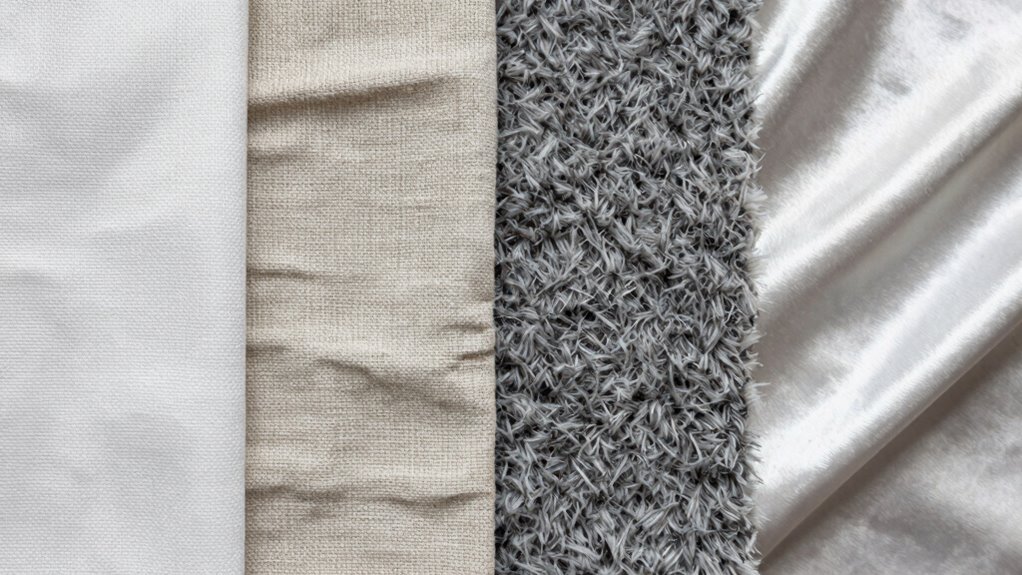

Cotton, linen, and wool each feel different because of their unique fibers and structures. Cotton is soft, smooth, and breathable, making it comfortable and easy to wear all day. Linen feels slightly rougher with a textured surface, but it’s lightweight and absorbs dye well, giving it a rich look. Wool is warm, plush, and elastic, providing insulation and a cozy feel. Exploring more about these fabrics reveals how their qualities influence your comfort and style choices.

Get the latest gadgets delivered free with Prime
- Fast, free delivery on millions of items
- Prime Video, Amazon Music and more included
- Member-only deals all year
Key Takeaways
- Cotton feels soft, smooth, and breathable, making it comfortable for everyday wear and easy to dye vibrant colors.
- Linen has a slightly textured, crisp feel due to its natural fibers, and softens with each wash.
- Wool offers a warm, plush, and resilient texture, providing insulation and a cozy feel.
- The different fiber structures influence fabric weight, texture, and how each material responds to dyeing.
- Fabric feel depends on fiber type, weave, and finishing processes, explaining why cotton, linen, and wool feel distinct.
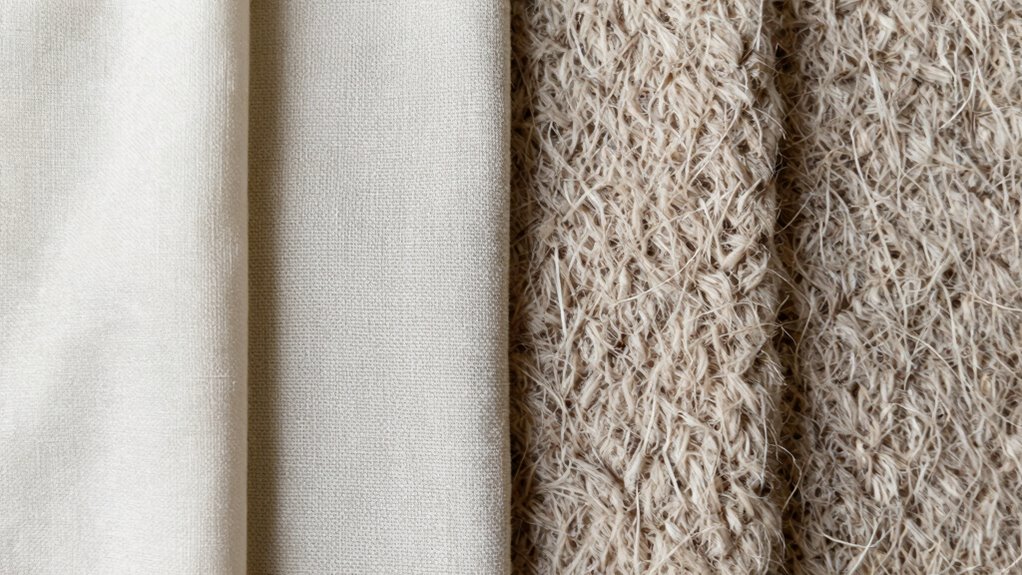
Fabric is the foundation of every clothing piece you wear, and understanding its basics can help you make better choices. When you pick out clothing, knowing what materials are used and how they’re made can influence how comfortable they feel, how long they last, and how they respond to dyeing techniques. Different fabrics have unique properties, especially concerning fabric durability and how they absorb color, which affects their overall look and longevity.
Understanding fabric types helps you choose durable, comfortable clothing that responds beautifully to dyeing techniques.
Cotton is one of the most popular natural fibers. It’s soft, breathable, and easy to dye, making it a favorite for everyday wear. Cotton’s fiber structure allows for vibrant dyeing techniques, so you often see bright, bold colors on cotton garments. Its fabric durability varies depending on weave and treatment, but generally, cotton is quite resilient. Proper care, like avoiding excessive washing or high heat, can extend its lifespan, ensuring your cotton pieces stay comfortable and vibrant over time. Understanding fabric composition can help you select the right cotton clothing for different activities and climates. Additionally, cotton’s ability to be easily processed makes it a versatile option in many textile applications.
Linen, made from flax fibers, offers a different experience. It’s lightweight and incredibly breathable, perfect for hot weather. Linen’s fiber structure gives it a natural luster and a slightly textured feel. When it comes to dyeing techniques, linen can absorb dyes quite well, giving it beautiful, rich colors. However, linen tends to wrinkle easily, which some see as a drawback. Its fabric durability is high; linen fibers are strong and tend to get softer with each wash, making it a durable choice for long-term wear, especially if you handle it carefully. Because linen is derived from natural fibers, it also responds well to dyeing techniques, allowing for a variety of vibrant and rich colors.
Wool introduces a whole new feel—warm, soft, and somewhat luxurious. It’s highly insulating, making it ideal for cold climates. Wool’s fiber structure makes it naturally elastic and resilient, contributing to its overall fabric durability. Wool can be dyed using various techniques, such as traditional dyeing or modern methods that enhance colorfastness. Because wool fibers are delicate compared to cotton or linen, proper care is essential to maintain its appearance and longevity. When you understand wool’s dyeing techniques and how its fibers respond to different treatments, you can keep your wool pieces looking vibrant and feeling cozy for years. Additionally, wool’s insulating properties make it a sustainable choice for colder environments, reducing the need for multiple layers or heavy clothing. Proper dyeing and finishing techniques can also help minimize pilling and shrinkage, extending the life of wool garments.
Ultimately, knowing how each fabric reacts to dyeing techniques and understanding their fabric durability helps you make smarter choices. Whether it’s the casual comfort of cotton, the refined texture of linen, or the cozy insulation of wool, recognizing their unique qualities ensures you select clothing that suits your needs and lasts longer.
As an affiliate, we earn on qualifying purchases.
Frequently Asked Questions
How Do I Best Care for Delicate Fabrics?
To best care for delicate fabrics, always follow the label instructions and opt for gentle wash cycles. Use cold water during fabric dyeing to preserve colors and prevent damage. Hand wash or place delicate items in a mesh bag, and avoid harsh detergents. Air dry whenever possible, and avoid wringing or tumble drying. This careful delicate fabric care helps maintain the fabric’s texture and color, extending its lifespan.
Are Natural Fabrics More Sustainable Than Synthetic Ones?
Natural fabrics are often the greener choice, acting like a breath of fresh air in your wardrobe. They typically have a lower environmental impact and are biodegradable, breaking down more gently in nature. Synthetic fabrics, like polyester, can linger like stubborn guests at a party, taking centuries to decompose. Choosing natural fibers supports sustainability, reduces pollution, and helps keep the planet healthier for future generations.
Can Fabric Feel Different After Multiple Washes?
Yes, fabric can feel different after multiple washes. You might notice a decrease in fabric softness, making it less comfortable, or it could become more durable with proper care. Washing can break down fibers or cause shrinkage, affecting wash durability. To keep your fabrics feeling their best, follow care instructions carefully. Over time, repeated washing naturally alters the texture, so your favorite pieces might feel a bit different.
What Are the Signs of High-Quality Fabric?
When you’re evaluating fabric quality, look for signs of lasting charm. High-quality fabric often boasts impressive durability, meaning it resists wear and tear over time. Its color stays vibrant after multiple washes, showing strong colorfastness. Feel the fabric—smooth, soft, yet substantial—indicating fine craftsmanship. If it holds its shape and resists pilling, you’ve found a winner. These subtle cues reveal the true excellence woven into the fabric.
How Does Fabric Weight Affect Comfort?
Fabric weight, driven by fabric density and weight variation, directly impacts your comfort. Lighter fabrics, with lower weight and density, feel breathable and cool, perfect for hot weather. Conversely, heavier fabrics offer warmth and durability, ideal for colder climates. Your comfort depends on choosing fabric weight suited to your activity and environment, ensuring you stay comfortable without sacrificing style or function.
Conclusion
Understanding the differences between cotton, linen, and wool helps you choose fabrics that suit your needs and style. Did you know that cotton accounts for about 38% of all fiber production worldwide? By knowing how each fabric feels and performs, you can make smarter choices for comfort, durability, and look. So next time you’re shopping, you’ll be confident in picking the perfect fabric for any occasion.
Fall Picks
fall essentials
As an affiliate, we earn on qualifying purchases.