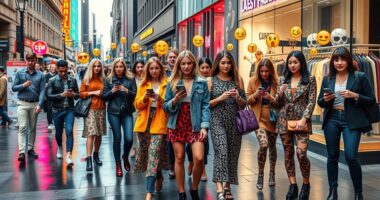
Yes, algorithms can predict the next fashion trends by analyzing social media content, runway shows, and consumer behavior. They examine millions of images and posts, identifying emerging styles, colors, and fabrics in real-time. Advanced models forecast trend adoption and longevity, helping brands stay ahead. AI also supports sustainability efforts and reduces waste through smarter design and supply chain management. If you want to explore how these innovations shape fashion’s future, keep exploring this fascinating topic.
Key Takeaways
- AI analyzes social media images, hashtags, and consumer interactions to identify emerging fashion trends in real-time.
- Advanced image recognition detects style attributes, color palettes, and silhouettes to forecast trend popularity.
- Sentiment analysis and time-series modeling predict the lifespan and adoption rate of upcoming trends.
- AI integrates cultural insights and social data to interpret and anticipate shifts in consumer preferences.
- While effective, AI predictions may be limited by biases, data quality, and inability to foresee disruptive innovations.
How AI Analyzes Social Media for Emerging Styles

Have you ever wondered how fashion brands stay ahead of trends? AI analyzes millions of social media images daily from platforms like Instagram and Weibo to spot emerging styles. It examines hashtags, likes, shares, and comments to gauge what resonates with consumers. The rapid pace of trend turnover, often within just two weeks, makes real-time analysis essential for staying relevant. Influencers promoting new looks provide valuable signals about potential trends, especially when their engagement spikes. Using advanced image recognition, AI detects over 2,000 fashion attributes in real-time, offering a detailed picture of current consumer preferences. Unlike traditional methods, AI focuses on content shared directly by users, capturing trends as they develop among everyday people. This continuous analysis helps brands stay ahead by understanding what styles are gaining popularity and predicting which ones might become mainstream soon. Incorporating cultural intelligence enables brands to interpret social cues more effectively and tailor their strategies for diverse markets. Additionally, AI-driven trend prediction constantly refines its forecasts by learning from new social media data, further enhancing its accuracy. The ability to analyze user-generated content in real-time is revolutionizing how brands respond to fast-changing fashion landscapes, especially when combined with innovative data analysis. Moreover, leveraging insights from social media analytics allows for more precise identification of emerging trends before they fully take hold.
Forecasting Trend Adoption and Longevity With Machine Learning

Machine learning models play a crucial role in forecasting fashion trend adoption and longevity by analyzing both historical and real-time data. You can rely on algorithms to identify emerging trends and estimate how quickly they’ll spread across different consumer groups. These models analyze visual features from fashion images—like color palettes, silhouettes, and fabrics—to recognize patterns linked to trend uptake. Clustering techniques help track how styles gain popularity over time and across demographics, while sentiment analysis of social media comments gauges consumer reception and potential longevity. Heuritech, founded in 2013 by two PhDs in Machine Learning, provides advanced AI-based visual recognition and forecasting models that analyze over 3 million social images daily, offering valuable insights into trend dynamics. Incorporating trend prediction methods further refines the accuracy of forecasts and helps brands adapt proactively. Using consumer behavior analysis, brands can better understand the motivations behind trend adoption, leading to more targeted marketing strategies. Moreover, applying cultural significance insights can reveal how certain styles resonate with different audiences and influence longevity. Time-series analysis predicts how long a trend might last, distinguishing fleeting fads from enduring styles. Additionally, integrating predictive analytics enhances the accuracy of trend forecasts. A strong understanding of credit card data and its analysis can help brands identify which styles are more likely to become popular based on consumer purchase patterns. By combining these insights, brands can optimize inventory, refine product development, and tailor marketing strategies, ensuring they stay ahead of evolving consumer preferences.
From Runway to Retail: AI’s Role in Predicting Market Shifts

AI is transforming how fashion brands predict market shifts by analyzing vast amounts of data from runway shows, social media, and consumer interactions. You can now forecast trends with greater accuracy by examining digital landscapes for colors, fabrics, and styles, reducing guesswork.
AI helps mitigate overproduction by identifying popular features, enabling targeted design and marketing. Retailers use AI insights to optimize supply chains and better understand which product attributes drive sales. This gives you a competitive edge, allowing early reactions to market changes.
Techniques like image processing isolate clothing items, while social media analysis gauges public sentiment. Real-time trend updates empower you to adapt quickly, ensuring your collections stay relevant and aligned with consumer demand, ultimately boosting your market responsiveness.
Understanding Consumer Behavior Through Data-Driven Insights
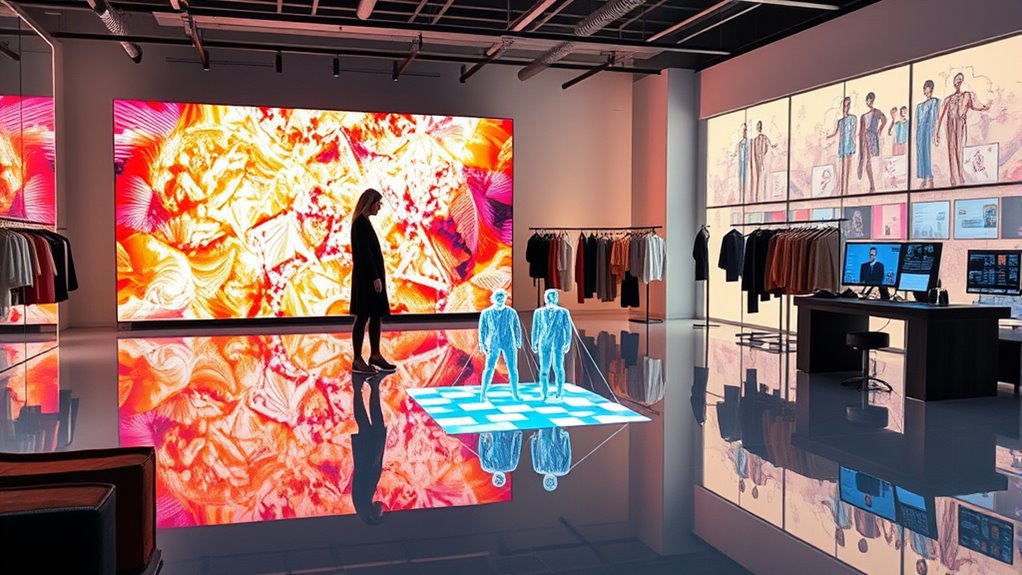
Understanding consumer behavior is crucial for staying ahead in fashion, and data-driven insights provide a clear window into what customers truly want. By analyzing sources like online shopping carts, loyalty programs, sales data, and social media interactions, you can identify patterns and emerging trends. What Is Data Analytics? Data analytics reveal preferences and help you tailor marketing strategies, refine inventory, and adjust pricing effectively. AI tools further enhance this process by recognizing behavior patterns and forecasting future demands, enabling real-time decision-making. Collecting and managing data from multiple platforms ensures an integrated view of your customers. Additionally, maintaining high data quality and privacy standards is essential to build trust and ensure compliance. Ensuring accurate data collection and management is vital for reliable insights. Incorporating appliance testing and compatibility considerations can help you anticipate potential issues with product launches or upgrades, thereby improving customer satisfaction. Prioritizing data quality and privacy is indispensable, but when done correctly, these insights empower you to create personalized experiences, improve customer engagement, and maintain a competitive edge in the ever-evolving fashion industry. Incorporating behavioral prediction techniques can further refine your ability to anticipate customer needs before they arise.
Promoting Sustainability and Reducing Waste With AI Solutions

How can fashion brands embrace technology to promote sustainability and cut waste? By leveraging AI-driven design and supply chain solutions, you can minimize environmental impact. Generative AI helps you experiment with eco-friendly materials and innovative techniques, reducing resource use. Virtual try-ons cut down on returns, decreasing textile waste. AI also optimizes production, ensuring just-in-time manufacturing and reducing excess inventory. Supply chain AI streamlines transportation, packaging, and sourcing, lowering carbon emissions and promoting transparency. Additionally, AI-powered sorting and recycling improve waste management, while platforms for renting and sharing clothing extend product lifespans. Sustainable innovation can be incorporated into sustainable fashion processes to foster innovation and adaptability. Personalized recommendations and educational content guide consumers toward sustainable choices. AI’s role in supply chain transparency is crucial for tracking materials and reducing unnecessary waste throughout the product lifecycle. Embracing digital transformation enables brands to adapt quickly to changing consumer expectations and environmental standards. Moreover, integrating ethical AI practices ensures that data use aligns with sustainability goals and respects consumer privacy.
Challenges and Ethical Considerations in AI-Driven Fashion Forecasting

While AI offers promising solutions for promoting sustainability in fashion, it also presents significant challenges and ethical concerns that can impact its effectiveness and integrity. Data quality and bias pose major issues; incomplete or biased data can lead to misleading predictions. Over-reliance on historical trends limits AI’s ability to anticipate disruptive shifts.
Homogeneous training datasets risk reinforcing existing biases and excluding diverse preferences. Privacy concerns arise when consumer data is used without proper safeguards. Creativity limitations also restrict AI; it struggles to replicate human originality, interpret cultural nuances, or innovate beyond established patterns. Data diversity is crucial to developing more equitable and innovative forecasting models. Incorporating diverse datasets can help mitigate bias and improve prediction accuracy.
Additionally, algorithmic homogenization results in repetitive trends, reducing regional diversity. Ethical challenges include data privacy, labor displacement, intellectual property ambiguity, and transparency gaps, all threatening AI’s responsible integration into fashion forecasting. Incorporating natural materials like wood and stone can help preserve the rustic charm and authenticity in farmhouse decor, emphasizing the importance of natural materials in design.
Frequently Asked Questions
How Accurate Are AI Predictions Compared to Human Trend Forecasters?
You might wonder how accurate predictions are when made by AI versus humans. AI uses vast datasets and machine learning to analyze patterns, making its forecasts more objective and often more precise.
It processes huge amounts of data quickly and adapts to changing trends faster than humans. While AI reduces subjectivity, combining it with human insight offers the best balance, improving overall trend prediction accuracy.
Can AI Capture Cultural Nuances Influencing Fashion Preferences?
You might wonder if AI can truly grasp cultural nuances shaping fashion preferences. It actively analyzes social media, historical data, and regional traditions to identify authentic influences.
By recognizing specific motifs, fabrics, and modesty norms, AI tailors designs that respect cultural identities. It also flags insensitive elements, ensuring respect.
While it enhances understanding, your awareness of AI’s limits remains essential to prevent cultural oversimplification or homogenization.
What Is the Cost of Implementing AI Trend Forecasting Tools?
You face costs that include infrastructure setup, data collection, software subscriptions, and staff training. You invest in hardware and storage, gather diverse datasets, and pay ongoing fees for AI tools.
You also spend on customizing solutions and training your team. These expenses aim to improve trend prediction accuracy, boost efficiency, and gain competitive advantage, but they require significant upfront and ongoing investments, making implementation a strategic financial decision.
How Do Brands Balance AI Insights With Creative Intuition?
You balance AI insights with your creative intuition by viewing AI as a tool, not a rule. Use data to identify promising trends, but trust your artistic vision to refine or challenge those forecasts.
Collaborate with AI outputs, applying your cultural and brand knowledge. This approach guarantees your collections stay unique and innovative, combining data-driven guidance with your personal touch to create compelling, market-ready fashion that resonates emotionally with consumers.
Are AI Models Adaptable to Emerging, Niche Fashion Markets?
Did you know that 65% of consumers in niche markets rely heavily on social media for fashion insights?
When it comes to adaptability, AI models can be highly responsive by analyzing real-time social media data, influencer trends, and consumer feedback.
You can fine-tune these models to understand regional and cultural variations, making them more accurate in predicting emerging trends and helping you stay ahead in niche markets.
Conclusion
Imagine standing at the crossroads of fashion’s future, where AI acts like a savvy stylist predicting your next favorite look. Just as a seasoned designer spots emerging trends before they hit the runway, algorithms sift through social media and data to forecast styles with surprising accuracy. By embracing these innovations, you can stay ahead of the curve, create sustainable collections, and connect more deeply with consumers—turning the chaotic runway into a well-orchestrated symphony of style.