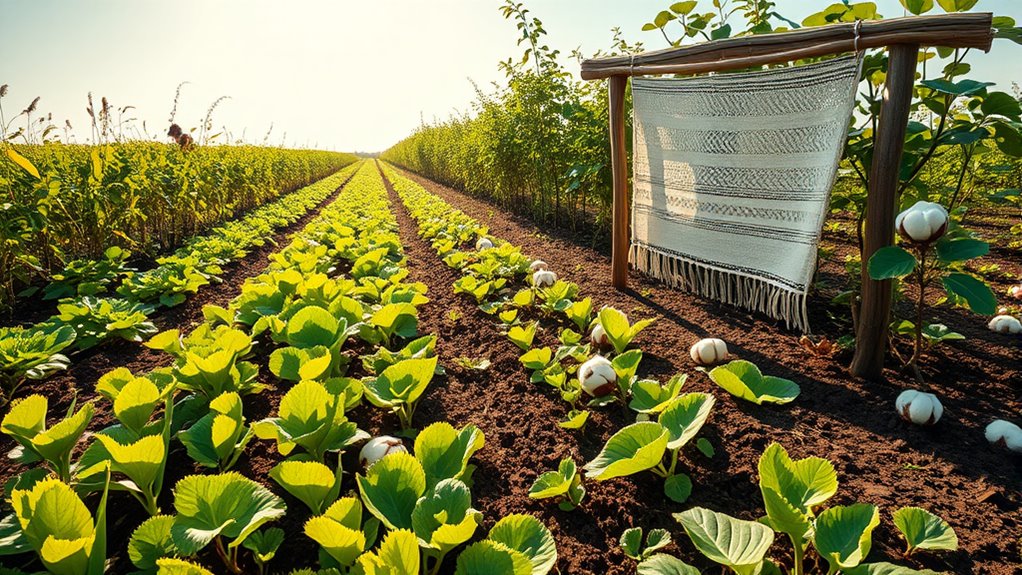

By adopting regenerative agriculture, you help improve soil health through practices that boost organic matter and microbial life, reducing the need for chemicals. This leads to healthier, more resilient crops like cotton and hemp, which produce sustainable textiles. It also decreases environmental harm by lowering water contamination and the carbon footprint of fiber production. Continuing share more about how these eco-friendly methods transform textile industries and support a healthier planet.

Get the latest gadgets delivered free with Prime
- Fast, free delivery on millions of items
- Prime Video, Amazon Music and more included
- Member-only deals all year
Key Takeaways
- Regenerative agriculture improves soil health, leading to more sustainable raw materials like organic cotton and hemp for textiles.
- Healthy soils in regenerative systems reduce chemical use, decreasing pollution in fiber production processes.
- Crop diversity enhances soil fertility and resilience, ensuring consistent fiber yields with lower environmental impact.
- Adoption of regenerative practices supports carbon sequestration, aiding climate change mitigation in textile supply chains.
- Sustainable farming methods promote eco-friendly textile sourcing, benefiting the environment and consumer sustainability choices.

Have you ever wondered how farming methods can directly influence the sustainability of your clothes? When farmers adopt regenerative practices, they focus on improving soil health and increasing crop diversity, which in turn benefits the environment and the textiles industry. Healthy soil isn’t just about the absence of pests or weeds; it’s about nourishing the land so it can sustain crops without depleting resources or causing long-term damage. Regenerative agriculture emphasizes building soil organic matter, minimizing chemical inputs, and encouraging natural microbial activity. This creates a vibrant ecosystem beneath the surface that supports the growth of fibers used in your clothing, such as cotton or hemp. When soil health is prioritized, crops grow more resilient, require fewer synthetic fertilizers, and produce better yields over time. This means fewer harmful runoff and less pollution, leading to a cleaner environment and healthier ecosystems. Enhanced soil vitality also contributes to increased carbon sequestration, helping mitigate climate change impacts.
Crop diversity plays a vital role in this process. Instead of planting monocultures—large expanses of a single crop—regenerative farmers rotate different types of plants. This practice reduces the risk of pests and diseases, naturally controlling problems without relying heavily on pesticides. It also enriches the soil by varying nutrient demands and contributions, preventing depletion of specific minerals. When crops like legumes, grains, and fibers are grown in rotation, the soil’s structure and fertility improve, making the land more resilient to droughts and other climate stresses. For the textile industry, this means more sustainable raw materials. Cotton, for example, grown on diverse, healthy soils, can require fewer chemical inputs, resulting in less contamination of waterways and a lower carbon footprint.
As an affiliate, we earn on qualifying purchases.
Frequently Asked Questions
How Does Regenerative Agriculture Impact Local Biodiversity?
You’ll notice that regenerative agriculture boosts local biodiversity by improving soil health and supporting pollinators. Healthy soil provides better habitats for diverse microorganisms and insects, while diverse plant cover attracts bees, butterflies, and other pollinators. These practices create a balanced ecosystem, encouraging a wide variety of species to thrive. As a result, your local environment becomes more resilient, vibrant, and capable of sustaining a rich tapestry of life.
What Are the Economic Benefits for Farmers Adopting Regenerative Practices?
You might be surprised, but adopting regenerative practices can boost your income. Financial incentives like grants or subsidies are often available, easing the shift. Plus, you’ll enjoy greater market stability as consumer demand shifts toward sustainable products. These benefits help you reduce input costs and build resilience against climate impacts, ensuring long-term profitability. Embracing regenerative methods isn’t just good for the environment — it’s a smart financial move for your farm’s future.
Can Sustainable Textiles Meet Large-Scale Fashion Industry Demands?
Yes, sustainable textiles can meet large-scale fashion industry demands by incorporating organic dyes and water conservation techniques. You can produce eco-friendly fabrics at scale, reducing environmental impact while maintaining quality. Embracing these methods helps you fulfill consumer demand for sustainable products, supports industry growth, and promotes responsible practices. By prioritizing water conservation and organic dyes, you guarantee your supply chain stays eco-conscious and responsive to market trends.
How Do Regenerative Methods Influence Soil Carbon Sequestration?
Regenerative methods boost soil health and increase carbon storage by promoting diverse plant roots and minimizing soil disturbance. You help sequester more carbon by adopting practices like cover cropping and reduced tillage. These methods enhance soil organic matter, which traps carbon effectively. As a result, soil becomes richer, more resilient, and capable of storing greater amounts of atmospheric carbon, positively impacting climate change mitigation efforts.
Are There Certification Standards for Regenerative Textile Products?
Yes, there are certification standards for regenerative textile products. You can look for eco labeling and certifications like GOTS (Global Organic Textile Standard), OEKO-TEX, and B Corp to guarantee the textiles meet regenerative criteria. These standards verify practices that promote soil health, reduce chemical use, and support sustainable farming methods. Checking for such certifications helps you choose textiles that align with regenerative principles and support environmental and social responsibility.
Conclusion
By embracing regenerative agriculture, you plant seeds of hope that bloom into thriving ecosystems, nourishing both soil and soul. As sustainable textiles weave nature’s resilience into every thread, you become part of a vibrant tapestry of change. Together, you nurture a future where the earth’s song is harmonized with human innovation. Let your choices ripple outward, turning small acts into a powerful wave that restores and renews our planet’s beauty, one sustainable step at a time.
Halloween Picks
halloween
As an affiliate, we earn on qualifying purchases.