
Wireless surround sound systems aren’t truly wireless because challenges like signal interference, latency, and power constraints make it hard to achieve seamless, cable-free audio. Interference from Wi-Fi, Bluetooth, and other devices can disrupt signals, while latency causes audio delays that throw off synchronization. Battery life and connectivity also limit performance, forcing many systems to rely on transmitters and cables. If you want to understand how these limitations are being addressed and what the future holds, keep exploring.

Get the latest gadgets delivered free — and shop member deals
- Fast, free delivery on millions of items
- Access to Prime Big Deal Days deals on October 6–7
- Prime Video, Amazon Music and more included
Key Takeaways
- Signal interference and latency issues disrupt synchronization, making it difficult to achieve flawless wireless surround sound.
- Power constraints and limited battery life in wireless speakers hinder fully cable-free, long-term operation.
- Wireless technology struggles with maintaining stable, high-quality connections in complex home environments.
- Achieving perfect audio synchronization across multiple speakers remains challenging without wired or transmitter-based setups.
- Ongoing technical limitations in interference mitigation and power management prevent most systems from being completely wireless.
As an affiliate, we earn on qualifying purchases.
How Do Wireless Surround Sound Systems Work?

Wireless surround sound systems work by transmitting audio signals from your receiver or source device to multiple speakers without the need for traditional cables. They rely on wireless protocols like Wi-Fi, Bluetooth, or proprietary technologies to send data seamlessly. To guarantee smooth transmission, audio compression is used to reduce the size of sound data, making it easier to transmit quickly and efficiently. This process preserves audio quality while minimizing latency and buffering issues. Your system encodes the sound into compressed data, transmits it over the chosen wireless protocol, and then decompresses it at each speaker. Additionally, audio synchronization is crucial for maintaining a cohesive listening experience across all speakers. Advanced signal processing techniques further enhance sound clarity and reduce distortions, ensuring a more immersive experience. This setup allows for a clutter-free environment and flexible speaker placement, all while maintaining synchronized, high-quality sound across your home theater. Advances in wireless technology continue to improve range and reliability, making wireless surround sound more practical for modern home theaters. Moreover, interference mitigation techniques help ensure consistent performance even in busy wireless environments. As technology progresses, mesh network setups are becoming more common, further enhancing system stability and coverage in larger or multi-room spaces.
What Challenges Prevent Fully Wireless Home Theater Sound?

You might face signal latency issues that cause audio delays, disrupting your viewing experience. Power and connectivity problems can also make it tough to keep all devices running smoothly without wires. These challenges are key hurdles to achieving fully wireless home theater sound. Additionally, mixed product roundups reveal that compatibility issues among different brands and technologies can further complicate creating a seamless wireless setup. Furthermore, the wireless technology limitations often prevent a truly cable-free experience from being realized, especially in complex home environments. The style differences between various wireless audio devices can also lead to inconsistent sound quality across your system. Moreover, interference sources such as other wireless devices or physical obstructions can significantly degrade signal strength and stability. To overcome these obstacles, ongoing advancements in wireless standards are crucial for improving reliability and performance.
Signal Latency Issues
Despite the convenience of a wireless setup, signal latency remains a significant challenge that prevents fully synchronized home theater sound. Wireless latency causes delays between audio signals, making it difficult to achieve perfect signal synchronization across all speakers. This delay results in echoes or out-of-phase sound, disrupting the immersive experience. To understand the impact, consider this table:
| Issue | Effect | Solution |
|---|---|---|
| Wireless latency | Audio delays, out-of-sync sound | Faster transmission tech |
| Signal synchronization | Disjointed audio, echo effects | Real-time processing |
| Hardware limitations | Increased latency, lag | Upgraded components |
| Network interference | Signal interruption | Improved network design |
| Processing speed | Slower response time | High-performance chips |
In essence, overcoming wireless latency is *vital* for seamless, synchronized surround sound. Additionally, advancements in signal processing technology are crucial to mitigate these issues effectively. Improving network stability also plays a key role in maintaining consistent audio quality across all wireless components. Implementing advanced error correction techniques can further reduce the impact of interference and ensure smoother audio transmission. Furthermore, ongoing research into low-latency wireless protocols offers promising solutions to these persistent challenges. Addressing wireless bandwidth limitations is also essential to support high-quality, synchronized audio streams without interruption.
Power and Connectivity
Power and connectivity issues pose significant hurdles to achieving a fully wireless home theater system. Limited battery life can interrupt playback, requiring frequent recharging or battery replacements. Wireless standards vary in stability and range, making consistent connections challenging. To navigate these issues, consider:
- Ensuring your devices support the latest wireless standards for better reliability.
- Choosing rechargeable batteries with longer life to minimize interruptions.
- Using devices with low power consumption to extend battery life.
- Positioning transmitters and receivers optimally to reduce connection drops. Additionally, understanding battery capacity and how it impacts device performance can help in selecting the right components for a seamless experience. Wireless technology] is evolving to address these limitations, but current power and connectivity limitations still prevent most setups from being entirely cable-free. These factors highlight why achieving seamless, fully wireless surround sound remains difficult. Technological advancements continue, but current power and connectivity limitations still prevent most setups from being entirely cable-free.
Why Do Most Wireless Surround Systems Still Rely on Cables or Transmitters?
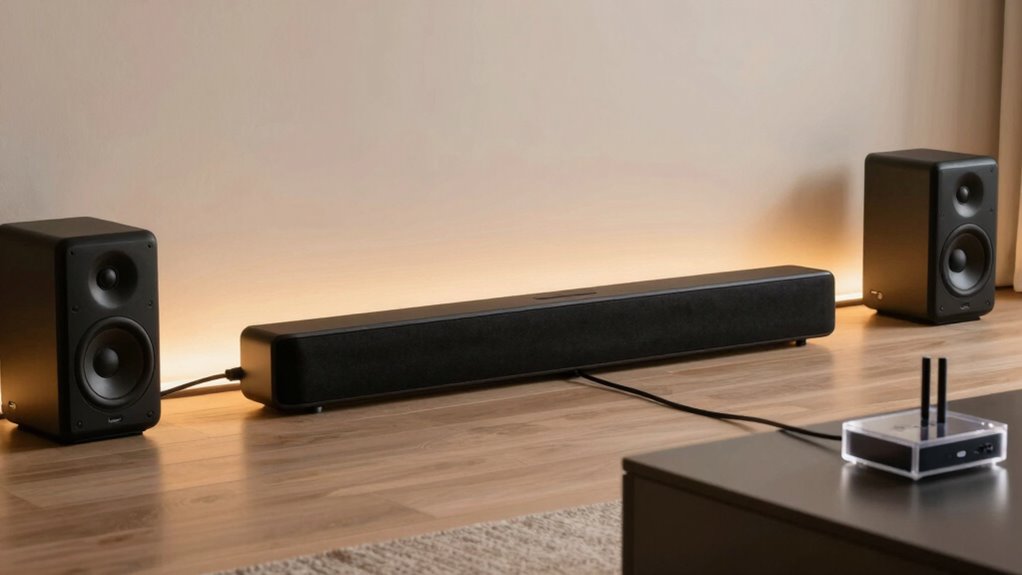
Many wireless surround sound systems still rely on cables or transmitters because achieving seamless, high-quality audio transmission without interference remains technically challenging. Wireless signals can be disrupted by walls, other devices, or signal congestion, which affects sound quality. Additionally, maintaining strong connections requires power, impacting battery life and design aesthetics—small, sleek speakers often struggle with adequate battery capacity. Transmitters ensure reliable connections but add clutter, compromising the clean look you want. To balance aesthetics and performance, manufacturers often stick with cables or dedicated transmitters. Furthermore, advancements in wireless technology continue to improve, but the inherent challenges of interference and power management still limit widespread adoption of truly wireless setups. As interference mitigation techniques evolve, we may see more seamless wireless experiences in the future. The ongoing development of battery efficiency is also crucial to enabling truly wireless surround sound systems. Researchers are exploring new wireless protocols to further reduce latency and improve stability, which could help overcome current limitations.
What Limitations Does Current Wireless Tech Face in Home Theater Audio?

Wireless tech in home theater systems still faces challenges like signal interference from other devices, which can cause dropouts or poor sound quality. You might notice latency or sync issues between audio and video, disrupting your viewing experience. Additionally, power and connectivity limits can restrict how far you can place your speakers without losing performance. Moreover, technological limitations in wireless audio transmission continue to hinder achieving fully seamless sound. As these technological barriers improve, more consumers can enjoy truly wireless surround sound setups in their homes, especially as advancements in wireless communication protocols address current connectivity issues. Overcoming these connectivity challenges remains essential for the widespread adoption of truly wireless home theater solutions.
Signal Interference Challenges
Signal interference remains a significant hurdle for current wireless home theater audio systems, often causing disruptions or degraded sound quality. Frequency interference from other devices can lead to signal disruption, making your listening experience less immersive. To understand this better, consider:
- Wi-Fi networks: Overlapping frequencies can cause conflicts, reducing audio clarity.
- Bluetooth devices: Competing signals may interfere, leading to dropouts.
- Microwave ovens: Operating on similar frequencies, they can create noise and signal disruptions.
- Other wireless gadgets: Smart home devices and cordless phones can also contribute to interference.
These issues highlight that wireless tech still struggles with maintaining a stable, interference-free connection, especially in environments crowded with electronic signals. This limits the reliability of wireless surround sound systems in home theaters.
Latency and Sync Issues
While overcoming interference remains a challenge, latency and synchronization issues pose another significant barrier to seamless wireless surround sound. Audio delay can cause noticeable lag between the audio and video, disrupting the immersive experience. When multiple speakers are involved, sync issues become even more problematic, leading to echoes or out-of-phase sounds that break immersion. Wireless tech struggles to deliver perfectly synchronized audio in real-time, especially when handling multiple channels simultaneously. Variations in signal processing or network latency can cause slight delays that, while tiny, are perceptible during intense movie scenes or musical performances. These issues highlight the current limitations of wireless systems, making it difficult to achieve the flawless, synchronized sound that wired setups can reliably provide.
Power and Connectivity Limits
Despite advances in technology, current wireless home theater audio systems still face significant power and connectivity limitations. These systems often struggle with:
- Limited battery life, requiring frequent recharging or replacements.
- Restricted signal range, which can cause dropouts or interference.
- Power constraints that limit loudness and overall performance.
- Connectivity issues, especially in larger spaces or with multiple devices.
These factors mean you might experience inconsistent sound quality or the need to stay close to transmitters. Battery life can shorten quickly if you’re using portable speakers, and signal range is often insufficient for large or complex rooms. As a result, truly wireless surround sound remains a challenge, and wired solutions still dominate for reliable performance.
What’s Holding Back Truly Wireless Surround Sound?

Although wireless surround sound has made significant strides, several technical challenges still keep it from becoming truly seamless. One major issue is battery limitations; wireless speakers and modules require power, and limited battery life can cause interruptions or reduce convenience. You might find yourself recharging devices frequently, which undermines the idea of a fully wireless setup. Signal interference also plays a significant role. Wireless signals can clash with Wi-Fi networks, Bluetooth devices, or other electronics, leading to audio dropouts or lag. This interference affects the consistency and quality of your surround sound experience. Until battery technology improves and interference is better managed, achieving a flawless, fully wireless surround sound system remains a challenge.
Is Fully Wireless Surround Sound Coming in the Future?
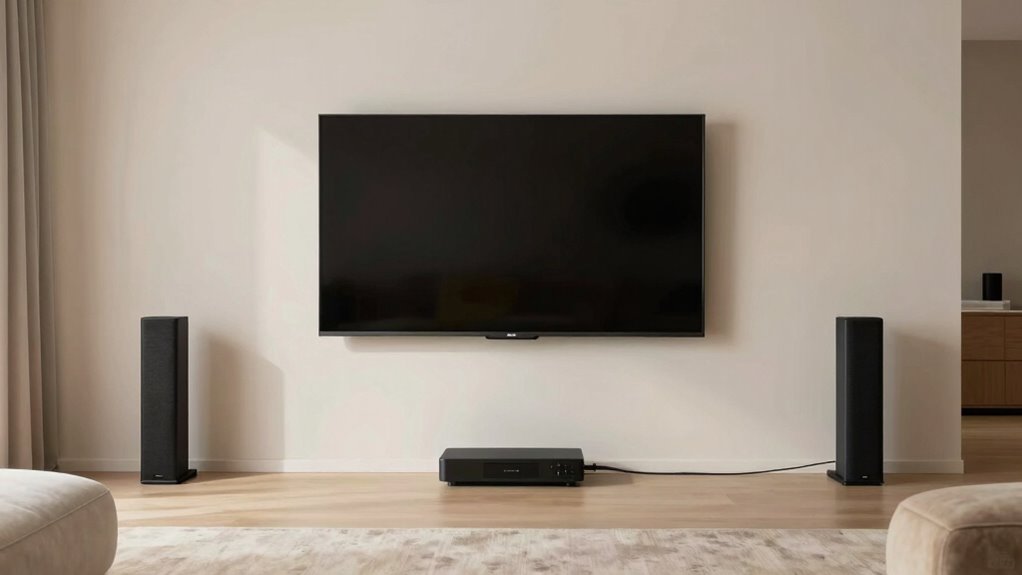
Are fully wireless surround sound systems becoming a reality? While wireless innovation advances rapidly, complete wireless surround sound still faces hurdles. The audio evolution is promising, but several factors need addressing:
- Signal stability to prevent lag or dropouts during movies.
- Power management for long, uninterrupted use.
- Integration with existing home theater setups seamlessly.
- Cost-effectiveness to make it accessible to consumers.
Despite these challenges, manufacturers are investing heavily in new technologies, hinting that fully wireless surround sound isn’t far off. As wireless innovation continues, future systems will likely deliver true freedom from wires, transforming your home audio experience. The evolution of wireless tech suggests that, soon, you might enjoy surround sound without the clutter, bringing a new level of immersion to your entertainment.
Frequently Asked Questions
Are There Any Fully Wireless Surround Sound Systems Available Now?
Yes, there are some fully wireless surround sound systems available now, but they’re rare. You’ll find models that try to minimize wireless latency and signal interference, but these issues still pose challenges. Wireless latency can cause audio sync problems, while signal interference from other devices might disrupt the experience. As a result, many systems still rely on wired connections for ideal sound quality and reliability.
How Does Wireless Surround Sound Impact Audio Quality?
Wireless surround sound often impacts audio quality by introducing latency issues and signal interference. You might notice delays between actions and sound, disrupting your experience. Signal interference from other devices can cause dropouts or distortions, reducing clarity. While wireless systems offer convenience, these issues can compromise sound precision and immersion. To get the best experience, consider systems with low latency and strong signal stability, ensuring your audio remains clear and synchronized.
What Are the Cost Differences Between Wired and Wireless Systems?
Wireless surround sound systems typically cost more upfront due to higher installation costs and advanced technology. You’ll spend less on maintenance expenses over time because there are no cables to repair or replace. Wired systems generally have lower initial costs but may incur higher maintenance costs from cable wear and setup complexity. Overall, your choice depends on your budget and preference for easier installation versus long-term savings.
Can Wireless Surround Sound Systems Integrate With Smart Home Devices?
Sure, you can integrate wireless surround sound with your smart home devices—if you enjoy Bluetooth interference and juggling device compatibility like a circus act. Many systems support smart assistants or apps, but expect occasional dropouts or lag when multiple devices compete for Bluetooth bandwidth. While some setups are seamless, others turn into a technological game of whack-a-mole, so be prepared for a little chaos in your quest for wireless audio perfection.
What Future Technologies Could Enable Truly Wireless Surround Sound?
Future technologies like wireless power and advanced audio beamforming could make truly wireless surround sound a reality. Wireless power enables speakers to stay unplugged, reducing clutter, while audio beamforming directs sound precisely, creating immersive experiences without wires. You’ll enjoy seamless, room-filling sound from completely wireless setups, transforming your home theater. These innovations could eliminate the need for cables and enhance integration with smart home systems, making truly wireless surround sound more accessible.
Conclusion
Ultimately, the dream of a truly wireless surround sound system remains just out of reach. Technical trials and transmission troubles tame the thrill of total freedom. While advancements continue, you’ll still find tangled cords and transmitter tensions. Stay hopeful, though — someday, seamless sound sensations might finally slip into your space, sparking a sound revolution. Until then, embrace the imperfect perfection of your current setup and enjoy every immersive moment.
Fall Picks
fall essentials
As an affiliate, we earn on qualifying purchases.