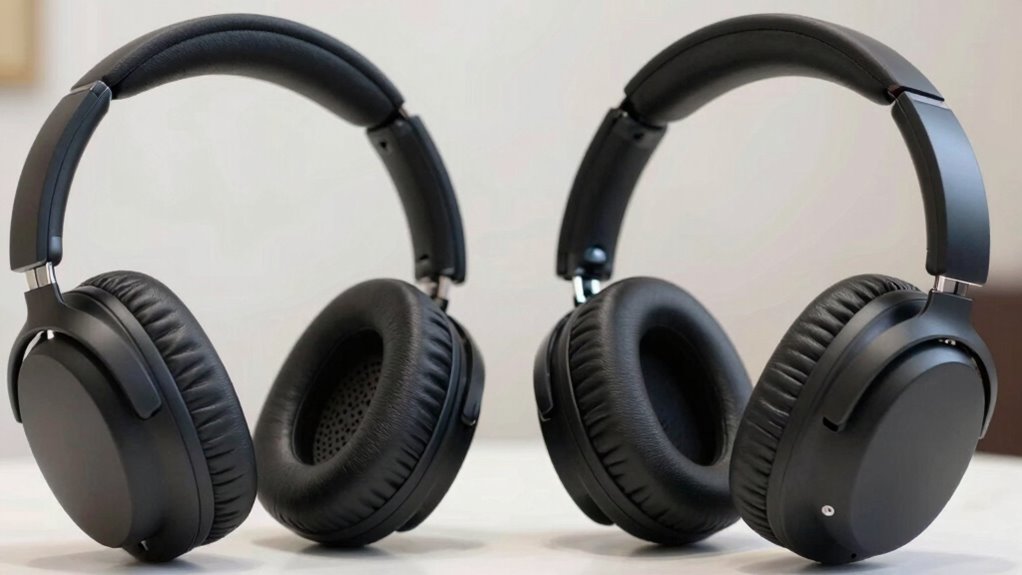

Choosing the wrong headphone style—open-back or closed-back—can lead to frustration, whether it’s poor sound quality, excessive noise, or discomfort. Open-backs offer natural sound and space but leak sound and aren’t ideal for noisy places. Closed-backs provide better noise isolation and portability but may sound less immersive. Making the right choice depends on your environment and preferences. Keep exploring to discover how to pick the perfect pair for you.
Key Takeaways
- Open-back headphones provide natural sound and a wide soundstage but leak sound, making them unsuitable for privacy or noisy environments.
- Closed-back headphones offer superior noise isolation and minimal sound leakage, ideal for travel, public spaces, and private listening.
- Choosing open-backs for noisy settings results in poor noise cancellation, while selecting closed-backs in quiet spaces limits sound quality and immersion.
- Open-backs are generally less durable and less portable, whereas closed-backs are built for durability and active use.
- Picking the wrong style based on environment and needs can lead to discomfort, sound leakage issues, or inadequate noise isolation, causing regret.
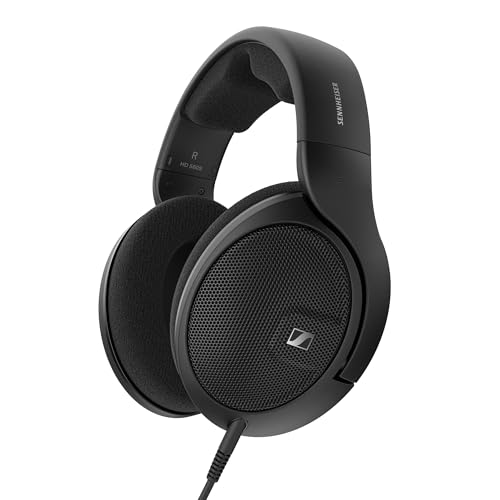
Sennheiser HD 560S Open-Back Over-Ear Wired Headphones – Neutral, Natural Sound for Music, Gaming, and Content Creation, Black
Wide, Natural Soundstage: Open-back design delivers lifelike depth and directional detail. Ideal for music lovers and gamers seeking…
As an affiliate, we earn on qualifying purchases.
As an affiliate, we earn on qualifying purchases.
Open‑Back vs. Closed‑Back Headphones: What’s the Difference?

Have you ever wondered how open-back and closed-back headphones differ in performance? The first noticeable difference lies in their aesthetic appeal. Open-back headphones often feature a sleek, modern look with visible ear cups and breathable designs, making them visually appealing for home use. Closed-back models tend to have a more compact and solid build, emphasizing privacy and durability. Your choice can also be influenced by brand reputation; established brands often produce both types, ensuring quality and style. Open-back headphones are typically associated with premium, audiophile brands, boosting their appeal among enthusiasts. Meanwhile, closed-back options are favored for their practical design and reliable performance. Additionally, the technological differences between the two types affect sound quality and noise isolation, which can impact your listening experience. Ultimately, your aesthetic preferences and trust in brand reputation play significant roles in selecting the right headphone type for you.

PreSonus Eris HD6BT — Over-Ear Closed-Back Wireless Headphones, Bluetooth, ANC Noise Cancelling, Up to 60 Hours Battery Life, Studio Headphones for Mixing, Monitoring, Recording, Eclipse Black
Over-Ear, Closed-Back Design: Provides excellent noise isolation and all-day comfort for mixing, monitoring, and recording sessions.
As an affiliate, we earn on qualifying purchases.
As an affiliate, we earn on qualifying purchases.
How Do Open‑Back and Closed‑Back Headphones Impact Sound Quality?

Your choice between open‑back and closed‑back headphones considerably affects soundstage and imaging, shaping how you perceive space and details. Open-backs usually deliver a broader soundstage, making instruments feel more natural, while closed-backs offer tighter imaging for focused listening. Additionally, noise isolation and leakage vary, influencing how much external sound you hear and how much others can overhear. For example, understanding the concept of Free Floating can help you appreciate how the design of headphones impacts sound dispersion and comfort during extended use. Recognizing how sound dispersion varies between designs can further enhance your listening experience and comfort over long periods. Moreover, the internal damping within headphone enclosures plays a role in controlling resonances and improving overall sound clarity.
Soundstage and Imaging
Open-back headphones typically create a more expansive soundstage, giving you the sensation of listening to music in a larger space. This enhances soundstage depth, making instruments and vocals feel more lifelike and three-dimensional. You’ll notice that open-backs provide sharper imaging precision, allowing you to pinpoint the exact position of each sound source within the mix. This clarity helps you distinguish individual instruments and vocals more easily, which is especially beneficial for critical listening or mixing. Additionally, open-backs tend to have a more natural sound profile, which contributes to a more authentic listening experience. The open design also allows for better airflow, reducing ear fatigue during long listening sessions. Improved ventilation can further enhance comfort and sound quality for extended use. Enhanced sound dispersion in open-backs helps create a more immersive listening environment, making music feel more spacious and alive. Closed-back headphones, by contrast, tend to have a narrower soundstage, resulting in a more confined and less realistic spatial experience. If you prioritize immersion and accurate imaging, open-backs will serve you better, but remember they may sacrifice some isolation. For optimal sound quality, consider yarn weight and stitch type, as these factors can influence the fidelity and clarity of the audio experience.
Noise Isolation and Leakage
Closed-back headphones provide superior noise isolation, effectively blocking out external sounds so you can focus on your music without distractions. This makes them ideal for environments with soundproofing challenges or significant environmental noise considerations. Their sealed design minimizes sound leakage, ensuring your music doesn’t disturb others nearby. However, this tight seal can also trap heat and moisture, potentially affecting comfort during long listening sessions. In contrast, open-back headphones allow sound to escape and external noise to enter, reducing soundproofing challenges but increasing leakage. This design makes open-backs unsuitable for noisy environments or public spaces, where privacy and noise control are priorities. Your choice impacts not only sound quality but also how well you isolate yourself from or share your sound environment.

Philips Open Back Wired Headphones – Cushioned Over Ear Headphones with Adjustable Headband for Ultimate Comfort and Superior Sound Quality, Plugs into TV, Stereo or PC, Ideal for Podcasts or Music
Elevate Your Listening Experience – Top-tier performance, comfort, and style: Our SHP9600 wired headphones are the perfect fusion…
As an affiliate, we earn on qualifying purchases.
As an affiliate, we earn on qualifying purchases.
Comfort and Fit: Which Style Suits Your Head Best?

Choosing the right headphones depends on how comfortable and well-fitting they feel on your head. You’ll want to contemplate adjustability features and whether the design suits your head shape. Let’s explore how open-back and closed-back styles compare in these aspects. Additionally, considering ethical consumer choices can help you select products that align with your values and promote sustainable manufacturing practices. Being aware of sustainable manufacturing practices can guide you toward more environmentally and socially responsible options.
Adjustability and Comfort
When it comes to comfort and fit, the key difference lies in how each headphone style interacts with your head. Open-back headphones often feature a more ergonomic design that prioritizes comfort during long listening sessions, but they may lack extensive adjustability. Closed-back models, on the other hand, usually come with adjustable headbands, allowing you to customize the fit to your head size. This flexibility can prevent discomfort and guarantee a secure fit, especially during active movement. The ability to fine-tune the fit enhances overall comfort, making closed-backs a good choice if you wear headphones for extended periods. Ultimately, both styles benefit from adjustable features, but closed-back headphones generally offer more options to optimize comfort and ensure a snug, personalized fit.
Head Shape Compatibility
Your head shape plays a significant role in determining which headphone style offers the best fit and comfort. If you have a wider head or prominent ears, open-back headphones with larger ear cups might feel too loose or cause uneven pressure. Conversely, closed-back models with snug ear cups can provide a more secure fit, especially if your ear shape is smaller or more delicate. Consider these factors:
- Ear shape: Smaller ears may feel cramped with over-ear designs, while larger ears fit better with spacious open-back cups.
- Headband pressure: If you prefer lightweight headphones, look for models with adjustable headbands to reduce discomfort.
- Fit stability: For active use, a tighter fit may be necessary, but too much pressure causes discomfort over time.
Matching your ear shape and headband pressure preferences guarantees the most comfortable, secure fit.

Yamaha HPH-50B Compact Closed-Back Headphones, Black
Swivel mechanism allows 90 degree turns to properly fit your ear angle
As an affiliate, we earn on qualifying purchases.
As an affiliate, we earn on qualifying purchases.
Sound Leakage and Noise Isolation: What You Need to Know?

Sound leakage and noise isolation are key factors to contemplate when selecting headphones, especially if you want to prevent disturbing others or immerse yourself fully in your music. Open-back headphones typically offer less noise isolation, making them ideal for home use, but they leak sound, which can disturb nearby people. Closed-back headphones provide better noise isolation, blocking out external sounds and reducing sound leakage, so you stay focused. If you prefer wireless convenience, consider that some wireless models might compromise sound isolation due to design choices. Durability considerations also matter; closed-back models often feature sturdier construction to withstand daily use. Additionally, understanding how each type handles sound leakage and noise isolation can help you select headphones that align with your environment and listening needs perfectly. Being aware of the design differences can further assist in choosing the right pair for your specific setting, especially since construction quality impacts longevity. Recognizing how design features influence both sound leakage and durability can lead to a more satisfying purchase.
Choosing Headphones for Different Environments: Music, Gaming, and More
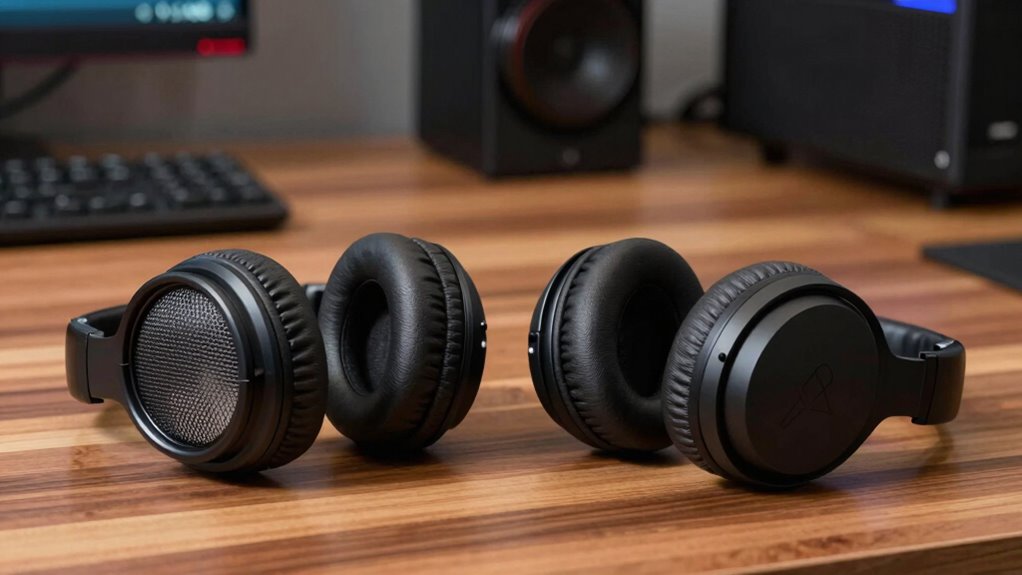
Choosing the right headphones depends heavily on the environment and how you plan to use them. Whether you’re listening to music, gaming, or working, selecting suitable features is key.
- For music lovers, opt for models with reliable wireless connectivity to avoid interruptions and consider durability testing to guarantee they withstand daily use.
- Gamers should prioritize comfort for long sessions and look for headphones with low latency and a secure fit.
- If you need headphones for outdoor activities, choose rugged designs with strong build quality and good battery life.
- Additionally, considering luxury materials and craftsmanship can elevate your experience and ensure durability and style in premium headphones.
- Paying attention to cable failures and their prevention can help maintain consistent audio quality and reduce the need for repairs over time.
Considering these factors helps you match your environment with the right features, guaranteeing an ideal experience without regrets. Focus on durability testing and wireless options to stay connected and resilient in any setting.
Active Noise Cancellation vs. Passive Isolation in Headphones
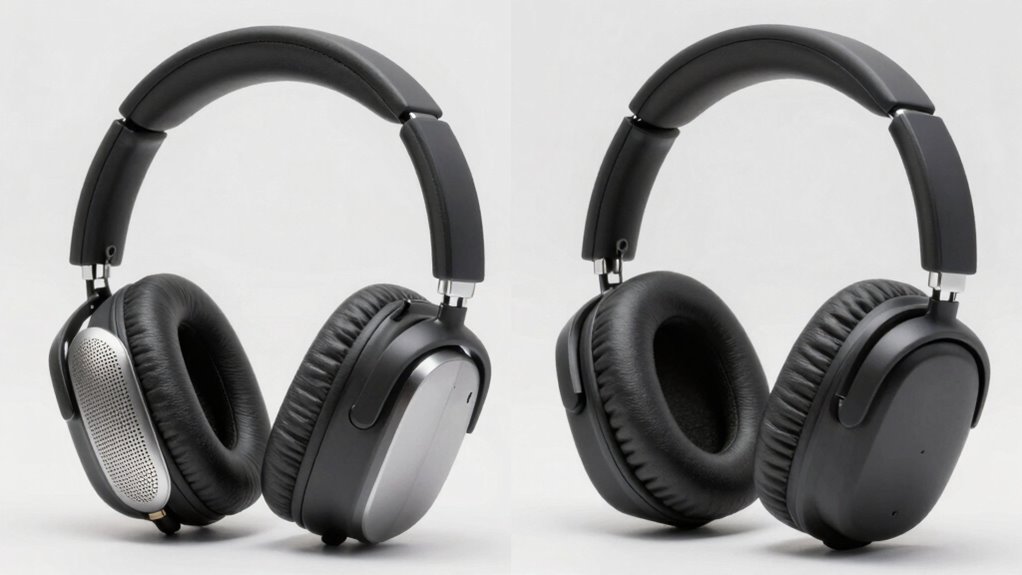
Active noise cancellation (ANC) and passive isolation are two key methods headphones use to block out unwanted sounds. ANC uses microphones and electronics to cancel ambient noise, ideal for noisy environments or travel. Passive isolation relies on the headphone’s material and design to physically block sound, offering better sound quality and no battery drain. If you prefer wireless connectivity, ANC headphones often include it, but be mindful of durability concerns with frequent use. Some headphones with ANC may be less rugged, so check build quality if you plan to use them outdoors. Here’s a quick comparison:
| Feature | Passive Isolation | Active Noise Cancellation |
|---|---|---|
| Power source | None | Battery-powered |
| Effectiveness | Depends on fit | Reduces ambient noise considerably |
| Durability concerns | Less affected | Battery life may diminish over time |
| Sound quality | Pure sound | Can sometimes affect audio fidelity |
| Use case | Quiet environments | Noisy, on-the-go settings |
Additionally, noise reduction effectiveness can vary based on headphone design and user preferences. For optimal performance, understanding these differences can help you select the right headphones for your needs. Many users also find that comfort plays a significant role in their listening experience, especially during extended wear. Moreover, wearability factors like weight and pressure impact long-term comfort and overall satisfaction. To further enhance your listening experience, paying attention to fit and how well the headphones isolate sound can make a noticeable difference.
Which Headphone Style Is Right for You? Tips to Make the Right Choice

When deciding between open-back and closed-back headphones, your environment and listening preferences play a significant role. To choose the right style, consider these tips:
- If you prioritize superior audio fidelity and a natural soundstage, open-back headphones are ideal, especially in quiet settings. However, they tend to be less headphone durable and leak sound.
- For portability, noise isolation, and durability in active environments, closed-back headphones are better, though they might compromise some audio fidelity.
- Think about your listening space: if you need privacy and minimal sound disturbance, closed backs excel. If you want an immersive experience without concern for sound leakage, open-back is the way to go.
- Additionally, understanding the return policies and hours of your preferred retailers can help you make informed purchases and exchanges, ensuring you get the best value and support for your headphone investment.
- Considering the environment where you’ll use your headphones can also impact your choice, as different settings may favor one style over the other. For example, air quality considerations can influence headphone usage, especially in dusty or humid conditions.
- Being aware of the hormetic effects of sound exposure can also guide you in selecting headphones that promote healthier listening habits and protect your hearing health. Moreover, selecting the appropriate headphone design can significantly enhance your overall listening experience and satisfaction.
Frequently Asked Questions
Can Open-Back Headphones Be Used Outdoors Safely?
Open-back headphones aren’t ideal for outdoor use because they lack noise cancellation, letting in ambient sound and exposing your ears to potential hazards. They usually aren’t water-resistant either, so sweat or rain could damage them. If you want to enjoy music outdoors safely, opt for closed-back headphones with good noise cancellation and water resistance. This way, you protect your hearing, avoid distractions, and keep your gear safe from the elements.
Are Closed-Back Headphones Suitable for Professional Mixing?
Yes, closed-back headphones are suitable for professional mixing because they offer excellent sound isolation, allowing you to focus on your mix without external distractions. They also minimize noise leakage, so you won’t disturb others nearby. This makes them ideal in studio environments where clarity and accuracy are critical. Just make certain they fit comfortably and have accurate sound reproduction to get the best results in your mixing process.
How Do Headphone Materials Affect Comfort Over Long Periods?
Think of your headphones as a gentle embrace—material breathability and padding softness are key. If you choose breathable materials, you’ll stay comfortable longer, avoiding sweat and heat buildup, much like a cool breeze on a summer day. Soft padding reduces pressure points, preventing discomfort over extended use. So, opt for materials that balance breathability and softness, ensuring your ears remain comfortable and focused, even during long listening sessions.
Do Headphone Styles Influence Bluetooth Connectivity Quality?
Yes, headphone styles can influence Bluetooth connectivity quality. Wireless interference from nearby devices may cause dropouts, especially if your headphones lack advanced Bluetooth tech. Additionally, the style impacts Bluetooth range; over-ear models often have better range, while smaller earbuds might struggle with obstacles. To guarantee a reliable connection, choose headphones with strong Bluetooth versions and maintain a clear line of sight to minimize interference issues.
Can Headphone Type Impact Ear Health or Cause Discomfort?
Did you know that prolonged headphone use can lead to discomfort or ear health issues? Your ear canal can become irritated or suffer pressure points from tight-fitting headphones. Closed-back styles, while offering better noise isolation, may cause more ear canal pressure, leading to discomfort. Open-back headphones reduce pressure points and allow better airflow, helping you avoid ear fatigue and potential health problems during extended use.
Conclusion
Choosing between open-back and closed-back headphones depends on your needs. Did you know that 65% of audiophiles prefer open-back models for their natural sound? Consider where you’ll use them most—whether for immersive listening or noise isolation. By understanding the differences and matching them to your environment, you’ll avoid regrets. Make an informed choice, and you’ll enjoy your favorite tunes with clarity and comfort every time.