
TL;DR
A GitHub project translates PSP game code into C++ and WebAssembly, then supplies browser-based implementations of PSP system and graphics functions. Its developer reports that God of War: Chains of Olympus and Ghost of Sparta run in browsers, but users must provide their own game data and the project’s performance figures are developer-reported.
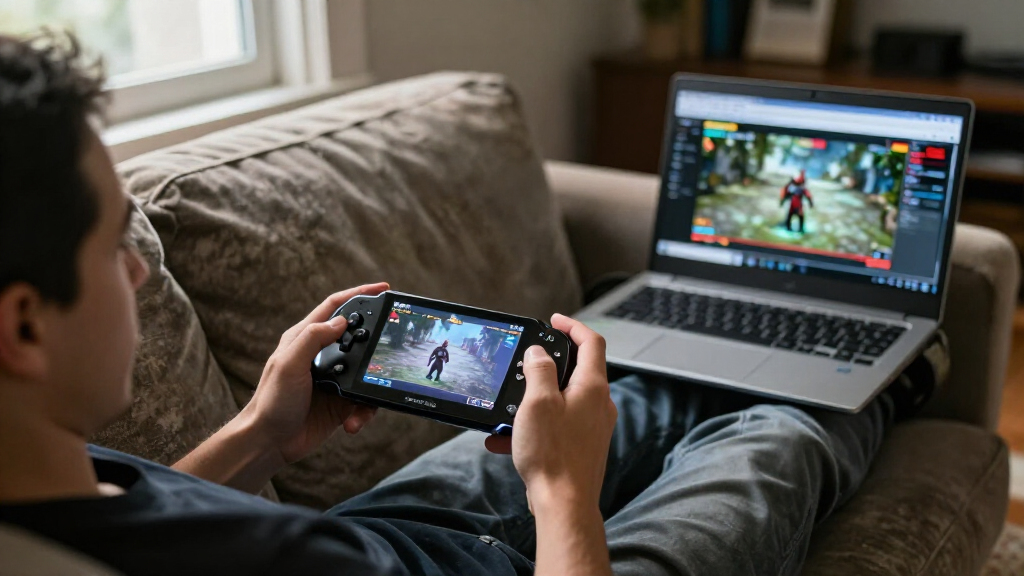
A developer has published a GitHub project that recompiles PSP games into WebAssembly so they can run in a browser without a conventional emulator. The first demonstrations feature God of War: Chains of Olympus and God of War: Ghost of Sparta; the developer says both can play through substantial portions of the games, while users must supply their own game data.

Get the latest gadgets delivered free with Prime
- Fast, free delivery on millions of items
- Prime Video, Amazon Music and more included
- Member-only deals all year
The project translates a game’s decrypted MIPS machine code into C++ ahead of time, compiles that output to WebAssembly and links it to a browser-based implementation of selected PSP functions. That layer handles operating-system tasks such as files, memory, controller input, audio and save data. For graphics, it decodes PSP display lists and sends the resulting work to WebGL2. The repository says game files are streamed using HTTP Range requests, so only the executable is downloaded up front.
According to the project report, Chains of Olympus runs from boot through menus, cutscenes and combat. The developer reports 60 frames per second in scenes measured so far in Chrome and Firefox on a laptop, at resolutions up to four times the PSP’s native 480-by-272 pixels. The report also says it runs on phones with touch controls. Music, dialogue and sound effects work; movies are currently skipped.
The same scripts were used to bring up Ghost of Sparta. Its developer reports 55 to 60 frames per second at three times native resolution, without additional performance work. Getting it to boot required handling a DRM-protected file, adding a small number of system calls and fixing a lighting issue. These results come from the project’s own report; the supplied material does not include independent testing or a detailed device-by-device performance comparison.
A Different Route to Browser Play
The project illustrates an alternative to running a complete console emulator: translate a game’s instructions before it runs, then recreate the system services that the game needs. That approach still requires substantial console-specific software—in this case, code for PSP memory, audio, graphics and operating-system behavior—but it changes how the game code is executed in the browser.
For players and preservation researchers, the practical result is a way to test older games through a web page rather than first installing a desktop emulator. The reported support for desktop and phone browsers also points to a wider range of possible devices. However, this is a developer project, not an official Sony release or a general-purpose service: the repository says it does not include game data, and its demonstrations do not establish compatibility with the full PSP library.
Products Worth Considering

Samsung Odyssey OLED G8 34-Inch Curved Ultra WQHD Gaming Monitor

Jackery Explorer 2000 v2 Portable Power Station, 2042Wh, 2200W

DJI Mini 3 Drone with DJI RC Controller
As an affiliate, we earn on qualifying purchases.
How the PSP Code Reaches WebGL
The source project describes a pipeline based on PSPRecomp, which analyzes a decrypted executable, identifies functions and emits C++ in units corresponding to 16 KiB of guest code. The browser target then runs that code against a modeled PSP register set and memory. A custom host layer provides selected system calls and services, while a graphics component converts the PSP’s display lists into WebGL rendering work.
Performance required changes beyond translating the code. The developer says an early playable build ran at about six frames per second. One major issue was that the game could swap its framebuffer repeatedly without waiting for a display refresh, causing it to draw several frames for each one shown. The project added synchronization intended to limit that wasted work. It also moved graphics processing to a worker thread, matching the PSP’s separation of CPU and graphics work, and adjusted buffer handling after finding browser-specific slowdowns.
Support for the second game exposed additional system behavior. According to the report, Ghost of Sparta checked a small protected file during startup. The project added code to handle the file’s decryption, then addressed a lighting problem that caused a white sky and haze. The material describes these as fixes for that title; it does not say the project now supports every protected PSP game or every graphics effect.
“PSP games running in the browser without an emulator.”
— Project report on GitHub
Compatibility and Performance Limits
The performance figures are reported by the project developer; the supplied material does not provide independent benchmarks, complete testing methodology or results across a broad range of browsers and devices. The statement that scenes measured so far reached 60 frames per second should not be read as a guarantee that every scene, laptop or phone will do so.
The report demonstrates two games, not broad PSP compatibility. It does not specify how much of each title has been tested beyond the described playthrough, whether every feature works, or how the project handles other games’ system calls, graphics techniques and copy-protection requirements. Movies are explicitly skipped in the current version described. The source also does not establish the project’s licensing status or provide a legal assessment of individual users’ game images.
Further Games and Browser Testing
The project description does not set out a release schedule or name another game under development. The next practical test is whether its existing scripts and recompiler can accommodate additional PSP titles without extensive title-specific changes; the report says the second God of War game worked through the same scripts, but also required targeted fixes.
Readers can consult the GitHub repository and its 1-minute-46-second recording for the developer’s demonstrations and technical notes. Until independent testing or broader compatibility results are available, browser performance and game support should be treated as project-reported results, not assurances for every setup.
Key Questions
Does this run the games in a conventional PSP emulator?
The project says it recompiles the PSP’s MIPS code into C++ and WebAssembly and supplies browser implementations of PSP services. It describes the approach as running the games without a conventional emulator, though it still models important parts of PSP hardware and software.
Which God of War games are shown?
The report names God of War: Chains of Olympus and God of War: Ghost of Sparta. It does not establish support for other PSP games.
Do the games run at 60 frames per second?
The developer reports 60 frames per second in the Chains of Olympus scenes measured so far on Chrome and Firefox on a laptop. For Ghost of Sparta, the report gives 55 to 60 frames per second at three times native resolution. These are project-reported figures, not independent benchmark results.
Does the project provide the games?
No. The repository states that game data is not included and says users bring a disc image they own. The supplied material does not provide a legal assessment of how individual users obtain or use game files.
Are all game features working?
Not according to the report: movies are skipped in the version described. The source does not confirm that every scene or feature in either title has been tested or works correctly.
Source: hn