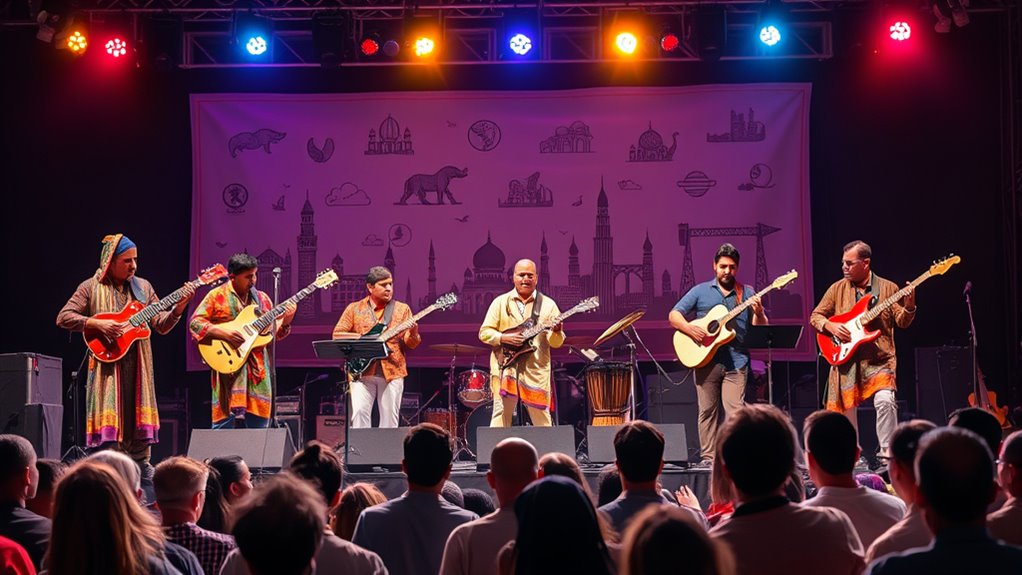

Cross-cultural influences shape global music by blending diverse traditions into vibrant fusion genres. You’ll find sounds that merge rhythms from different regions, breaking traditional boundaries and inspiring creative innovation. Hybrids like reggae, jazz, and hip-hop reflect shared histories, migration, and cultural exchange, fostering understanding and unity. These dynamic styles serve as musical stories of connection, showing how music evolves through cross-cultural collaboration. Exploring this world reveals the rich tapestry of human expression waiting for you to discover more.
Key Takeaways
- Fusion genres like jazz, reggae, and hip-hop showcase the blending of diverse cultural elements into universal music forms.
- Cross-cultural influences reflect historical exchanges, migration, and multicultural urban environments shaping modern music styles.
- Hybrid genres serve as storytelling tools, honoring roots while exploring new sonic landscapes through cultural dialogue.
- Incorporating musical elements from different traditions fosters cross-cultural understanding and appreciation among diverse audiences.
- Music as a universal language exemplifies ongoing cultural exchange, connecting people globally through shared hybrid sounds.
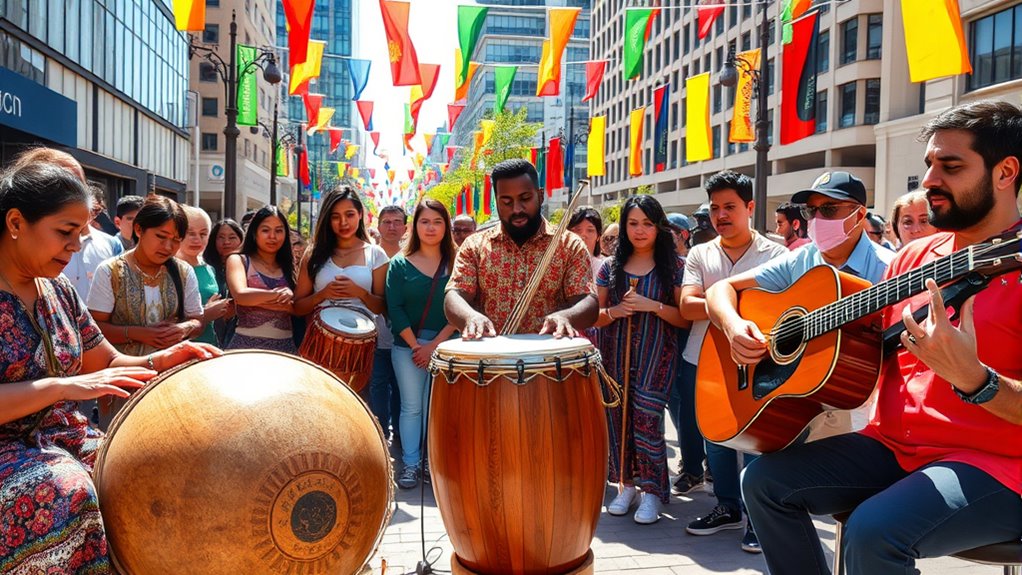
Music has always been a dynamic reflection of cultural exchange, shaping and being shaped by the diverse traditions it encounters. When different musical styles meet, they often create fusion genres—vibrant musical hybrids that blend elements from distinct cultures into something fresh and exciting. These hybrids aren’t just about mixing sounds; they tell stories of connection, migration, and shared history. As you listen, you experience the result of centuries of cultural dialogue, where genres like jazz, reggae, and hip-hop have absorbed influences from around the world, transforming into new forms that resonate globally.
Fusion genres allow artists to break down barriers and challenge traditional boundaries. Imagine a reggae beat infused with African rhythms or a flamenco guitar layered over electronic dance music—these are examples of musical hybrids that push creative limits. You might find yourself drawn into a track because of its unfamiliar yet inviting blend of sounds, sensing the cultural stories woven into each note. This mixing isn’t accidental; it’s a deliberate act of storytelling, a way to honor roots while experimenting with new sonic landscapes. The creation of these hybrids fosters a sense of unity, showing how music can serve as a universal language that bridges different worlds.
Fusion genres break barriers, blending sounds to tell stories and unite cultures through musical innovation.
As you explore these genres, you notice how they reflect broader social and historical exchanges. For instance, the rise of Latin trap combines traditional Latin rhythms with contemporary hip-hop, echoing the experiences of Latin communities worldwide. These musical hybrids often emerge in multicultural urban centers, where diverse populations live side by side, sharing influences and collaborating across cultural lines. They embody a sense of belonging and innovation, illustrating how music adapts and evolves through cross-cultural interactions. When you hear these hybrid sounds, you’re witnessing the ongoing process of cultural dialogue—an exchange that enriches musical expression and connects people across borders.
In addition, the incorporation of musical elements from various cultures demonstrates how hybrid genres can serve as a bridge for understanding and appreciation among diverse audiences. The beauty of fusion genres and musical hybrids lies in their ability to transcend geographic and cultural boundaries. They invite you to experience a world of sounds that are both familiar and novel, reminding you that music is a living, breathing testament to human interconnectedness. By embracing these cross-cultural influences, artists continue to redefine what music can be, making it a powerful tool for understanding and celebrating diversity. So, as you listen to these hybrids, remember that they are more than just innovative sounds—they are a reflection of our shared history and collective future, woven together through the universal language of music.
Frequently Asked Questions
How Do Cultural Exchanges Shape Emerging Musical Genres?
Cultural exchanges shape emerging musical genres by blending diverse musical elements, creating fresh sounds. You’ll notice artists incorporate cultural symbolism, reflecting shared histories and values, which enriches their artistic identity. This fusion sparks innovation, allowing genres to evolve dynamically. As you explore these genres, you see how cultural exchanges foster creativity and unity, making music a powerful tool for expressing global interconnectedness and celebrating diverse heritages.
What Role Do Traditional Instruments Play in Modern Fusion Music?
Traditional instruments play a essential role in modern fusion music by enabling instrument integration that blends diverse sounds seamlessly. You’ll notice these instruments often carry cultural symbolism, adding depth and authenticity to the music. When you incorporate traditional instruments into contemporary compositions, you honor cultural roots while creating innovative soundscapes, fostering a richer, more meaningful musical experience that resonates across different audiences.
How Do Language Barriers Influence Cross-Cultural Musical Collaborations?
Language barriers can substantially impact cross-cultural musical collaborations by causing linguistic misunderstandings and lyric translation challenges. You might find it difficult to fully express your ideas or emotions when translating lyrics, leading to misinterpretations or a loss of cultural nuance. These obstacles require patience, collaboration, and creative solutions to guarantee the music authentically reflects both cultures, ultimately enriching the fusion and making the collaboration more meaningful.
What Impact Does Globalization Have on Local Music Authenticity?
Globalization challenges music authenticity by blending diverse styles, which can dilute traditional sounds. You might notice local music losing its unique cultural identity as artists adopt global trends. However, it also offers opportunities for cultural preservation through exposure and collaboration. You can support authentic music by seeking out and promoting those who maintain traditional practices, ensuring that cultural richness is preserved amidst the global exchange of musical ideas.
How Do Different Cultural Perceptions Affect Music Reception Worldwide?
You know what they say, “Don’t judge a book by its cover.” Cultural perceptions shape how you receive music worldwide, often influenced by stereotypes and your audience expectations. These perceptions can enhance or hinder appreciation, as you may interpret melodies differently based on cultural context. Recognizing this helps you stay open-minded, allowing diverse musical styles to resonate authentically, regardless of the cultural lens through which you initially view them.
Conclusion
As you explore the rich tapestry of global music, you realize that cultures intertwine like threads in a vibrant fabric. These cross-cultural influences breathe new life into melodies, creating a fusion that’s both exciting and authentic. Keep an open mind and embrace the diversity—you never know what new sounds might come your way. Remember, music is a two-way street; the more you listen and learn, the more you’ll see that it truly brings people together.