
TL;DR
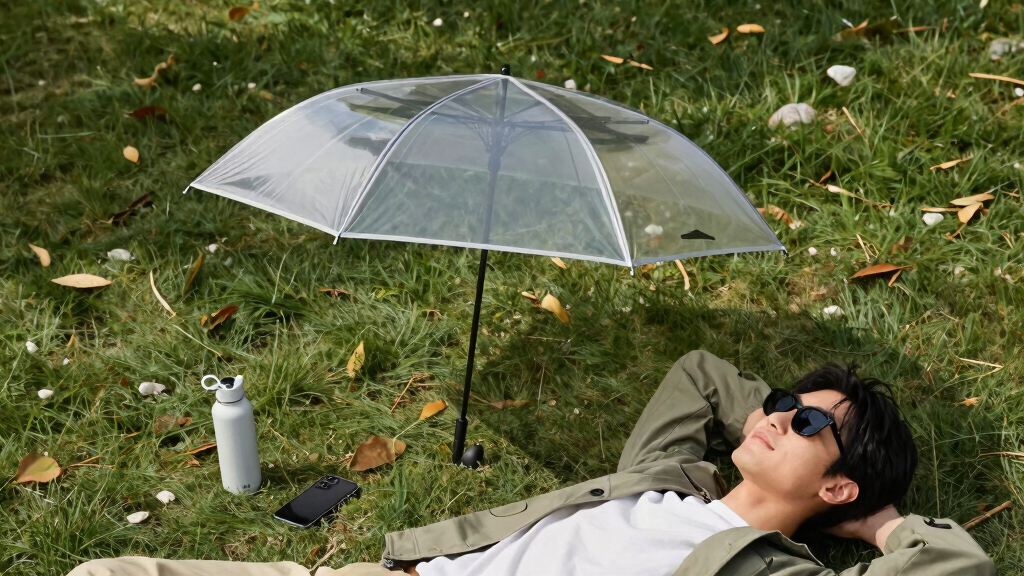
A prototype autonomous flying umbrella has been demonstrated that can track and follow users to shield them from rain and sunlight. The device combines drone technology with weather protection, representing a significant innovation in personal mobility and weather adaptation.
A new autonomous flying umbrella has been introduced that can follow users to shield them from rain and sunlight, marking a significant development in personal weather protection technology. The device, demonstrated by a tech startup, uses drone-like flight capabilities combined with weather shielding features, aiming to enhance mobility and convenience in various weather conditions.
The prototype, developed by a startup named AeroShade, employs sensors and GPS to autonomously track user movement and maintain a position overhead. The umbrella’s design integrates lightweight drone components with a weather-resistant canopy, allowing it to follow users outdoors without manual intervention. During a recent demonstration, the device successfully followed a person across different terrains, adjusting its position to provide continuous protection from rain and sunlight. AeroShade officials confirmed that the system uses real-time data processing and obstacle avoidance to navigate safely in complex environments. The device is still in testing phases, with commercial deployment expected within the next year, pending regulatory approvals and further refinements.Potential Impact on Personal Weather Protection
This innovation could transform how individuals manage weather exposure, especially in urban environments or for outdoor workers. By automating weather shielding, the autonomous umbrella could reduce inconvenience, improve comfort, and potentially decrease exposure-related health risks. The technology also opens pathways for integrating autonomous weather protection with other wearable or mobility devices, advancing the field of personal robotics and smart environments. However, questions about safety, regulation, and practical usability remain as the technology moves toward commercial availability.

Repel Windproof Travel Umbrella – Compact & Withstands Winds up to 100MPH, Strongest Premium Auto Folding Umbrella for Rain and Sun – Durable, Light & Portable for Women & Men, Fits Backpack & Cars
- Windproof Design: Withstands winds up to 100MPH
- Automatic Operation: One-touch open and close
- Compact & Lightweight: Folds to 11 inches, under 1 lb
As an affiliate, we earn on qualifying purchases.
As an affiliate, we earn on qualifying purchases.
Autonomous personal devices have been evolving rapidly, with drones and robotic assistants entering various markets. The concept of an autonomous umbrella is a logical extension of this trend, combining mobility, weather adaptation, and automation. Previous prototypes focused on static or manually operated umbrellas, but the recent demonstration by AeroShade marks a shift toward fully autonomous, follow-me weather protection systems. The project aligns with broader efforts in smart city and wearable tech development, aiming to enhance outdoor experiences and safety. The technology’s roots trace back to advances in drone navigation, obstacle avoidance, and sensor integration over the past few years.
“Our autonomous umbrella represents a step forward in personal weather protection, combining robotics with everyday convenience.”
— AeroShade CEO, Lisa Chen
Unanswered Questions About Safety and Practical Use
It is still unclear how the device will perform in complex or crowded environments, or how it will handle obstacles and unpredictable weather changes. Regulatory approval processes for autonomous flying devices are ongoing, and safety standards specific to weather-shielding drones have yet to be established. Details about battery life, cost, and user interface are also still emerging, and the transition from prototype to commercial product remains uncertain.
Upcoming Tests and Regulatory Approvals
The developers plan to conduct larger-scale outdoor tests in various weather conditions over the next six months. They aim to refine obstacle avoidance, battery efficiency, and user controls. Concurrently, they are engaging with regulatory bodies to ensure compliance with aviation and safety standards. A commercial launch could occur within 12-18 months if testing and approval processes proceed smoothly.
Key Questions
How does the autonomous umbrella follow the user?
The device uses GPS and sensors to track the user’s position and movements, adjusting its flight path to stay overhead and provide continuous coverage.
Can it operate in crowded or urban environments?
While initial demonstrations have been promising, its performance in crowded areas is still under testing, and safety protocols are being developed to prevent collisions.
How long can the umbrella operate on a single charge?
Battery life details are still being finalized, but current prototypes aim for at least 30-45 minutes of continuous operation.
Will this technology be available for consumers soon?
The developers plan to conduct further testing over the next year, with commercial availability possibly within 12-18 months, subject to regulatory approval.
What are the safety concerns associated with the device?
Potential concerns include obstacle detection accuracy, safe flight in complex environments, and compliance with aviation regulations. These are being addressed in ongoing testing.
Source: hn