TL;DR
Canon introduced a prototype portable mixed reality device, high-efficiency AR waveguides, and a new XR collaboration platform at AWE. These developments indicate the company’s focus on enterprise XR solutions and potential product launches.
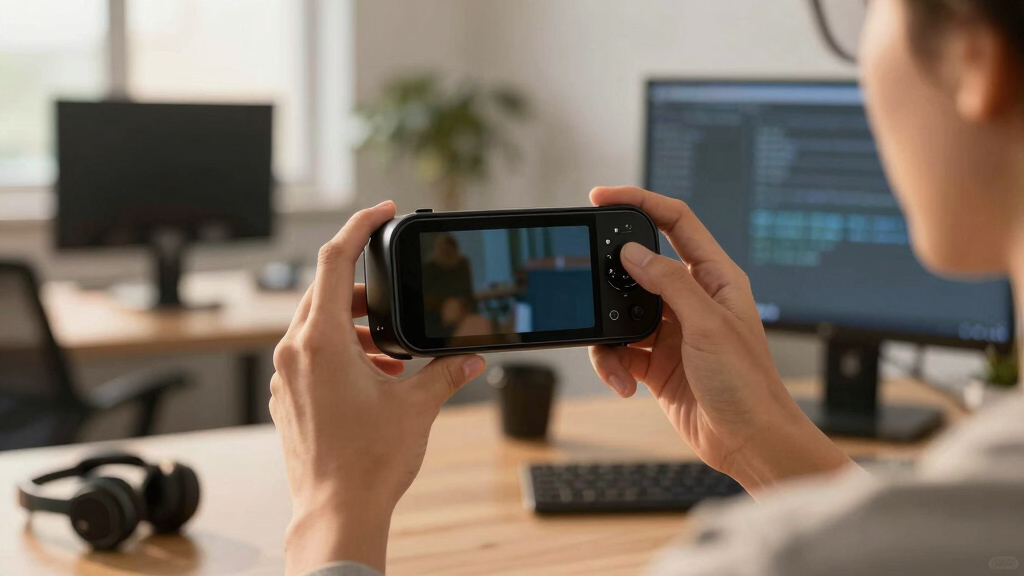
Canon unveiled a prototype of a pocket-sized, high-image-quality mixed reality device at AWE, signaling its interest in expanding into portable XR hardware for enterprise use. The device is currently a concept under development, with no immediate availability but active efforts to find partners for potential commercialization.
The prototype, described as a “Pocket-Size, High-Image-Quality MR Device,” is tethered and designed for portability, aiming to deliver high-definition visuals and seamless compatibility with XR applications. Canon has not released detailed specifications but indicates the device is intended for enterprise deployment, with a focus on high visual fidelity.
In addition to the MR device, Canon presented a new high-efficiency waveguide for AR glasses, capable of supporting a 30-degree field-of-view, with optical coupling efficiency exceeding 15,000 nits per lumen and transmittance over 85%. The waveguides are shown in configurations using microLED and microOLED displays, suggesting applications in lightweight AR glasses rather than immersive headsets.
Furthermore, Canon announced the upcoming release of MREAL Collaborator, an XR software platform aimed at manufacturing designers. The software allows users without advanced 3D graphics expertise to manipulate spatial data easily and supports OpenXR, facilitating cross-device and remote collaboration. A free trial is expected to launch in early July.
Potential Impact on Enterprise XR Market
These developments demonstrate Canon’s strategic push into portable and lightweight XR hardware and software tailored for enterprise use. The portable MR device could offer a new level of mobility for industrial applications, training, or remote collaboration, while the advanced waveguides and software enhance the usability and integration of AR solutions. If brought to market, these innovations could strengthen Canon’s position in the growing XR enterprise sector, especially outside Japan where handheld devices are gaining popularity.
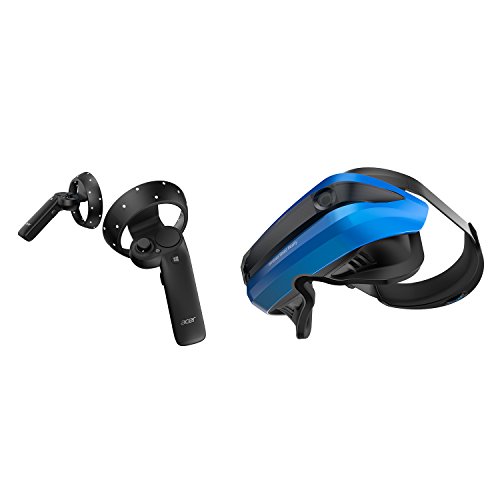
Acer (AH101-D8EY) Windows Mixed Reality Headset Model VD.R05AP.002
- Display Size: 2.89" x 2 & Resolution:…
- Refresh Rate: 90Hz – Using HDMI 2.0,…
- Tracking Sensors: Gyroscope, Accelerometer & Magnetometer
As an affiliate, we earn on qualifying purchases.
As an affiliate, we earn on qualifying purchases.
Canon’s XR Development and Industry Position
Canon has been active in the XR space for several years, notably developing multiple generations of MREAL mixed reality headsets aimed at enterprise clients. The company’s recent focus on lightweight, portable devices aligns with broader industry trends toward mobile AR and mixed reality solutions for industrial, manufacturing, and design applications. The AWE showcase marks a significant step in Canon’s efforts to translate research prototypes into commercial products, with potential for broader adoption outside Japan.
“Canon’s new MR device prototype indicates a strategic move toward portable XR hardware for enterprise markets.”
— an anonymous researcher
Unconfirmed Details About Device Specifications
Specific technical specifications of the prototype device, such as resolution, weight, and battery life, are not yet available. It is also unclear when the device might be commercially released or which markets it will target first.
Next Steps Toward Commercialization and Industry Adoption
Canon is expected to continue development of the prototype, seek partners, and potentially demonstrate the device at future industry events. The release of the MREAL Collaborator software trial in July will also provide insight into Canon’s broader XR ecosystem. Monitoring these developments will clarify the company’s market strategy and product timelines in the coming months.
Key Questions
When might the Canon handheld MR device be available for purchase?
There is no confirmed timeline yet; the device is still in development, and Canon is seeking partners to bring it to market.
What are the main features of Canon’s new AR waveguides?
They support a 30-degree field-of-view, have an optical coupling efficiency exceeding 15,000 nits per lumen, and over 85% transmittance, suitable for lightweight AR glasses.
How does the new XR collaboration software benefit manufacturers?
The software allows users without advanced 3D graphics skills to manipulate spatial data easily and supports cross-device sharing via OpenXR, facilitating remote collaboration.
Will Canon’s innovations be available outside Japan?
It is not yet confirmed, but the demonstration at AWE suggests the company may target international markets in the future.
Source: Road to VR