
TL;DR

Get the latest gadgets delivered free — and shop member deals
- Fast, free delivery on millions of items
- Access to Prime Big Deal Days deals on October 6–7
- Prime Video, Amazon Music and more included
Virtual reality is being adopted by construction and urban planning firms to design, visualize, and simulate future developments. This shift aims to improve accuracy, collaboration, and efficiency, although some challenges remain. The development signals a significant change in how infrastructure projects are conceived and executed.
Construction and urban planning firms are increasingly deploying virtual reality (VR) tools to design, visualize, and simulate future projects, marking a significant shift in how infrastructure developments are conceived and managed. This adoption aims to improve accuracy, stakeholder engagement, and project efficiency, making VR a key technology in building the future.
Several industry leaders and technology providers have announced new VR platforms tailored specifically for construction and urban planning. These platforms allow users to walk through virtual models of buildings, neighborhoods, and infrastructure projects before physical work begins, enabling better decision-making and reducing errors.
According to recent reports, companies are using VR for tasks such as spatial planning, interior design, and safety training. The technology also facilitates collaboration among architects, engineers, contractors, and clients, who can all explore a project in a shared virtual environment regardless of their physical location.
While the benefits are clear—such as enhanced visualization, early detection of design flaws, and improved stakeholder communication—challenges remain. For more on VR applications, see inside VR development. These include high costs of VR hardware and software, the need for specialized training, and questions about the accuracy of virtual models compared to real-world conditions.
Building The Future Through Virtual Reality
Construction and urban planning teams are moving projects into immersive environments before work begins—making complex designs easier to understand, test, coordinate, and improve.
Where immersion changes the work
VR turns technical models into navigable experiences. Architects, engineers, contractors, clients, and public stakeholders can inspect the same proposal from a human-scale perspective.
Spatial Planning
Teams test circulation, proportions, sightlines, access, and the relationship between spaces before construction begins.
Immersive Review
Stakeholders walk through buildings, neighborhoods, and infrastructure proposals instead of interpreting drawings alone.
Shared Decisions
Distributed specialists meet inside a common virtual model, creating faster feedback and clearer design alignment.
Safety Training
Workers rehearse hazardous tasks and site procedures in simulated conditions without exposure to physical risk.
From digital model to informed action
The value of VR is not the headset alone. It comes from connecting design information, human experience, collaborative review, and earlier intervention.
Model
BIM, planning, and design data form the virtual environment.
Enter
Users experience the proposal at realistic scale and perspective.
Inspect
Teams identify clashes, usability issues, and unclear decisions.
Collaborate
Specialists and stakeholders review changes in a shared space.
Refine
Design updates happen before errors become physical and costly.
A new layer—not a total replacement
Traditional plans and physical models remain essential records. VR complements them by adding presence, scale, and shared exploration to the decision-making process.
| Capability | 2D Plans | Physical Models | VR Environment |
|---|---|---|---|
| Human-scale walkthrough | ✗Limited | ~Indirect | ✓Immersive |
| Rapid design iteration | ~Possible | ✗Slow | ✓Immediate |
| Remote collaboration | ~Document-based | ✗Location-bound | ✓Shared space |
| Technical documentation | ✓Strong | ~Supporting | ~Complementary |
| Stakeholder comprehension | ~Expert-led | ✓Accessible | ✓Highly intuitive |
What remains unresolved?
The next construction interface
Industry adoption is likely to grow as systems become more affordable, realistic, interoperable, and supported by larger project case studies.
Better Hardware
Lighter headsets, improved displays, and lower costs can remove practical barriers for everyday project use.
More Case Studies
Expanded pilots will clarify best practices, measurable returns, and the project types that benefit most.
VR + AR + AI
Immersive review may combine with augmented reality and AI-driven design to connect planning with delivery.
Build confidence before building concrete.
Virtual reality is becoming a practical decision layer for the built environment. Its greatest promise lies in revealing problems earlier, bringing more voices into the design process, and turning technical complexity into shared understanding. It will complement established methods while reshaping how future cities and infrastructure are conceived.
Why Virtual Reality Is Transforming Construction and Planning
The integration of virtual reality into construction and urban planning signifies a major technological shift that can lead to more efficient, accurate, and collaborative project workflows. It has the potential to reduce costs, minimize delays, and improve stakeholder understanding of complex projects, ultimately shaping how cities and infrastructure are built in the future.
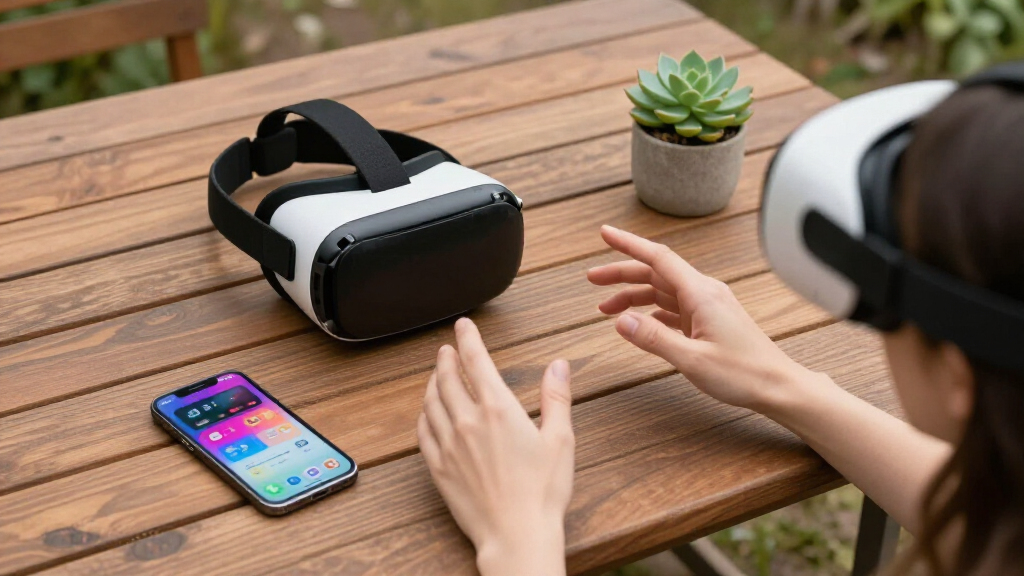
VR headsets for construction and urban planning
As an affiliate, we earn on qualifying purchases.
As an affiliate, we earn on qualifying purchases.
Recent Advances and Industry Adoption of VR in Building Design
Over the past few years, VR technology has transitioned from niche applications to mainstream industry tools. Major construction firms and urban planning agencies have begun investing heavily in VR platforms, driven by the need for better visualization and stakeholder engagement. Early pilots and projects have demonstrated significant improvements in project outcomes, encouraging wider adoption.
Historically, design visualization relied on 2D plans and physical models, which limited understanding and collaboration. The advent of VR offers a more immersive experience, allowing stakeholders to virtually ‘walk through’ projects before construction begins. This evolution aligns with broader trends toward digital twins and Building Information Modeling (BIM).
Despite the promising developments, some industry experts caution that VR is still maturing, with issues related to hardware costs, user training, and model accuracy remaining to be fully addressed.
Unresolved Challenges and Questions About VR Integration
It is still unclear how quickly VR will become a standard industry tool across all levels of construction and urban planning. Questions remain about the long-term cost-effectiveness, the accuracy of virtual models compared to real-world conditions, and the potential need for ongoing technological upgrades. Additionally, the impact of VR on project timelines and workforce training is still being evaluated.
Future Developments and Industry Trends in VR for Building
Industry experts expect continued technological improvements, including more affordable hardware and more realistic virtual environments. Pilot projects and case studies are likely to expand, providing further insights into best practices and ROI. Regulatory frameworks and standards for VR in construction may also emerge, helping to facilitate broader adoption.
Research into integrating VR with other digital tools, such as augmented reality and AI-driven design, is expected to accelerate, potentially transforming how future cities and infrastructure are planned and built.
Key Questions
How is virtual reality currently used in construction projects?
VR is used for visualizing building designs, spatial planning, safety training, and stakeholder presentations, allowing for immersive walkthroughs before physical construction begins.
What are the main benefits of adopting VR in urban planning?
VR improves visualization, enhances stakeholder engagement, helps detect design flaws early, and can streamline decision-making processes, reducing costs and delays.
What challenges does VR face in the construction industry?
High hardware and software costs, the need for specialized training, model accuracy concerns, and integration with existing workflows are key challenges that need addressing.
Will VR replace traditional design methods entirely?
While VR is becoming a valuable tool, it is likely to complement rather than replace traditional methods, serving as an additional layer of visualization and collaboration.
What is the timeline for wider VR adoption in construction?
Experts suggest that adoption will accelerate over the next 5 to 10 years as technology becomes more affordable and proven through larger projects.
Source: rss
Fall Picks
fall essentials
As an affiliate, we earn on qualifying purchases.