
TL;DR

Get the latest gadgets delivered free — and shop member deals
- Fast, free delivery on millions of items
- Access to Prime Big Deal Days deals on October 6–7
- Prime Video, Amazon Music and more included
Meta has launched new smart glasses aimed at enhancing virtual reality experiences. While they offer innovative features, concerns about user privacy and data security are mounting. Meta’s facial recognition on smart glasses raises questions about privacy. The development prompts questions about the balance between technological advancement and privacy protection.
Meta’s new smart glasses have been released to the market, offering advanced features intended to enhance virtual reality experiences. While the company claims these devices will revolutionize how users interact with digital environments, they also face criticism over potential privacy risks, sparking a broader debate about data security and user rights.
The smart glasses, officially launched in April 2024, incorporate sensors and cameras capable of capturing high-resolution video, audio, and environmental data. Learn more about AI smart glasses. Meta states that the devices are designed to improve user immersion and facilitate seamless integration with social media and other digital platforms.
However, privacy advocates and some experts have expressed concern that such extensive data collection could lead to misuse or unauthorized surveillance. The devices are capable of recording and transmitting data in real-time, raising questions about how user information is stored, protected, and potentially shared with third parties.
Meta has responded by emphasizing that user privacy settings will be robust and that data collection will comply with existing regulations. Nonetheless, critics argue that the sheer volume of data captured by these glasses presents significant security challenges.
Are Meta’s Smart Glasses Revolutionizing VR—or Endangering Your Privacy?
The promise: cameras, sensors and connected intelligence that make digital experiences feel effortless. The tension: a wearable device that can continuously capture people, places, voices and context in real time.
A computer at eye level
The glasses move digital interaction out of a handheld screen and into everyday surroundings. That can make connected experiences more immediate—but also makes collection less visible to users and bystanders.
High-resolution capture
Integrated cameras can record the wearer’s field of view, creating material for hands-free communication, assistance and social sharing.
Environmental sensing
Sensors can interpret surroundings and support digital overlays or contextual assistance that responds to the physical world.
Instant connectivity
Real-time transmission and platform integration reduce friction between capturing an experience, processing it and sharing it.
The same feature, two outcomes
Nearly every convenience has a corresponding data implication. The issue is not simply whether data is captured, but who controls it, how long it persists and what additional inferences can be drawn.
| Smart-glasses function | User-facing value | Privacy exposure | What protection requires |
|---|---|---|---|
| Always-available camera | +Hands-free documentation | Recording people without meaningful awareness | Visible signals, limited defaults and bystander safeguards |
| Microphone and audio | +Voice control and communication | Incidental capture of private conversations | Clear activation states and local processing where possible |
| Environmental data | +Context-aware digital assistance | Location, routine and relationship inference | Data minimization, short retention and purpose limits |
| Facial recognition | ~Potential identity-aware features | Identification, profiling and surveillance risks | Strict opt-in rules, legal oversight and transparent controls |
| Social integration | +Fast publishing and live sharing | Expanded access across services and third parties | Granular permissions and auditable sharing disclosures |
How a glance becomes data
Risk accumulates across the full information lifecycle. A privacy switch at the point of capture matters, but it cannot replace controls governing transfer, analysis, retention and reuse.
Capture
Cameras, microphones and sensors observe the surrounding environment.
Transmit
Recorded signals may move to a phone, platform or remote service.
Analyze
Software can classify scenes, speech, objects, identities or behavior.
Store
Information may persist beyond the moment in which it was collected.
Share
Permissions and policies determine whether others can access or reuse it.
Promise is clearer than protection
The report describes strong product capabilities and broad privacy assurances, while leaving critical operational questions unresolved. These bars represent the relative clarity of claims in the supplied material—not measured product scores.
Clarity of the current picture
What consumers should ask
The decisive questions concern defaults, visibility and accountability. “Compliant with regulations” is a baseline claim; trustworthy wearables require users to understand and control what happens.
How do the glasses enhance immersive experiences?
Sensors, cameras and connected processing can support contextual interactions, social features and real-time capture without requiring the wearer to hold another device.
What is the primary privacy concern?
Persistent, high-context collection can expose video, audio, location and environmental information—and may affect people who never chose to use the device.
Has Meta offered security assurances?
Meta says privacy settings will be robust and data practices will follow existing regulations. Critics contend that clearer operational detail and independent scrutiny are still needed.
Will regulation change?
Further scrutiny is expected. Possible focus areas include biometric identification, recording indicators, third-party access, retention periods and bystander consent.
What happens next?
Adoption, real-world testing and regulatory review will shape the outcome. The supplied report references a broader rollout expected after the initial 2024 availability, while the practical privacy framework remains unsettled.
The revolution and the risk are the same mechanism.
The cameras, sensors and continuous connectivity that make smart glasses useful are also what make them sensitive. The real question is not innovation versus privacy—it is whether privacy is engineered into the innovation.
Before adoption, consumers should inspect recording indicators, cloud-processing rules, retention controls, biometric settings and third-party permissions. Regulators, meanwhile, must decide whether rules designed for phones and websites are sufficient for devices that see what their wearers see.
Implications for User Privacy and VR Innovation
This development matters because it highlights the tension between technological innovation and privacy rights. If widely adopted, Meta’s smart glasses could set new standards for augmented and virtual reality, but they also risk normalizing pervasive data collection. The debate impacts consumers, regulators, and the tech industry, as it questions how privacy protections can keep pace with rapid advancements.
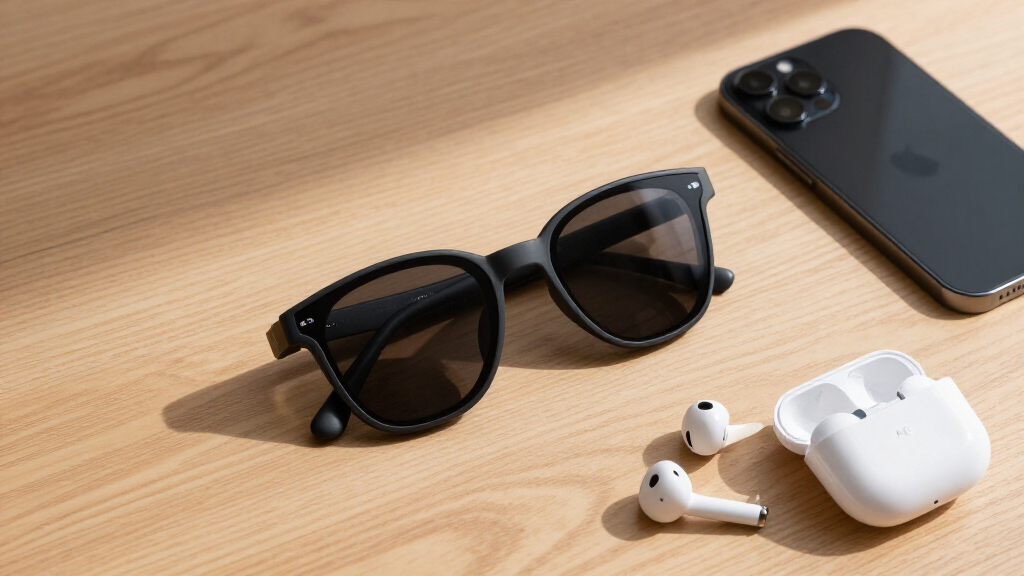
Meta smart glasses with privacy features
As an affiliate, we earn on qualifying purchases.
As an affiliate, we earn on qualifying purchases.
Meta’s Smart Glasses and the Evolving Privacy Debate
Meta has been investing heavily in virtual and augmented reality technologies, with previous products like Oculus VR headsets. The introduction of these smart glasses marks a new phase aimed at integrating AR capabilities into everyday life. Privacy concerns are not new to Meta, which has faced scrutiny over data practices in the past, but the wearable nature of these devices intensifies the debate about surveillance and consent.
Past incidents involving data misuse and privacy breaches have heightened public awareness, making this latest product launch a focal point for ongoing discussions about regulation and user rights in the digital age.
“The capabilities of these glasses to record and transmit environmental data are unprecedented, raising serious privacy questions.”
— an anonymous researcher
Unclear Aspects of Privacy Protections and Data Use
It is not yet clear how Meta will enforce privacy controls, what data will be shared with third parties, or how user consent will be managed in practice. Regulatory responses and user acceptance remain uncertain as the technology rolls out more broadly.
Next Steps in Regulation and User Adoption
Regulators are expected to scrutinize Meta’s privacy policies and possibly introduce new regulations governing wearable data collection. Meanwhile, user feedback and real-world testing will influence how widely these glasses are adopted and how privacy concerns are addressed moving forward.
Key Questions
How do Meta’s smart glasses enhance virtual reality experiences?
The glasses incorporate sensors and cameras that enable immersive AR interactions, seamless social media integration, and real-time environmental data capture, aiming to improve user engagement in virtual spaces.
What are the main privacy concerns associated with these glasses?
The primary concerns involve extensive data collection, including video, audio, and environmental information, which could be misused or lead to unauthorized surveillance if not properly protected.
Has Meta provided assurances about data security?
Meta states that privacy settings will be robust and compliant with regulations, but critics argue that the device’s capabilities pose inherent risks that require more transparency and regulation.
Will regulations be introduced to control wearable device data?
Regulators are expected to review and potentially strengthen rules on data collection from wearable devices, but specific measures are still under discussion.
When will the wider public have access to these smart glasses?
The glasses are currently available to select users, with broader rollout expected later in 2024, pending regulatory review and user feedback.
Source: bluesky
Fall Picks
fall essentials
As an affiliate, we earn on qualifying purchases.