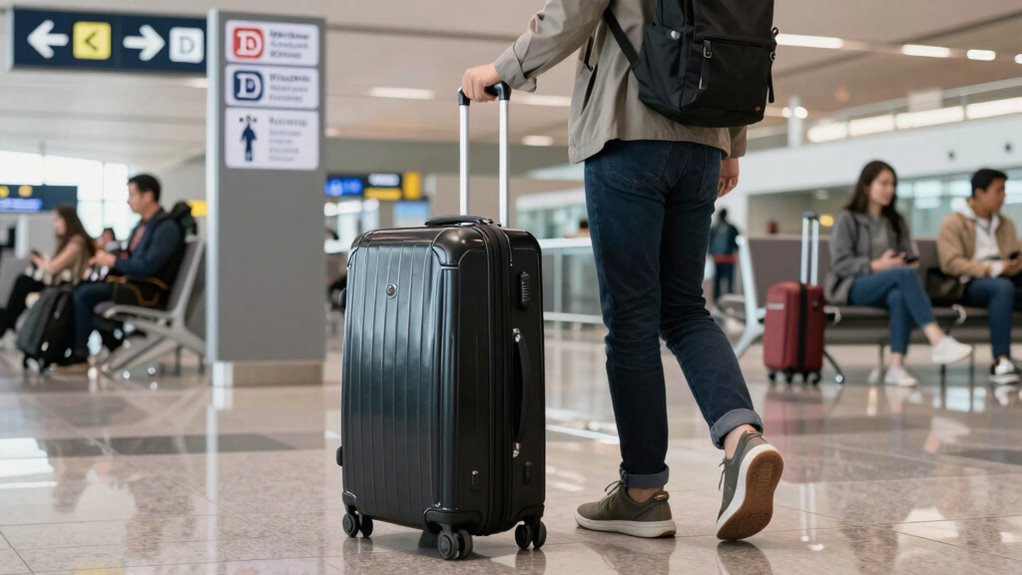

To avoid surprise gate checks, make certain your carry-on bag meets your airline’s size restrictions, usually around 22″ x 14″ x 9″, but check their website first. Measure your bag to confirm it fits and avoid extra fees. Also, pack liquids in containers of 3.4 ounces or less, all inside a single quart-sized bag, to pass through TSA quickly. Staying organized and informed helps guarantee a smooth trip from the start. Keep reading for detailed tips.

Get the latest gadgets delivered free with Prime
- Fast, free delivery on millions of items
- Prime Video, Amazon Music and more included
- Member-only deals all year
Key Takeaways
- Always measure your carry-on bag with a tape measure to ensure it complies with airline size restrictions before arriving at the airport.
- Check your airline’s specific carry-on size limits on their website, as they can vary between carriers.
- Avoid packing liquids over 3.4 ounces and ensure all are in a single quart-sized clear plastic bag for TSA compliance.
- Weigh your bag beforehand to stay within airline weight limits and prevent last-minute repacking or fees.
- Organize liquids and essentials efficiently to streamline security screening and reduce the risk of delays or gate checks.
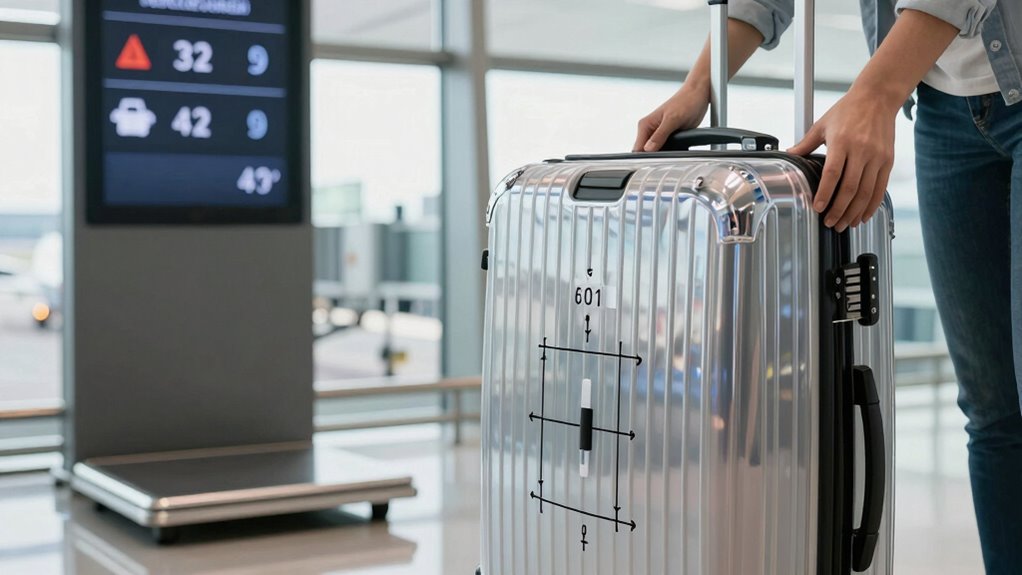
Traveling light means knowing the carry-on size rules that airlines enforce. It’s essential to understand the specific airline restrictions before packing so you can avoid surprises at the gate. Each airline sets its own size and weight limits for carry-on bags, and these can vary significantly from one carrier to another. Typically, most airlines allow a bag roughly 22 inches by 14 inches by 9 inches, including wheels and handles, but double-checking the airline’s website is always a smart move. Ignoring these restrictions can result in having your bag checked at the gate, which often comes with additional fees, delays, or the inconvenience of repacking on the fly.
Knowing airline carry-on size limits helps avoid gate checks and travel delays. Always double-check your airline’s specific regulations.
Beyond airline restrictions, you also need to be aware of TSA regulations, especially regarding what you can carry in your carry-on. The Transportation Security Administration sets rules on liquids, gels, and aerosols, limiting containers to 3.4 ounces (100 milliliters) and requiring them to fit inside a single quart-sized clear plastic bag. These rules are designed to speed up security screening, but they also influence how much you can pack without hassle. If you pack liquids exceeding the limit, TSA agents will ask you to discard them or place them in checked luggage. Knowing these regulations helps you pack efficiently and avoid delays at security checkpoints.
To ensure your carry-on meets both airline restrictions and TSA regulations, start by measuring your bag before heading to the airport. Use a tape measure to verify it fits within the size limits, including wheels and handles. Remember that the weight of your bag can also be a factor—some airlines impose weight limits, typically around 15 to 22 pounds. Pack smartly by choosing versatile clothing and minimizing unnecessary items, so you stay within the weight restrictions without sacrificing essentials. Additionally, being aware of carry-on sizing rules can help you avoid last-minute surprises at the gate. Planning your packing based on these rules can also help you create a more efficient packing strategy. Being familiar with airline restrictions can further streamline your packing process and reduce stress during your trip. Also, staying organized with your liquids and gels can prevent delays and make security checks more straightforward.
A good way to stay organized is to prepare your liquids early, making sure they are in a compliant bag before arriving at security. This can save you time and prevent scrambling during the screening process. Being organized and aware of both airline restrictions and TSA regulations not only helps you avoid surprise gate checks but also keeps your travel experience smooth and stress-free. By staying informed and prepared, you can breeze through security and boarding, ensuring your trip starts on a positive note.
As an affiliate, we earn on qualifying purchases.
Frequently Asked Questions
Do Carry-On Size Restrictions Vary Between Airlines?
Yes, carry-on size restrictions vary between airlines. You need to check each airline’s policies because baggage regulations differ, and what’s acceptable on one might be too large for another. Always review airline policies before packing to avoid surprise gate checks. By understanding specific size limits, you can pack efficiently, stay within regulations, and avoid delays or extra fees at the gate.
Can I Bring a Personal Item and a Carry-On Bag?
Yes, you can bring a personal item and a carry-on bag. Just follow personal item guidelines, which usually include a purse, laptop bag, or small backpack, and make sure your carry-on bag essentials fit within airline size restrictions. Keep in mind, some airlines charge for carry-ons or limit the number of items. To avoid surprise gate checks, measure your bags beforehand, and pack smartly, prioritizing what you’ll need during your flight.
Are There Weight Limits for Carry-On Luggage?
Think of luggage weight like a delicate balance beam—you don’t want to tip it over. Most airlines have strict policies, typically capping carry-on luggage weight around 15-22 pounds. Exceeding airline policies can turn your smooth journey into a surprise gate check, causing delays and extra fees. To stay on the safe side, weigh your luggage beforehand, and remember, every airline’s rules differ, so check theirs before packing.
What Are the Best Ways to Measure Carry-On Dimensions?
To measure your carry-on dimensions accurately, use a measuring tape to check length, width, and height. Make sure your luggage fits within airline size limits. Additionally, use luggage scales to weigh your bag, ensuring it doesn’t exceed weight restrictions. Check your airline’s specific size and weight limits beforehand. By measuring and weighing carefully, you avoid surprises at the gate and keep your travel smooth and hassle-free.
Are Soft-Sided Bags More Flexible for Size Limits Than Hard-Sided Ones?
You’ll find soft-sided bags more flexible for size limits, especially since 60% of travelers prefer them for their adaptable packing. Their flexible material allows you to squeeze into tight spaces or adjust dimensions easily, reducing the risk of surprise gate checks. Plus, while soft-sided bags offer flexible packing, guarantee the material’s durability so it withstands rough handling. This balance helps you stay within size limits without sacrificing protection.
Conclusion
By sticking to carry-on sizing rules, you keep your travel plans sailing smoothly—no surprises at the gate. Think of these rules as your trusty map, guiding you safely through airport chaos. When you pack smart and measure twice, you avoid the dreaded gate check, saving time and stress. Remember, a well-packed bag isn’t just about fitting everything—it’s about gliding through security like a leaf on a breeze, effortless and worry-free.
Halloween Picks
halloween
As an affiliate, we earn on qualifying purchases.