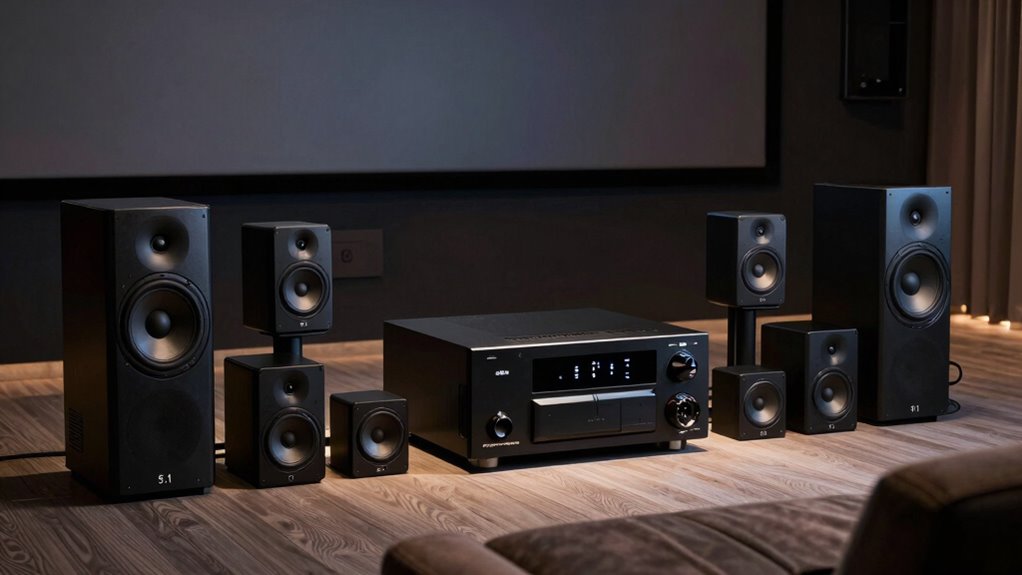

Understanding AV receiver channels helps you create a more immersive sound experience. A 5.1 system has five speakers plus a subwoofer, ideal for most rooms. Upgrading to 7.1 adds two surround back speakers for deeper surround sound. Moving to 9.2 or 11.2 setups introduces more subwoofers or height speakers, offering richer and three-dimensional audio. Keep exploring to discover how each setup can match your space and audio goals.
Key Takeaways
- 5.1 channels include five speakers and one subwoofer, suitable for standard home theaters.
- 7.1 adds two surround back speakers for enhanced depth and immersive sound.
- 9.2 features two subwoofers for deeper bass and better sound distribution.
- 11.2 incorporates height or ceiling speakers for 3D audio effects.
- Higher channel setups offer more immersive experiences but require more space and precise calibration.
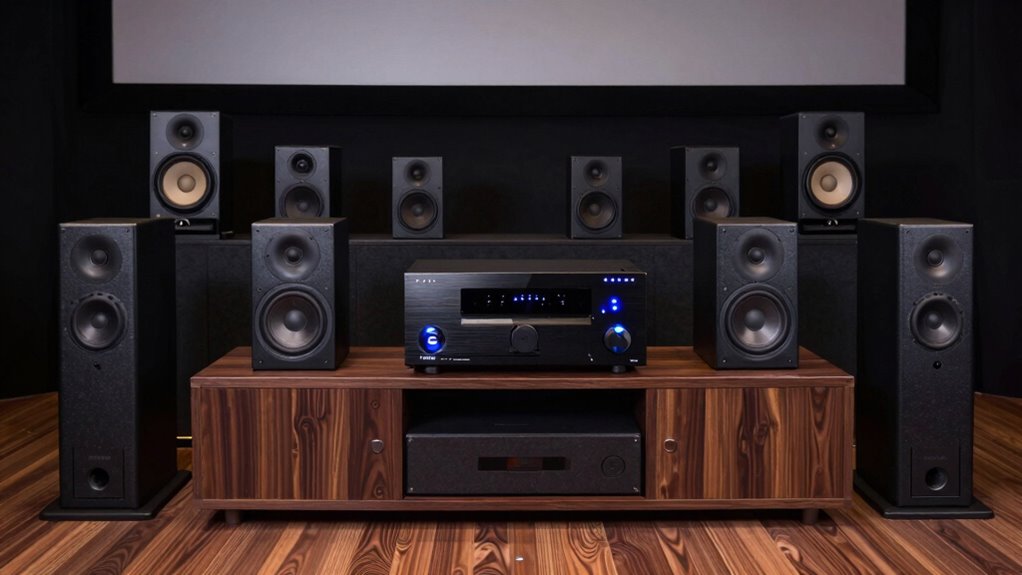
Understanding AV receiver channels is essential for setting up a home theater system that delivers immersive sound. The number of channels your receiver supports directly impacts how you arrange your speakers and how the audio system performs during movies and music. When planning your setup, you need to consider speaker placement carefully, ensuring each speaker is positioned to create a balanced sound field. Proper placement helps maximize the effect of the channels and prevents sound from becoming muddy or uneven. Once your speakers are in position, audio calibration becomes crucial. Calibration adjusts the receiver’s settings to account for room acoustics and speaker distances, ensuring sound reaches your ears at the right levels and timing. This process enhances clarity and the sense of immersion.
Proper speaker placement and calibration are key to immersive, balanced home theater sound.
The most common setup, 5.1, includes five full-range speakers—front left, front right, center, and two surround speakers—plus a subwoofer for low frequencies. It’s a solid choice for most home theaters, offering a good balance between immersive sound and setup simplicity. You’ll want to place the front speakers at ear level, with the center speaker directly above or below the display, and surround speakers slightly behind and to the sides of your seating area. Audio calibration tools built into your receiver make it easier to fine-tune volume levels and delay times, ensuring all channels work harmoniously. This setup is widely supported and compatible with most content, giving you a rich sound experience without overcomplicating the wiring.
Moving up, a 7.1 system adds two additional surround back speakers, creating a more enveloping sound environment. These extra speakers are placed behind your listening position, providing a heightened sense of depth and realism. With more channels, speaker placement becomes even more critical, as each speaker’s position influences how well the system reproduces directional sounds. Audio calibration becomes more detailed, requiring calibration of these additional channels to prevent sound from overlapping or sounding out of place. This setup works well if you have a larger room or want more precise surround effects, especially for action movies or immersive gaming. Additionally, understanding AV receiver channels is key to optimizing your setup for the best sound quality. Properly configuring your system ensures you get the most out of these advanced setups.
For those seeking even more dynamic sound, 9.2 and 11.2 configurations introduce additional speakers and, in some cases, multiple subwoofers. The 9.2 adds two more subwoofers, enhancing bass performance and reducing localization issues, while 11.2 channels include more height or ceiling speakers for a true three-dimensional soundscape. These complex setups demand meticulous speaker placement and advanced audio calibration to fully realize their potential. The extra channels allow for more precise placement of sound effects, creating a truly cinematic experience that envelops you from all directions. Ultimately, choosing the right configuration depends on your room size, budget, and how immersive you want your home theater to be. Investing in a multi-channel receiver can be beneficial as you expand your audio setup over time.

Yamaha Audio YHT-4950U 4K Ultra HD 5.1-Channel Home Theater System with Bluetooth, black
- Complete Home Theater Package: Includes AV receiver, 5 speakers, subwoofer, and wires
- Waterproof: Not waterproof
- AV Receiver Dimensions: 17” W x 6” H x 12” D
As an affiliate, we earn on qualifying purchases.
As an affiliate, we earn on qualifying purchases.
Frequently Asked Questions
How Do I Choose the Right Number of Channels for My Room?
You should choose the number of channels based on your room size, speaker placement, and room acoustics. Larger rooms and those with open layouts benefit from more channels, like 7.1 or 9.2, for immersive sound. Smaller spaces may only need 5.1. Consider how speakers are positioned and how sound travels in your room to optimize your setup, ensuring clear dialogue and balanced audio for the best experience.
Can I Upgrade My AV Receiver to Add More Channels Later?
You can upgrade your AV receiver later, but it depends on your speaker placement and power needs. Some receivers support additional channels via an upgrade or external power amps, allowing you to expand without replacing the whole unit. However, make sure your current setup matches the power requirements for new speakers and that your receiver has extra pre-outs or compatible connections for future expansion.
What Are the Differences Between Surround and Height Speaker Channels?
Surround and height speaker channels create different immersive effects with Dolby Atmos. Surround speakers are placed around you, providing a sense of space and directionality for sounds coming from behind or beside. Height speakers are installed above, adding vertical dimension to the audio. Proper speaker placement guarantees you experience clear, three-dimensional sound, making Dolby Atmos more effective and engaging, whether you’re watching movies or gaming.
Do More Channels Always Mean Better Sound Quality?
More channels don’t always mean better sound quality. While additional channels can enhance speaker placement and create a more immersive experience, they also depend on proper calibration and room acoustics. If your setup isn’t optimized, extra channels might cause sound muddiness or imbalance. Focus on clear sound and correct speaker placement first, then consider adding channels to improve the overall sound clarity and surround experience.
How Do Channel Configurations Affect Gaming Audio Experiences?
Imagine your gaming world as a symphony, where channel configurations act as the conductor’s baton. With more channels, you reveal immersive sound and enhanced spatial accuracy, making explosions feel all around and footsteps precise. A 7.1 or higher setup envelops you in the game’s environment, heightening realism. So, upgrading channels sharpens your audio experience, turning every gaming session into a cinematic adventure full of depth and clarity.
Conclusion
Understanding AV receiver channels is essential, but the real question remains: which setup will elevate your home theater experience to the next level? Whether you choose 5.1, 7.1, 9.2, or even 11.2 channels, each option offers a unique thrill waiting to be accessed. As technology advances, the possibilities grow even more exciting. So, are you ready to discover what’s truly possible and push your home theater beyond the limits you thought existed? The choice is yours.