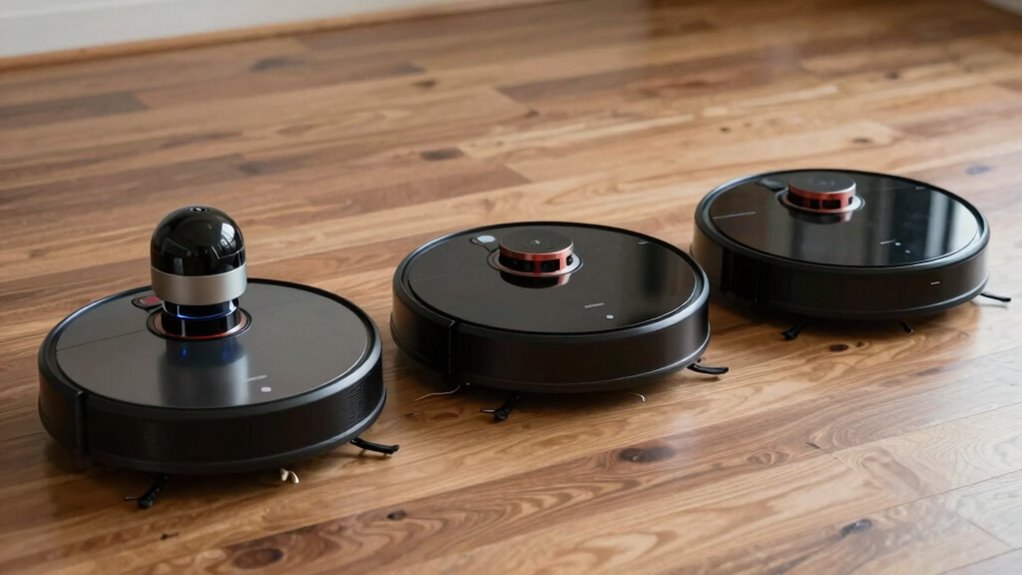

Robot vacuums navigate using different tech, like LiDAR, cameras, or simple bump-and-go systems. LiDAR uses lasers to create precise maps and plan efficient paths, making it ideal for complex layouts. Camera-based models analyze images for detailed navigation, recognizing furniture and boundaries. Bump-and-go models rely on physical contact sensors to change direction, suitable for straightforward homes. To see which fits your needs best, keep exploring how each system operates and their pros and cons.

Get the latest gadgets delivered free with Prime
- Fast, free delivery on millions of items
- Prime Video, Amazon Music and more included
- Member-only deals all year
Key Takeaways
- LiDAR offers precise, real-time mapping with laser beams for thorough cleaning in complex environments.
- Camera navigation uses visual sensors and AI to understand surroundings and recognize obstacles more accurately.
- Random or bump-and-go vacuums rely on physical contact sensors and simple algorithms, suitable for open, clutter-free spaces.
- LiDAR provides higher accuracy and obstacle avoidance, while cameras enable smarter navigation with visual context.
- Simpler systems like bump-and-go are cost-effective but less efficient in complex or cluttered environments.
robot vacuum with LiDAR navigation
As an affiliate, we earn on qualifying purchases.
As an affiliate, we earn on qualifying purchases.
How Do Robot Vacuums Navigate? An Overview of Technologies

Robot vacuums rely on a variety of navigation technologies to efficiently clean your space. They use mapping algorithms to create a digital layout of your home, allowing them to plan their cleaning routes systematically. These algorithms help the vacuum remember areas it has already covered and identify regions that need more attention. Obstacle detection plays a vital role in preventing collisions; sensors detect furniture, walls, and other objects, guiding the vacuum around them. This technology guarantees safe navigation without damaging your belongings. Some models combine these features with additional sensors to adapt to changing environments, avoiding obstacles in real-time. Navigation systems enable robot vacuums to adjust to different layouts and obstacles dynamically. Additionally, sensor integration enhances their ability to respond to unexpected changes in the environment. Modern navigation techniques often incorporate LiDAR sensors, which provide precise distance measurements to improve mapping accuracy. Overall, these advanced navigation systems enable robot vacuums to clean thoroughly and efficiently, saving you time and effort.

Building on how navigation technologies help robot vacuums move efficiently, LiDAR (Light Detection and Ranging) stands out for its accuracy. It creates advanced mapping of your home by emitting laser beams that bounce back to the sensor, allowing the vacuum to build a detailed, real-time map. This precision helps it plan ideal cleaning paths and avoid missed spots. LiDAR also excels at obstacle detection, sensing objects with high accuracy to prevent collisions and navigate around furniture seamlessly. Unlike simpler sensors, it continuously updates its map as it cleans, adapting to changes in your environment. This combination of advanced mapping and obstacle detection makes LiDAR-equipped robot vacuums highly efficient, thorough, and reliable for maintaining your floors. Navigation technology further enhances their ability to operate effectively in complex home layouts.
How Camera-Based Robot Vacuums See Your Home
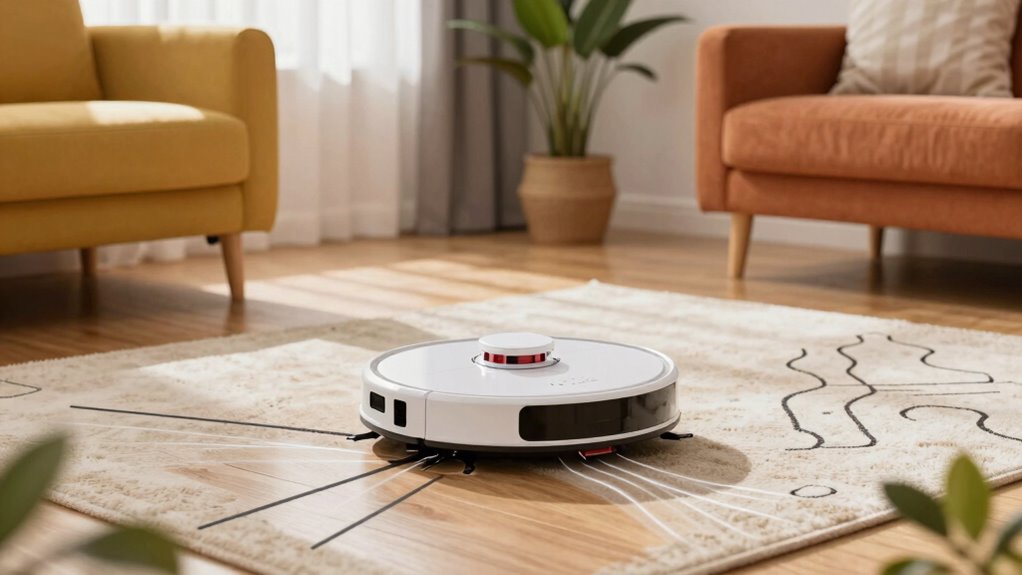
Camera-based robot vacuums rely on visual sensors to navigate and understand your home environment. They use AI mapping to create detailed layouts by analyzing images captured during cleaning. This process helps the vacuum recognize obstacles, furniture, and room boundaries more accurately. Sensor fusion combines visual data with other sensor inputs, like proximity or infrared sensors, to enhance navigation and avoid collisions. Unlike LiDAR, cameras can pick up finer details, which improves object detection and room mapping. As a result, your vacuum can plan efficient paths and adapt to changes in your home layout over time. Visual sensors enable these vacuums to interpret complex surroundings more effectively. This approach offers a more dynamic understanding of your space, ensuring thorough cleaning while reducing missed spots. Overall, camera-based systems leverage AI and sensor fusion to deliver smarter, more precise navigation.

While advanced visual sensors and AI mapping enhance navigation, simpler systems like bump-and-go can still be effective. These vacuums rely on obstacle avoidance through physical contact, using bump sensors to detect obstacles. When a collision occurs, the vacuum changes direction manually or automatically, allowing it to cover areas efficiently. This straightforward approach suits homes with fewer obstacles or clutter. Additionally, airless paint spraying tips such as using the right pressure and nozzle can be adapted from cleaning techniques to ensure thorough surface coverage in DIY projects. Implementing cost-effective navigation methods can also make these vacuums a practical choice for budget-conscious consumers. The use of contrast ratio in projectors demonstrates how the ability to render dark scenes with depth can significantly enhance viewing quality, an aspect that can be appreciated even in simple navigation systems. Moreover, understanding the importance of natural backyard elements can help optimize outdoor spaces for relaxation and entertainment, especially since wearable biosensors are increasingly used to monitor environmental factors that impact outdoor comfort.
Choosing the Best Robot Vacuum Navigation for Your Home
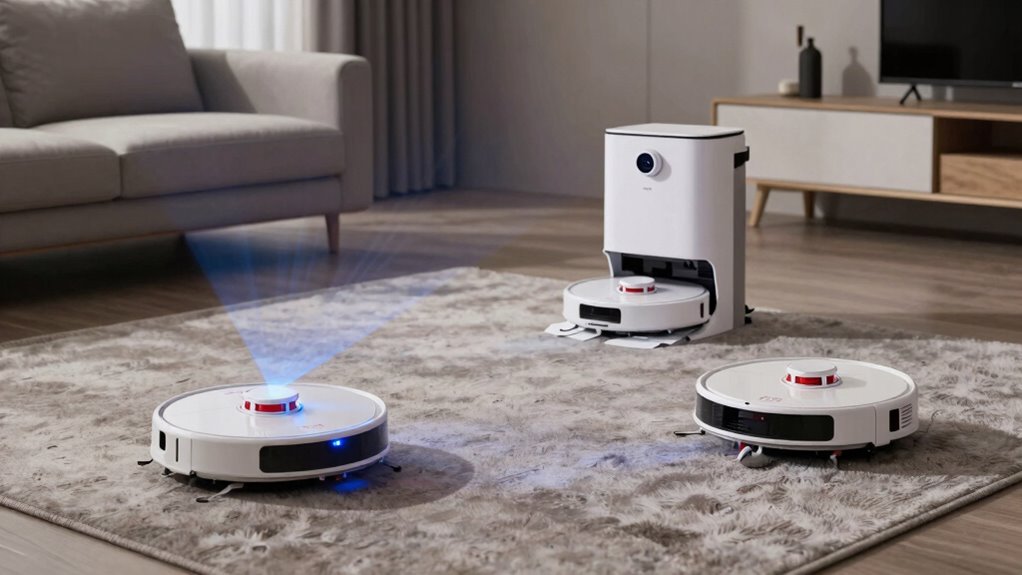
Choosing the right robot vacuum navigation depends on your home’s layout and cleaning needs. If your space is open and straightforward, a random or bump-and-go model might suffice, but keep in mind they typically have shorter battery life and can be noisy. For larger or more complex homes, a navigation system with LiDAR or cameras guarantees thorough coverage, often with better battery efficiency and quieter operation. Consider your priorities: if you want quick cleaning cycles, a model with longer battery life is ideal. If noise levels bother you, opt for a quieter navigation system. Additionally, understanding the types of commercial kitchen equipment can help you better maintain your appliances and optimize your cleaning routines. Incorporating herbal wellness practices into your routine can also promote a healthier environment in your home. Moreover, understanding the advantages of different navigation systems can help you make a more informed decision. Being aware of navigation accuracy can further enhance your choice, ensuring the robot adapts well to your home’s specific layout. To optimize your cleaning experience, it’s also helpful to consider temperature treatments that can improve your home environment. Overall, balancing battery life and noise levels helps you select a robot vacuum that fits your home’s design and your daily routines, ensuring efficient, hassle-free cleaning.
Frequently Asked Questions
How Do Robot Vacuums Handle Different Floor Types?
You’ll find that robot vacuums handle different floor types by automatically adjusting their cleaning modes during floor changes. They use obstacle detection to navigate smoothly across carpets, hardwood, and tiles, avoiding obstacles and preventing falls. Some models are equipped with sensors that detect changes in surface texture, ensuring peak suction and movement. This way, your vacuum maintains efficiency whether it’s shifting between floors or tackling tricky obstacle detection scenarios.
Can Robot Vacuums Navigate Stairs Safely?
Robot vacuums can’t safely navigate stairs due to limited stair detection and obstacle avoidance capabilities. They are designed to recognize and avoid drop-offs, but they can’t climb or descend stairs safely. You need to manually block stairs or use models with sensors that detect edges. Always supervise your robot vacuum near stairs to prevent falls or damage, ensuring safe operation around multi-level areas.
Do Robot Vacuums Remember Their Cleaning Patterns?
Yes, robot vacuums remember their cleaning patterns thanks to mapping memory and obstacle recognition. They create a digital map of your space, which helps them plan efficient routes. This memory allows them to avoid re-cleaning the same areas and navigate around obstacles more effectively. As a result, your vacuum becomes smarter over time, providing thorough cleaning with less overlap and better obstacle handling.
How Does Battery Life Affect Navigation Strategies?
Battery life considerably impacts your robot vacuum’s navigation strategies. When battery efficiency drops, it prioritizes power management, often switching to simpler patterns like random navigation to conserve energy. Longer-lasting batteries allow for more advanced mapping and systematic cleaning. You’ll notice that as the battery depletes, your vacuum may slow down or return to the charging dock sooner, ensuring it manages power effectively while completing its cleaning task.
Are There Privacy Concerns With Camera-Based Systems?
Sure, your robot vacuum’s camera surveillance might make you feel like you’re living in Big Brother’s living room. Privacy concerns with camera-based systems are real, as they could capture sensitive data or invade your personal space. While they help with navigation, you might worry about constant camera surveillance turning your home into a high-tech fishbowl. So, yes, privacy concerns are valid when it comes to camera-based navigation.
Conclusion
So, whether you’re dazzled by lasers, captivated by cameras, or just love a good bump, your robot vacuum’s got a navigation style for you. Remember, no system’s perfect—unless you enjoy playing hide and seek with your furniture. Ultimately, pick what makes your life easier, not more complicated. Because in the end, if your vacuum’s smarter than your last date, at least your floors will stay clean!
Halloween Picks
halloween
As an affiliate, we earn on qualifying purchases.