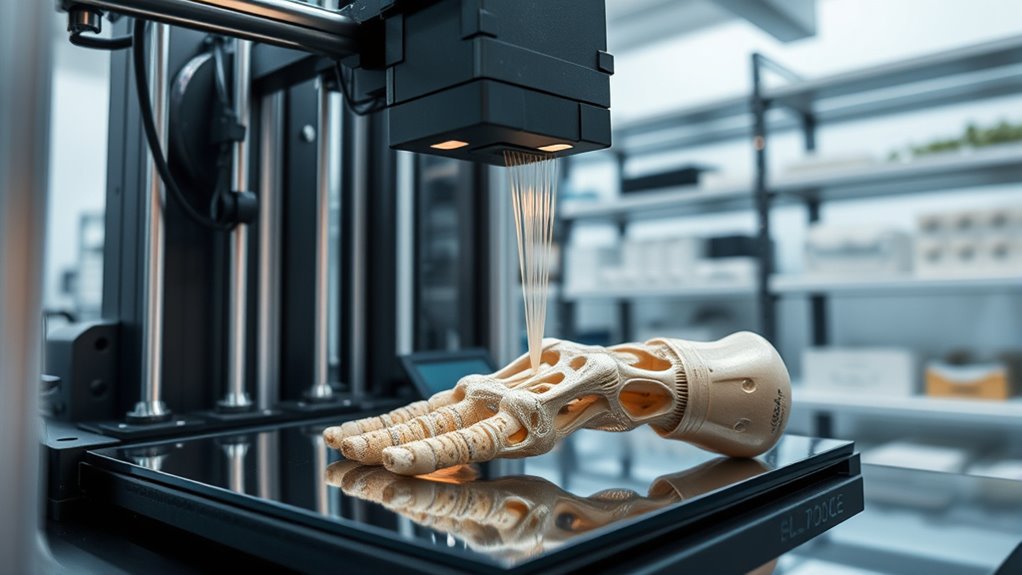

3D printing is transforming manufacturing and medicine by letting you create custom parts, prototypes, and even living tissues quickly and efficiently. You canDesign intricate designs, reduce waste, and bring ideas to life faster than traditional methods. In healthcare, it enables personalized treatments and organ printing, opening new possibilities for patient care. As technology advances, the potential grows even more. Continue exploring to discover how these innovations could reshape industries and impact your future.
Key Takeaways
- 3D printing enables rapid prototyping and complex design creation, reducing time-to-market in manufacturing.
- It facilitates the production of customized, end-use parts, including medical implants and industrial tools.
- In medicine, 3D bioprinting allows for the creation of living tissues and organs for transplantation and research.
- The technology enhances efficiency, reduces material waste, and supports sustainable manufacturing practices.
- Ongoing advancements are transforming industries by integrating robotics and enabling innovative, cost-effective solutions.
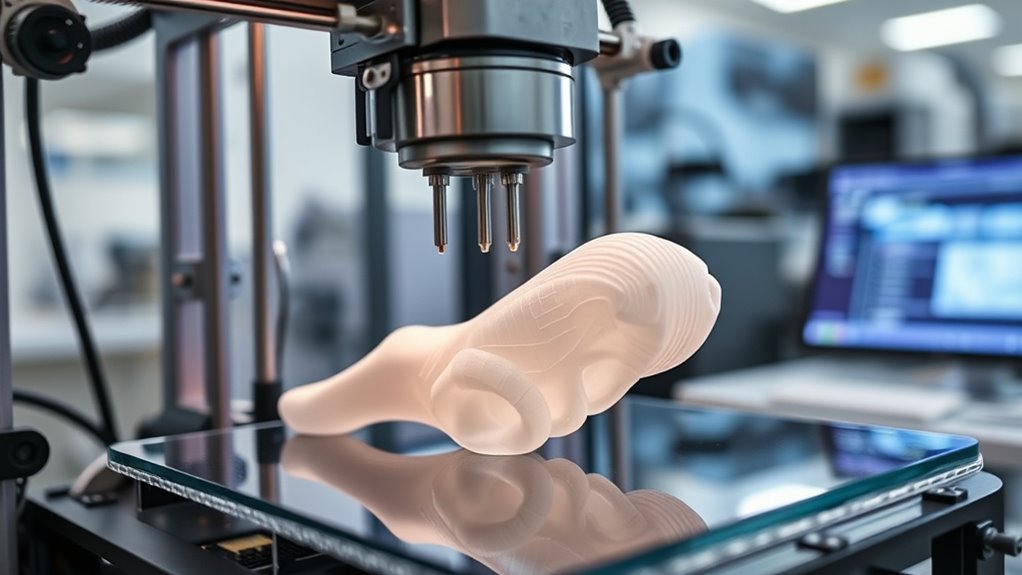
Have you ever wondered how 3D printing is revolutionizing industries like manufacturing and medicine? This innovative technology is transforming the way products are designed, developed, and produced, offering unprecedented speed and customization. One of the most exciting developments is in bioprinting applications, where living tissues and organs are created layer by layer. This process allows researchers and medical professionals to produce complex biological structures that closely mimic natural tissues, opening new doors for regenerative medicine. Imagine printing a functioning liver or heart in the lab—this is no longer science fiction but an emerging reality. Bioprinting applications are not only advancing transplant research but also enabling personalized medicine, where treatments are tailored to individual patients’ needs. As a result, you can expect faster recovery times and better outcomes in the future.
In manufacturing, 3D printing is heavily utilized for rapid prototyping, a process that markedly accelerates product development. Instead of waiting weeks for traditional manufacturing methods, you can create prototypes within hours or days. This rapid turnaround allows you to test and refine designs quickly, reducing costs and minimizing risks before moving to mass production. Whether you’re developing new consumer electronics, automotive parts, or aerospace components, rapid prototyping with 3D printing enables you to iterate faster and bring innovations to market sooner. You don’t have to compromise on complexity or customization either, as 3D printing handles intricate geometries with ease. This flexibility means you can produce complex parts that would be impossible or prohibitively expensive with conventional manufacturing methods. Additionally, advancements in robotics integration are further enhancing the efficiency and precision of these processes.
Furthermore, 3D printing’s versatility extends to producing end-use parts, especially in industries where customization is key. You can create tailored solutions that fit specific requirements, whether for medical implants or bespoke industrial tools. The technology also reduces material waste because it adds material only where needed, making it more sustainable. As you explore these applications, you’ll notice how the combination of bioprinting and rapid prototyping is pushing the boundaries of what’s possible, making industries more efficient, cost-effective, and innovative. From creating living tissues to developing prototypes at lightning speed, 3D printing is not just a trend—it’s a fundamental shift that’s shaping the future of manufacturing and medicine in profound ways.

FLASHFORGE Adventurer 5M 3D Printer with Fully Auto Leveling, Max 600mm/s High Speed Printing, 280°C Direct Extruder with 3S Detachable Nozzle, CoreXY All Metal Structure, Print Size 220x220x220mm
One-Click Automatic Printing: Experience hassle-free 3D printing with the Adventurer 5M Series. Enjoy automatic bed leveling for flawless…
As an affiliate, we earn on qualifying purchases.
As an affiliate, we earn on qualifying purchases.
Frequently Asked Questions
What Are the Environmental Impacts of 3D Printing Materials?
You should consider that 3D printing materials impact the environment through their recyclability and potential toxic emissions. Some materials are highly recyclable, reducing waste, but others aren’t, contributing to landfill buildup. Additionally, certain filaments emit toxic fumes during printing, which can harm air quality and health. Choosing eco-friendly, recyclable materials and ensuring proper ventilation helps minimize these environmental impacts and makes your 3D printing process more sustainable.
How Does 3D Printing Compare Cost-Wise to Traditional Manufacturing?
You’ll find 3D printing often more cost-efficient for small batches, as it reduces setup costs and material waste. Its rapid production speed allows you to quickly prototype and iterate designs, saving time and money. However, for large-scale manufacturing, traditional methods usually remain cheaper due to economies of scale. Overall, 3D printing offers notable advantages in cost efficiency and quick turnaround, especially for customized or complex parts.
What Are the Limitations of 3D Printing in Complex Medical Applications?
You’ll face biocompatibility challenges and precision limitations when using 3D printing for complex medical applications. The materials may not always integrate safely with the human body, risking adverse reactions. Additionally, achieving the necessary accuracy for intricate structures can be difficult, which might impact the effectiveness of implants or prosthetics. These factors restrict the widespread use of 3D printing in highly sensitive or detailed medical procedures.
How Secure Is the Intellectual Property Involved in 3D Printed Products?
Think of your intellectual property like a treasure chest; digital security acts as the lock. In 3D printing, your IP isn’t foolproof—hacking and copying are real risks. Data breaches happen more often than you’d like, risking your innovations. While encryption and secure networks help, you’re still vulnerable if you don’t stay vigilant. Protecting your IP requires constant updates, just like changing a lock to stay ahead of thieves.
What Future Innovations Are Expected in 3D Printing Technology?
You can expect exciting bioprinting innovations that will revolutionize healthcare, like printing functional tissues and organs. Additionally, future advancements will focus on developing recyclable materials, making 3D printing more sustainable and eco-friendly. These innovations will accelerate personalized medicine and reduce waste, transforming industries. As technology evolves, you’ll see more efficient, versatile, and environmentally conscious 3D printing solutions shaping the future.
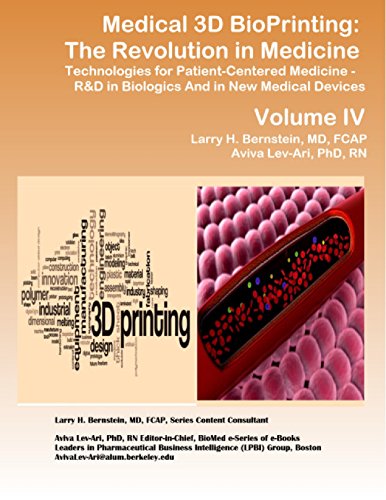
Medical 3D BioPrinting – The Revolution in Medicine Technologies for Patient-centered Medicine: From R&D in Biologics to New Medical Devices (Series E: Patient-Centered Medicine Book 4)
As an affiliate, we earn on qualifying purchases.
As an affiliate, we earn on qualifying purchases.
Conclusion
As you explore 3D printing’s incredible potential in manufacturing and medicine, you realize it’s only just beginning to reshape possibilities. But what breakthroughs lie ahead? Will it revolutionize healthcare, or open new manufacturing frontiers? The future remains uncertain, yet your curiosity grows stronger. One thing’s clear: as this technology advances, your world could soon change in ways you never imagined. Stay tuned—what’s coming next might be more astonishing than you ever expected.

FLASHFORGE AD5M 3D Printer,600mm/s High-Speed CoreXY Printer,1-Click Auto Leveling, 220x220x220mm Build Volume,Direct Drive Extruder,Quick-Swap Nozzle,Ideal for Rapid Prototyping&DIY 3D Printing
Featuring a fully automatic one-click leveling system, this cutting-edge printer eliminates the need for manual calibration of the…
As an affiliate, we earn on qualifying purchases.
As an affiliate, we earn on qualifying purchases.
custom industrial 3D printed parts
As an affiliate, we earn on qualifying purchases.
As an affiliate, we earn on qualifying purchases.