
Streetwear’s rebellious, casual vibe now profoundly shapes high fashion, blurring luxury with urban style. You see oversized silhouettes, graphic prints, and athletic influences transforming runway collections into bold streetwear statements. Luxury brands team up with streetwear icons, making exclusivity more accessible. Designers like Virgil Abloh push boundaries, blending craftsmanship with street-inspired elements. If you want to explore how this fusion is evolving and disrupting norms, keep exploring how streetwear continues to redefine fashion’s future.
Key Takeaways
- High fashion now incorporates streetwear elements like oversized silhouettes, graphic prints, and athletic influences, blurring traditional boundaries.
- Collaborations between luxury brands and streetwear icons elevate streetwear’s status within high-end fashion.
- Designers such as Virgil Abloh and Demna Gvasalia integrate streetwear’s rebellious spirit with haute couture craftsmanship.
- Streetwear aesthetics challenge conventional norms, fostering a more diverse, inclusive, and urban-oriented fashion industry.
- Technology like AI-powered virtual reality enhances immersive shows, making high fashion more accessible and engaging worldwide.

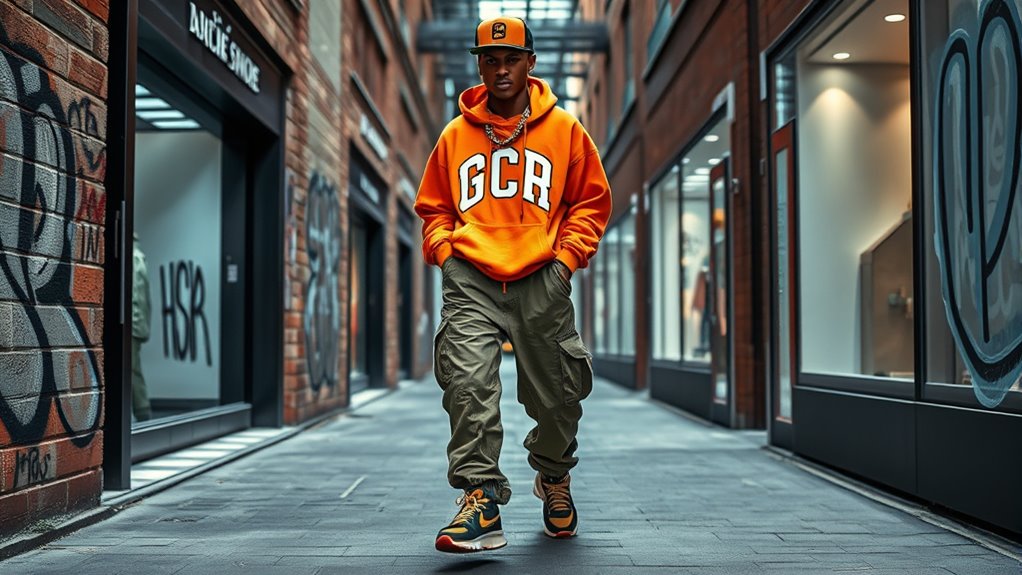
In recent years, high fashion has increasingly embraced streetwear aesthetics, blurring the lines between casual and luxury styles. This fusion reshapes the fashion industry, making haute couture more accessible and relevant to urban culture. You’ll notice luxury brands adopting streetwear elements like oversized silhouettes, graphic prints, and athletic influences, transforming runway collections into bold expressions of streetwear and high fashion.
This shift isn’t just about style; it’s about redefining what luxury means in a modern, casual context. Collaborations between renowned luxury brands, such as Louis Vuitton, and streetwear icons like Supreme, have set significant precedents. These partnerships showcase how streetwear influence can elevate high-end fashion, creating a new domain of casual luxury that appeals to a broader audience.
By merging streetwear aesthetics with haute couture craftsmanship, designers challenge traditional standards and demonstrate that luxury can be rebellious and inclusive. These collaborations also highlight the importance of streetwear-inspired accessories—sneakers, logo-heavy bags, hoodies—that now frequently appear on high fashion runways, emphasizing the seamless integration of urban culture into the luxury sphere.
Designers like Virgil Abloh and Demna Gvasalia are at the forefront of this movement, pioneering collections that blend streetwear’s rebellious spirit with high-end craftsmanship. They emphasize the versatility of oversized silhouettes, utilitarian details, and graphic elements, making streetwear influence central to contemporary fashion. Additionally, understanding the zodiac compatibility of fashion trends can help brands better align their collections with current cultural energies, enhancing consumer engagement.
Their work exemplifies how streetwear aesthetics are no longer confined to casual wear but are now integral to high fashion’s evolving language. This influence has challenged traditional norms, fostering a more inclusive and relaxed approach to high fashion presentations.
You see it reflected not just in clothing but in the entire aesthetic—mixing luxury fabrics with streetwear’s bold, expressive visuals. The result is a fashion industry that’s more dynamic, diverse, and attuned to urban culture. The rise of casual luxury demonstrates how streetwear’s rebellious roots have been embraced by luxury brands, pushing boundaries and encouraging innovation.
This ongoing integration is often supported by AI-powered virtual reality, which enhances the immersive experience of fashion shows and digital showcases, making high fashion more accessible and engaging for a global audience.
As a consumer, you now have access to a world where streetwear and high fashion coexist, allowing you to express individuality without sacrificing sophistication. This ongoing evolution signifies a broader shift toward a more accessible, culturally connected fashion landscape, where streetwear influence continues to shape the future of high-end style.

Streetwear: The Ultimate Guide to Streetwear, Sneaker Culture, and Hype
As an affiliate, we earn on qualifying purchases.
As an affiliate, we earn on qualifying purchases.
Frequently Asked Questions
How Has Streetwear’s Rise Affected Traditional Luxury Branding?
You see how streetwear’s rise has shaken up traditional luxury branding. It pushes brands to be more accessible, blending casual styles with high-end craftsmanship.
You notice luxury labels adopting streetwear elements like sneakers, hoodies, and bold logos to attract younger audiences. This shift challenges the exclusivity of high fashion, making it more relatable and dynamic, ultimately transforming how you perceive and engage with luxury brands today.
What Are the Key Designers Bridging Streetwear and High Fashion?
You see designers like Virgil Abloh, who seamlessly blend streetwear with high fashion through his brand Off-White, creating accessible yet luxurious pieces.
Others like Demna Gvasalia at Balenciaga push boundaries with casual, street-inspired designs.
These innovators actively bridge the gap by mixing streetwear’s boldness with luxury craftsmanship, making high fashion more relatable and dynamic for your modern wardrobe.
How Do Consumer Perceptions Differ Between Streetwear and High Fashion?
You see that streetwear is often viewed as casual, rebellious, and accessible, appealing to a broader audience.
High fashion, on the other hand, is perceived as exclusive, luxurious, and sophisticated.
Consumers might see streetwear as more expressive and trend-driven, while high fashion is associated with timeless elegance and craftsmanship.
Your perception likely depends on your style preferences, social context, and desire for exclusivity or comfort.
What Role Does Social Media Play in the Streetwear-High Fashion Crossover?
Social media acts as a bridge, turning quiet whispers into a roaring crowd in the streetwear-high fashion crossover. You see, it amplifies trends swiftly, making exclusive styles accessible and fostering a sense of community.
Platforms like Instagram and TikTok serve as runways, where influencers and brands showcase their latest looks, blending streetwear’s rebellious spirit with high fashion’s sophistication.
This digital dance accelerates the fusion, shaping perceptions and fueling the trend’s momentum.
How Sustainable Are Collaborations Between Streetwear Brands and Luxury Houses?
Collaborations between streetwear brands and luxury houses can be quite sustainable if both parties prioritize eco-friendly materials and ethical practices. You might notice some brands focusing on limited editions, which reduce waste, or using recycled fabrics.
However, not all collaborations prioritize sustainability, so it’s essential to research each partnership. When done responsibly, these collaborations can promote sustainable fashion trends, but it’s up to you to support brands that genuinely commit to eco-conscious efforts.
Conclusion
So, as you’ve seen, streetwear has dramatically shaped high fashion, blending comfort with luxury and challenging traditional norms. It’s a bold reminder that style is always evolving, and boundaries are meant to be crossed. Do you think this fusion will continue to redefine what’s fashionable or will high fashion reclaim its exclusivity? Ultimately, the future of style depends on your willingness to embrace change and celebrate the innovative spirit that both worlds inspire.