For studio headphones with open-back reference sound, my best overall pick is the Sennheiser HD 490 PRO, a strong all-rounder for mixing and long sessions. The beyerdynamic DT 900 PRO X is a compelling alternative for sturdy daily studio use, while the Audio-Technica ATH-R50x offers a simpler reference-focused option. The main tradeoffs are tonal character, fit over extended sessions, and whether your interface can drive a higher-impedance model. Open-back designs also leak sound, so they are less suited to recording near microphones or listening around other people. Read on for the full comparison and recommendations by buyer type.

Get the latest gadgets delivered free with Prime
- Fast, free delivery on millions of items
- Prime Video, Amazon Music and more included
- Member-only deals all year
Complete the kit


Key Takeaways
- The HD 490 PRO leads as the most balanced all-round choice: it suits buyers who want one pair for broad studio work rather than a model with a narrower specialty.
- The DT 900 PRO X favors practical daily use: its studio-oriented design makes it a distinct alternative to the more established DT 990 PRO family.
- Impedance changes the buying decision: the 48-ohm DT 990 Pro X is a different match for portable or modest outputs than the 250-ohm DT 990 PRO versions.
- Semi-open models fill a different role: the Samson SR850 and AKG K240 Studio can suit budget-conscious monitoring, but they are not interchangeable with fully open reference designs.
- The lineup has several near-duplicates: the two listed 250-ohm DT 990 PRO variants share the same core choice, so buyers should compare the exact version and included details rather than expect a different sound category.
| Sennheiser HD 490 PRO Open-Back Professional Headphones |  | Best Overall for Mix Decisions | Design: Open-back, over-ear | Frequency response: 5–36,000 Hz | Connectivity: Wired | VIEW ON AMAZON | See Our Full Breakdown |
| Audio-Technica ATH-R30X Open-Back Reference Headphones |  | Best Lightweight Everyday Studio Pick | Design: Open-back, over-ear | Driver type and size: Dynamic, 40 mm | Frequency range: 15 Hz–25,000 Hz | VIEW ON AMAZON | See Our Full Breakdown |
| Sennheiser HD 560S Open-Back Wired Over-Ear Headphones |  | Best for Natural-Sounding Monitoring | Design: Open-back, over-ear | Driver type and size: Dynamic, 38 mm | Frequency range: 6 Hz–38 kHz | VIEW ON AMAZON | See Our Full Breakdown |
| beyerdynamic DT 900 PRO X Open-Back Studio Headphones |  | Best for Flexible Source Pairing | Design: Open-back, over-ear | Driver type and size: Dynamic, 45 mm STELLAR.45 | Impedance: 48 ohms | VIEW ON AMAZON | See Our Full Breakdown |
| beyerdynamic DT 990 PRO Open-Back Studio Headphones, 80 Ohm, Gray |  | Best for Long-Term Serviceability | Design: Open-back, over-ear | Impedance: 80 ohms | Frequency response: 5–35,000 Hz | VIEW ON AMAZON | See Our Full Breakdown |
| Philips SHP9600MB Open-Back Over-Ear Headphones with Detachable Microphone |  | Best for Monitoring and Calls | Design: Wired, open-back, over-ear | Driver size: 50 mm | Frequency range: 6 Hz–35 kHz | VIEW ON AMAZON | See Our Full Breakdown |
| beyerdynamic DT 990 Pro X 48 Ohm Open-Back Studio Headphones | 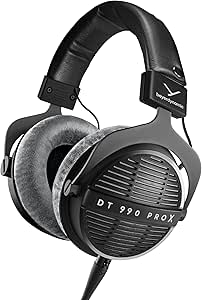 | Best for Accessible Studio Reference | Design: Open-back, over-ear | Driver: 45 mm dynamic; STELLAR.45 | Impedance: 48 ohms | VIEW ON AMAZON | See Our Full Breakdown |
| Samson SR850 Semi-Open Studio Reference Headphones |  | Best Value-Style Studio Starter | Design: Semi-open, over-ear | Driver type: Dynamic | Driver size: 50 mm | VIEW ON AMAZON | See Our Full Breakdown |
| AKG K240 Studio Semi-Open Studio Headphones | 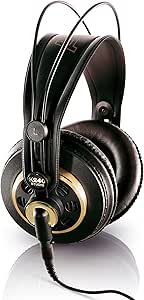 | Best for Long Monitoring Sessions | Design: Semi-open, over-ear | Transducers: 30 mm XXL with Varimotion diaphragms | Cable length: 3 m (9.9 ft) | VIEW ON AMAZON | See Our Full Breakdown |
| FIFINE HD18 Lite Wired Open-Back Monitoring Headphones |  | Best for Monitoring with a Detachable Mic | Design: Wired, over-ear, open-back | Driver size: 53 mm | Driver type: Dynamic | VIEW ON AMAZON | See Our Full Breakdown |
| Audio-Technica ATH-R50x Open-Back Reference Headphones |  | Best Lightweight Reference Pick | Brand: Audio-Technica | Model: ATH-R50x | Design: Open-back | VIEW ON AMAZON | See Our Full Breakdown |
| beyerdynamic DT 990 PRO 250 Ohm Open-Back Studio Headphones |  | Best for Amp-Equipped Studio Setups | Brand: beyerdynamic | Model: DT 990 PRO 250 | Impedance: 250 ohms | VIEW ON AMAZON | See Our Full Breakdown |
| beyerdynamic DT 990 PRO 250 Ohm Open-Back Studio Headphones, Black |  | Best Familiar Studio Workhorse | Brand: beyerdynamic | Model: DT 990 PRO | Impedance: 250 ohms | VIEW ON AMAZON | See Our Full Breakdown |
| beyerdynamic DT 1990 Pro MKII Open-Back Studio Headphones (30 Ohm) |  | Best Premium Low-Impedance Pick | Brand: beyerdynamic | Model: DT 1990 PRO MKII | Impedance: 30 ohms | VIEW ON AMAZON | See Our Full Breakdown |
| Neumann NDH 30 Open-Back Studio Headphones, Black |  | Best for Stereo-Imaging Reference | Brand: Neumann | Model: NDH 30 Black Edition | Model number: 399006 | VIEW ON AMAZON | See Our Full Breakdown |
| studio headphones open back reference | Design | Impedance | Sensitivity | Weight |
|---|---|---|---|---|
| Sennheiser HD 490 PRO Open-Bac | Open-back, over-ear | — | — | — |
| Audio-Technica ATH-R30X Open-B | Open-back, over-ear | 36 ohms | 92 dB | 7.36 oz |
| Sennheiser HD 560S Open-Back W | Open-back, over-ear | 120 ohms | 110 dB | — |
| beyerdynamic DT 900 PRO X Open | Open-back, over-ear | 48 ohms | 100 dB | — |
| beyerdynamic DT 990 PRO Open-B | Open-back, over-ear | 80 ohms | 96 dB | — |
| Philips SHP9600MB Open-Back Ov | Wired, open-back, over-ear | 32 ohms | — | 1.5 pounds |
| beyerdynamic DT 990 Pro X 48 O | Open-back, over-ear | 48 ohms | 97 dB | 10.3 ounces |
| Samson SR850 Semi-Open Studio | Semi-open, over-ear | 32 ohms | 98 dB | 1.1 pounds |
| AKG K240 Studio Semi-Open Stud | Semi-open, over-ear | — | — | — |
| FIFINE HD18 Lite Wired Open-Ba | Wired, over-ear, open-back | — | — | — |
| Audio-Technica ATH-R50x Open-B | Open-back | — | — | 207 g (7.36 oz) |
| beyerdynamic DT 990 PRO 250 Oh | Open-back, over-ear | 250 ohms | 96 dB | 8.8 ounces |
| beyerdynamic DT 990 PRO 250 Oh | Open-back, over-ear | 250 ohms | 96 dB | 1.2 pounds |
| beyerdynamic DT 1990 Pro MKII | Open-back, over-ear | 30 ohms | 94 dB | 13.3 ounces |
| Neumann NDH 30 Open-Back Studi | Open-back, over-ear | 120 ohms | 97 dB | 245 g |
More Details on Our Top Picks
Sennheiser HD 490 PRO Open-Back Professional Headphones
The HD 490 PRO is my strongest fit for studio work where placement and tonal balance matter more than isolation. Its wide soundstage and precise localization can help separate instruments and judge stereo positioning, while the stated uncolored response suits monitoring and mixing. A practical advantage over the HD 560S is the pair of included washable, replaceable ear-pad sets, with options intended for mixing and producing. The detachable cable also makes replacement easier than on the ATH-R30X. The tradeoff is typical of open-back reference headphones: sound leaks both ways, so these are a poor match for noisy rooms or shared spaces. They are wired, too, and the 1.8 m cable may be limiting if your setup is spread out.
Pros:- Wide soundstage and precise sound localization support stereo and placement decisions.
- Uncolored response is suited to monitoring and mixing.
- Two washable, replaceable ear-pad sets offer mixing and producing options.
- Detachable 1.8 m cable and included 6.5 mm adapter suit common studio connections.
Cons:- Open-back construction provides little isolation and leaks sound.
- Wired listening limits mobility, and the 1.8 m cable may not suit every studio layout.
Best for: Home-studio mixers who want clear spatial cues, a neutral monitoring focus, and pad options for different production tasks.
Not ideal for: People recording near a live microphone, working in noisy rooms, or needing wireless freedom and strong sound isolation.
- Design:Open-back, over-ear
- Frequency response:5–36,000 Hz
- Connectivity:Wired
- Cable length:1.8 m, detachable
- Included pads:Mixing and producing ear pads
- Included adapter:3.5 mm to 6.5 mm
- Warranty:2 years
Our verdict“Choose the HD 490 PRO if mix-focused spatial detail and adaptable ear pads matter more to you than isolation or wireless convenience.”
Audio-Technica ATH-R30X Open-Back Reference Headphones
The ATH-R30X suits creators who want one open-back pair for home production and ordinary listening, without a heavy studio feel. Its 7.36 oz frame and velour pads are practical for longer sessions, while the 40 mm drivers are described as delivering clear, balanced sound with defined lows and transparent mids. Compared with the more mixing-oriented Sennheiser HD 490 PRO, the R30X leans toward flexible everyday use rather than offering separate pads for distinct production tasks. Its 36-ohm impedance also makes it a straightforward wired option for common listening setups. The main compromise is the non-detachable cable, which is less convenient to replace or pack away. Like the other open-back picks here, it offers no meaningful noise control and will leak sound.
Pros:- Lightweight 7.36 oz construction and velour earpads support extended sessions.
- Balanced presentation is described with defined lows, transparent mids, and extended highs.
- Wide soundstage works for studio tasks and everyday listening.
- 36-ohm impedance and included 6.3 mm adapter suit a range of wired setups.
Cons:- Non-detachable cable is harder to replace if damaged.
- Open-back design provides no noise control and leaks sound.
- The supplied information does not specify a carrying case or alternate ear pads.
Best for: Home-studio beginners and multimedia creators who want a lightweight wired headphone for production and casual listening.
Not ideal for: Users who need sound isolation, a replaceable cable, or headphones for tracking beside a live microphone.
- Design:Open-back, over-ear
- Driver type and size:Dynamic, 40 mm
- Frequency range:15 Hz–25,000 Hz
- Impedance:36 ohms
- Sensitivity:92 dB
- Weight:7.36 oz
- Cable:Wired, non-detachable
- Included adapter:6.3 mm (1/4 in)
Our verdict“Pick the ATH-R30X if comfort and general-purpose home use outrank cable serviceability and isolation.”
Sennheiser HD 560S Open-Back Wired Over-Ear Headphones
The HD 560S is a sensible pick for listeners who want natural, accurate sound and a spacious presentation without moving to a more elaborate studio package. Its angled 38 mm drivers and stated extended bass response make it a useful option for monitoring and focused listening. Compared with the HD 490 PRO, it has a simpler supplied package: the 490 PRO includes two washable pad sets, while the HD 560S listing includes a cable and manual. The HD 560S does have a detachable cable, a useful serviceability advantage over the ATH-R30X. One setup detail deserves attention: its 120-ohm impedance may make it a less convenient pairing for some low-powered sources than the 48-ohm DT 900 PRO X. Open-back construction also rules it out for noisy rooms and microphone tracking.
Pros:- Natural, accurate sound is suited to reference listening and monitoring.
- Wide soundstage helps convey spatial relationships.
- Extended bass response supports listening across a broad range of material.
- Detachable cable and included 3.5 mm adapter add connection flexibility.
Cons:- Open-back design does not block room noise and leaks sound.
- 120-ohm impedance may be less convenient with some low-powered sources.
- Wired-only operation limits movement.
Best for: Listeners and home-studio users seeking a natural, spacious sound for careful monitoring with a detachable cable.
Not ideal for: Buyers who need isolation, wireless listening, or a headphone that is an easy match for every low-powered device.
- Design:Open-back, over-ear
- Driver type and size:Dynamic, 38 mm
- Frequency range:6 Hz–38 kHz
- Impedance:120 ohms
- Sensitivity:110 dB
- Cable:Detachable
- Connector:6.3 mm jack with 3.5 mm adapter
- Warranty:2 years
Our verdict“Choose the HD 560S if natural presentation and a detachable cable matter more than easy drive requirements or isolation.”
beyerdynamic DT 900 PRO X Open-Back Studio Headphones
The DT 900 PRO X stands out for buyers who want an open-back studio headphone that can work with common devices as well as an interface. Its 48-ohm impedance is the clearest practical distinction from the 120-ohm Sennheiser HD 560S, potentially making source pairing less demanding. The 45 mm STELLAR.45 dynamic drivers and wide soundstage are aimed at mixing, mastering, and critical listening; velour ear cups add a studio-oriented fit, while the detachable mini-XLR cable supports replacement. Compared with the HD 490 PRO, the stated package adds a protective case but does not list interchangeable production-focused pads. There are also tradeoffs: this remains a wired, open-back design, so it leaks sound and will not quiet a room. The listed frequency-response specification is only “5 Hz,” so the available data does not give an upper limit.
Pros:- 48-ohm impedance is suited to use with common devices and audio interfaces.
- Wide soundstage supports detailed monitoring and critical listening.
- Detachable mini-XLR cable is serviceable.
- Velour ear cups, 1/4-inch adapter, and protective case suit studio use and storage.
Cons:- Open-back design leaks sound and offers no room-noise isolation.
- Wired connection restricts mobility.
- The supplied frequency-response data gives a lower figure but no upper limit.
Best for: Mixers who move between laptops, phones, and audio interfaces and want a lower-impedance open-back option with a detachable cable.
Not ideal for: People needing closed-room isolation, wireless use, or a fully stated frequency-response range for spec comparisons.
- Design:Open-back, over-ear
- Driver type and size:Dynamic, 45 mm STELLAR.45
- Impedance:48 ohms
- Frequency response:5 Hz (upper limit not specified)
- Sensitivity:100 dB
- Cable:Detachable mini-XLR
- Ear cup material:Velour
- Included accessories:1/4-inch adapter and protective case
Our verdict“Choose the DT 900 PRO X if flexible source pairing and a detachable mini-XLR cable outweigh isolation and wireless convenience.”
beyerdynamic DT 990 PRO Open-Back Studio Headphones, 80 Ohm, Gray
The DT 990 PRO 80 Ohm is the serviceable, long-cable option in this group. Its open-back presentation is described as offering a natural soundstage and detailed imaging for editing, mixing, mastering, and home listening; replaceable ear pads and serviceable parts give it a practical advantage for owners who want to maintain their gear over time. Against the DT 900 PRO X, it has a higher listed impedance and a 3 m cable, which may suit a fixed studio desk better than a compact or mobile setup. The cable length can also become cumbersome when space is limited. Its open construction leaks sound and admits room noise, so it is not a tracking solution near microphones or a choice for shared, quiet spaces. The supplied package lists a screw-on 1/4-inch adapter and storage bag.
Pros:- Natural soundstage and detailed imaging suit editing and critical listening.
- Replaceable ear pads and serviceable parts support maintenance.
- Three-meter cable provides reach across a studio desk.
- Includes a screw-on 1/4-inch adapter and drawstring storage bag.
Cons:- Open-back design leaks sound and lets surrounding noise through.
- Three-meter cable can be awkward in compact or mobile setups.
- 80-ohm impedance may be less convenient than the 48-ohm DT 900 PRO X for some sources.
Best for: Studio users with a fixed desk setup who value replaceable parts, a long cable, and detailed spatial listening.
Not ideal for: Mobile listeners, users with limited cable space, or anyone who needs isolation for recording or shared rooms.
- Design:Open-back, over-ear
- Impedance:80 ohms
- Frequency response:5–35,000 Hz
- Sensitivity:96 dB
- Driver type:Dynamic
- Cable length:3 m
- Connector:3.5 mm jack with 1/4-inch screw-on adapter
- Country of manufacture:Germany
Our verdict“Pick the DT 990 PRO if serviceability and a long studio cable matter more than portability or isolation.”
Philips SHP9600MB Open-Back Over-Ear Headphones with Detachable Microphone
The SHP9600MB is the most versatile pick here when studio listening needs to share space with gaming or voice calls. Its detachable boom microphone adds a practical use the Samson SR850 and AKG K240 Studio do not offer, while the 50 mm drivers and 32-ohm impedance suit everyday wired sources. Breathable cushions and an adjustable headband also support longer sessions, though the listed 1.5-pound weight makes it less appealing if a lighter fit is a priority. This is an open-back listener, not a sealed tracking headphone: sound passes both ways, so nearby people may hear playback and outside noise remains audible. Compared with the more studio-focused beyerdynamic DT 990 Pro X, Philips makes a stronger case for mixed listening and communication, but offers less clearly specified reference-oriented detail.
Pros:- Detachable boom microphone supports calls and gaming
- 50 mm dynamic drivers and a stated 6 Hz–35 kHz frequency range
- Breathable ear cushions and adjustable headband
- Includes a 6.3 mm adapter for compatible studio equipment
Cons:- Wired 3.5 mm connection limits movement
- Open-back construction leaks sound and provides little isolation
- Listed weight of 1.5 pounds may feel substantial during extended sessions
Best for: Home listeners and gamers who want open-back stereo listening plus a detachable mic for calls, using a laptop, console, or interface with a 3.5 mm output.
Not ideal for: Engineers recording beside an active microphone or anyone needing isolation, wireless use, or the lighter listed weight of the beyerdynamic DT 990 Pro X.
- Design:Wired, open-back, over-ear
- Driver size:50 mm
- Frequency range:6 Hz–35 kHz
- Impedance:32 ohms
- Connectivity:3.5 mm headphone jack
- Included accessories:Detachable microphone, cable, 6.3 mm adapter
- Weight:1.5 pounds
- Water resistance:Not water resistant
Our verdict“Choose the SHP9600MB if you want an open-back headphone that can also handle calls and gaming, but skip it for isolated recording or a strictly studio-reference setup.”
beyerdynamic DT 990 Pro X 48 Ohm Open-Back Studio Headphones
The DT 990 Pro X earns its place as the strongest dedicated studio-reference choice in this group for listeners who want spacious imaging without relying on a separate headphone amp. At 48 ohms, it is specified for use with common devices as well as studio interfaces, while its 45 mm dynamic driver and open-back design suit mixing, editing, and critical listening. The detachable mini-XLR cable is easier to replace than a fixed lead, and velour pads add comfort for longer work sessions. Compared with the Philips SHP9600MB, this beyerdynamic is more studio-oriented and has no included microphone; against the semi-open Samson SR850, it offers a fully open design. The tradeoff is sound leakage, and the supplied frequency-response figure lists only 5 Hz, with no upper limit provided.
Pros:- 48-ohm impedance is specified for use with laptops, phones, interfaces, and consoles
- Open-back presentation is suited to wide, natural imaging for mixing and editing
- Detachable 3 m mini-XLR cable and soft velour ear pads
- Includes a 1/4-inch adapter and carrying pouch
Cons:- Open-back design lets playback leak and offers little isolation
- Published frequency response gives a 5 Hz lower figure but no upper limit
- No microphone is included for calls or voice chat
Best for: Mixers and home-studio listeners who want a spacious, wired reference headphone that can run from common devices without a dedicated headphone amp.
Not ideal for: People recording in a shared room, listeners who need an included microphone, or buyers who require a complete published frequency-response range.
- Design:Open-back, over-ear
- Driver:45 mm dynamic; STELLAR.45
- Impedance:48 ohms
- Frequency response:Listed as 5 Hz; upper limit not provided
- Sensitivity:97 dB
- Cable:Detachable 3 m mini-XLR
- Connectors:3.5 mm and 6.35 mm headphone jacks
- Weight:10.3 ounces
- Included accessories:1/4-inch adapter and black carrying pouch
Our verdict“Pick the DT 990 Pro X for accessible, studio-focused open-back monitoring, provided sound leakage and the incomplete frequency-response listing are acceptable.”
Samson SR850 Semi-Open Studio Reference Headphones
The SR850 is a straightforward entry point for buyers who want a large-driver, semi-open headphone for studio monitoring without extra features getting in the way. Its 50 mm dynamic drivers, 32-ohm impedance, and stated 10 Hz–30 kHz range give it a useful specification set for general listening and practice mixes. The semi-open construction can make it a less exposed-feeling choice than the fully open Philips SHP9600MB, although it still does not isolate like a closed-back headphone. Its self-adjusting headband keeps fit simple, and the included 1/4-inch adapter supports studio connections. Compared with the AKG K240 Studio, Samson specifies the driver size and frequency range more fully here; the AKG instead provides a 3 m cable and a screw-on adapter. The SR850 remains wired, with no microphone or water resistance.
Pros:- 50 mm dynamic drivers
- Specified 10 Hz–30 kHz frequency response and 32-ohm impedance
- Self-adjusting headband and over-ear design
- Includes a 1/8-inch to 1/4-inch adapter
Cons:- Wired connection limits movement
- Semi-open construction still allows sound leakage and limited isolation
- No microphone is included
Best for: New home-studio users who want a simple semi-open headphone for monitoring and music listening, with both standard headphone and 1/4-inch connections.
Not ideal for: Musicians tracking near a live microphone, buyers who need a detachable mic, or anyone seeking wireless convenience or full sound isolation.
- Design:Semi-open, over-ear
- Driver type:Dynamic
- Driver size:50 mm
- Frequency response:10 Hz–30 kHz
- Impedance:32 ohms
- Sensitivity:98 dB
- Connectivity:Wired, 3.5 mm headphone jack
- Included adapter:1/8-inch to 1/4-inch
- Weight:1.1 pounds
Our verdict“Choose the SR850 as a no-frills semi-open starter for home monitoring, but look elsewhere if you need a mic, isolation, or a detachable cable.”
AKG K240 Studio Semi-Open Studio Headphones
The K240 Studio is the comfort-and-connection pick for listeners who spend long stretches monitoring, editing, or checking mixes. Its self-adjusting headband and circumaural pads are designed for extended wear, while the 3 m cable gives a studio desk or interface a bit more reach than a compact lead. AKG’s 30 mm XXL transducers use Varimotion diaphragms, a design tied to the model’s stated wide dynamic range, solid bass, and clear highs. Unlike the Samson SR850, the K240’s supplied details emphasize its transducer construction and long cable rather than a published frequency range or sensitivity. Both use semi-open designs, so neither is a suitable isolation choice for recording beside a sensitive microphone. The lack of listed impedance and driver frequency figures also leaves fewer technical details for buyers comparing reference response on paper.
Pros:- Self-adjusting headband and circumaural pads are suited to long listening sessions
- 30 mm XXL transducers with Varimotion diaphragms
- 3 m cable supports use at a studio desk
- Includes a 1/8-inch plug and screw-on 1/4-inch adapter
Cons:- Wired design restricts movement
- Semi-open construction can leak sound and provides limited isolation
- Supplied product data does not list impedance or frequency response
Best for: Studio users and Hi-Fi listeners who prioritize a self-adjusting fit and a long cable for extended monitoring at a desk or mixing position.
Not ideal for: Buyers who need detailed published response and impedance figures, wireless listening, or isolation for vocal tracking.
- Design:Semi-open, over-ear
- Transducers:30 mm XXL with Varimotion diaphragms
- Cable length:3 m (9.9 ft)
- Connector:1/8-inch stereo plug
- Adapter:Screw-on 1/4-inch adapter
- Headband:Self-adjusting
- Ear pads:Circumaural
Our verdict“Choose the K240 Studio for a comfortable, long-cable semi-open monitoring setup, but not if detailed published response specifications are a priority.”
FIFINE HD18 Lite Wired Open-Back Monitoring Headphones
The HD18 Lite pairs an open-back monitoring brief with a detachable boom mic, giving it a clear niche among these reference-style options. Its 53 mm dynamic drivers are described as tuned for clear highs, natural mids, and controlled bass, while breathable ear cups support longer sessions. That makes it more communication-ready than the AKG K240 Studio or Samson SR850, neither of which lists an included microphone. Compared with the Philips SHP9600MB, FIFINE also includes a detachable mic, but the supplied specs list fewer technical details: there is no impedance, sensitivity, or frequency range to help judge source compatibility and response. The 3.5 mm wired connection keeps setup simple with compatible equipment, yet the open-back design leaks sound and provides little protection from surrounding noise. It is a practical hybrid, not a fully specified reference tool.
Pros:- 53 mm dynamic drivers described as delivering balanced sound
- Detachable boom microphone supports voice chat and calls
- Breathable ear cups
- 3.5 mm plug connects to compatible studio equipment and devices
Cons:- Wired connection limits movement
- Open-back construction gives limited isolation and lets sound leak
- Product data does not specify impedance, sensitivity, or frequency range
Best for: Home creators and gamers who want an open-back listening option with a detachable boom mic for voice chat or calls.
Not ideal for: Mix engineers who need published impedance and frequency-response figures, vocalists recording in the same room, or users seeking wireless operation.
- Design:Wired, over-ear, open-back
- Driver size:53 mm
- Driver type:Dynamic
- Connectivity:3.5 mm plug
- Microphone:Detachable boom microphone
- Ear cups:Breathable
- Color:Black and purple
- Included items:Headphone, microphone, user manual
- Warranty:1 year
Our verdict“Pick the HD18 Lite for an open-back headset-style setup with a detachable mic, but choose a more fully specified model for critical reference work.”
Audio-Technica ATH-R50x Open-Back Reference Headphones
The ATH-R50x makes a strong case for buyers who want an open, spacious mix perspective without a heavy fit. Its 45 mm drivers are described as pairing powerful bass with accurate midrange, while the wide soundstage can help reveal placement and balance across a mix. At 207 g, it is lighter than the Neumann NDH 30, and its two detachable cables offer more flexibility than the fixed cable on the DT 990 PRO. That flexibility suits a desk setup that shifts between close monitoring and a studio interface.
The tradeoff is the usual open-back limitation: outside noise gets in and playback can be heard nearby. I’d choose this over the DT 990 PRO if low weight and cable choice matter more than a coiled lead, but it is not a quiet-room solution.
Pros:- Light 207 g design supports extended listening
- Wide soundstage and accurate midrange suit reference work
- Two detachable cables cover different desk and studio setups
- Includes a 6.3 mm adapter and carrying pouch
Cons:- Open-back construction leaks sound and does not block room noise
- No supplied impedance or sensitivity data to guide source matching
Best for: Mixers who want a lightweight open-back pair for long sessions and need both short and long cable options.
Not ideal for: People recording beside a live microphone or working in a noisy space, since the open cups provide little isolation.
- Brand:Audio-Technica
- Model:ATH-R50x
- Design:Open-back
- Driver size:45 mm
- Weight:207 g (7.36 oz)
- Cable lengths:3.0 m and 1.2 m
- Connector:2.5 mm twist-lock at earcup; 3.5 mm stereo mini-plug
- Included accessories:6.3 mm adapter and carrying pouch
Our verdict“Choose the ATH-R50x for a light, flexible reference headphone when soundstage and cable options matter more than isolation.”
beyerdynamic DT 990 PRO 250 Ohm Open-Back Studio Headphones
The DT 990 PRO 250 Ohm is aimed at a studio chain that already has a suitable headphone output. Its 250-ohm impedance makes source matching more demanding than with the 30-ohm DT 1990 PRO MKII, so it makes more sense with an interface or headphone amplifier than as a casual laptop companion. In return, its wide, natural stereo image supports monitoring and editing, and the replaceable velour pads are practical for headphones expected to see regular studio use.
The fixed 3 m coiled cable keeps slack manageable at a desk, though it offers less placement freedom than the ATH-R50x’s two detachable straight cables. Open construction also means it is a poor fit for recording near microphones or working around people who need quiet. I’d pick it for an established rig, not for a plug-in-anywhere setup.
Pros:- Wide, natural stereo image for monitoring and editing
- Replaceable velour ear pads support long-term studio use
- 3 m coiled cable and 1/4-inch adapter suit fixed desk setups
- Open-back design gives a spacious listening presentation
Cons:- 250-ohm impedance benefits from a capable interface or headphone amplifier
- Fixed coiled cable is less adaptable than detachable cable options
- Open cups leak sound and admit room noise
Best for: Studio users with an audio interface or headphone amplifier who want an open-back monitor with replaceable pads and a desk-friendly coiled cable.
Not ideal for: Laptop-only listeners without a headphone amp, or anyone who needs isolation while recording or sharing a room.
- Brand:beyerdynamic
- Model:DT 990 PRO 250
- Impedance:250 ohms
- Design:Open-back, over-ear
- Frequency response:5–35,000 Hz
- Sensitivity:96 dB
- Cable:Fixed 3 m coiled cable
- Weight:8.8 ounces
Our verdict“Choose the DT 990 PRO 250 Ohm if your studio already has a suitable amp and you prefer a coiled cable over the ATH-R50x’s detachable options.”
beyerdynamic DT 990 PRO 250 Ohm Open-Back Studio Headphones, Black
This black DT 990 PRO is a second listing of the same core proposition as the DT 990 PRO 250 Ohm elsewhere in this roundup: a 250-ohm open-back monitor with a wide, natural stereo image and replaceable velour pads. Its stated strengths suit editing and monitoring in a stationary studio, while the 3 m coiled cable keeps excess lead from trailing across a desk. Compared with the ATH-R50x, it has a fixed cable and a higher-impedance requirement; compared with the DT 1990 PRO MKII, it is less convenient for lower-powered sources.
The listing specifies black velour pads and reports weight as 1.2 pounds, unlike the 8.8-ounce figure in the other DT 990 PRO listing, so I would not treat the two listings as distinct acoustic choices based on the supplied data. Its main drawback remains practical: source matching matters, and the open cups leak both ways.
Pros:- Wide, natural soundstage for studio monitoring and editing
- Replaceable black velour ear pads
- 3 m coiled cable suits a fixed workstation
- 3.5 mm and 6.35 mm connectivity supports common studio outputs
Cons:- 250-ohm impedance is better matched to an interface or dedicated amplifier
- Fixed cable restricts replacement and setup flexibility
- Open-back design offers little isolation and leaks playback
Best for: Buyers seeking the black DT 990 PRO configuration for a stationary studio interface or headphone-amp setup.
Not ideal for: Listeners who need a portable, low-impedance headphone or expect privacy and sound isolation.
- Brand:beyerdynamic
- Model:DT 990 PRO
- Impedance:250 ohms
- Design:Open-back, over-ear
- Frequency response:Up to 35,000 Hz
- Sensitivity:96 dB
- Cable:3 m coiled cable
- Ear pads:Replaceable black velour
- Weight:1.2 pounds
Our verdict“Pick this listing if you want the black DT 990 PRO format for an amp-equipped studio, but don’t expect a different role from the other 250-ohm DT 990 PRO listing.”
beyerdynamic DT 1990 Pro MKII Open-Back Studio Headphones (30 Ohm)
The DT 1990 PRO MKII stands apart from the 250-ohm DT 990 PRO models by pairing a 30-ohm impedance with a TESLA.45 driver designed for detailed, low-distortion monitoring. That makes it the more straightforward choice when a laptop or interface is the intended source and adding a dedicated headphone amp is undesirable. Its focus is professional mixing and mastering, while the supplied detachable cable and protective case add practical value for moving between workspaces.
Against the Neumann NDH 30, this model has a lower listed impedance, while the Neumann’s product data emphasizes precise stereo imaging and gives a 120-ohm impedance. The tradeoff is that neither is a closed-back solution: the DT 1990 PRO MKII will not shield a listener from room noise or prevent playback from reaching nearby microphones. Its listed frequency-response figure is only 5 Hz, so the data does not support a full-range comparison.
Pros:- 30-ohm impedance suits laptops and many audio interfaces
- TESLA.45 transducer is specified for detailed monitoring with low distortion
- Detachable cable and protective case support studio transport
- Velour cushions and lightweight headband are intended for long sessions
Cons:- Open-back design does not isolate from outside noise and leaks audio
- Wired-only connectivity limits movement
- Supplied frequency-response data is incomplete
Best for: Mixers and mastering engineers who want a detailed open-back reference headphone that can be driven from a laptop or audio interface without a dedicated amp.
Not ideal for: People who need isolation for tracking, commute listening, or shared-room use.
- Brand:beyerdynamic
- Model:DT 1990 PRO MKII
- Impedance:30 ohms
- Driver:TESLA.45 transducer
- Design:Open-back, over-ear
- Sensitivity:94 dB
- Cable:Detachable
- Weight:13.3 ounces
- Included items:Detachable cable, protective case, user manual
Our verdict“Choose the DT 1990 PRO MKII for detailed studio listening from common sources when you want to avoid the 250-ohm DT 990 PRO’s amplifier requirement.”
Neumann NDH 30 Open-Back Studio Headphones, Black
The Neumann NDH 30 is the specialist pick here for buyers whose reference work depends on precise placement and a linear stereo presentation. Its stated strengths center on detailed reproduction and accurate imaging for mixing and mastering, rather than portability or convenience. The aluminum enclosure and 245 g weight give it a different physical profile from the lighter ATH-R50x, while its detachable cable is easier to replace than the DT 990 PRO’s fixed coiled lead.
Its 120-ohm impedance sits between the 30-ohm DT 1990 PRO MKII and 250-ohm DT 990 PRO listings, so source suitability deserves attention. The NDH 30 remains wired and open-backed: it will not isolate a mix engineer from room noise, and its sound can reach nearby microphones. The supplied frequency-response figure is listed only as 35,000 Hz, so it does not provide a complete range for comparison.
Pros:- Precise stereo imaging is suited to mix decisions
- Detailed sound reproduction for studio work
- Detachable cable is easier to replace than the DT 990 PRO fixed lead
- Aluminum enclosure and adjustable headband
Cons:- Open-back construction provides limited isolation and leaks sound
- 120-ohm impedance may need source-matching attention
- Frequency-response data supplied here is incomplete
Best for: Mix engineers who prioritize stereo placement and a linear open-back reference presentation in a controlled studio.
Not ideal for: Mobile listeners, users who need sound isolation, or buyers who want complete frequency-response specifications for direct comparisons.
- Brand:Neumann
- Model:NDH 30 Black Edition
- Model number:399006
- Design:Open-back, over-ear
- Impedance:120 ohms
- Sensitivity:97 dB
- Driver type:Dynamic
- Cable:Detachable
- Weight:245 g
Our verdict“Choose the NDH 30 when stereo-image precision is your priority and your studio source can comfortably drive its 120-ohm load.”

How We Picked
I ranked these headphones by how well they serve open-back studio reference work, not by feature count alone. The main criteria were tonal usefulness for balancing mixes, comfort and fit for longer sessions, build and serviceability, connection and amplification demands, and versatility across editing, mixing, and critical listening. Because open-back headphones leak sound, I also weighed whether a model’s likely role makes sense in a quiet control room rather than a recording booth or shared space.
The higher-ranked picks offer a more convincing blend of reference use, everyday practicality, and clear positioning against the rest of the list. Models with a defined strength—such as a lower-impedance variant, semi-open construction, or a detachable microphone—remain useful but rank lower for a broad studio-reference brief. The duplicate DT 990 PRO 250-ohm listings are treated as the same basic listening proposition, not as separate performance tiers. I did not rank by price, ratings, or popularity.
| studio headphones open back reference | Design |
|---|---|
| Sennheiser HD 490 PRO Open-Bac | Open-back, over-ear |
| Audio-Technica ATH-R30X Open-B | Open-back, over-ear |
| Sennheiser HD 560S Open-Back W | Open-back, over-ear |
| beyerdynamic DT 900 PRO X Open | Open-back, over-ear |
| beyerdynamic DT 990 PRO Open-B | Open-back, over-ear |
| Philips SHP9600MB Open-Back Ov | Wired, open-back, over-ear |
| beyerdynamic DT 990 Pro X 48 O | Open-back, over-ear |
| Samson SR850 Semi-Open Studio | Semi-open, over-ear |
| AKG K240 Studio Semi-Open Stud | Semi-open, over-ear |
| FIFINE HD18 Lite Wired Open-Ba | Wired, over-ear, open-back |
| Audio-Technica ATH-R50x Open-B | Open-back |
| beyerdynamic DT 990 PRO 250 Oh | Open-back, over-ear |
| beyerdynamic DT 990 PRO 250 Oh | Open-back, over-ear |
| beyerdynamic DT 1990 Pro MKII | Open-back, over-ear |
| Neumann NDH 30 Open-Back Studi | Open-back, over-ear |
Factors to Consider When Choosing Studio Headphones Open Back Reference
Choosing open-back reference headphones is less about finding a universally perfect frequency response and more about matching the headphone to your room, workflow, and listening habits. These factors can prevent a common mistake: buying a model suited to critical listening, then expecting it to work well for tracking, noisy spaces, or every output device.
Decide Whether Open-Back Leakage Fits Your Workspace
Open-back headphones allow air and sound to pass through the earcups, which can make listening feel less sealed-in, but the sound travels both ways. A nearby microphone may pick up playback, and people in the same room can hear what you are monitoring. That makes open-back reference models a poor default for vocal tracking, live recording, or shared offices. A closed-back pair is often the more practical second tool, even if open-backs remain your main mixing option. If you work alone in a quiet room, leakage may be a manageable tradeoff; if not, solve the room-use problem before comparing fine tonal differences.
Match Impedance to the Output You Actually Use
Impedance alone does not tell you how loud or clean a headphone will play, but it is a useful warning to check source compatibility. High-impedance options such as the 250-ohm DT 990 PRO versions may benefit from a capable headphone output, while the 48-ohm DT 990 Pro X is a more accessible match for modest sources. Check the output’s headphone power and the headphone’s sensitivity rather than assuming a laptop, interface, or phone will drive every model equally well. A weak source can leave you turning the volume up without getting the headroom you need for dynamic material. If your setup changes often, a lower-impedance option can reduce the number of equipment questions you need to solve.
Choose a Reference Balance That Helps You Make Decisions
Reference headphones should help you make repeatable mix choices, not merely make every track sound exciting. A brighter presentation can make detail and high-frequency problems easy to notice, yet it may also lead you to underplay treble if you do not know the headphone’s character. A more even, familiar balance is often easier to use across different genres, but no headphone removes the need to learn its sound with known recordings. Avoid choosing on the basis of a single short comparison track. Use a small set of familiar mixes and check your results on speakers or another playback system before changing a mix habit.
Treat Comfort as Part of Accuracy
Fit affects how long you can work and whether you keep the earcups in the same position, which can influence repeatability. Clamp force, pad material, heat, headband shape, and glasses compatibility matter more during a long editing session than during a brief audition. A headphone that feels comfortable at first may become tiring after several hours, while loose positioning can make bass perception less consistent. If possible, check the return policy and wear the model for a full work block before committing. Also look into replacement pads and cables: serviceable parts can matter more over time than a small difference in convenience features.
Separate Mixing Headphones from Tracking Headphones
One pair does not have to handle every studio task. Open-backs can be useful for editing and critical listening in a quiet room, while closed-backs usually make more sense when performers need isolation or microphones are live. The Philips SHP9600MB’s detachable microphone gives it a communication use that the more studio-focused models do not share, but a built-in mic does not solve open-back leakage. Likewise, semi-open models such as the K240 Studio and SR850 occupy a middle ground, not a substitute for strong isolation. Plan around the most demanding task in your workflow, then add a second pair if one design cannot meet both needs.
Pay for a Clear Upgrade, Not a Name or Duplicate
Premium models make sense when their fit, build, serviceability, or reference performance addresses a specific limitation in your current setup. A higher-tier headphone will not correct untreated room acoustics, poor monitoring habits, or an underpowered output. This lineup also includes several closely related DT 990 PRO entries, including two 250-ohm listings; do not treat those listings as distinct sound signatures without checking the exact product details. Compare the impedance, version, included accessories, and intended use before deciding that a new model is a meaningful step up. For many buyers, a well-matched midrange pair plus reliable cross-checking is more useful than paying for refinement they cannot yet apply.
Frequently Asked Questions
Can I use open-back reference headphones to record vocals?
You can, but sound leakage may reach the microphone and create spill in the recording. The risk depends on playback level, microphone directionality, room volume, and how close the headphones sit to the mic. For vocal tracking or live recording, closed-back headphones are usually the safer choice because they contain more of the cue mix. Keep an open-back pair for editing or mixing after recording if its sound suits your work. If you must track with open-backs, lower the cue level and check a test recording for bleed.
Should I choose the 48-ohm DT 990 Pro X or a 250-ohm DT 990 PRO?
Start with the output you plan to use, not the assumption that the higher impedance is automatically better. The 48-ohm DT 990 Pro X is generally the easier pairing for modest headphone outputs, while the 250-ohm DT 990 PRO may call for more capable amplification. Check the specifications for your interface or headphone amp, including available power and the headphone’s sensitivity. If you switch between devices, the lower-impedance version can be simpler to manage. These are related options, but they are not identical product versions, so compare fit, build, and included details as well.
Are semi-open headphones a good replacement for fully open studio headphones?
They can work for some monitoring tasks, but semi-open construction should not be read as full isolation or as an automatic match for a fully open reference model. The AKG K240 Studio and Samson SR850 offer a different design position within this roundup, and their leakage still makes them unsuitable for many recording situations. Pick one if its specific fit, sound, or workflow suits you, rather than expecting the label to guarantee a particular tonal result. For mix decisions, use familiar reference tracks and check the outcome on other playback systems. For recording near a microphone, closed-back headphones remain the more dependable choice.
Do I need a separate headphone amplifier for studio reference headphones?
Not always; many interfaces and dedicated audio devices can drive some headphones adequately. The answer depends on the source output and the headphone’s impedance and sensitivity, as well as how much headroom you need for dynamic material. If you reach the top of the volume control and still cannot monitor comfortably, or hear distortion at normal levels, check source capability before blaming the headphone. Higher-impedance models deserve particular attention to output specifications. A suitable amp can help with level and headroom, but it will not change a headphone’s basic tuning into a different reference profile.
Is a premium model a worthwhile upgrade if I already own a DT 990 PRO?
It is worthwhile only if you can name a limitation the new headphone is meant to fix, such as comfort, build needs, or a different reference presentation. This roundup includes alternatives such as the HD 490 PRO, DT 900 PRO X, DT 1990 Pro MKII, and Neumann NDH 30, but moving up in the list does not guarantee better decisions for every listener. First check that your current pair is driven properly and that you know its tonal character through familiar mixes. If the problem is inconsistent translation, compare on speakers and review the room before spending on another headphone. A premium model makes most sense when its specific strengths match a real workflow need.
Conclusion
For most buyers seeking one pair of open-back studio reference headphones, I recommend the Sennheiser HD 490 PRO as best overall for its broad studio role. The beyerdynamic DT 900 PRO X is my practical daily-use alternative, while buyers seeking a premium step should compare the DT 1990 Pro MKII and Neumann NDH 30 against their specific workflow and output equipment. For beginners or value-focused setups, the ATH-R30X, ATH-R50x, Samson SR850, and AKG K240 Studio offer different entry points; choose by fit, source compatibility, and intended work rather than treating them as interchangeable. If you need a microphone for calls, the Philips SHP9600MB has a distinct convenience role, though its open-back design still leaks sound. For tracking near microphones or listening around others, choose closed-back headphones instead of forcing an open-back model to do that job.