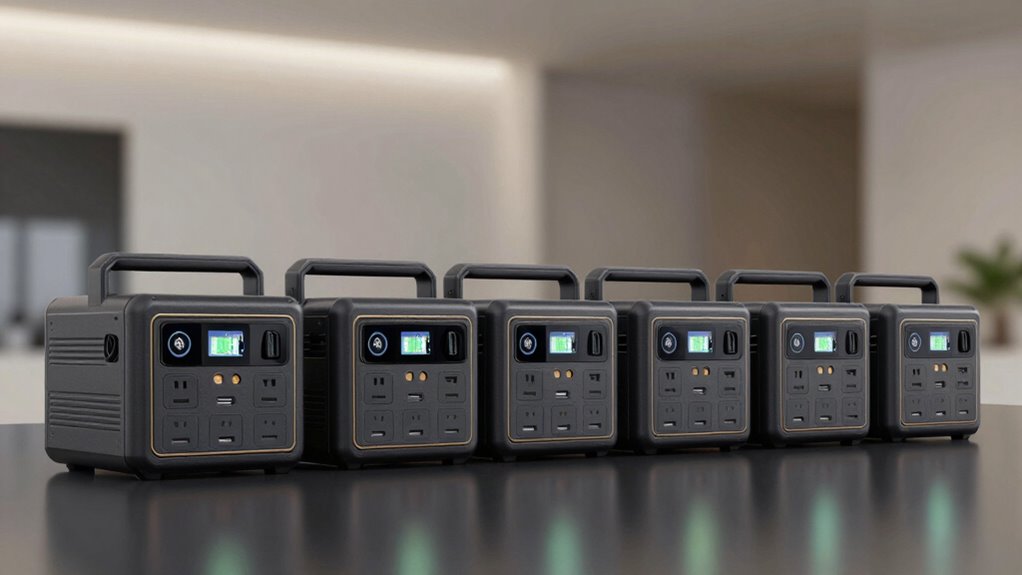

A 2000W portable power station can run many everyday appliances, but the right pick depends on both its continuous output and how long its battery can supply that load. I rank the OUPES Mega 1 as the best overall balance here, while the Jackery Explorer 2000 v2 is a stronger fit for buyers prioritizing a larger-capacity backup option, and the EBL Acc2400 suits users who need higher rated output. The key tradeoffs are power versus runtime, capacity versus carry weight, and feature breadth versus simplicity. Some models in this roundup are below 2000W continuous output, despite fitting the broader portable-power category. Read on for the full comparison and guidance on choosing the right match for your loads.

Get the latest gadgets delivered free with Prime
- Fast, free delivery on millions of items
- Prime Video, Amazon Music and more included
- Member-only deals all year
Complete the kit


Key Takeaways
- OUPES Mega 1 is the closest match to the 2000W brief: its stated 2000W output and 4500W surge rating distinguish it from the 1500W Anker SOLIX S2000 and Jackery Explorer 1000 V2.
- Capacity and output are separate buying decisions: the Anker SOLIX S2000 pairs a stated 2010Wh battery with 1500W output, so its energy reserve does not make it a 2000W inverter.
- The EBL Acc2400 prioritizes higher output: its 2400W rating makes it relevant for heavier loads, but buyers should check appliance startup demands and the model’s full specifications.
- Smaller-capacity stations trade runtime for easier handling: the 576Wh model and 1024Wh OUPES Mega 1 Lite are better suited to shorter sessions than extended backup.
- Model names can blur meaningful differences: the OUPES Mega 1 and Mega 1 Lite have different stated output and capacity figures, so buyers should verify the exact model rather than shop by family name.




| portable power station 2000w | Battery type | Capacity | Weight | Continuous output |
|---|---|---|---|---|
| Anker SOLIX S2000 Portable Pow | LFP, 314Ah cells | 2,010Wh | 35.7lb | 1,500W |
| OUPES Mega 1 Lite Portable Pow | LiFePO4 | 1,024Wh | 26.7lb | — |
| EBL Acc2400 Portable Power Sta | LiFePO4 | 1,843.2Wh | 55lb | — |
| Jackery Explorer 1000 V2 Porta | LFP | 1,070Wh | 23.8lb | — |
| Jackery Explorer 2000 v2 Porta | LiFePO4 | 2,042Wh | 39.5lb | — |
| Portable Power Station 2000W P | LiFePO₄ | 576Wh | 14.8 lbs | 1,000W |
| Anker SOLIX C1000 Gen 2 Portab | LiFePO₄ | 1,024Wh | 11.3kg | 2,000W |
| OUPES Mega 1 Portable Power St | LiFePO₄, 3,500+ cycles | — | — | 2,000W |
More Details on Our Top Picks
Anker SOLIX S2000 Portable Power Station 2010Wh 1500W
The Anker SOLIX S2000 is a strong fit for buyers who want roughly 2kWh of storage without hauling a bulky unit. Its 35.7-pound weight and compact dimensions make it easier to stow or move than the 55-pound EBL Acc2400, while its 2,010Wh capacity is nearly double that of the Jackery Explorer 1000 V2. The tradeoff is output: at 1,500W continuous, it has less headroom for high-draw appliances than either the EBL’s 2,400W rating or the Jackery Explorer 2000 v2’s 2,200W. Eight AC outlets help organize several devices, and six recharge methods offer flexibility for home and vehicle use. Its 400W solar input is useful, though not as high as the OUPES Mega 1 Lite’s 800W input. Skip it if you need a 12V DC port or regularly lift a station over distance.
Pros:- 2,010Wh capacity supports longer runtimes than the 1,070Wh Jackery Explorer 1000 V2.
- 35.7-pound weight and compact dimensions are easier to manage than the 55-pound EBL Acc2400.
- Eight AC outlets provide room for several household or camping devices.
- Six recharge methods include up to 400W solar input.
Cons:- 1,500W continuous output offers less headroom than the EBL Acc2400 and Jackery Explorer 2000 v2.
- No dedicated 12V DC port for directly powering some vehicle accessories.
- At 35.7 pounds, it is still substantial for frequent carrying.
Best for: Campers and outage-prepared households seeking about 2kWh of capacity in a comparatively compact station, with several AC devices to power.
Not ideal for: Buyers running appliances above 1,500W continuously, or drivers who need a dedicated 12V DC port for car accessories.
- Capacity:2,010Wh
- Battery type:LFP, 314Ah cells
- Continuous output:1,500W
- Peak output:3,000W
- Weight:35.7lb
- Maximum solar input:400W
- AC outlets:8, front and rear
- Recharge options:AC, solar, wall outlet, generator, alternator charger, car outlet
Our verdict“Choose the SOLIX S2000 if you want near-2kWh storage in a relatively compact package and can work within its 1,500W continuous output.”
OUPES Mega 1 Lite Portable Power Station 1024Wh
The OUPES Mega 1 Lite prioritizes high output and short recharge stops over long off-grid runtime. Its 2,000W AC output can handle many appliances that exceed the 1,500W ceiling of the Anker SOLIX S2000 and Jackery Explorer 1000 V2, but its 1,024Wh battery stores about half as much energy as those 2kWh-class options. That makes it a better match for shorter outages, tool use, or trips where recharging is available than for running a refrigerator for extended periods. Fast 1,400W AC input is the standout: the supplied data cites a 46-minute full recharge, while 800W solar input can speed replenishment with a suitable panel setup. At 26.7 pounds, it is easier to carry than the larger-capacity EBL Acc2400. Factor in audible fan noise and the specific panels needed for fastest solar charging.
Pros:- 2,000W AC output exceeds the continuous rating of the Anker SOLIX S2000 and Jackery Explorer 1000 V2.
- Fast AC charging can replenish the station in a cited 46 minutes.
- At 26.7 pounds, it is lighter than the 2kWh-class Anker SOLIX S2000 and EBL Acc2400.
- Two 140W USB-C ports support high-power device charging.
Cons:- 1,024Wh capacity provides substantially less stored energy than the 2,010Wh Anker SOLIX S2000.
- Fastest solar charging calls for a specific three-panel, 240W setup.
- Cooling fan noise may be noticeable in quiet indoor spaces.
Best for: Travelers, DIY users, and backup-power buyers who need 2,000W appliance output, quick recharge cycles, and a lighter station for shorter-duration use.
Not ideal for: Households seeking long runtimes between recharges, or solar users who want the fastest charging without matching the specified panel arrangement.
- Capacity:1,024Wh
- Battery type:LiFePO4
- AC output:2,000W
- Surge output:4,500W
- AC input:1,400W
- Solar input:800W
- Weight:26.7lb
- USB-C ports:2 × 140W PD
- UPS switchover:Under 20ms
Our verdict“Pick the Mega 1 Lite if high appliance output and rapid recharging matter more to you than extended runtime from a larger battery.”
EBL Acc2400 Portable Power Station 2400W LiFePO4 Battery
The EBL Acc2400 is the power-focused choice here: its 2,400W output gives it more room for demanding appliances than the Anker SOLIX S2000’s 1,500W rating or the Jackery Explorer 2000 v2’s 2,200W. Its 1,843.2Wh battery also offers considerably more stored energy than the OUPES Mega 1 Lite, making the EBL better suited to substantial backup loads rather than short bursts of high output. A 0.1-second backup switch is useful for equipment that benefits from a quick handoff during an outage, and its mix of AC, USB, DC, car, and wireless charging ports accommodates varied devices. The cost of that capability is portability: at 55 pounds, it is far heavier than the 39.5-pound Jackery Explorer 2000 v2 and takes more storage space. I’d choose it for stationary backup or rolling-cart use, not frequent carrying.
Pros:- 2,400W output provides the highest continuous power rating among these five products.
- 1,843.2Wh capacity offers more stored energy than the OUPES Mega 1 Lite.
- 0.1-second backup switch supports a rapid changeover during blackouts.
- Port selection includes AC, USB-C, DC, car, and wireless charging.
Cons:- 55-pound weight makes it much harder to transport than the Jackery Explorer 2000 v2 or Anker SOLIX S2000.
- Larger dimensions require more storage space than the compact 2kWh-class alternatives.
- Its 1,843.2Wh capacity is below the Anker SOLIX S2000 and Jackery Explorer 2000 v2.
Best for: Homeowners or workshop users who need higher-wattage backup, a range of device connections, and a station that can remain mostly in one place.
Not ideal for: Hikers, frequent campers, or anyone who needs to carry a power station regularly; its 55-pound weight and larger footprint make transport cumbersome.
- Capacity:1,843.2Wh
- Battery type:LiFePO4
- Output power:2,400W
- Weight:55lb
- Dimensions:16.9 × 11.8 × 11in
- Charge cycles:3,500+
- Ports:4 AC, 2 USB-A, 2 USB-C, 1 car, 2 DC, 1 wireless
- Backup switch time:0.1 seconds
Our verdict“Choose the EBL Acc2400 for demanding backup loads and broad connectivity if you can keep its heavy, large body mostly stationary.”
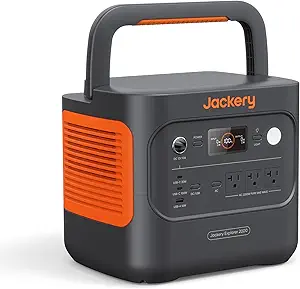
Jackery Explorer 1000 V2 Portable Power Station 1070Wh 1500W
The Jackery Explorer 1000 V2 makes more sense for road trips, camping, and portable device power than for buyers focused on a full 2kWh battery. At 23.8 pounds, it is the lightest option in this group, while its 1,070Wh capacity and 1,500W continuous output suit smaller appliances and several electronics. The tradeoff against the Anker SOLIX S2000 is clear: Jackery is easier to carry, but holds close to half the energy. Its three AC outlets also give less room for simultaneous plug-in devices than the Anker’s eight. A cited one-hour emergency recharge through the app can help when time is tight, and the 4,000-plus-cycle LFP battery supports long-term use. Solar charging is restricted to Jackery panels, which makes this a less flexible pick for people who already own other solar equipment.
Pros:- At 23.8 pounds, it is the easiest product in this group to carry.
- 1,500W continuous output supports multiple smaller appliances and electronics.
- App-based emergency charging is listed at one hour.
- LFP battery is rated for more than 4,000 charge cycles.
Cons:- 1,070Wh capacity is roughly half that of the Jackery Explorer 2000 v2 and Anker SOLIX S2000.
- Three AC outlets provide fewer connection points than the Anker SOLIX S2000.
- Solar charging is compatible only with Jackery brand panels.
Best for: Campers and road-trippers who value low carry weight, a useful AC output, and fast app-controlled recharging for shorter power needs.
Not ideal for: Buyers needing multi-day appliance runtime or broad solar-panel compatibility; its capacity is modest beside the 2kWh-class Jackery Explorer 2000 v2.
- Capacity:1,070Wh
- Continuous AC output:1,500W
- Surge power:3,000W
- Weight:23.8lb
- Battery type:LFP
- Emergency fast charge:1 hour via Jackery app
- Charge cycles:4,000+
- Ports:3 AC, 2 USB-C, 1 USB-A, 1 DC car
Our verdict“Pick the Explorer 1000 V2 when low carry weight matters more than the longer runtimes available from the 2kWh-class stations.”
Jackery Explorer 2000 v2 Portable Power Station
For buyers prioritizing quiet indoor operation without giving up 2kWh-class capacity, the Jackery Explorer 2000 v2 stands apart. Its 2,042Wh battery and 2,200W AC output give it more stored energy and appliance headroom than the Jackery Explorer 1000 V2, while its 39.5-pound weight is far below the EBL Acc2400’s 55 pounds. The sub-30dB silent mode is suited to overnight backup or indoor use where fan noise would be unwelcome. It also recharges to 80% in a cited 66 minutes with AC fast charging, though Emergency Super Charging requires the app. Three AC ports are fewer than the eight on the Anker SOLIX S2000, and its 2,200W rating is below the EBL’s 2,400W. This is a balanced 2kWh option, but not the best fit if outlet count or maximum output leads your priorities.
Pros:- 2,042Wh capacity pairs with 2,200W AC output for substantial backup use.
- 39.5-pound weight is lower than the EBL Acc2400’s 55 pounds.
- Silent mode is specified below 30dB for quieter indoor operation.
- AC fast charging reaches 80% in a cited 66 minutes.
Cons:- Three AC ports offer fewer plug-in connections than the Anker SOLIX S2000’s eight.
- 2,200W output is below the EBL Acc2400’s 2,400W rating.
- Emergency Super Charging requires app use.
Best for: Households and small-business users who want 2kWh-class backup with low operating noise for indoor spaces or overnight use.
Not ideal for: Buyers who need more than 2,200W continuous output, numerous AC outlets, or app-free access to Emergency Super Charging.
- Capacity:2,042Wh
- AC output:2,200W
- Weight:39.5lb
- Dimensions:13.2 × 10.4 × 11.5in
- Battery type:LiFePO4
- AC fast charging:0–80% in 66 minutes
- Noise level:Under 30dB in Silent Mode
- Ports:3 AC, USB-C PD 100W
Our verdict“Choose the Explorer 2000 v2 if quiet operation and portable 2kWh-class backup matter more than maximum output or a high AC outlet count.”
Portable Power Station 2000W Peak, 576Wh LiFePO4 Battery Solar Generator
This model makes the most sense when easy carrying matters more than long runtimes. At 14.8 pounds, it is much lighter than the 1,024Wh Anker SOLIX C1000 Gen 2 and OUPES Mega 1, while still offering four AC outlets and a 1,000W continuous output. Its 2,000W peak rating is not the same as 2,000W continuous power, so buyers should check the running wattage of appliances before relying on it for demanding loads. The 576Wh battery suits smaller devices, short work sessions, and brief outages, but will run down sooner than the Anker or OUPES. LiFePO₄ chemistry, a stated 3,000-plus cycle life, multiple charging inputs, and pass-through charging add practical flexibility. The tradeoff is limited stored energy, and solar panels and car cables are sold separately.
Pros:- 14.8-pound weight is easier to carry than the larger-capacity Anker SOLIX C1000 Gen 2 and OUPES Mega 1.
- Four pure sine wave AC outlets plus USB-C, USB-A, and DC connections support varied small-device setups.
- LiFePO₄ battery is rated for more than 3,000 cycles to 80% capacity.
- AC, solar, and car charging options and pass-through charging support flexible use.
Cons:- The 2,000W figure is peak output; continuous output is 1,000W.
- 576Wh capacity limits runtime during outages or when powering larger appliances.
- Solar panels and car charging cables are sold separately.
Best for: Campers, mobile workers, and emergency-kit buyers who want a light station for electronics and modest loads rather than extended appliance backup.
Not ideal for: Households seeking sustained 2,000W output or multi-hour backup for power-hungry appliances; this unit is rated for 1,000W continuous and has only 576Wh of capacity.
- Continuous output:1,000W
- Peak output:2,000W
- Capacity:576Wh
- Battery type:LiFePO₄
- Weight:14.8 lbs
- AC outlets:4 × 110V pure sine wave
- Maximum solar input:300W MPPT
- Cycle life:3,000+ cycles to 80%
Our verdict“Choose this compact option for lighter loads and easier carrying, but pick the Anker SOLIX C1000 Gen 2 or OUPES Mega 1 for true 2,000W continuous output and roughly twice the capacity.”
Anker SOLIX C1000 Gen 2 Portable Power Station
The Anker SOLIX C1000 Gen 2 is a strong fit for buyers who need 2,000W continuous output but also want a fast return to service between uses. Its 1,024Wh capacity doubles that of the lightweight 576Wh station in this roundup, giving it more room for appliances and longer sessions, though neither capacity guarantees a full day of backup at high loads. HyperFlash is specified to recharge the unit in 49 minutes, while the OUPES Mega 1 offers a particularly quick 0–80% AC charge; the charging figures describe different targets, so they are not direct equivalents. Ten ports and a 10ms UPS switchover broaden its role from outdoor power to short-interruption backup for electronics. The compromises are its 11.3kg weight and lack of a built-in handle, which make frequent carrying less appealing.
Pros:- Provides 2,000W continuous output with a 3,000W peak rating.
- HyperFlash is specified to recharge the station fully in 49 minutes.
- Ten ports and a 10ms UPS switchover support mixed device use and short power interruptions.
- LiFePO₄ battery is rated to retain 80% capacity after 4,000 cycles, with a 10-year warranty.
Cons:- At 11.3kg, it is considerably heavier than the 14.8-pound, lower-capacity station in this roundup.
- No built-in handle makes moving it through tight spaces less convenient.
- The 1,024Wh battery may not provide extended runtime for high-wattage appliances.
Best for: Home-office users and campers who need 2,000W continuous output, multiple connection options, and quick recharging between power sessions.
Not ideal for: Buyers who regularly carry their station over distance or need expandable capacity; its 11.3kg body has no built-in handle, and no battery expansion is specified.
- Continuous output:2,000W
- Peak output:3,000W
- Capacity:1,024Wh
- Battery type:LiFePO₄
- Ports:10
- UPS switchover:10ms
- AC recharge time:49 minutes for a full recharge
- Weight:11.3kg
- Warranty:10 years, InfiniPower
Our verdict“Pick the C1000 Gen 2 if fast recharging and 2,000W continuous output matter more than easy carrying or expandable capacity.”
OUPES Mega 1 Portable Power Station 1024Wh 2000W (4500W Surge)
The OUPES Mega 1 earns its place for buyers who may need more capacity later, not just a high output today. Its 2,000W continuous output matches the Anker SOLIX C1000 Gen 2, while the 1,024Wh battery starts at the same capacity; the distinction is that the OUPES can expand to 5,120Wh with two optional B2 batteries. That makes it a more adaptable base for longer backup, though expansion adds equipment, weight, and expense. Fast charging is another strength: the listed charge time is 36 minutes to 80% from AC, or 26 minutes with AC and solar combined. Four AC outlets, app control, and a UPS transfer under 20ms suit mixed home or work setups. Its 4,500W surge rating handles brief startup demands, but the stated runtime at full load is about one hour, and the station itself cannot provide that expanded runtime without extra batteries.
Pros:- 2,000W continuous output and 4,500W surge rating support substantial running loads and brief startup surges.
- Capacity can expand from 1,024Wh to as much as 5,120Wh with two optional B2 batteries.
- AC recharge reaches 80% in 36 minutes; combined AC and solar charging is listed at 26 minutes.
- Bluetooth app control and UPS protection with a transfer time under 20ms add monitoring and backup flexibility.
Cons:- At full 2,000W output, the listed runtime is about one hour.
- Expansion batteries are optional additions and increase the system’s weight and cost.
- The under-20ms UPS transfer is slower than the Anker SOLIX C1000 Gen 2’s 10ms specification.
Best for: Off-grid users and households planning staged backup capacity who want 2,000W continuous output, app monitoring, and the option to add batteries.
Not ideal for: Buyers who need long runtime at high loads without add-ons, or who want a simple lightweight station; full expansion requires separate batteries and increases the carrying burden.
- Continuous output:2,000W
- Surge output:4,500W
- Battery capacity:1,024Wh
- Expandable capacity:Up to 5,120Wh with two B2 extra batteries
- Battery type:LiFePO₄, 3,500+ cycles
- AC recharge:0–80% in 36 minutes
- Combined AC and solar recharge:0–80% in 26 minutes
- UPS transfer time:Under 20ms
- AC outlets:4 × 120V pure sine wave
Our verdict“Choose the Mega 1 if you want a 2,000W station that can grow into a larger backup system, but favor the Anker C1000 Gen 2 for its faster specified UPS switchover.”

How We Picked
I ranked these eight options by how clearly their stated specifications answer the needs behind a 2000W portable power station search: continuous AC output, battery capacity, and the usefulness of the overall feature set for backup or mobile power. A 2000W rating matters for running more demanding appliances, while watt-hours help estimate how long a station can run them. I treated surge output as a separate factor because brief startup peaks do not replace a strong continuous rating.
The order favors models that make their output and capacity combination easier to match to real loads, then weighs portability, versatility, and the likely compromises implied by smaller batteries or lower output. That is why the OUPES Mega 1 leads as a balanced 2000W-class pick, while the EBL Acc2400 stands out for higher stated output and the Jackery Explorer 2000 v2 for buyers seeking a larger-format option. Models rated at 1500W or below remain useful alternatives, but rank lower for shoppers who specifically need close to 2000W. Exact runtimes, charging rates, ports, and supported appliances depend on the complete model specifications and the load.
| portable power station 2000w | Battery type |
|---|---|
| Anker SOLIX S2000 Portable Pow | LFP, 314Ah cells |
| OUPES Mega 1 Lite Portable Pow | LiFePO4 |
| EBL Acc2400 Portable Power Sta | LiFePO4 |
| Jackery Explorer 1000 V2 Porta | LFP |
| Jackery Explorer 2000 v2 Porta | LiFePO4 |
| Portable Power Station 2000W P | LiFePO₄ |
| Anker SOLIX C1000 Gen 2 Portab | LiFePO₄ |
| OUPES Mega 1 Portable Power St | LiFePO₄, 3,500+ cycles |
Factors to Consider When Choosing Portable Power Station 2000w
Before choosing by a 2000W label, I would match the station to the appliances, duration, and places where you plan to use it. These checks help prevent paying for output you will not use—or buying a unit that cannot sustain your intended load.
Check Continuous Output Against Your Appliances
Start with the appliance’s running wattage, then check whether its startup demand is higher. Motors in refrigerators, pumps, and power tools can briefly draw more than their normal operating load, so a station’s surge figure may matter as much as its continuous rating. Do not treat peak or surge watts as power the unit can supply indefinitely. If several devices will run together, add their loads rather than judging each one alone. Leave some headroom for cycling appliances and unexpected demand. When a product listing gives only a peak rating, find the continuous AC output before buying.
Estimate Runtime From Watt-Hours, Not the 2000W Label
Output describes how much power a station can deliver at once; battery capacity describes how much energy it stores. A rough runtime estimate starts by dividing watt-hours by the device’s watts, but real AC runtime is lower because conversion and standby use consume energy. A 2000W appliance can drain a mid-sized battery quickly even if the inverter supports it. For backup planning, total the energy use over the hours you need, not just the peak load. Add reserve for cold conditions, battery aging, and appliances that cycle on and off. This calculation often points buyers toward more capacity rather than a higher watt rating.
Treat Solar Charging as a System, Not a Label
Solar compatibility does not by itself tell you how quickly a station can recharge. Check the allowed solar input, connector type, voltage range, and whether panels are included or sold separately. Panel output also varies with sunlight, angle, shade, and temperature, so a rated input is not a promise of constant charging speed. Buyers relying on solar during a power outage should compare the expected daily energy harvest with their daily use. A station that supports more solar input may shorten recharge time in suitable conditions, but only if the panel setup can supply it. Confirm compatibility before pairing third-party panels.
Weigh Carrying Practicality Against Backup Capacity
Higher-capacity stations can extend runtime, but they are often harder to lift, store, and move between a vehicle and campsite. Think about the route from storage to use, including stairs, car access, and whether one person must handle the unit. A compact model can be more useful for frequent short trips even if it cannot sustain appliances as long. For home backup, a larger station may make sense if it stays in one place and supports essential devices for longer. Check the actual dimensions, weight, handle design, and any wheel options rather than assuming “portable” means easy to carry. A realistic carrying plan can matter more than a small difference in rated capacity.
Verify Battery Chemistry, Care, and Warranty Terms
Battery chemistry affects expected service life, but the chemistry name alone does not describe the full ownership experience. Check the manufacturer’s stated cycle-life conditions, storage guidance, operating temperature range, and warranty coverage. Avoid storing a station fully depleted for long periods, and follow its recommended charge level and maintenance schedule. Frequent use as a home backup calls for attention to storage and periodic checks; occasional camping use may place different demands on the battery. Also confirm whether the warranty covers capacity loss and what support is available in your region. A longer stated lifespan is only useful if the care requirements and warranty terms fit your plans.
Match Port Selection and Charging to the Job
Count the devices you expect to connect at the same time and check which outlets or ports they require. USB-C power delivery, USB-A, car outlets, and AC sockets serve different devices, and a high total output does not mean every individual port can supply that amount. Check whether the station can recharge from wall power, a vehicle, solar, or more than one source, and note the specified charging times for each method. For outages, a quick wall recharge may be useful between events; for remote use, solar or vehicle charging can matter more. Do not assume a station supports pass-through operation or uninterrupted backup switching unless the manufacturer states it. Port layout and recharge options can determine whether a capable unit fits your actual routine.
Frequently Asked Questions
Does a 2000W portable power station run every 2000W appliance?
No. A 2000W continuous rating is a ceiling for the station’s output, not a guarantee that every appliance rated at 2000W will run reliably. Startup surges, the combined draw of other devices, and the station’s operating limits can push demand beyond its capacity. Check both the appliance’s running and startup wattage, and leave room for other loads. If an appliance regularly draws close to the station’s limit, a higher-output model such as the EBL Acc2400 may offer more headroom, subject to its full specifications.
Is a 2000W station with about 1000Wh enough for home backup?
It may run a suitable appliance, but its runtime can be limited when the load is substantial or used for many hours. The 1024Wh OUPES Mega 1 Lite, for example, has far less stored energy than the 2010Wh Anker SOLIX S2000, even though capacity and output are different measures. List the essential devices, estimate their average draw, and decide how many hours of backup you need. Include energy losses and avoid planning around the battery’s full rated capacity. For longer outages, capacity and a workable recharge plan matter as much as inverter output.
Should I choose a 1500W model or a 2000W model?
Choose based on the largest load you actually need to run, including startup demand, rather than the category name alone. A 1500W unit such as the Jackery Explorer 1000 V2 or Anker SOLIX S2000 may suit lighter appliances and can still offer useful battery capacity. A true 2000W-class option gives more room for heavier loads, but may cost you in carrying ease or other features depending on the model. If your devices stay well below 1500W, extra output may not improve your experience. If a planned appliance approaches that limit, check the 2000W and higher-output choices carefully.
Can I recharge a portable power station with solar panels during an outage?
Many stations support solar charging, but the station and panels must be electrically compatible. Confirm the power station’s solar input limits, voltage range, connector, and any panel requirements before assembling a setup. Actual recharge time changes with sunlight, panel placement, shade, and the energy being used while charging. A solar setup may help maintain essential loads or replenish the battery during the day, but it may not keep up with continuous heavy use. For outage planning, compare realistic daily solar production with your expected daily consumption and keep another charging method available when possible.
Is the OUPES Mega 1 the same as the OUPES Mega 1 Lite?
No. The listed specifications distinguish them: the OUPES Mega 1 is rated at 1024Wh, 2000W, and 4500W surge, while the Mega 1 Lite is listed as a 1024Wh model without the same output figures in its product name. Do not assume products in one family share inverter output, ports, charging limits, or included accessories. Compare the exact model number and manufacturer specification sheet before ordering. This distinction matters especially if your appliance needs close to 2000W of continuous power.
Conclusion
For the broadest fit among these picks, I recommend the OUPES Mega 1 as best overall, with its stated 2000W output and 4500W surge rating. The EBL Acc2400 is my pick for higher-output needs, while the Jackery Explorer 2000 v2 is the premium-style choice for buyers prioritizing a larger-format backup station; verify its exact output and capacity before purchase. For beginners with modest loads, the Jackery Explorer 1000 V2 offers a lower-output route into portable power, though it is not a 2000W unit. The 576Wh model is best for short, lighter-use sessions, while the Anker SOLIX S2000 makes more sense when capacity matters more than reaching 2000W output. If you value a smaller battery with a lower listed output, compare the OUPES Mega 1 Lite against the higher-output Mega 1 by exact specifications. Choose by the appliance load and runtime you need, not by the wattage in the product title alone.