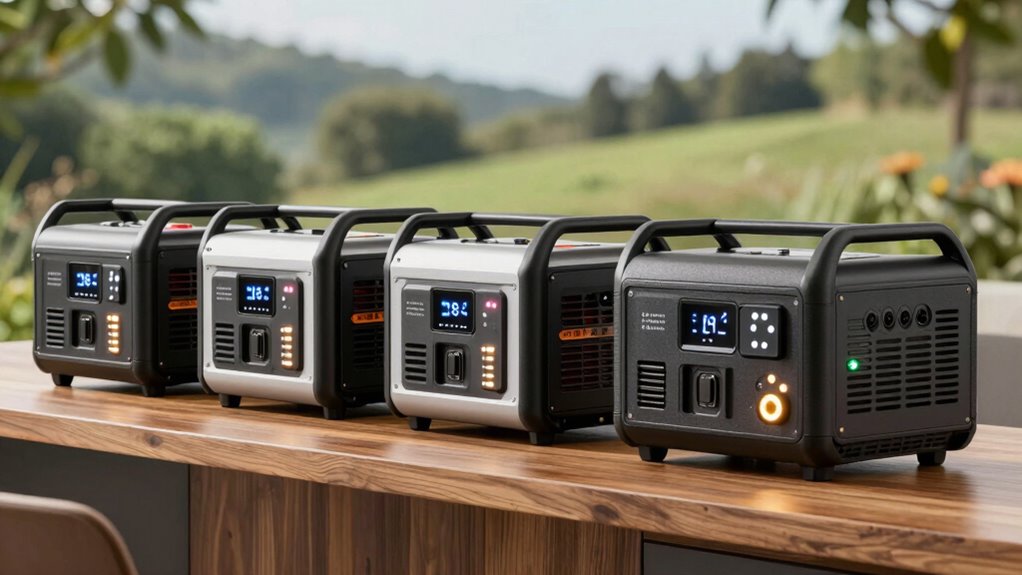

If you want a portable generator inverter around 4,000 watts, my best overall pick is the Champion 4000-Watt RV-Ready Portable Inverter Generator for its direct RV focus and straightforward gasoline setup. The Westinghouse iGen4000DFcv stands out for dual-fuel flexibility, while the maXpeedingrods MXR4000 adds Bluetooth app monitoring for buyers who value remote status checks. The main tradeoffs are fuel choice, starting and running output, RV connection needs, noise, and how much weight you are willing to manage. Models labeled 4,000 watts do not all deliver the same usable power or conveniences. Read on for the full comparison, buying advice, and picks matched to different needs.

Get the latest gadgets delivered free with Prime
- Fast, free delivery on millions of items
- Prime Video, Amazon Music and more included
- Member-only deals all year
Complete the kit


Key Takeaways
- RV readiness separates several close contenders: Champion’s RV-ready gasoline and dual-fuel models, along with the WEN 4800, are aimed at direct RV use, but buyers should still match the outlet and amperage to their rig.
- Dual fuel is a flexibility choice, not a guarantee of longer runtime: The Westinghouse iGen4000DFcv, iGen4000DFc, Champion dual-fuel model, and BILT HARD 5500W offer fuel options that may help when one fuel is unavailable; actual runtime depends on load and fuel capacity.
- Rated wattage is not the whole power story: The lineup ranges from 4,000-watt-named products to 4,400-, 4,800-, and 5,500-watt models, so compare running output and starting surge before powering air conditioners or motor-driven appliances.
- Convenience features distinguish similar gasoline choices: The maXpeedingrods MXR4000 adds Bluetooth monitoring, while the GENMAX, Pulsar, PowerSmart, and Evernexta models call for closer checks of their specific outlets, controls, and included accessories.
- Several names appear more than once, but they are not automatically interchangeable: The two PowerSmart and two Evernexta entries, plus similarly named Oxseryn models, require SKU-level checks for engine, outlet, and configuration details before purchase.
| maXpeedingrods MXR4000 4000-Watt Inverter Generator with Bluetooth App Monitoring |  | Best for App-Based Monitoring | Peak output: 4,000 watts | Running output: 3,200 watts | Fuel: Gas | VIEW ON AMAZON | See Our Full Breakdown |
| Pulsar PGD40ISCO 4000W Portable Gas Inverter Generator |  | Best for Quiet, Simple Portability | Peak output: 4,000 watts | Running output: 3,200 watts | Fuel: Gasoline | VIEW ON AMAZON | See Our Full Breakdown |
| Evernexta 4000W Portable Gas Inverter Generator |  | Best for Outlet Variety | Peak output: 4,000 watts | Running output: 3,200 watts | Fuel type listed: Natural gas | VIEW ON AMAZON | See Our Full Breakdown |
| PowerSmart 4000-Watt Portable Inverter Generator |  | Best for Longer Light-Load Runs | Peak output: 4,000 watts | Running output: 3,200 watts | Fuel: Gasoline | VIEW ON AMAZON | See Our Full Breakdown |
| PowerSmart 4000-Watt Portable Inverter Generator | | Best for Quiet, Multi-Device Power | Starting output: 4,000 watts | Running output: About 3,200 watts | Fuel: Gasoline | VIEW ON AMAZON | See Our Full Breakdown |
| Westinghouse iGen4000DFcv Dual Fuel Portable Inverter Generator |  | Best for Quiet, Higher Running Output | Peak output: 4,000 watts | Running output: 3,300 watts | Fuel type: Gasoline or propane | VIEW ON AMAZON | See Our Full Breakdown |
| Champion 4000-Watt RV-Ready Portable Inverter Generator |  | Best Lightweight Gas-Only Pick | Starting wattage: 4,000 watts | Running wattage: 3,000 watts | Fuel type: Gasoline | VIEW ON AMAZON | See Our Full Breakdown |
| Champion 4000-Watt Dual-Fuel RV-Ready Portable Inverter Generator |  | Best for Extended Propane Runtime | Starting wattage: 4,000 watts | Running wattage: 3,000 watts gasoline; 2,700 watts propane | Fuel type: Gasoline or propane | VIEW ON AMAZON | See Our Full Breakdown |
| Westinghouse iGen4000DFc Dual-Fuel Portable Inverter Generator |  | Best for Convenient Starting | Peak wattage: 4,000 watts | Running wattage: 3,300 watts | Fuel type: Gasoline or propane | VIEW ON AMAZON | See Our Full Breakdown |
| Oxseryn 4400-Watt Gas-Powered Inverter Generator |  | Best for Longer Gasoline Runtime | Starting wattage: 4,400 watts | Running wattage: 3,400 watts | Fuel type: Gasoline | VIEW ON AMAZON | See Our Full Breakdown |
| Evernexta 4000W Gas-Powered Inverter Generator |  | Best Lightweight Pick | Engine: 208cc, 4-stroke | Fuel: Gasoline | Starting / running watts: 4,000 / 3,400 watts | VIEW ON AMAZON | See Our Full Breakdown |
| WEN 4800-Watt RV-Ready Portable Inverter Generator |  | Best for Higher Continuous Output | Engine displacement: 224cc | Starting / running watts: 4,800 / 4,000 watts | Fuel and tank: Gasoline; 1.9 gallons | VIEW ON AMAZON | See Our Full Breakdown |
| Oxseryn 4400-Watt Gasoline Inverter Generator |  | Best for Light-Load Runtime | Engine: 4-stroke | Fuel: Gasoline | Peak / running power: 4,400 / 3,400 watts | VIEW ON AMAZON | See Our Full Breakdown |
| GENMAX 4000W Portable Inverter Generator with 223cc Engine |  | Best for USB-C Convenience | Engine: 223cc | Fuel: Gasoline | Peak / running watts: 4,000 / 3,200 watts | VIEW ON AMAZON | See Our Full Breakdown |
| BILT HARD 5500W Dual-Fuel Inverter Generator |  | Best Dual-Fuel Flexibility | Fuel type: Gasoline or LPG | Starting watts: 5,500 watts on gasoline; 5,000 watts on LPG | Running watts: 4,000 watts on gasoline; 3,600 watts on LPG | VIEW ON AMAZON | See Our Full Breakdown |
| portable generator inverter 4000w | Weight | Runtime | Noise level | Outlets |
|---|---|---|---|---|
| maXpeedingrods MXR4000 4000-Wa | 48.5 pounds | — | — | — |
| Pulsar PGD40ISCO 4000W Portabl | 47.3 pounds | Up to 4 hours at half load | 59 dB | — |
| Evernexta 4000W Portable Gas I | 48 pounds | Up to 7 hours at 25% load | 59 dB at 23 feet | 2 × 120V 20A, 1 × 120V 30A L5-30R, 1 × 12V DC 8.3A |
| PowerSmart 4000-Watt Portable | — | Up to 8 hours at 25% load | 59 dBA at 23 feet and 25% load | — |
| PowerSmart 4000-Watt Portable | 50.7 pounds | — | Under 59 dBA at 23 feet | — |
| Westinghouse iGen4000DFcv Dual | — | Up to 7 hours | As low as 52 dBA | 120V duplex household, TT-30R 30A RV, and two USB |
| Champion 4000-Watt RV-Ready Po | Less than 49 pounds | Up to 10 hours at 25% load | 64 dBA at 23 feet | 120V 25A TT-30R, 120V 20A household duplex, 12V automotive-style, and parallel outlets |
| Champion 4000-Watt Dual-Fuel R | Less than 55 pounds | Up to 10 hours on gasoline or 25 hours on propane at 25% load | 64 dBA at 23 feet | — |
| Westinghouse iGen4000DFc Dual- | — | Up to 7 hours | As low as 52 dBA | Six total, including RV-ready TT-30R, 5–20R household, and USB outlets |
| Oxseryn 4400-Watt Gas-Powered | 56 pounds | Up to 14 hours at 25% load | Under 72 dBA at 23 feet | Two 120V AC, one 12V DC, and one RV outlet |
| Evernexta 4000W Gas-Powered In | 55 lb | — | — | One 30A outlet, two 120V AC outlets, one 12V DC port |
| WEN 4800-Watt RV-Ready Portabl | 72.7 pounds | Up to 7 hours at half load | 62 dB at quarter load | Four 120V receptacles, one TT-30R, one 12V DC, two 5V USB |
| Oxseryn 4400-Watt Gasoline Inv | 57 pounds | Up to 14 hours at 25% load | — | Two 120V AC, one 30A RV, one 12V DC |
| GENMAX 4000W Portable Inverter | 61.7 lbs | Up to 11.7 hours at 50% load | 66 dB(A) at 7 m and 25% load | 30A RV, 120V 20A household, USB-C, USB-A |
| BILT HARD 5500W Dual-Fuel Inve | 61.7 pounds | — | — | 120V 20A, 120V 30A RV TT-30R, 12V DC 8A, USB-C/USB-A adapter |
More Details on Our Top Picks
maXpeedingrods MXR4000 4000-Watt Inverter Generator with Bluetooth App Monitoring
I’d put the MXR4000 ahead of the Pulsar PGD40ISCO for buyers who want to check generator status from a phone: its app reports output, fuel level, voltage, frequency, and runtime, and can switch ECO mode on or off. It delivers the same 3,200 running watts as the Pulsar in a similarly light 48.5-pound package, with an included RV outlet adapter and LED lights that add practical campsite utility. Clean inverter power suits electronics, though the listed specs don’t quantify its distortion. The main compromise is the 4-liter tank, which is smaller than the Pulsar’s one-gallon tank and calls for more attention during longer sessions. Recoil starting is also less convenient than electric start. I’d choose it for visibility and portability, not extended unattended runtime.
Pros:- App displays fuel level, output, voltage, frequency, and runtime
- App-controlled ECO mode offers a convenient way to adjust operation
- 48.5-pound body is relatively easy to move
- Includes an RV outlet adapter and LED lights
Cons:- 4-liter fuel tank is small for extended operation
- Recoil start requires manual starting
- Only two outlets are listed
Best for: RV travelers and campers who want app access to fuel and operating data, plus a compact generator with an RV adapter.
Not ideal for: Buyers needing long stretches between refueling or an electric-start generator; the 4-liter tank and recoil start are limiting.
- Peak output:4,000 watts
- Running output:3,200 watts
- Fuel:Gas
- Fuel tank:4 liters
- Engine:145 cc, 4-stroke
- Starting system:Recoil
- Weight:48.5 pounds
- Warranty:2 years with lifetime technical assistance
Our verdict“Choose the MXR4000 if app monitoring and a lightweight RV-ready package matter more than long runtime between refills.”
Pulsar PGD40ISCO 4000W Portable Gas Inverter Generator
The Pulsar PGD40ISCO is a straightforward pick for buyers who want 4,000 peak watts in a lightweight package without app controls or a complicated feature set. At 47.3 pounds, it is the lightest of these five listed models, and its stated 59 dB operation gives it a clear camping-friendly angle. Its 3,200 running watts match the maXpeedingrods MXR4000 and the two PowerSmart options, while parallel capability leaves room to combine it with a compatible unit later. The tradeoff is endurance: the one-gallon tank is rated for only four hours at half load, so its published runtime is less compelling than PowerSmart’s eight hours at a much lighter 25% load. I’d favor the Pulsar for easier carrying and a defined noise rating, but not for minimizing fuel stops.
Pros:- 47.3-pound weight is the lowest listed in this group
- Rated at 59 dB
- Parallel-ready for connection to a compatible generator
- Three outlets are listed
Cons:- One-gallon tank is rated for four hours at half load
- No app monitoring is listed
- The runtime figure is limited to a specified half-load condition
Best for: Campers and RV owners who prioritize a lighter 4,000-watt-class generator, quiet-operation specifications, and parallel readiness.
Not ideal for: People running a substantial load for long periods without refueling; its stated runtime is four hours at half load.
- Peak output:4,000 watts
- Running output:3,200 watts
- Fuel:Gasoline
- Fuel tank:1 gallon
- Runtime:Up to 4 hours at half load
- Noise level:59 dB
- Weight:47.3 pounds
- Warranty:3-year limited
Our verdict“Pick the Pulsar if low carrying weight and a stated quiet-operation rating matter more than extended runtime.”
Evernexta 4000W Portable Gas Inverter Generator
The Evernexta 4000W earns its place here through a useful mix of outlet types: two household outlets, an L5-30R outlet, and a 12V DC connection cover more setups than the two outlets listed for the maXpeedingrods MXR4000. Its below-3% THD specification gives buyers a concrete power-quality figure for everyday electronics, while parallel capability provides an upgrade path if 3,200 running watts are not enough. The stated 59 dB noise level and 48-pound weight also keep it in the portable-camping category. Its runtime claim—up to seven hours—applies only at 25% load, so I would not read it as a full-load endurance figure. The product data also lists natural gas as its fuel type but gasoline as its engine type; I’d verify fuel compatibility with the seller before buying.
Pros:- Below-3% THD specification supports use with sensitive electronics
- Includes household, L5-30R, and 12V DC outlets
- Parallel capability can expand available output with a compatible unit
- 48-pound listed weight keeps it portable
Cons:- Fuel type is listed as natural gas while the engine is listed as gasoline
- Seven-hour runtime applies only at 25% load
- Running output is 3,200 watts, not 4,000 watts
Best for: Campers or backup-power buyers who need household, 30A, and 12V connections in one portable inverter generator.
Not ideal for: Buyers who need a clearly specified fuel setup or long runtime at heavier loads; the fuel data is inconsistent and runtime is stated only at 25% load.
- Peak output:4,000 watts
- Running output:3,200 watts
- Fuel type listed:Natural gas
- Runtime:Up to 7 hours at 25% load
- Noise level:59 dB at 23 feet
- Total harmonic distortion:Below 3%
- Outlets:2 × 120V 20A, 1 × 120V 30A L5-30R, 1 × 12V DC 8.3A
- Weight:48 pounds
Our verdict“Consider the Evernexta for its broad outlet selection, but confirm the fuel specification and match its runtime claim to your expected load.”
PowerSmart 4000-Watt Portable Inverter Generator
Among these five, this PowerSmart 4000-Watt has the strongest stated runtime figure: up to eight hours at 25% load from its 1.3-gallon tank. That makes it a stronger fit for overnight or campsite use at modest demand than the Pulsar PGD40ISCO, whose one-gallon tank is rated for four hours at half load. PowerSmart also specifies less than 3% THD and includes a digital display, cold-start technology, low-oil shutdown, and overload protection. Its L5-30R, duplex household outlet, DC outlet, and USB ports give it useful connection options. The caveat is that the eight-hour claim is tied to light load, and the parallel kit is sold separately. At 50.7 pounds, it is also heavier than the Pulsar and MXR4000.
Pros:- Up to eight hours of stated runtime at 25% load
- Less than 3% THD is specified for sensitive electronics
- Digital display and protective shutdown features
- Includes L5-30R, household, DC, and USB outlets
Cons:- Eight-hour runtime applies only at 25% load
- Parallel kit is sold separately
- At 50.7 pounds, it is heavier than the Pulsar PGD40ISCO and MXR4000
Best for: Campers and home-backup users who expect modest loads and value a longer stated run between refills, plus multiple outlet types.
Not ideal for: Buyers needing long runtime at high output, the lightest portable option, or an included parallel kit.
- Peak output:4,000 watts
- Running output:3,200 watts
- Fuel:Gasoline
- Fuel tank:1.3 gallons
- Runtime:Up to 8 hours at 25% load
- Noise level:59 dBA at 23 feet and 25% load
- Engine:149 cc, 4-stroke
- Warranty:2-year limited manufacturer warranty
Our verdict“Choose this PowerSmart for extended light-load use and varied connections, provided you can work within its load-dependent runtime.”
PowerSmart 4000-Watt Portable Inverter Generator
This second PowerSmart 4000-Watt listing suits buyers who want several device connections and a stated noise level under 59 dBA, rather than a detailed runtime claim. It shares the 3,200-watt running output, 149 cc engine, 1.3-gallon tank, and 50.7-pound weight of the other PowerSmart in this group. Both list parallel capability, but neither includes the parallel kit according to the product data. Compared with the Evernexta, this model’s listed advantage is six outlets and a clear under-59-dBA specification; Evernexta gives a more explicit outlet breakdown and a runtime figure, though only at 25% load. The PowerSmart’s data does not state runtime, so I would not choose it when hours between refills are central to the decision.
Pros:- Six listed outlets cover AC, DC, and USB devices
- Noise level is specified at under 59 dBA from 23 feet
- Under-3% THD is suitable for sensitive electronics
- Includes Eco Mode and parallel capability
Cons:- No runtime figure is provided
- Parallel kit is sold separately
- The 1.3-gallon tank may require refueling during extended operation
Best for: Campers or tailgaters who need multiple AC, DC, and USB connections and value a stated sub-59-dBA operating level.
Not ideal for: Buyers choosing primarily by runtime, since no runtime figure is provided, or anyone who needs a parallel kit included.
- Starting output:4,000 watts
- Running output:About 3,200 watts
- Fuel:Gasoline
- Fuel tank:1.3 gallons
- Noise level:Under 59 dBA at 23 feet
- Total harmonic distortion:Under 3%
- Engine:149 cc, 4-stroke
- Weight:50.7 pounds
Our verdict“Choose this PowerSmart when quiet operation and several device connections matter more than having a published runtime estimate.”
Westinghouse iGen4000DFcv Dual Fuel Portable Inverter Generator
I’d shortlist this Westinghouse when usable running capacity and lower operating noise matter more than long intervals between refueling. Its 3,300 running watts exceed the Champion 4000-Watt models’ 3,000 watts on gasoline, leaving more room for concurrent RV or campsite loads. It also switches between gasoline and propane, and its under-3% THD rating suits sensitive electronics. The tradeoff is a modest 1.69-gallon tank, with up to seven hours of stated gasoline runtime, so extended outings may mean more frequent fuel stops than with the Champion’s up-to-10-hour gasoline figure at 25% load. At as low as 52 dBA, it is the quieter-sounding choice on paper, though the noise measurements are not stated at the same distance. Recoil starting is another compromise: this model lacks the electric and remote starts of the Westinghouse iGen4000DFc.
Pros:- 3,300 running watts, more than the Champion 4000-Watt gasoline and dual-fuel models’ 3,000 gasoline running watts
- Gasoline or propane operation offers fuel flexibility
- Noise is listed as low as 52 dBA
- RV outlet, USB ports, digital display, wheels, and extendable handle support campsite use
Cons:- Recoil start only, unlike the electric and remote starts on the Westinghouse iGen4000DFc
- Gasoline runtime is up to seven hours on a 1.69-gallon tank
- Noise figure is not given at the same measurement distance as the Champion models
Best for: RV owners and campers who want dual-fuel flexibility, relatively quiet operation, and more than 3,000 running watts for sensitive electronics.
Not ideal for: Buyers who want push-button or remote starting, or who need longer gasoline runtime between refills.
- Peak output:4,000 watts
- Running output:3,300 watts
- Fuel type:Gasoline or propane
- Runtime:Up to 7 hours
- Gas tank capacity:1.69 gallons
- Noise level:As low as 52 dBA
- Total harmonic distortion:Less than 3%
- Outlets:120V duplex household, TT-30R 30A RV, and two USB
- Starting system:Recoil
Our verdict“Choose this Westinghouse if you value 3,300 running watts and a low stated noise level over longer runtime and push-button starting.”
Champion 4000-Watt RV-Ready Portable Inverter Generator
I’d pick this Champion for buyers who want a gasoline-only inverter that is notably light for the output class. At less than 49 pounds, it is easier to move than the dual-fuel Champion 4000-Watt model, listed under 55 pounds, and far more portable than many larger backup units. Its stated up-to-10-hour runtime at 25% load also outlasts the Westinghouse iGen4000DFcv’s up-to-seven-hour figure, though the load conditions differ from real-world heavier use. The compromise is 3,000 running watts, below both Westinghouse iGen4000 models’ 3,300 watts, and there is no propane option. RV, household, and 12V outlets cover common campsite needs; CO Shield and low-oil shutoff add useful protection. I’d favor it for mobility, not as a substitute for a whole-home backup system.
Pros:- Listed weight under 49 pounds makes it the lightest specified option in this batch
- Up to 10 hours of runtime at 25% load
- Less than 3% THD for sensitive electronics
- CO Shield and low-oil shutoff provide automatic safety protections
Cons:- Gasoline only, unlike the dual-fuel Westinghouse and Champion alternatives
- 3,000 running watts is below the Westinghouse iGen4000 models’ 3,300 watts
- Parallel kit is sold separately, and the product is not recommended for emergency home backup
Best for: Solo campers and RV owners who need a light, gas-powered inverter with RV and household outlets and a published low-load runtime.
Not ideal for: Buyers who need propane operation, more than 3,000 running watts, or a generator intended for emergency whole-home backup.
- Starting wattage:4,000 watts
- Running wattage:3,000 watts
- Fuel type:Gasoline
- Runtime:Up to 10 hours at 25% load
- Fuel tank capacity:1.54 gallons
- Weight:Less than 49 pounds
- Noise level:64 dBA at 23 feet
- Outlets:120V 25A TT-30R, 120V 20A household duplex, 12V automotive-style, and parallel outlets
- Safety features:CO Shield automatic shutoff and low-oil shutoff
Our verdict“Choose this Champion if low carrying weight and gasoline runtime matter more than propane flexibility or the higher running output of the Westinghouse models.”
Champion 4000-Watt Dual-Fuel RV-Ready Portable Inverter Generator
This Champion earns its place for buyers who can bring a propane cylinder and want to reduce gasoline stops. Its standout figure is up to 25 hours on propane at 25% load, compared with up to 10 hours on gasoline; the Westinghouse iGen4000DFcv lists up to seven hours on its gasoline tank. That makes this model better suited to long, steady campsite use than to maximizing output: running capacity falls to 2,700 watts on propane, versus 3,000 watts on gasoline and 3,300 watts from either listed Westinghouse fuel setup. It also weighs under 55 pounds and includes RV, household, 12V, and parallel outlets. At 64 dBA from 23 feet, it is not the quietest listed option. I’d choose it for fuel flexibility and propane endurance, not for the highest running wattage.
Pros:- Runs on gasoline or propane
- Up to 25 hours on propane at 25% load
- RV, household, 12V, and parallel outlets serve several campsite uses
- CO Shield and low-oil shutoff are included
Cons:- Running output drops to 2,700 watts on propane
- At 64 dBA from 23 feet, it is louder on paper than the Westinghouse iGen4000DFcv’s as-low-as-52-dBA figure
- Parallel kit is sold separately
Best for: RV travelers and campers who can carry propane and prioritize fewer fuel changes during long periods of modest power use.
Not ideal for: Buyers who need more than 2,700 running watts on propane, the lowest stated noise figure, or a parallel kit included.
- Starting wattage:4,000 watts
- Running wattage:3,000 watts gasoline; 2,700 watts propane
- Fuel type:Gasoline or propane
- Runtime:Up to 10 hours on gasoline or 25 hours on propane at 25% load
- Gasoline tank capacity:1.54 gallons
- Noise level:64 dBA at 23 feet
- Weight:Less than 55 pounds
- Total harmonic distortion:Less than 3%
- Safety features:CO Shield automatic shutoff and low-oil shutoff
Our verdict“Choose this Champion if propane runtime is your priority and you can work within its 2,700-watt propane running output.”
Westinghouse iGen4000DFc Dual-Fuel Portable Inverter Generator
I’d give this Westinghouse the edge for buyers who want dual-fuel operation without relying on a recoil pull. Its remote, electric, and recoil starting choices make it easier to start from a distance or with less effort than the recoil-only Westinghouse iGen4000DFcv. It also supplies 3,300 running watts, more than either Champion 4000-Watt model’s 3,000 watts on gasoline, and lists noise as low as 52 dBA. Those advantages come with a shorter stated gasoline runtime: up to seven hours from a 1.69-gallon tank, compared with the Champions’ up-to-10-hour figures at 25% load. The product data does not specify a propane runtime, so I wouldn’t assume the same endurance on that fuel. Clean power under 3% THD and an RV-ready outlet make it a strong convenience-focused choice, but frequent refueling may matter on longer trips.
Pros:- Remote, electric, and recoil starting options
- 3,300 running watts, above the Champion models’ 3,000 watts on gasoline
- Gasoline or propane operation
- Less than 3% THD and RV-ready outlet for campsite electronics and RV use
Cons:- Gasoline runtime is up to seven hours on a 1.69-gallon tank
- The product data gives no propane-runtime figure
- Its 52 dBA noise claim is not specified at the same distance as the Champion models’ 64 dBA figure
Best for: RV owners who want gasoline-or-propane flexibility, 3,300 running watts, and remote or electric starting for easier operation.
Not ideal for: Campers prioritizing long stretches between refueling or buyers who need a published propane-runtime figure before choosing.
- Peak wattage:4,000 watts
- Running wattage:3,300 watts
- Fuel type:Gasoline or propane
- Runtime:Up to 7 hours
- Gas tank capacity:1.69 gallons
- Noise level:As low as 52 dBA
- Total harmonic distortion:Less than 3%
- Starting methods:Remote, electric, and recoil
- Outlets:Six total, including RV-ready TT-30R, 5–20R household, and USB outlets
Our verdict“Choose the iGen4000DFc if easy starting and higher running output outweigh the Champion dual-fuel model’s longer stated propane runtime.”
Oxseryn 4400-Watt Gas-Powered Inverter Generator
I’d consider this Oxseryn when longer stated gasoline runtime matters more than a quieter, enclosed setup. It lists up to 14 hours at 25% load from a two-gallon tank, exceeding the Champion gasoline model’s up-to-10-hour figure at the same stated load. Its 3,400 running watts also edge above the Westinghouse iGen4000 models’ 3,300 watts. That extra output and endurance come with a clear tradeoff: this is an open-frame design, and its noise rating is under 72 dBA at 23 feet, compared with 64 dBA for the Champions. At 56 pounds, it is portable but heavier than the sub-49-pound Champion. It offers an RV outlet, two AC outlets, and 12V DC, though the supplied data does not state THD or a CO shutdown feature. I’d favor it for longer-running outdoor loads, not quiet camping.
Pros:- 3,400 running watts, slightly above the Westinghouse iGen4000 models’ 3,300 watts
- Up to 14 hours at 25% load from a two-gallon tank
- Includes AC, 12V DC, and RV outlets
- 56-pound weight and compact listed dimensions aid transport
Cons:- Open-frame design and noise listed under 72 dBA at 23 feet make it a less appealing fit for quiet campsites
- Gasoline only, unlike the dual-fuel Westinghouse and Champion options
- Product data does not state THD or carbon monoxide shutdown protection
Best for: Campers or RV owners who need more than 3,300 running watts and value extended low-load gasoline runtime over quiet operation.
Not ideal for: Noise-sensitive campers, buyers seeking propane flexibility, or anyone who wants a stated THD figure and documented CO shutdown protection.
- Starting wattage:4,400 watts
- Running wattage:3,400 watts
- Fuel type:Gasoline
- Runtime:Up to 14 hours at 25% load
- Fuel tank capacity:2 gallons
- Noise level:Under 72 dBA at 23 feet
- Weight:56 pounds
- Engine:208 cc, 4-stroke
- Outlets:Two 120V AC, one 12V DC, and one RV outlet
Our verdict“Choose the Oxseryn for higher running output and longer stated low-load runtime if its open-frame noise and gasoline-only setup suit your site.”
Evernexta 4000W Gas-Powered Inverter Generator
The Evernexta is a sensible choice when carrying weight matters more than full 4,000-watt running output. Its 55-pound frame is lighter than the WEN 4800-Watt RV-Ready Portable Inverter Generator, though the Evernexta supplies 3,400 running watts rather than 4,000. That output can cover a range of campsite and backup needs, while under 3% THD is a useful specification for powering sensitive electronics. A 30A outlet adds RV compatibility, and ECO mode plus low-oil shutdown cover basic operating protections. The tradeoff is endurance: its two-gallon tank is rated for up to 6.5 hours at 50% load, shorter than the WEN’s stated seven hours at half load. Its open-frame design also offers less protection from weather than an enclosed-style unit. I’d choose it for easier lifting, not for the longest run time.
Pros:- 55-pound weight is comparatively manageable for loading and moving
- Under 3% THD is suited to sensitive electronics
- Includes a 30A outlet alongside AC and 12V DC connections
- ECO mode, overload protection, and low-oil shutdown add practical safeguards
Cons:- 3,400 running watts falls below the WEN’s 4,000-watt rated output
- Up to 6.5 hours at 50% load means more frequent refueling than longer-running alternatives
- Open-frame construction leaves components more exposed to the elements
Best for: Campers and homeowners who need a relatively light inverter generator with a 30A outlet and clean power for electronics.
Not ideal for: RV users who need 4,000 watts of continuous output or buyers seeking longer rated runtime and a more weather-protected enclosure.
- Engine:208cc, 4-stroke
- Fuel:Gasoline
- Starting / running watts:4,000 / 3,400 watts
- Total harmonic distortion:Under 3%
- Outlets:One 30A outlet, two 120V AC outlets, one 12V DC port
- Tank and runtime:2 gallons; up to 6.5 hours at 50% load
- Weight:55 lb
- Warranty:2-year limited home-use warranty
Our verdict“Choose the Evernexta if a lighter 55-pound generator and low-distortion output matter more than maximum continuous wattage or extended runtime.”
WEN 4800-Watt RV-Ready Portable Inverter Generator
Among these five, the WEN is the clearest fit for buyers who need 4,000 watts of rated output, rather than a 4,000-watt starting figure. It also has 4,800 surge watts and a TT-30R RV receptacle, giving it more continuous capacity than the Evernexta and Oxseryn, both rated at 3,400 running watts. Four 120V receptacles, USB ports, wheels, and a telescoping handle make it a more complete campsite package, although its 72.7-pound weight makes lifting less appealing than moving the lighter Evernexta. WEN lists up to seven hours at half load and 62 dB at quarter load; those figures are tied to specific operating conditions, not every load. CO shutdown protection is welcome, but a parallel connection kit is sold separately if you want to combine units.
Pros:- 4,000 rated watts provide more continuous capacity than the 3,400-watt Evernexta and Oxseryn
- TT-30R RV outlet plus household, DC, and USB connections
- Wheels and telescoping handle help with ground-level transport
- CO shutdown protection and a three-year warranty are included
Cons:- At 72.7 pounds, it is heavier to lift than the other reviewed generators
- Parallel connection kit is sold separately
- Seven-hour runtime applies at half load, not necessarily under heavier use
Best for: RV owners and households needing 4,000 watts of continuous 120V inverter output, convenient outlet variety, and wheeled transport.
Not ideal for: Buyers who frequently lift a generator into a vehicle alone or want a parallel kit included with the generator.
- Engine displacement:224cc
- Starting / running watts:4,800 / 4,000 watts
- Fuel and tank:Gasoline; 1.9 gallons
- Runtime:Up to 7 hours at half load
- Noise level:62 dB at quarter load
- Outlets:Four 120V receptacles, one TT-30R, one 12V DC, two 5V USB
- Weight:72.7 pounds
- Warranty:3 years
Our verdict“Pick the WEN if you need the strongest stated continuous output here and can accommodate its heavier, wheeled format.”
Oxseryn 4400-Watt Gasoline Inverter Generator
The Oxseryn stands out for its up to 14-hour runtime at 25% load, a rating that favors overnight essentials and lighter campsite use rather than sustained high output. Its 4,400 peak watts and 3,400 running watts put it close to the Evernexta in continuous capacity, but it offers a longer stated low-load run and the same useful 30A RV connection. Cold-start technology may appeal to owners who expect to run it in chilly conditions. The limitation is how to read the endurance claim: 25% load is a modest draw, so buyers running several demanding appliances should expect a different result. Compared with the WEN, it gives up 600 running watts, but weighs 15.7 pounds less. Its one-year warranty is also shorter than WEN’s three years.
Pros:- Up to 14 hours of runtime is stated at 25% load
- Includes a 30A RV outlet and 12V DC outlet
- 57-pound weight is lower than the WEN’s 72.7 pounds
- Cold-start technology, ECO mode, and low-oil shutdown are included
Cons:- 3,400 running watts is well below the WEN’s 4,000-watt rating
- The 14-hour runtime claim applies only at 25% load
- One-year warranty is shorter than the WEN’s three-year coverage
Best for: Campers and backup-power users who mostly run lighter loads and value long stated runtime between refueling stops.
Not ideal for: RV owners who need 4,000 watts of continuous output, or buyers who expect the 14-hour figure under heavy loads.
- Engine:4-stroke
- Fuel:Gasoline
- Peak / running power:4,400 / 3,400 watts
- Tank capacity:2 gallons
- Runtime:Up to 14 hours at 25% load
- Outlets:Two 120V AC, one 30A RV, one 12V DC
- Weight:57 pounds
- Warranty:1 year
Our verdict“Choose the Oxseryn for lighter loads and longer stated low-load operation, but favor the WEN if you need more continuous power.”
GENMAX 4000W Portable Inverter Generator with 223cc Engine
The GENMAX is a practical match for buyers who want RV and household connections plus direct USB charging in one generator. Its 30A RV outlet and 120V 20A outlet cover common power needs, while USB-C and USB-A ports can charge small devices without a separate adapter. At 3,200 running watts, it offers less continuous capacity than the Evernexta and Oxseryn, both rated at 3,400 watts, and substantially less than the WEN’s 4,000 watts. Its stated up to 11.7 hours at 50% load is a useful endurance claim, though actual runtime varies with demand. The open-frame design and 61.7-pound weight make it less convenient to carry than the Evernexta. Less than 5% THD and a three-year limited warranty round out a feature set aimed at everyday usability over maximum output.
Pros:- USB-C and USB-A ports simplify charging small devices
- 30A RV outlet and 120V 20A household outlet cover common connections
- Up to 11.7 hours at 50% load is a useful stated runtime
- Less than 5% THD, low-oil shutdown, and a three-year limited warranty
Cons:- 3,200 running watts is lower than the Evernexta and Oxseryn’s 3,400 watts
- Open-frame construction offers less protection from weather
- At 61.7 pounds, it is heavier than the Evernexta and Oxseryn
Best for: Campers and RV users who want USB-C charging, a 30A outlet, and a longer stated half-load runtime in one unit.
Not ideal for: Buyers whose loads require more than 3,200 running watts or who prioritize low weight and a protected enclosure.
- Engine:223cc
- Fuel:Gasoline
- Peak / running watts:4,000 / 3,200 watts
- Total harmonic distortion:Less than 5%
- Outlets:30A RV, 120V 20A household, USB-C, USB-A
- Runtime:Up to 11.7 hours at 50% load
- Noise level:66 dB(A) at 7 m and 25% load
- Weight:61.7 lbs
- Warranty:3-year limited warranty
Our verdict“Choose the GENMAX if USB-C charging and its RV-ready outlet mix matter more than matching the lineup’s higher running-watt ratings.”
BILT HARD 5500W Dual-Fuel Inverter Generator
The BILT HARD is the only option in this group with gasoline and LPG operation, making fuel choice its main advantage over the gas-only WEN and GENMAX. It supplies 4,000 running watts on gasoline, matching the WEN’s rated output, but falls to 3,600 running watts on LPG. That flexibility can matter when a buyer already keeps propane for other equipment or wants another fuel option during an outage. The generator also includes a 30A RV outlet, USB connections, an operating display, and CO auto-shutoff. Its 1.14-gallon gasoline tank is small, though, and the supplied details give no runtime figure to compare directly with the other models. At 61.7 pounds it is lighter than the WEN, but buyers should weigh fuel flexibility against the extra planning that comes with two fuel modes.
Pros:- Runs on gasoline or LPG, unlike the gas-only WEN and GENMAX
- Provides 4,000 running watts on gasoline
- Includes a 30A RV outlet, USB options, and a digital operating display
- CO auto-shutoff, overload indicators, and low-oil protection are specified
Cons:- Small 1.14-gallon gasoline tank may mean more frequent refueling
- Running output drops to 3,600 watts on LPG
- No runtime figure is provided in the supplied product data
Best for: Preparedness-minded homeowners and RV users who want to switch between gasoline and LPG and need 4,000 watts of gasoline running output.
Not ideal for: Buyers who prioritize long gasoline run time between refills or want a stated runtime figure before choosing.
- Fuel type:Gasoline or LPG
- Starting watts:5,500 watts on gasoline; 5,000 watts on LPG
- Running watts:4,000 watts on gasoline; 3,600 watts on LPG
- Engine:160cc 4-stroke OHV
- Fuel tank capacity:1.14 gallons
- Outlets:120V 20A, 120V 30A RV TT-30R, 12V DC 8A, USB-C/USB-A adapter
- Starting method:Recoil
- Weight:61.7 pounds
- Safety features:CO auto-shutoff, overload indicators, AC/DC breakers, low-oil protection
Our verdict“Pick the BILT HARD if dual-fuel choice is your priority, but choose a gas-only alternative if you want clearer runtime expectations or fewer refueling stops.”

How We Picked
I ranked these generators by how well their stated configuration matches common 4,000-watt-class needs: RV connection, home backup for selected loads, and portable power away from an outlet. I gave more weight to clearly useful differences—such as dual-fuel operation, RV-ready connections, higher stated output, and app monitoring—than to a wattage label alone. I also considered how much a buyer must verify before relying on the unit, including running versus starting watts, outlet type, fuel capacity, and the exact model number.
The order reflects buyer fit and the clarity of the available differentiators, not a claim that every unit performs identically or has been independently tested. RV-ready and flexible-fuel models rank well for buyers who need those specific capabilities; higher-output choices suit heavier loads only when their running ratings support them. Products with duplicate or closely related names receive more cautious positioning because specifications can vary by SKU. I do not treat advertised wattage, portability, or fuel flexibility as a substitute for checking the product manual and your actual load list.
Factors to Consider When Choosing Portable Generator Inverter 4000w
Before choosing a 4,000-watt-class inverter generator, I would start with the job it must do and the exact devices it must power. The product names in this roundup can make models sound more alike than their connections, usable output, or fuel systems really are. These checks help prevent a generator that is powerful on paper but awkward or unsuitable for your setup.
Match Running and Starting Watts to Your Load
Write down the running watts for everything you expect to power at once, then identify appliances with motors or compressors that need extra starting power. Air conditioners, refrigerators, pumps, and some power tools can briefly draw more than their steady-state rating. A generator advertised as 4,000 watts may list a lower continuous output, so do not plan around the headline number alone. Add a reasonable margin rather than assuming you can run every listed appliance simultaneously. A common mistake is adding appliance running watts but ignoring startup surges. If the manual does not clearly state both ratings, treat that missing information as a reason to verify before buying.
Confirm the RV Outlet and Connection Plan
“RV-ready” is useful only if the generator’s receptacle matches your RV’s power cord or your intended adapter. Check outlet type, amperage, and whether the generator’s continuous output can support the loads you plan to use. An adapter changes the connection, not the generator’s available power. Some buyers also need to account for a transfer switch or a qualified electrician when connecting backup power to home circuits; never backfeed a house through a wall outlet. Before purchase, compare the outlet layout in the manual with your RV or equipment rather than relying on a product name. This matters even when two generators share the same wattage label.
Choose Fuel Flexibility for Your Real Supply Situation
Dual-fuel models let you choose between gasoline and propane, which can be helpful when storage rules, availability, or planned use favor one fuel. That flexibility can bring extra steps: propane needs a compatible tank and hose, and the generator may deliver different output or runtime on each fuel. Compare the specifications for both fuels instead of assuming the headline rating applies equally. Gasoline can be convenient for short-notice refueling, while stored propane may suit some backup plans, but neither choice removes the need for safe storage. A common buying error is selecting dual fuel for the feature alone without checking included fittings and fuel-specific ratings. Choose it when the second fuel solves a real supply or storage problem.
Treat Portability as a Whole-Unit Question
“Portable” does not mean easy for one person to lift, move, or load into a vehicle. Check the listed weight, dimensions, wheel kit, handle arrangement, and whether those items are included or sold separately. A larger-output model such as the WEN 4800, Oxseryn 4400-watt options, or BILT HARD 5500W may make sense for heavier loads, but added capacity can also mean more bulk to transport. Think about the path from storage to use, including stairs, gravel, and vehicle cargo space. Buyers often focus on the generator’s weight and overlook fuel, accessories, and the effort needed to secure it during transport. If it will stay at a campsite or worksite, portability may matter less than access to controls and outlets.
Compare Runtime, Noise, and Maintenance Details
Runtime figures are meaningful only when you compare the load used to produce them and the fuel capacity behind them. A long runtime at a light load may not predict performance while running an RV air conditioner or several household devices. Look for published noise measurements and the distance and load conditions used; numbers gathered under different conditions are not directly comparable. Read the maintenance schedule for oil changes, air-filter care, and fuel-system storage, especially if the generator may sit between emergencies. Infrequent use can make stale gasoline and neglected maintenance more troublesome than a small difference in advertised runtime. I would favor specifications that clearly describe test conditions over a larger claim with little context.
Verify the Exact SKU Before Ordering
This roundup includes two PowerSmart entries, two Evernexta entries, and two similarly named Oxseryn generators, so brand and wattage alone may not identify the unit you intend to buy. Compare the model number, engine size, outlets, fuel type, and included accessories on the listing and manual. A changed suffix can signal a different fuel configuration or feature set. Do not assume a photo, title, or shared brand name confirms the same electrical output. Save the exact model number and check that it matches the documentation before purchase. This extra check is especially useful when the product title uses rounded wattage or omits whether its rating is peak or running output.
Frequently Asked Questions
Can a 4,000-watt inverter generator run my RV air conditioner?
It may, but the answer depends on the air conditioner’s running draw, its startup surge, and what else is operating in the RV. Check the generator’s continuous output rather than relying on its maximum or headline wattage. If the compressor’s startup demand exceeds the generator’s capacity, the unit may trip or fail to start the appliance. A soft-start device can reduce startup demand on some systems, but it does not increase the generator’s rated output. Compare the appliance and generator manuals before deciding whether a 4,000-watt-class model fits your setup.
Should I pick a dual-fuel model over a gasoline-only generator?
I would choose dual fuel when having a second fuel source improves your backup plan or matches how you store fuel. The Westinghouse and Champion dual-fuel options in this roundup add that flexibility, while gasoline-only models may suit buyers who want a simpler fuel setup. Check each fuel’s output and runtime separately; a unit may not provide identical power on gasoline and propane. Also confirm whether the propane hose or other required fittings are included. If you expect to use only gasoline, dual-fuel capability may add complexity without solving a need.
Is an RV-ready outlet enough to connect a generator to my RV?
Not by itself: the outlet must match your RV connection, and the generator must supply enough continuous power for the loads you intend to run. Check outlet type and amperage in the generator documentation, then compare them with your RV cord and electrical system. An adapter may allow a physical connection, but it cannot provide more power than the generator can produce. Consider air-conditioner startup demand and other appliances running at the same time. If you are uncertain about a connection or adapter, consult the RV or generator manufacturer before use.
Why do some models say 4,400, 4,800, or 5,500 watts in a 4,000-watt-class roundup?
Listings may use different headline ratings, and some generators in this group are adjacent higher-output alternatives rather than exact 4,000-watt matches. The Oxseryn, WEN, and BILT HARD models could appeal to buyers who need more capacity, but their headline figures should not be treated as continuous output. Compare rated running watts, surge watts, and any fuel-specific ratings before deciding. Higher output can help with simultaneous loads, though it may come with more weight or a larger footprint. If your needs are modest, paying attention to usable output and portability may matter more than the biggest number.
How should I choose between two listings with the same brand and wattage?
Start with the full model number, since similar product titles can hide differences in fuel type, engine, outlet layout, or included equipment. This is particularly relevant here because PowerSmart and Evernexta each appear twice, and the Oxseryn entries have similar names. Compare the manufacturer’s specification sheet and manual rather than relying on listing photos or shortened titles. Confirm running output, receptacles, weight, and any RV-ready or fuel features you need. If those details cannot be matched clearly to the exact SKU, ask the seller or manufacturer before buying.
Conclusion
My best overall pick is the Champion 4000-Watt RV-Ready Portable Inverter Generator for buyers whose priority is a direct RV-focused gasoline setup. For best value, I would compare the PowerSmart and Evernexta listings only after verifying the exact SKU and outlet details; their similar names make that check part of the decision. The best premium-style choice for flexibility is the Westinghouse iGen4000DFcv if dual fuel fits your backup plan, while the maXpeedingrods MXR4000 suits buyers who want Bluetooth monitoring. For beginners, a clearly documented single-fuel model with an outlet layout that matches the intended use is usually easier to manage than extra fuel options. For higher-load needs, consider the WEN 4800, Oxseryn 4400-watt models, or BILT HARD 5500W only after checking their continuous output, weight, and connection requirements against your load list.