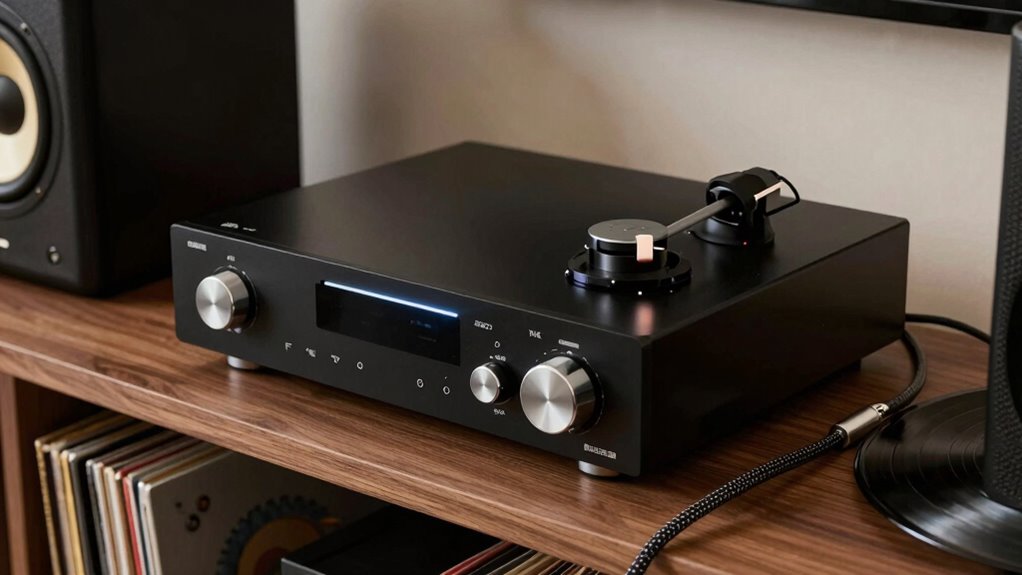

For a phono preamp audiophile upgrade, I’d start with the iFi Zen Phono 3 for its broad MM/MC support and adjustment options. The Cambridge Audio Solo is a simpler match for moving-magnet systems, while the Parks Audio Waxwing suits listeners who want app-based DSP control. The main tradeoffs are cartridge compatibility, how much adjustment you need, and whether you prefer a straightforward analog signal path or extra features such as tubes, Bluetooth, or digital processing. A more elaborate preamp is not automatically a better match for your cartridge or system. Read on for my breakdown of all 14 options and guidance on choosing one that fits your setup.

Get the latest gadgets delivered free with Prime
- Fast, free delivery on millions of items
- Prime Video, Amazon Music and more included
- Member-only deals all year
Complete the kit



Key Takeaways
- Cartridge support creates the clearest dividing line: the Zen Phono 3, Fosi Audio BOX X5, and Douk Audio T9 support MM and MC, while several simpler options are intended for MM cartridges.
- The Zen Phono 3 is the strongest all-around fit for flexible systems: its MM/MC support and adjustment options give it more room to adapt than the basic MM-focused picks.
- The Cambridge Audio Solo favors simplicity over flexibility: it is a focused choice for MM owners who want a dedicated phono stage without tube, headphone, or app features.
- The Waxwing takes a different route to customization: DSP and app control offer sound-shaping choices, but they may be unnecessary for listeners who want a conventional analog preamp.
- Extra features come with practical tradeoffs: tube models add a distinct design and, on some units, headphone or tone controls, while Bluetooth and compact budget models prioritize convenience over a more specialized audiophile feature set.
| iFi Zen Air Phono 2 Phono Preamp |  | Best Overall for MM/MC Flexibility | Cartridge support: MM and MC | Noise floor: -141 dBV | Audio output: Stereo | VIEW ON AMAZON | See Our Full Breakdown |
| Pyle PP999 Phono Turntable Preamp |  | Best Basic Line-Level Fix | Inputs: Stereo RCA | Outputs: Stereo RCA | Pickup support: Magnetic pickups | VIEW ON AMAZON | See Our Full Breakdown |
| Jancane Phono Preamp for Turntable – Mini Electronic Audio Stereo Phonograph Preamplifier with RCA Input, RCA/TRS Output, Low Noise Operation, 12V DC Adapter |  | Best for RCA-to-TRS Connectivity | Model: 221-B | Channels: 2 | Inputs: Stereo RCA | VIEW ON AMAZON | See Our Full Breakdown |
| Ampapa A1 Vacuum Tube Phono Preamp and Headphone Amplifier | 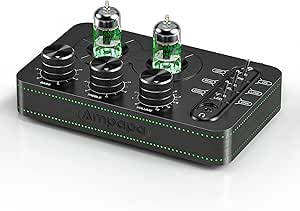 | Best for MM Headphone Listening | Model: A1 | Amplifier type: Tube | Cartridge support: MM | VIEW ON AMAZON | See Our Full Breakdown |
| Douk Audio P7 Vacuum Tube Phono Preamp with Balanced XLR Output |  | Best Tube Pick for Balanced Systems | Inputs: MM phono/RCA | Outputs: RCA and balanced XLR | Tubes: Replaceable PSVANE ECC83 | VIEW ON AMAZON | See Our Full Breakdown |
| ART DJPREII Phono Preamplifier |  | Best for Cartridge Matching and Rumble Control | Inputs: RCA left and right | Outputs: RCA left and right | Input capacitance: Switchable between 100 pF and 200 pF | VIEW ON AMAZON | See Our Full Breakdown |
| Fluance PA10 Phono Preamp with RIAA Equalization for MM Turntables |  | Best for Straightforward MM Stereo Systems | Model: PA10UK | Turntable compatibility: Moving-magnet (MM) | Channels: 2 | VIEW ON AMAZON | See Our Full Breakdown |
| Fosi Audio Box X2 Phono Preamp Mini Stereo Hi-Fi Preamplifier with Gain Gear for MM Turntable and Record Player, DC 12V Power Supply |  | Best for MM Tube-Tone Experimentation | Model: BoxX2 | Cartridge compatibility: MM | Gain modes: 39 dB / 42 dB / 45 dB | VIEW ON AMAZON | See Our Full Breakdown |
| Fosi Audio BOX X5 Phono Preamp for MM and MC Turntables |  | Best for MM-to-MC Upgrade Flexibility | Cartridge compatibility: MM and MC | Gain settings: 38 / 48 / 56 / 66 dB | Channels: Listed as 1 | VIEW ON AMAZON | See Our Full Breakdown |
| Douk Audio T9 Vacuum Tube Phono Preamp with Headphone Output and Treble/Bass Control for MM/MC Turntables |  | Best for Headphone Listening and Tone Controls | Channels: 2 | Phono compatibility: MM and MC | Inputs: MM/MC phono and RCA line-level | VIEW ON AMAZON | See Our Full Breakdown |
| Cambridge Audio Solo Moving Magnet Phono Preamplifier |  | Best for a Simple, Low-Noise MM Setup | Cartridge support: Moving Magnet | Channels: 2 | Output power: 10 watts | VIEW ON AMAZON | See Our Full Breakdown |
| MANAYO PM6BT Bluetooth Phono Preamp |  | Best for Wireless Listening | Bluetooth version: 5.2 | Receiver codecs: SBC, AAC, aptX, aptX-LL, aptX-HD | Transmitter codecs: SBC, aptX, aptX-LL, aptX-HD | VIEW ON AMAZON | See Our Full Breakdown |
| Parks Audio Waxwing Phono DSP Preamp with Optical Output and App Control |  | Best for DSP and Record-by-Record Tuning | Cartridge compatibility: MM, MI, and MC | Minimum input level: 0.2 mV | EQ settings: Hundreds | VIEW ON AMAZON | See Our Full Breakdown |
| Zen Phono 3 Audiophile MM/MC Turntable Pre-Amplifier |  | Best for Cartridge Matching and Upgrade Flexibility | Cartridge compatibility: MM/MC | Gain range: 36–72 dB | Gain control: Adjustable independently of loading | VIEW ON AMAZON | See Our Full Breakdown |
| phono preamp audiophile | Weight | Dimensions |
|---|---|---|
| iFi Zen Air Phono 2 Phono Prea | — | — |
| Pyle PP999 Phono Turntable Pre | 8.8 ounces | 8.25 × 4 × 2 inches |
| Jancane Phono Preamp for Turnt | 0.33 kg | — |
| Ampapa A1 Vacuum Tube Phono Pr | 0.38 kg | 3.62 × 6.02 × 0.98 inches |
| Douk Audio P7 Vacuum Tube Phon | 1.56 pounds | 4.88 × 6.1 × 1.65 inches |
| ART DJPREII Phono Preamplifier | — | 4.5 x 4.6 x 1.85 inches |
| Fluance PA10 Phono Preamp with | 11.52 ounces | 3.6 x 4 x 2.25 inches |
| Fosi Audio Box X2 Phono Preamp | 0.65 kg | — |
| Fosi Audio BOX X5 Phono Preamp | 2.4 lbs | 4.1 x 6.5 x 1.4 inches |
| Douk Audio T9 Vacuum Tube Phon | 0.96 kg | — |
| Cambridge Audio Solo Moving Ma | 1600 g | 6.9 x 5.2 x 1.9 inches |
| MANAYO PM6BT Bluetooth Phono P | 1.33 pounds | 8.9 x 6.34 x 2.44 inches |
| Parks Audio Waxwing Phono DSP | — | — |
| Zen Phono 3 Audiophile MM/MC T | — | — |
More Details on Our Top Picks
iFi Zen Air Phono 2 Phono Preamp
The iFi Zen Air Phono 2 is my most versatile pick for an audiophile setup because it supports both moving-magnet and moving-coil cartridges, avoiding an upgrade bottleneck if you change cartridge types later. Its stated -141 dBV noise floor and precise RIAA equalization suit listeners prioritizing a quiet, properly balanced phono signal, while the subsonic filter can help tame record rumble before it reaches speakers. Compared with the simpler Pyle PP999, it is the more capable choice for cartridge flexibility and noise-conscious listening; the Pyle is better framed as a basic line-level converter. The tradeoff is a wired-only design and limited supplied details about adjustments or connections beyond that. Choose it for an adaptable vinyl chain, not for wireless convenience.
Pros:- Supports both MM and MC cartridges
- Specified -141 dBV noise floor targets quiet playback
- Precise RIAA equalization for accurate phono correction
- Subsonic filter helps reduce record rumble
Cons:- Wired connectivity only
- Provided product data does not specify adjustable gain or cartridge loading options
- One-year warranty is relatively limited for a long-term component
Best for: Vinyl listeners using an MM cartridge now who may move to MC, and audiophiles seeking low-noise playback with rumble filtering.
Not ideal for: Buyers who need wireless connectivity or want extensive cartridge loading and gain adjustments documented before purchase.
- Cartridge support:MM and MC
- Noise floor:-141 dBV
- Audio output:Stereo
- Connectivity:Wired
- RIAA equalization:Precise RIAA equalization
- Filter:Subsonic filter
- Color:Black
- Warranty:1 year
Our verdict“Choose the iFi if cartridge flexibility and a low-noise, rumble-conscious signal path matter more than wireless features.”
Pyle PP999 Phono Turntable Preamp
The Pyle PP999 earns a place as a straightforward way to connect a turntable to equipment that lacks a phono input. Its stereo RCA input and output keep setup familiar, and its compact, lightweight form makes it easy to position near a source. That placement matters here: the product guidance recommends keeping it close to the turntable to reduce noise and interference. Compared with the more cartridge-flexible iFi Zen Air Phono 2, the PP999 is a basic bridge for magnetic pickups rather than a future-facing MM/MC option. Its listed sensitivity and maximum output provide useful connection context, but the supplied data does not describe selectable loading or other audiophile adjustments. The required 12 V adapter and placement sensitivity are practical compromises, so I would choose it for compatibility first, not system tuning.
Pros:- Converts phono output to line level for equipment without a phono input
- Stereo RCA inputs and outputs simplify connection
- Compact 8.8-ounce design is easy to position
- Specified input sensitivity and output level clarify basic system matching
Cons:- Requires a 12 V DC adapter
- Placement near the source is recommended to limit noise and interference
- Product data supports magnetic pickups but does not specify MC compatibility or cartridge adjustments
Best for: Turntable owners with a magnetic cartridge and a receiver, powered speakers, or computer setup that has no dedicated phono input.
Not ideal for: Listeners planning an MC cartridge upgrade or seeking documented cartridge loading, advanced controls, or especially flexible system matching.
- Inputs:Stereo RCA
- Outputs:Stereo RCA
- Pickup support:Magnetic pickups
- Input sensitivity:3 mV at 50 kΩ
- Maximum output:2 V peak-to-peak at 10 kΩ
- Power:12 V DC adapter
- Dimensions:8.25 × 4 × 2 inches
- Weight:8.8 ounces
Our verdict“Pick the PP999 when you need a simple RCA line-level connection, but skip it if cartridge flexibility is a priority.”
Jancane Phono Preamp for Turntable – Mini Electronic Audio Stereo Phonograph Preamplifier with RCA Input, RCA/TRS Output, Low Noise Operation, 12V DC Adapter
The Jancane 221-B stands out for offering both RCA and TRS outputs, giving a turntable owner a route into compatible equipment that the RCA-only Pyle PP999 does not provide. It converts a phono signal to line level, uses low-noise op-amps, and includes a 12 V adapter for a simple plug-in setup. The stated ceiling of 2 V peak-to-peak gives a clear limit, though it may not suit every downstream input or system-level preference. Unlike the iFi Zen Air Phono 2, whose supplied data confirms MM and MC support, Jancane’s listing does not establish cartridge compatibility beyond turntable phono conversion. Its output choices are useful, but they are not balanced XLR connections. I would choose it when TRS compatibility solves a real connection problem, not as a feature-rich upgrade path.
Pros:- Provides both RCA and TRS outputs
- Low-noise op-amps are intended to keep the converted signal clear
- Includes a 12 V DC adapter for plug-and-play setup
- Aluminum construction and freestanding form
Cons:- Maximum output is 2 V peak-to-peak, which may not suit every system
- No balanced XLR output
- Product data does not specify MM/MC compatibility or adjustable cartridge loading
Best for: Owners of a turntable and stereo gear with RCA or compatible TRS inputs who want a compact, powered phono-to-line converter.
Not ideal for: MC cartridge owners who need confirmed cartridge support, or listeners who require balanced XLR output or more than 2 V peak-to-peak.
- Model:221-B
- Channels:2
- Inputs:Stereo RCA
- Outputs:RCA and TRS
- Maximum output:2 V peak-to-peak at 10 kΩ
- Power:12 V DC
- Material:Aluminum
- Weight:0.33 kg
Our verdict“Choose the Jancane when its TRS output matches your system, but favor a better-documented MM/MC model if cartridge flexibility matters.”
Ampapa A1 Vacuum Tube Phono Preamp and Headphone Amplifier
The Ampapa A1 makes the most sense for an MM turntable owner who wants one small component to feed speakers or headphones. Its JAN 5654 tubes and adjustable bass and treble controls give listeners a way to shape the presentation, while RCA and 3.5 mm connections broaden its role beyond a basic phono-to-line converter. That hands-on tone shaping distinguishes it from the cleaner, simpler connection focus of the Pyle PP999. The tradeoff is firm: the A1 is designed for MM cartridges, unlike the MM/MC-capable iFi Zen Air Phono 2, so it is a poor match for an MC upgrade plan. Tube coloration and tone controls also make it less suited to buyers who want an unadjusted signal path. Its corded power further limits placement flexibility.
Pros:- JAN 5654 tubes provide a tube-based alternative to basic solid-state converters
- Bass and treble controls allow tonal adjustment
- RCA and 3.5 mm connections support amplifiers, active speakers, and headphones
- Metal enclosure with compact dimensions
Cons:- Designed for MM turntables rather than MC cartridges
- Requires corded electric power
- Warm sound profile and tone controls may not suit listeners seeking a strictly uncolored signal
Best for: MM turntable owners who want a compact tube-based component with headphone and active-speaker connections plus bass and treble adjustment.
Not ideal for: MC cartridge users and listeners seeking a neutral, controls-free phono stage or battery-powered portability.
- Model:A1
- Amplifier type:Tube
- Cartridge support:MM
- Tubes:JAN 5654
- Connectors:3.5 mm jack and RCA
- Output channels:2
- Output wattage:1 watt
- Dimensions:3.62 × 6.02 × 0.98 inches
- Weight:0.38 kg
Our verdict“Choose the A1 for an MM vinyl-and-headphone setup with adjustable tube character, not for MC flexibility or a neutral-only chain.”
Douk Audio P7 Vacuum Tube Phono Preamp with Balanced XLR Output
The Douk Audio P7 is the most connection-focused tube option here: its balanced XLR and RCA outputs let it fit systems that the RCA/TRS Jancane cannot serve directly. For vinyl, the high-pass filter cuts frequencies below 20 Hz, helping reduce subsonic content, and the bass and treble controls can be bypassed when you want to leave the tonal balance alone. Replaceable PSVANE ECC83 tubes add a customization route that the fixed-tube Ampapa A1 does not offer. The tradeoff is that the filter is available only in phono mode, and the listed input supports MM phono/RCA rather than establishing MC compatibility. This is a better fit for a tube-oriented MM chain with balanced downstream gear than for listeners seeking broad cartridge support or a simple, adjustment-free stage.
Pros:- Balanced XLR and standard RCA outputs support varied system connections
- High-pass filter cuts frequencies below 20 Hz in phono mode
- Replaceable PSVANE ECC83 tubes allow tube changes
- Bass and treble controls include a bypass option
Cons:- High-pass filter is available only with the phono input
- Listed input is MM phono/RCA, with no stated MC support
- Tube circuitry and tone controls add complexity for buyers seeking a minimal signal path
Best for: MM vinyl listeners building a tube-based system with balanced XLR inputs, subsonic filtering, and optional tone shaping.
Not ideal for: MC cartridge owners, buyers needing the high-pass filter on non-phono sources, or listeners who want a simple RCA-only component.
- Inputs:MM phono/RCA
- Outputs:RCA and balanced XLR
- Tubes:Replaceable PSVANE ECC83
- Tube operating voltage:180 V
- High-pass filter:Cuts frequencies below 20 Hz; available in phono mode
- Tone controls:Bass and treble with bypass
- Dimensions:4.88 × 6.1 × 1.65 inches
- Weight:1.56 pounds
Our verdict“Choose the P7 for an MM tube setup that needs balanced XLR and phono-mode rumble filtering, but skip it if you need confirmed MC support.”
ART DJPREII Phono Preamplifier
The ART DJPREII is the most adjustment-focused choice here for listeners who want to tune a straightforward MM setup rather than add tube coloration. Its switchable 100/200 pF capacitance gives cartridge matching more flexibility than the fixed-spec Fluance PA10, while the low-cut filter can reduce turntable rumble before it reaches the rest of the system. A front-panel gain trim and signal/clip indicators also help when connecting to recording gear or checking levels. The tradeoff is a more utility-minded design: it lacks the tube-swapping character of the Fosi Audio Box X2 and has no headphone output like the Douk Audio T9. I’d choose it for adjustment options and monitoring cues, not for built-in listening extras.
Pros:- Switchable 100 pF and 200 pF input capacitance supports cartridge matching.
- Selectable low-cut filter helps limit low-frequency turntable rumble.
- Front-panel gain trim with signal and clip indicators aids level setting.
- RIAA phono circuitry sits in a rugged aluminum case.
Cons:- Requires an external 12 V DC power adapter.
- No stated MC compatibility or headphone output.
Best for: MM turntable owners who want to adjust cartridge capacitance and gain, or connect their setup to recording equipment.
Not ideal for: Listeners seeking MC compatibility, headphone listening, or tube-based tonal customization; those features are absent or better served by the Fosi Audio BOX X5 and Douk Audio T9.
- Inputs:RCA left and right
- Outputs:RCA left and right
- Input capacitance:Switchable between 100 pF and 200 pF
- Low-cut filter:Switchable
- Gain control:Front-panel trim
- Frequency standard:RIAA
- Power:12 V DC; adapter included
- Dimensions:4.5 x 4.6 x 1.85 inches
Our verdict“Choose the ART DJPREII if cartridge capacitance adjustment, rumble filtering, and visible level cues matter more than tube character or headphone features.”
Fluance PA10 Phono Preamp with RIAA Equalization for MM Turntables
The Fluance PA10 suits a buyer who wants a focused MM-to-line-stage conversion without the adjustment-heavy approach of the ART DJPREII. Its separate left and right channel amplifiers are intended to keep stereo channels distinct, and a selectable filter cuts frequencies below 20 Hz to help reduce rumble. A shielded enclosure is another practical fit for systems where nearby electronics may introduce interference. The limits are clear: compatibility is specified for MM cartridges, and the product data gives no gain adjustment or cartridge-capacitance options. That makes it less adaptable than the ART and less flexible across cartridge types than the Fosi Audio BOX X5. I’d shortlist it for a simple MM stereo chain, not for a system likely to change cartridges.
Pros:- Separate left and right channel amplifiers are designed for stereo channel separation.
- Selectable filter reduces frequencies below 20 Hz.
- Metal shielding helps resist electronic interference.
- Freestanding form and compact dimensions suit a small audio setup.
Cons:- Specified for MM turntables; other cartridge types are not listed as compatible.
- No gain or input-capacitance adjustment is specified.
Best for: MM turntable owners building a compact stereo system who want RIAA equalization, channel separation, and a switchable rumble filter.
Not ideal for: Owners of MC cartridges or listeners who need adjustable gain and broader cartridge support, such as the options offered by the Fosi Audio BOX X5.
- Model:PA10UK
- Turntable compatibility:Moving-magnet (MM)
- Channels:2
- Filter:Selectable; reduces frequencies below 20 Hz
- Mounting type:Freestanding
- Dimensions:3.6 x 4 x 2.25 inches
- Weight:11.52 ounces
- Warranty:2 years
Our verdict“Pick the Fluance PA10 for a compact, uncomplicated MM stereo setup, but choose a more adjustable model if your cartridge needs may change.”
Fosi Audio Box X2 Phono Preamp Mini Stereo Hi-Fi Preamplifier with Gain Gear for MM Turntable and Record Player, DC 12V Power Supply
The Fosi Audio Box X2 is the tube option for MM listeners who want a choice of gain settings and the ability to alter the preamp’s character by changing tubes. Its three gain modes—39, 42, and 45 dB—offer more level flexibility than the fixed-use focus of the Fluance PA10, while the included tubes and compatible tube types give curious owners room to experiment. It also provides RCA line-level output and a grounding post, with a 3.5 mm AUX input listed among its connections. The tradeoff is that tube selection can take trial and error, and the unit is specified for MM rather than MC cartridges. Unlike the ART DJPREII, it emphasizes tonal customization over capacitance switching and signal/clip indicators.
Pros:- Three selectable gain settings: 39 dB, 42 dB, and 45 dB.
- Tube design and broad listed tube compatibility allow tonal experimentation.
- Includes two vacuum tubes, RCA cable, power adapter, and manual.
- Grounding post supports turntable integration.
Cons:- Designed for MM turntables and not compatible with MC cartridges.
- Finding a preferred tube character may require additional experimentation.
Best for: MM turntable owners who enjoy experimenting with tube character and need selectable gain for different system levels.
Not ideal for: MC cartridge owners or listeners who want a set-and-forget, measurement-oriented design with cartridge-capacitance selection, such as the ART DJPREII.
- Model:BoxX2
- Cartridge compatibility:MM
- Gain modes:39 dB / 42 dB / 45 dB
- Inputs:3.5 mm AUX, RCA
- Outputs:RCA line-level
- Power supply:DC 12 V
- Vacuum tube compatibility:Includes 6K4, 6J1, 6J4, GE5654, 6AK5 and other listed types
- Weight:0.65 kg
Our verdict“Choose the Box X2 if you have an MM cartridge and want adjustable gain plus tube-based sound customization rather than broad cartridge support.”
Fosi Audio BOX X5 Phono Preamp for MM and MC Turntables
The Fosi Audio BOX X5 earns its place as the cartridge-flexibility pick: it supports both MM and MC and offers four gain settings from 38 to 66 dB. That makes it a more practical long-term choice than the MM-only Fosi Audio Box X2 if a future cartridge change is on the table. Its aluminum chassis, gold-plated RCA jacks, grounding port, and stated RIAA equalization keep the design oriented toward conventional system integration rather than the tube and headphone features of the Douk Audio T9. There are important limits in the supplied data: the channel count is listed as one, and it requires 120 V AC. I’d verify that channel specification and power fit before buying, especially for a standard stereo setup.
Pros:- Supports both MM and MC cartridges.
- Four selectable gain settings cover a broad stated range from 38 to 66 dB.
- Aluminum chassis, gold-plated RCA jacks, and a grounding port support system integration.
- Simple controls avoid the tube-selection process of the Fosi Audio Box X2.
Cons:- The supplied specifications list one channel, an important point to verify for stereo use.
- Requires 120 V AC power.
- No headphone output or tube-based customization is specified.
Best for: Listeners planning to use or upgrade between MM and MC cartridges who want multiple gain choices in a conventional RCA-based system.
Not ideal for: Buyers who require clearly specified two-channel operation, low-voltage power, or built-in headphone listening; the Douk Audio T9 lists two channels and a headphone amplifier.
- Cartridge compatibility:MM and MC
- Gain settings:38 / 48 / 56 / 66 dB
- Channels:Listed as 1
- Equalization:RIAA
- Supply voltage:120 V AC
- Dimensions:4.1 x 6.5 x 1.4 inches
- Weight:2.4 lbs
- Warranty:24 months
Our verdict“The BOX X5 is the better fit for buyers seeking MM/MC and gain flexibility, provided its listed channel configuration meets their stereo requirements.”
Douk Audio T9 Vacuum Tube Phono Preamp with Headphone Output and Treble/Bass Control for MM/MC Turntables
The Douk Audio T9 is the most feature-rich listening hub in this group, combining MM/MC phono inputs with RCA line inputs, a dedicated headphone amplifier, and adjustable treble and bass. Its 16–300 Ω headphone support makes it a different proposition from the Fosi Audio BOX X5, which focuses on cartridge compatibility and gain settings rather than personal listening controls. The dual-tube design adds a customizable, tube-based presentation, while the metal case is intended to shield the circuitry. The tradeoff is that buyers seeking a restrained phono-only component may not need its extra controls and inputs. The stated 250 mW output is for headphones, not speakers, so this is not a direct speaker-driving solution. I’d pick it for headphone-centered vinyl playback and skip it for a minimalist chain.
Pros:- Accepts both MM and MC phono inputs as well as RCA line-level input.
- Dedicated headphone amplifier supports listed headphone impedances from 16–300 Ω.
- Treble and bass controls allow listening adjustments without changing the source.
- Dual-tube design and all-metal CNC-machined case provide customization and shielding.
Cons:- The extra inputs, tone controls, and headphone stage may be unnecessary in a minimalist system.
- No wireless or Bluetooth connectivity is specified.
- The listed 250 mW output does not make it a direct speaker-driving amplifier.
Best for: Vinyl listeners who want one component for MM or MC playback, RCA line input, headphone listening, and adjustable treble and bass.
Not ideal for: Buyers seeking a simple phono-only stage, wireless playback, or an amplifier to drive speakers directly; the listed output is headphone-oriented.
- Channels:2
- Phono compatibility:MM and MC
- Inputs:MM/MC phono and RCA line-level
- Headphone impedance range:16–300 Ω
- Output power:250 mW
- Vacuum tubes:Dual 6E2 and 6A2
- Power:12 V DC
- Weight:0.96 kg
Our verdict“Choose the Douk Audio T9 if you want MM/MC vinyl playback with headphone output and tone controls in one tube-based component.”
Cambridge Audio Solo Moving Magnet Phono Preamplifier
The Solo is a focused pick for listeners who want a dedicated moving-magnet phono stage without added wireless features or extensive adjustment options. Its surface-mount circuitry and short signal paths are intended to keep playback noise low, while the steel-and-aluminum case gives it a more substantial format than a miniature adapter-style preamp. Compared with the iFi ZEN Phono 3, the Solo is simpler to slot into an MM system but cannot accommodate moving-coil cartridges or offer the same cartridge-tuning flexibility. Automatic standby after 20 minutes of inactivity is a practical touch for a set-and-forget system. The tradeoff is clear: this is a specialized, straightforward stage, not a flexible upgrade for someone planning to experiment with cartridge types.
Pros:- Designed for low-noise playback with short signal paths
- Surface-mount circuitry in a steel-and-aluminum enclosure
- Two-channel design suits a standard stereo turntable setup
- Automatically enters standby after 20 minutes of inactivity
Cons:- Supports moving-magnet cartridges only
- Offers less cartridge flexibility than the iFi ZEN Phono 3
- Does not provide the DSP adjustment options found on the Parks Audio Waxwing
Best for: Listeners with a moving-magnet cartridge who want a dedicated, low-noise phono stage and do not need extensive setup controls.
Not ideal for: Owners of moving-coil cartridges or listeners who want cartridge-loading adjustments, DSP, or Bluetooth connectivity.
- Cartridge support:Moving Magnet
- Channels:2
- Output power:10 watts
- Circuitry:Surface mount
- Dimensions:6.9 x 5.2 x 1.9 inches
- Weight:1600 g
- Model:C11026
- Part number:SOLO
Our verdict“Choose the Solo for a tidy, dedicated MM setup; choose a more adjustable model if you may change to an MC cartridge.”
MANAYO PM6BT Bluetooth Phono Preamp
The PM6BT is the connectivity pick, aimed at listeners who want vinyl to reach Bluetooth headphones or speakers, or who need Bluetooth audio sent into a wired system. Its transmitter and receiver modes make it more versatile for wireless routing than the Cambridge Audio Solo, which is a dedicated wired MM preamp. A PHONO/LINE switch and bass, treble, and master-volume controls add convenient adjustments, though they make the PM6BT more of a flexible connection hub than a purist’s stripped-back phono stage. Supported codecs vary by mode, and the listed receiver and transmitter options are not identical. Pairing may take time and work best nearby; the unit also supplies no speaker amplification, so it cannot power passive speakers on its own.
Pros:- Bluetooth receiver and transmitter modes support several connection arrangements
- Dedicated PHONO/LINE switch helps match the input to the source
- Bass, treble, and master-volume controls allow basic listening adjustments
- Aluminum-alloy chassis and gold-plated RCA connectors
Cons:- Initial Bluetooth pairing can take 30–60 seconds and may require close proximity
- Does not include speaker amplification
- Bluetooth codec support differs between receiver and transmitter modes
Best for: Vinyl listeners who want to send turntable audio to Bluetooth headphones or speakers, or bring Bluetooth audio into a wired setup.
Not ideal for: Listeners prioritizing a simple wired audiophile chain, or anyone expecting the unit to amplify passive speakers or replace a headphone amplifier.
- Bluetooth version:5.2
- Receiver codecs:SBC, AAC, aptX, aptX-LL, aptX-HD
- Transmitter codecs:SBC, aptX, aptX-LL, aptX-HD
- Phono/line switch:Yes
- Headphone jack:3.5 mm
- Power adapter:12V
- Dimensions:8.9 x 6.34 x 2.44 inches
- Weight:1.33 pounds
Our verdict“Pick the PM6BT when wireless routing matters more than a minimal signal path or broad cartridge adjustment.”
Parks Audio Waxwing Phono DSP Preamp with Optical Output and App Control
The Waxwing is for listeners who want to shape playback, not just apply standard phono equalization. Its DSP tools are designed to reduce clicks and pops, adjust tonal balance, and improve mono playback, while hundreds of EQ settings offer room to tailor different records. Support for MM, MI, and MC cartridges gives it broader cartridge coverage than the MM-only Cambridge Audio Solo. It can also process a line-level input from an existing phono stage, making it useful in a more involved signal chain. That flexibility brings a different cost in convenience: app-based control depends on the Waxwing Remote app, rather than a simple set of onboard knobs. Compared with the iFi ZEN Phono 3, the Waxwing emphasizes digital processing and record-specific tuning.
Pros:- Supports MM, MI, and MC cartridges
- DSP tools are designed to reduce pops and clicks and tune playback
- Hundreds of EQ settings allow adjustments for different LPs
- Can process a line input from an existing phono preamp
Cons:- App-based control requires the Waxwing Remote app
- Its DSP-focused approach may be more involved than a straightforward phono stage
- The product data does not specify adjustable cartridge loading
Best for: Record collectors with mixed cartridge types or varied LP collections who want app-controlled DSP for noise reduction, tonal tuning, and mono playback.
Not ideal for: Listeners who prefer physical controls, a simple analog-only path, or a phono preamp that needs no app-based operation.
- Cartridge compatibility:MM, MI, and MC
- Minimum input level:0.2 mV
- EQ settings:Hundreds
- Optical output:Yes
- App control:Waxwing Remote app
- Line input processing:Can process input from an existing phono preamp
- Item weight:1.01 pounds
- Package dimensions:6.69 x 5.35 x 2.24 inches
Our verdict“Choose the Waxwing if record-specific DSP and cartridge breadth matter more to you than app-free, hands-on operation.”
Zen Phono 3 Audiophile MM/MC Turntable Pre-Amplifier
The ZEN Phono 3 makes the most sense for a system where cartridge choice and precise matching matter. Its 36–72 dB gain range and independently adjustable gain and loading give MM and MC owners more room to match the phono stage to a cartridge than the fixed MM-focused Cambridge Audio Solo. The listed RIAA circuitry uses parallel TDK C0G capacitors, and the intelligent subsonic filter is designed to reduce record rumble without affecting audible frequencies. A stated 91 dB signal-to-noise ratio adds a useful reference point, though the product data does not describe the measurement conditions. Unlike the Parks Audio Waxwing, this model centers on analog cartridge setup rather than DSP and app-led record tuning. It still needs a separate amplifier or headphone setup, and its feature set may be unnecessary for a basic MM system.
Pros:- Supports MM and MC cartridges with a 36–72 dB gain range
- Gain and loading adjust independently for more precise cartridge matching
- RIAA circuitry uses multiple TDK C0G capacitors in parallel
- Intelligent subsonic filter is designed to control rumble without affecting audible frequencies
Cons:- Requires external amplification and does not include a headphone amp or speaker output
- Its adjustable setup may be unnecessary for a basic fixed-cartridge system
- Does not offer the Waxwing’s DSP tools for record-specific tuning
Best for: MM or MC owners who want adjustable gain and loading, especially listeners building a system around cartridge changes or upgrades.
Not ideal for: Entry-level listeners with a fixed MM cartridge who want a built-in headphone amp, speaker output, or app-based DSP tools.
- Cartridge compatibility:MM/MC
- Gain range:36–72 dB
- Gain control:Adjustable independently of loading
- Loading control:Adjustable independently of gain
- Signal-to-noise ratio:91 dB
- RIAA EQ circuitry:Multiple TDK C0G capacitors in parallel
- Subsonic filter:Intelligent
- Enclosure material:Metal
- Warranty:1 year
Our verdict“Choose the ZEN Phono 3 if cartridge matching and MM/MC upgrade flexibility are priorities and you already have downstream amplification.”

How We Picked
I ranked these phono preamps by how well their design and features serve real turntable systems, rather than by feature count alone. Cartridge compatibility came first: a model that supports the listener’s MM or MC cartridge matters more than extra connectivity that will go unused. I also weighed adjustment options, noise-control features, output choices, ease of setup, build and maintenance considerations, and whether the product’s added functions suit focused listening or everyday convenience.
The order reflects usefulness across a range of audiophile setups. Flexible, system-ready options lead, followed by strong choices for listeners with narrower needs; basic and feature-specific models rank lower when their tradeoffs limit broader use. That does not make an entry-level or specialized preamp a poor choice: the Pyle and Jancane suit straightforward setups, while the Waxwing, tube models, and Bluetooth option serve people who actively want their particular features. I treated all claims as product specifications, not as evidence of hands-on testing.
Factors to Consider When Choosing Phono Preamp Audiophile
Before choosing a phono stage, I’d start with the system around it, not the most impressive-looking spec sheet. The right pick depends on the cartridge, the next device in the signal chain, and how much control you want over sound and setup. These broader checks can help avoid paying for features that do not solve a real need.
Match the Preamp to Your Cartridge
Check whether your cartridge is moving magnet (MM) or moving coil (MC) before comparing other features. An MM-only preamp will not serve an MC cartridge correctly, and MC designs can differ in the gain and loading options they provide. If you plan to change cartridges later, an MM/MC model offers more room to adapt, but only if its settings fit the cartridges you might use. Do not assume that an MC label means every MC cartridge will be an ideal match. Look up your cartridge’s output and recommended load, then compare those requirements with the preamp’s specifications. For a fixed MM setup, a simpler MM-only model may be the cleaner, easier choice.
Decide How Much Adjustment You Will Actually Use
Gain, loading, and equalization choices can help tailor a phono stage to a cartridge and listening system, but added controls also make setup more involved. A useful adjustment is one that addresses a known mismatch or gives you a practical way to compare settings. More switches are not inherently a sound-quality upgrade, and changing several settings at once can make it hard to identify what helped. If you value a stable, repeatable setup, prioritize clear documentation and controls you can set once. If you expect to swap cartridges or speakers, extra flexibility may justify the added complexity. Choose based on likely changes to your system, not hypothetical ones.
Check Noise and Gain Against the Rest of Your System
A phono cartridge produces a relatively low-level signal, so noise and gain become especially noticeable when the amplifier is turned up. A preamp with too little gain may leave you pushing the volume control harder, while excessive gain can magnify hum or hiss elsewhere in the chain. Cable routing, grounding, nearby power supplies, and the location of the preamp can also affect noise, so a spec sheet cannot solve every installation problem. Keep the phono unit away from transformers and try not to bundle signal cables with power cords. When comparing noise claims, check whether they are measured under comparable conditions. A quiet setup is a system result, not just a product label.
Choose the Signal Path and Connections You Need
Map the connections from turntable to amplifier, powered speakers, headphones, or recording device before buying. A basic RCA input and output may be all a traditional stereo system needs, while balanced outputs, optical output, or headphone connections can suit more specialized arrangements. Each extra output may solve a genuine compatibility problem, but it can also add setup steps and take up space. DSP and Bluetooth change the signal path more than a conventional analog stage does, so decide whether those functions support your listening habits. Avoid buying a connector simply because it sounds future-proof if you have no device to connect to it. The best connection set is the one that fits the whole chain cleanly.
Weigh Tubes, DSP, and Convenience Features
Tubes, app control, tone adjustment, and wireless features appeal for different reasons; none is a universal shortcut to better playback. Tube designs may suit listeners who want that component style and related functions, but tubes add components that can require replacement and may introduce extra setup considerations. DSP can offer precise adjustments, though listeners who prefer a simple analog chain may not want to manage an app. Bluetooth favors convenience and shared listening over a strictly wired setup. Ask whether the feature will be used often enough to earn its place in the system. If not, a focused preamp can be easier to position, operate, and troubleshoot.
Plan for Placement, Power, and Future Changes
A phono preamp is sensitive to where it sits, so check its size, power arrangement, and cable reach before settling on a location. Compact models can fit near a turntable, but a small enclosure may offer fewer controls or connections than a larger unit. Keep ventilation in mind for tube equipment, and leave access to any switches you may need to change. If a second turntable or cartridge is likely, compatibility and adjustable settings can matter more than a minor convenience feature today. If the system will stay as it is, pay for fit and usability rather than speculative expansion. A preamp that integrates neatly can be a better purchase than a more elaborate unit that complicates the setup.
Frequently Asked Questions
Do I need an MM/MC phono preamp if my current cartridge is moving magnet?
No, an MM-only preamp can be a sensible choice if you expect to keep the same cartridge type. MM/MC support becomes useful if you already own, or plan to buy, a moving-coil cartridge and the preamp’s gain and loading suit it. Do not pay for MC compatibility based on the label alone; verify the specifications against the cartridge you intend to use. If you value future cartridge changes, flexible models such as the Zen Phono 3 or BOX X5 are worth comparing. For a settled MM system, a focused option such as the Cambridge Audio Solo may be a more direct fit.
Will an audiophile phono preamp make a basic turntable sound high-end?
A phono preamp can provide the correct RIAA equalization and gain, and a well-matched unit can avoid noise or compatibility problems. It cannot by itself fix a worn stylus, poor cartridge alignment, vibration, or limitations elsewhere in the system. Check those basics before treating the preamp as the main upgrade. If the current unit is built into a turntable or receiver, an external model may give you a dedicated signal stage, but results depend on the rest of the setup. I would match the preamp to the cartridge and system before stepping up to a feature-heavy model.
Is a tube phono preamp a good choice for a first vinyl system?
It can be, if you specifically want the tube design and are comfortable with its extra components and potential upkeep. For a first system, cartridge compatibility, grounding, and straightforward connections usually matter more than a tube stage or tone controls. Some options in this roundup combine tubes with headphone or balanced outputs, but those features may add complexity without helping a simple receiver-and-speaker setup. A conventional MM preamp is often easier to place and troubleshoot. Choose tubes for the features and ownership experience you want, not as a guarantee of better sound.
When does DSP or app control make more sense than an analog-only preamp?
DSP and app control are a better fit when you want adjustable processing or prefer making and saving changes from a phone. The Waxwing is the standout option here, with app-based control and an optical output that distinguish it from the conventional analog picks. That flexibility may help listeners who enjoy tuning a system, but it adds a digital layer that some vinyl fans would rather avoid. If your priority is a simple wired path, a conventional model such as the Cambridge Audio Solo is easier to understand and operate. Decide based on whether you will use the control options regularly.
What should I check if I hear hum after installing a separate phono preamp?
Start by checking the turntable’s ground wire and the grounding instructions for both the turntable and preamp. Move the phono preamp and its signal cables away from power adapters, transformers, and bundled mains cords. Confirm that the turntable connects to the preamp input and that the preamp output goes to a line-level input, not another phono input, unless the equipment instructions specify otherwise. Try another cable or outlet if the hum persists, changing one thing at a time. If the noise remains, check the cartridge leads and the manuals before assuming the preamp is faulty.
Conclusion
For the broadest mix of cartridge support and useful adjustment, my best overall pick is the iFi Zen Phono 3. The best value depends on the system: the ART DJPREII is a practical MM-focused choice, while the Pyle PP999 and Jancane suit buyers who need a simple entry-level connection more than extensive features. For a best premium feature-led option, I’d choose the Parks Audio Waxwing if DSP control is part of the appeal. Beginners with an MM cartridge should look first at the straightforward Cambridge Audio Solo or Fluance PA10, depending on their setup and desired controls. For specific needs, choose the Douk Audio P7 for balanced XLR output, the Ampapa A1 or Douk Audio T9 for tube-oriented features, or the MANAYO PM6BT if Bluetooth is a priority. Match the choice to your cartridge and signal chain before deciding which extras matter.