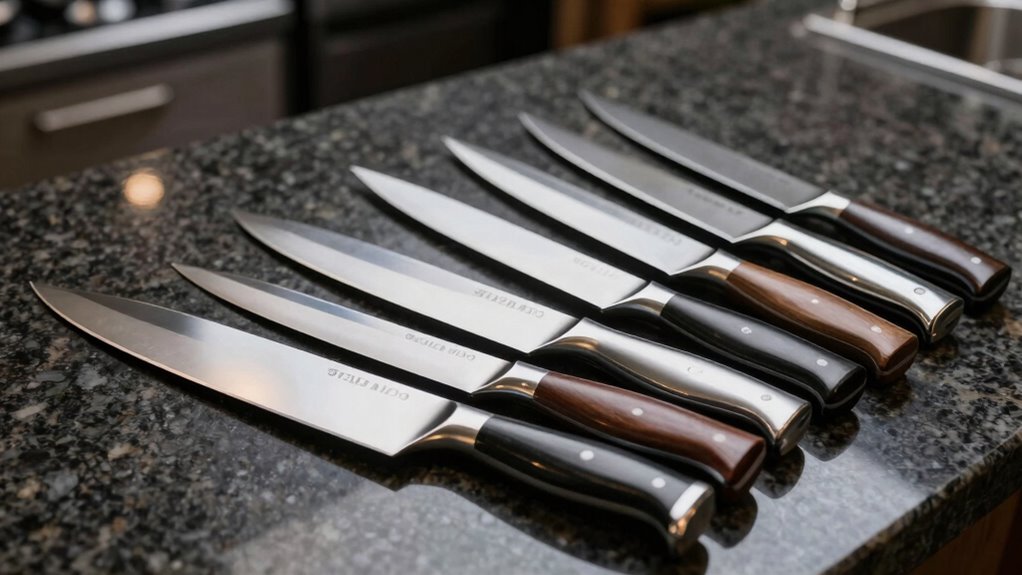

Gyuto knives are Japanese-style chef’s knives built for versatile kitchen prep, but steel, edge care, handle design, and price can make one a better fit than another. My best overall pick is the Shun Premier 8-inch Chef’s Knife for buyers seeking a recognizable premium option, while the KAI Seki Magoroku Akane is a more approachable choice and the Kimura 8-Inch Gyuto suits cooks who prefer stainless steel and practical upkeep. Hand-forged and Damascus-pattern models add visual appeal and varied construction, but those details alone do not guarantee better cutting or easier maintenance. The right choice depends on how much edge care you want to do and how the knife feels in your hand. Read on for the full breakdown of all 15 options and the tradeoffs that separate them.

Get the latest gadgets delivered free with Prime
- Fast, free delivery on millions of items
- Prime Video, Amazon Music and more included
- Member-only deals all year
Complete the kit



Key Takeaways
- The lineup spans distinct maintenance styles: stainless options such as the Kimura and KAI may suit cooks who want simpler care, while high-carbon and layered-steel listings call for closer attention to the maker’s care guidance.
- Several listings share similar specifications: multiple 8-inch or 8.27-inch knives use VG10 or 10Cr15MoV and layered construction, so handle comfort, seller details, and warranty information can matter more than the layer count.
- The Shun Premier is the premium-oriented pick: it stands apart from the many less-established or less-detailed listings, though buyers should weigh its care requirements and price against their actual use.
- The KAI Akane and Kimura prioritize a more practical profile: they are worth comparing with the flashier Damascus and hand-forged options if straightforward daily use matters more than decorative finishes.
- Eight-inch blades dominate this group: they suit many home cooks, while the 210 mm KAI and 8.27-inch models offer only small length differences; board space, grip, and preferred cutting motion are more meaningful.


| gyuto knife | Blade length | Weight | Blade material | Construction |
|---|---|---|---|---|
| KAI Seki Magoroku Akane Gyuto | 8.3 inches (210 mm) | 142 g | Stainless steel composite with molybdenum-vanadium core | Forged, triple-layer |
| KAWAHIRO 8.27 Inch Japanese Ch | 8.27 inches (210 mm) | 6.7 oz | VG10 steel core, 3-layer construction | — |
| 8-Inch Japanese Chef Knife | 8 inches | 4 ounces | 9-layer high-carbon 10CR15MOV steel | Hand-forged, 9-layer clad steel; full tang |
| Japanese Chef Kitchen Knife | 8 inches | 209 g | — | — |
| Imarku Japanese 8-Inch Chef Kn | 8 inches | 6.56 ounces | High-carbon stainless steel, 0.6–0.75% carbon and 16–18% chromium | — |
| HOSHANHO 8-Inch Japanese Gyuto | 8 inches | 218 g | — | 9-layer composite, forged |
| Shan Zu 8-Inch Japanese Chef K | 8 inches | 272 g | — | 9-layer forged, full tang |
| Kanngou VG10 Damascus Chef Kni | 8.27 inches | 230 g | — | — |
| Shun Premier 8" Chef’s Knife | 8 inches | 214 g | VG-MAX core with 68-layer Damascus cladding | Forged |
| HOSHANHO 8-Inch Gyuto Chef Kni | 8 inches | 221 g | 10Cr15MoV high-carbon steel | 9-layer, forged |
| Mitsumoto Sakari 8-Inch Japane | 8.6 in | 279 g | 3-layer 9Cr18MoV high-carbon stainless steel | Forged San-Mai |
| Kimura 8-Inch Japanese Chef Kn | 8 in (21 cm) | 175 g | High-carbon chrome molybdenum stainless steel | Full tang, triple riveted, full bolster |
| 8.27 Inch Japanese Gyuto Chef | Listed as 8 in and 8.27 in | — | Japanese VG10 steel | Forged |
| SHAN ZU 8-Inch Japanese Gyuto | 8 in | 0.39 kg | 9-layer high-carbon 10Cr15MoV steel | Full tang |
| HOSHANHO 8-Inch Japanese High | 8 in | — | Japanese high-carbon 10Cr15CoMoV steel | — |
More Details on Our Top Picks
KAI Seki Magoroku Akane Gyuto Knife, 8.3 Inches (210 mm)
I’d put the KAI Seki Magoroku Akane near the top for cooks who want a Japanese-made gyuto without the upkeep of a harder, more demanding edge. Its 210 mm triple-layer stainless blade offers a practical balance: the molybdenum-vanadium core is designed for sharpness, while the construction is intended to be easier to maintain than the 60+ HRC VG10 KAWAHIRO. The heat-resistant resin handle and dishwasher-safe rating also make this a more convenient choice for busy kitchens. That convenience has limits, though: the blade still needs prompt drying, and the right-handed design may feel less natural to left-handed cooks. Compared with the Imarku, it has a more explicitly Japanese-made construction and a slightly longer blade, but neither is meant for careless treatment around moisture.
Pros:- 210 mm blade suits general vegetable, meat, and herb prep.
- Triple-layer stainless construction balances sharpness with manageable maintenance.
- Heat-resistant resin handle is dishwasher safe.
- Made in Japan, with a forged construction.
Cons:- Blade needs prompt drying to reduce the chance of rust or discoloration.
- Primarily designed for right-handed users.
- Resin handle offers less traditional character than the KAWAHIRO’s octagonal wood handle.
Best for: Home cooks who want a Japanese-made 210 mm gyuto with a low-fuss handle and straightforward day-to-day care.
Not ideal for: Left-handed cooks seeking a purpose-built ambidextrous edge, or anyone who expects to leave a knife wet after washing.
- Blade length:8.3 inches (210 mm)
- Total length:13.0 inches (330 mm)
- Weight:142 g
- Blade material:Stainless steel composite with molybdenum-vanadium core
- Construction:Forged, triple-layer
- Handle:Polyacetal and nylon; heat-resistant
- Origin:Made in Japan
- Dishwasher safe:Yes
Our verdict“Choose the KAI if easy-care handling matters more than a premium wood handle or a very hard VG10 edge.”
KAWAHIRO 8.27 Inch Japanese Chef Knife, Hand-Forged VG10
The KAWAHIRO 210 mm gyuto is the lineup’s sharper-edged, higher-maintenance choice. Its VG10 core hardened to 60+ HRC is aimed at cooks who value a fine cutting edge and longer intervals between sharpening, while the refined taper and hand-sharpened edge are suited to controlled slicing. The octagonal ebony, turquoise, and ruby wood handle gives it a more traditional grip than the resin-handled KAI Seki Magoroku Akane, but also calls for more careful care. This is not the knife I’d choose for bones, frozen food, or a sink-side routine: the maker specifies hand washing and immediate drying. Compared with the lighter, 4-ounce 9-layer knife in this roundup, the KAWAHIRO’s 6.7-ounce weight may feel more substantial, though the listed data does not establish a direct balance advantage.
Pros:- VG10 core at 60+ HRC is specified for lasting sharpness.
- 210 mm gyuto length works for a broad range of prep tasks.
- Octagonal Wa handle offers a traditional grip shape.
- Includes a certificate, manual, wipe cloth, and wooden presentation box.
Cons:- Hand wash and immediate drying are required.
- Not suited to bones, frozen foods, or other hard materials.
- Hard edge calls for more careful use than the KAI’s easier-care construction.
Best for: Confident home cooks or professionals who prioritize a fine VG10 edge, controlled slicing, and a traditional octagonal handle.
Not ideal for: Cooks who want dishwasher convenience, cut hard or frozen ingredients, or prefer a forgiving knife that needs less careful handling.
- Blade length:8.27 inches (210 mm)
- Weight:6.7 oz
- Blade material:VG10 steel core, 3-layer construction
- Hardness:60+ HRC
- Handle:Octagonal Wa handle in ebony, turquoise, and premium ruby wood
- Care:Hand wash only; dry immediately
- Included components:Knife, certificate of authenticity, manual, and wipe cloth
- Model:KH-6601
Our verdict“Pick the KAWAHIRO if edge retention and a traditional Wa handle matter more to you than forgiving care.”
8-Inch Japanese Chef Knife – Hand-Forged Gyuto, 9-Layer Steel
At a listed 4 ounces, this 8-inch gyuto stands apart from the heavier KDNKEEN, which weighs 209 g. Its low weight may appeal to cooks who favor quick, controlled slicing over a blade that carries more heft through a cut. The 12° edge and 62 HRC 9-layer steel point toward precise work and edge retention, but they also make this a less carefree choice than the KAI Seki Magoroku Akane. The G10 front section adds a slip-resistant element to the rosewood handle, although the wood still calls for thoughtful moisture care. I’d treat the knife as a slicing-focused option rather than a heavy-duty chopper: the product description itself flags that its light build may not suit forceful chopping.
Pros:- Listed 4-ounce weight favors nimble handling.
- 12° edge is specified for precise slicing.
- 9-layer high-carbon stainless construction with 62 HRC hardness.
- G10 and rosewood handle combines a slip-resistant section with a wood grip.
Cons:- Lightweight build may feel insubstantial during heavy chopping.
- Rosewood handle needs care to limit moisture damage.
- Hard, acute edge is less suited to rough use than the KAI’s more maintenance-friendly setup.
Best for: Cooks who prefer a very light gyuto for fine slicing, detail work, and nimble everyday prep.
Not ideal for: Anyone who wants a weighty blade for forceful chopping or a handle that can be neglected around water.
- Blade length:8 inches
- Overall length:14 inches
- Weight:4 ounces
- Blade material:9-layer high-carbon 10CR15MOV steel
- Hardness:62 HRC
- Edge angle:12°
- Handle:Rosewood with G10 front section
- Construction:Hand-forged, 9-layer clad steel; full tang
Our verdict“Choose this gyuto for light, precise prep, but skip it if you want chopping weight or minimal handle care.”
Japanese Chef Kitchen Knife, 8-Inch Black Gyuto, Hand-Forged 67-Layer Damascus Steel VG10 Core, Ultra Sharp, Rosewood & Ebony Handle, Leather Sheath
The KDNKEEN black gyuto is the heaviest knife in this five-product group with a listed weight: 209 g. That gives it a different feel from the 4-ounce 9-layer knife, which is designed around lightness rather than heft. Its VG10 core, 58–60 HRC hardness, and 15° double edge describe a more moderate hardness and edge angle than the 62 HRC, 12° model, while the full tang and octagonal wood handle complete a substantial, traditional-style package. The 67-layer Damascus finish and leather sheath add visual distinction and blade protection in storage. The tradeoff is care: it requires hand washing, and the weight may tire cooks who prefer a nimble gyuto. I’d choose it for a steady, weightier feel, not for low-maintenance cleanup.
Pros:- 209 g weight offers a more substantial feel than the lightweight 9-layer option.
- VG10 core with 58–60 HRC hardness and a 15° double edge.
- Full-tang forged construction with an octagonal red sandalwood and black ebony handle.
- Includes a leather sheath, manual, and cleaning cloth.
Cons:- Heavier build may feel tiring or bulky for cooks who prefer a nimble gyuto.
- Hand washing is required; it is not dishwasher safe.
- Wood handle requires more care than the KAI’s heat-resistant resin handle.
Best for: Cooks who prefer a heavier, full-tang gyuto and want a leather sheath for blade storage.
Not ideal for: Anyone seeking a lightweight knife, dishwasher-safe cleanup, or a handle that needs little moisture care.
- Blade length:8 inches
- Blade construction:Hand-forged, 67-layer Damascus
- Core material:VG10
- Hardness:58–60 HRC
- Edge:15° double edge
- Weight:209 g
- Handle:Octagonal red sandalwood and black ebony
- Included accessories:Leather sheath, user manual, and cleaning cloth
Our verdict“Pick the KDNKEEN if you want a heavier full-tang gyuto with a sheath, and skip it if low weight or easy cleanup is the priority.”
Imarku Japanese 8-Inch Chef Knife – Sharp Kitchen Knife, Gift for Mom & Dad
The Imarku 8-inch chef knife is the straightforward everyday option here: its high-carbon stainless blade has a stated 56–58 HRC hardness, below the KAWAHIRO’s 60+ HRC and the 9-layer knife’s 62 HRC. That softer specification points to a less extreme edge-retention focus, which may suit cooks who want a general-purpose knife rather than a very hard, acute slicer. Its pakkawood handle offers a familiar grip, and the 6.56-ounce weight sits between the KAWAHIRO at 6.7 ounces and the unusually light 4-ounce model. Unlike the KAI, though, the supplied information does not list dishwasher-safe handling; it also comes without a sheath or storage case. I’d pick it for uncomplicated home prep, not for buyers seeking specialized gyuto geometry or included blade protection.
Pros:- 8-inch blade and 13-inch overall length suit common kitchen prep tasks.
- High-carbon stainless steel includes 16–18% chromium.
- Pakkawood handle provides a wood-style grip.
- 6.56-ounce weight is close to the KAWAHIRO’s listed weight without its elaborate handle materials.
Cons:- 56–58 HRC is lower than the KAWAHIRO’s 60+ HRC and the 9-layer knife’s 62 HRC.
- No protective sheath or storage case is included.
- Product data does not specify Japanese origin or a gyuto-specific edge geometry.
Best for: Home cooks who want a standard 8-inch stainless chef knife with a pakkawood handle for routine meal preparation.
Not ideal for: Buyers seeking a documented Japanese-made gyuto, a high-hardness precision edge, or a protective sheath in the box.
- Blade length:8 inches
- Overall length:13 inches
- Weight:6.56 ounces
- Blade material:High-carbon stainless steel, 0.6–0.75% carbon and 16–18% chromium
- Hardness:56–58 HRC
- Handle:FSC-certified pakkawood
- Included components:One chef knife
- Model:SC10-01
Our verdict“Choose the Imarku for routine home prep with a pakkawood grip, but look elsewhere for a specialized, high-hardness gyuto or included sheath.”
HOSHANHO 8-Inch Japanese Gyuto Chef Knife, 9-Layer 10Cr15MoV Steel
The 12° hand-sharpened edge is the defining reason to choose this HOSHANHO: it favors clean, controlled cuts over the more forgiving feel of a broader edge. Its 10Cr15MoV core, rated up to 62 HRC, is designed to retain sharpness, while the 9-layer forged construction and hammered Kurouchi Tsuchime finish give the blade a distinctive textured look. At 218 g, it is lighter than the Shan Zu 8-Inch Japanese Chef Knife, which may appeal to cooks who prefer less weight through repeated prep. The tradeoff is upkeep: the listing recommends sharpening about every three months with regular use, and the thin edge calls for careful handling. Choose this for precision; pick the Shun Premier if you value its stated sharpening support.
Pros:- Hand-sharpened 12° edge supports precise slicing and fine cuts.
- 10Cr15MoV steel core is described as wear-resistant and designed to hold its sharpness.
- 218 g weight is lighter than the Shan Zu knife in this lineup.
- Handle is designed for balance and use by left- and right-handed cooks.
Cons:- The listing recommends sharpening about every three months with regular use.
- The fine edge requires more careful handling than a less acute edge.
- The description lists both rosewood and G10 for the handle, so its material composition is not fully clear.
Best for: Home cooks who prioritize fine slicing and want a relatively light 8-inch gyuto with a narrow, precise edge.
Not ideal for: Cooks who want a low-maintenance workhorse or tend to use a knife roughly; the fine edge needs regular sharpening and careful handling.
- Blade length:8 inches
- Item length:12 inches
- Weight:218 g
- Steel core:10Cr15MoV
- Construction:9-layer composite, forged
- Hardness:Up to 62 HRC
- Edge angle:12°
- Handle material:G10 and rosewood
Our verdict“Choose this HOSHANHO if a fine, precise edge matters more than minimizing sharpening and handling demands.”
Shan Zu 8-Inch Japanese Chef Knife, 9-Layer 10Cr15MoV High Carbon Steel
The Shan Zu is the lineup’s more substantial-feeling 10Cr15MoV option: at 272 g, it weighs more than either HOSHANHO knife, a difference cooks may notice during long prep sessions. Its 9-layer forged blade has a 10Cr15MoV core hardened to 62 HRC, paired with an octagonal red sandalwood handle intended to reduce hand fatigue. The matte finish is a practical contrast with the Kanngou’s patterned Damascus blade, since it is described as minimizing fingerprints and food residue. That handle shape will not suit everyone, though; the product description specifically warns it may feel bulky in smaller hands. I would favor the lighter HOSHANHO 9-layer model for nimble, fine work, while this Shan Zu fits cooks who prefer a fuller grip and do not mind extra weight.
Pros:- 9-layer forged construction surrounds a 10Cr15MoV core rated to 62 HRC.
- Octagonal red sandalwood handle offers a fuller grip.
- Matte blade finish is described as reducing fingerprints and food residue.
- Full-tang construction is specified.
Cons:- At 272 g, it is heavier than both HOSHANHO knives in this group.
- The octagonal handle may feel bulky for cooks with smaller hands.
- The product information does not specify an edge angle.
Best for: Cooks with medium or larger hands who prefer a fuller octagonal handle and a weightier knife for general prep.
Not ideal for: Cooks with smaller hands or anyone seeking a light, quick-feeling gyuto; the 272 g weight and potentially bulky handle may feel tiring.
- Blade length:8 inches
- Item length:14.96 inches
- Weight:272 g
- Blade steel:10Cr15MoV
- Construction:9-layer forged, full tang
- Hardness:62 HRC
- Handle material:Red sandalwood (Pakkawood)
- Model number:SZES-2025-001-1
Our verdict“Pick the Shan Zu if you want a weightier gyuto with a substantial handle, and skip it if a compact, light grip is your priority.”
Kanngou VG10 Damascus Chef Knife, 8.27-Inch Gyuto
The Kanngou pairs a VG-10 core with 67-layer Damascus cladding, giving it a more elaborate blade presentation than the Shun Premier’s 68-layer cladding while keeping the focus on a Japanese-style gyuto profile. Its 8.27-inch blade is slightly longer than the 8-inch Shun and HOSHANHO models here, adding reach for larger ingredients but taking up more board space. A 10–12° Honbazuke-sharpened edge points toward fine, precise cutting; cooks choosing it should also be ready for careful maintenance, since the listing calls for regular care to preserve corrosion resistance. The ebony and rosewood handle, gift box, and scabbard make this a polished presentation choice. Unlike the Shun, however, the supplied details do not mention sharpening support, so it is less compelling for buyers seeking an aftercare service.
Pros:- VG-10 core with 67-layer Damascus cladding gives the blade a distinctive layered finish.
- Hand-sharpened 10–12° edge is suited to precise cutting.
- Ebony and rosewood octagonal handle is designed for a non-slip grip.
- Includes a scabbard and premium gift box.
Cons:- The 8.27-inch blade is longer than the 8-inch Shun Premier and HOSHANHO options.
- Regular maintenance is needed to preserve corrosion resistance.
- The provided details do not specify an edge angle beyond the 10–12° range or describe sharpening support.
Best for: Gift buyers and home cooks who want a longer, finely edged gyuto with Damascus styling, a scabbard, and an octagonal wood handle.
Not ideal for: Cooks who prefer a shorter blade, want stated sharpening support, or are unwilling to maintain a steel knife regularly.
- Blade length:8.27 inches
- Overall length:13.4 inches
- Weight:230 g
- Blade construction:67-layer Damascus with VG-10 core
- Listed blade materials:AUS-10, alloy steel, stainless steel
- Edge angle:10–12°
- Handle material:Ebony and rosewood
- Included accessories:Gift box and scabbard
Our verdict“Choose the Kanngou for Damascus presentation, a narrow edge, and gift-ready accessories, but not if you want a shorter or lower-maintenance knife.”
Shun Premier 8″ Chef’s Knife
The Shun Premier earns its place through a pairing the other knives here do not state: a VG-MAX core and free sharpening and honing support. That service may matter more to a regular cook than extra layers or a narrower edge, especially when ongoing edge care is part of ownership. Its 16° edge is less acute than the Kanngou’s 10–12° edge, making the Kanngou the more explicitly fine-edged choice; the Shun instead adds a hammered tsuchime finish intended to reduce drag and sticking. At 214 g, it is also the lightest knife in this five-product group. The tradeoffs are that it still needs regular maintenance, and its product description identifies it as a chef’s knife rather than specifying a gyuto profile. I’d choose it for the service and balanced everyday format, not for the lowest stated edge angle.
Pros:- VG-MAX steel core with 68-layer Damascus cladding.
- Hammered tsuchime finish is designed to reduce drag and food sticking.
- Contoured Pakkawood handle is specified for left- and right-handed users.
- Free sharpening and honing support is included.
Cons:- Its 16° edge is broader than the Kanngou’s stated 10–12° edge.
- Regular maintenance is still required to keep the edge in good condition.
- The product description identifies it as a chef’s knife rather than explicitly naming a gyuto profile.
Best for: Frequent home cooks who want an 8-inch Japanese-style chef’s knife with stated sharpening and honing support.
Not ideal for: Buyers who specifically want a listed gyuto designation or the narrowest edge angle in this group; its description calls it a chef’s knife and specifies a 16° edge.
- Blade length:8 inches
- Overall length:14.25 inches
- Weight:214 g
- Blade material:VG-MAX core with 68-layer Damascus cladding
- Edge angle:16°
- Handle material:Pakkawood
- Construction:Forged
- Warranty:Lifetime
Our verdict“Choose the Shun if ongoing sharpening support and a light, everyday Japanese chef’s knife matter more than a narrower edge or explicit gyuto labeling.”
HOSHANHO 8-Inch Gyuto Chef Knife – Ultra Sharp Japanese Kitchen Knife
This HOSHANHO is the more straightforward daily-prep pick among the two HOSHANHO gyutos here. Its 8-inch blade, 221 g weight, and 12–15° V-shaped edge make it a familiar all-purpose format for chopping, slicing, and dicing, while the rosewood octagonal handle gives it a traditional grip shape. Compared with the first HOSHANHO, it is slightly heavier and has a stated edge-angle range rather than a fixed 12° hand-sharpened edge; the first model also lists a hammered Kurouchi Tsuchime finish, which this one does not. The 9-layer 10Cr15MoV construction and hand-forged build are appealing, but the description calls for regular maintenance to prevent corrosion. I’d choose this model for general kitchen work and the Kanngou for a longer blade and included scabbard.
Pros:- 8-inch blade suits a broad range of routine kitchen prep.
- 9-layer 10Cr15MoV construction is designed for durability and edge retention.
- Hand-polished 12–15° V-shaped edge favors precise cutting.
- Forged construction and rosewood octagonal handle are specified.
Cons:- Regular maintenance is needed to prevent corrosion on the high-carbon steel.
- The 12–15° edge range is less exact than the first HOSHANHO model’s stated 12° edge.
- The description does not specify a hardness rating.
Best for: Home cooks seeking a general-purpose 8-inch gyuto with a rosewood octagonal handle for everyday chopping, slicing, and dicing.
Not ideal for: Cooks who want a low-maintenance stainless knife, a clearly specified single edge angle, or the extra finish and accessories listed for the Kanngou.
- Blade length:8 inches
- Overall length:14.2 inches
- Weight:221 g
- Blade material:10Cr15MoV high-carbon steel
- Construction:9-layer, forged
- Edge angle:12–15°
- Handle material:Rosewood
- Edge type:Plain
Our verdict“Choose this HOSHANHO for an everyday 8-inch gyuto with a traditional wood handle, provided you are willing to maintain high-carbon steel.”
Mitsumoto Sakari 8-Inch Japanese Gyuto Chef Knife – 3-Layer 9Cr18MoV
The Mitsumoto Sakari pairs a San-Mai 9Cr18MoV core with a hammered blade, giving it a different appeal from the smooth-edged Kimura: the texture is intended to limit food sticking during slicing. Its octagonal rosewood handle offers a traditional grip, while the included storage box gives it a more gift-ready presentation. At 279 g, it is also heavier than the 175 g Kimura, which may feel steadier for cooks who prefer some heft but less nimble for rapid prep. The stated 8.6-inch blade provides a little more reach than a standard 8-inch option, but the listing offers no alternate size. Choose it for its hammered finish and forged construction, not if you want the lightest or most size-flexible gyuto.
Pros:- San-Mai construction pairs a 9Cr18MoV core with layered steel.
- Tsuchime hammered texture is designed to reduce food adhesion.
- Octagonal rosewood handle provides a traditional grip shape.
- Sandalwood storage box makes storage or gifting more convenient.
Cons:- At 279 g, it is substantially heavier than the Kimura listed here.
- Only one blade size is specified, limiting choice for different prep styles.
- Rosewood calls for more care around water than a synthetic handle.
Best for: Home cooks who want a forged gyuto with a food-release texture, a traditional octagonal handle, and a presentation box.
Not ideal for: Cooks who prefer a light knife, want multiple blade-length options, or need a fully specified maintenance routine.
- Blade length:8.6 in
- Overall length:14.05 in
- Weight:279 g
- Blade material:3-layer 9Cr18MoV high-carbon stainless steel
- Construction:Forged San-Mai
- Edge type:Plain
- Handle material:Rosewood
Our verdict“Choose the Mitsumoto Sakari if you want a heavier forged gyuto with a hammered face and traditional handle rather than the lighter, simpler Kimura.”
Kimura 8-Inch Japanese Chef Knife (Gyuto) – High Carbon Molybdenum Stainless Steel
The Kimura is the most straightforward pick here for cooks who value low-fuss handling over layered steel or a showpiece finish. Its 175 g weight is notably lighter than the Mitsumoto Sakari, and the 57 HRC double-bevel edge is a more forgiving setup for everyday kitchen work than the harder VG10 Atumuryou. A full bolster, triple rivets, and full tang add a sturdy, familiar feel, while the POM handle avoids the wood-care concerns of several other knives in this group. The tradeoff is a stamped blade, which may disappoint buyers specifically seeking a forged gyuto, and its 15-degree edge is less acute than the sharper angles listed for the Atumuryou and HOSHANHO. This is the practical choice for routine prep, not a specialist’s showpiece.
Pros:- Light 175 g weight can make extended everyday prep less tiring.
- POM resin handle avoids the moisture upkeep required by wood.
- Full tang, triple rivets, and full bolster provide sturdy construction.
- Double-bevel edge suits cooks who use either hand.
Cons:- Stamped construction lacks the forged build sought by some gyuto buyers.
- 57 HRC is softer than the listed VG10 and 10Cr15MoV alternatives.
- Full bolster can make sharpening the heel less convenient.
Best for: Newer home cooks who want a light, double-bevel Japanese gyuto with a synthetic handle and familiar full-bolster construction.
Not ideal for: Buyers who specifically want a forged or layered blade, a very hard fine edge, or a traditional wood handle.
- Blade length:8 in (21 cm)
- Blade material:High-carbon chrome molybdenum stainless steel
- Hardness:57 HRC
- Edge angle:15 degrees
- Edge type:Double bevel
- Construction:Full tang, triple riveted, full bolster
- Handle material:POM resin
- Weight:175 g
- Origin:Seki, Japan
Our verdict“Pick the Kimura for an approachable, lightweight everyday gyuto with a synthetic handle, but skip it if forged construction is a priority.”
8.27 Inch Japanese Gyuto Chef Knife, Black Forged 3-Layer VG10 Steel Core
The Atumuryou stands out for its forged three-layer VG10 core and listed 60–62 HRC hardness, putting it among the harder-edged choices in this group. Its 12–15-degree bevel is aimed at precise slicing, while stainless cladding is intended to help shield the core from corrosion. Compared with the softer Kimura, this setup prioritizes edge hardness and a finer cutting feel over a forgiving, easygoing profile. The stabilized wood-and-resin handle is another practical distinction: it offers a wood-like look without being plain wood. Harder steel can be less forgiving of twisting, impacts, or careless board contact, so this is not the best match for rough chopping or a first knife. The stated edge-retention claim is not a substitute for sharpening; expect upkeep with regular use.
Pros:- Three-layer construction uses a VG10 steel core with stainless cladding.
- Listed 60–62 HRC hardness and 12–15-degree bevel favor precise slicing.
- Forged construction distinguishes it from the stamped Kimura.
- Stabilized wood-and-resin handle combines a decorative look with a composite material.
Cons:- Hard steel can be less tolerant of impacts and poor cutting technique.
- Edge still needs periodic sharpening; the stated retention claim is not a maintenance schedule.
- Product details list both 8-inch and 8.27-inch blade measurements.
Best for: Experienced home cooks seeking a forged VG10 gyuto for precise slicing and who are comfortable maintaining a harder edge.
Not ideal for: Beginners, cooks who use a knife roughly, or anyone wanting a more forgiving blade for frequent twisting and heavy chopping.
- Blade length:Listed as 8 in and 8.27 in
- Overall length:13.6 in
- Blade material:Japanese VG10 steel
- Hardness:60–62 HRC
- Layers:3-layer
- Construction:Forged
- Edge angle:12–15 degrees
- Handle material:Stabilized wood and resin
Our verdict“Choose the Atumuryou for a harder forged VG10 gyuto and precise slicing, provided you can handle and maintain a less forgiving edge.”
SHAN ZU 8-Inch Japanese Gyuto Chef Knife – Hand-Forged 9-Layer High Carbon 10CR15MoV Steel with Rosewood Handle
The SHAN ZU combines a 62 HRC, 9-layer 10CR15MoV blade with a handle that mixes slip-resistant G10 and rosewood. That handle is the clearest point of difference from the HOSHANHO, whose listing specifies wood alone: the SHAN ZU’s G10 front gives cooks a synthetic contact surface while retaining rosewood at the back. Its 12-degree edge is set up for fine slicing, and the full-tang construction adds a sturdy feel. The compromise is weight: at 390 g, it is much heavier than the Kimura and may feel tiring for long sessions or quick, repetitive work. A 62 HRC blade also calls for careful board technique, and the rosewood portion still needs protection from excess moisture. Pick it for grip and heft, not for agility.
Pros:- 9-layer 10Cr15MoV steel is specified at 62 HRC.
- 12-degree edge angle is suited to precise slicing.
- G10 and rosewood handle combines a synthetic grip area with natural wood.
- Full-tang construction offers a sturdy build.
Cons:- At 390 g, it is heavier than the other listed knives with stated weights.
- Hard 62 HRC steel requires careful technique to avoid edge damage.
- Rosewood section needs care around moisture.
Best for: Cooks who prefer a substantial gyuto with a mixed-material grip and a fine slicing edge.
Not ideal for: Anyone seeking a lightweight knife, a simple low-maintenance handle, or a forgiving blade for rough chopping.
- Blade length:8 in
- Overall length:14 in
- Weight:0.39 kg
- Blade material:9-layer high-carbon 10Cr15MoV steel
- Hardness:62 HRC
- Edge angle:12 degrees
- Construction:Full tang
- Handle material:G10 front, rosewood back with brass pin
Our verdict“Choose the SHAN ZU if a secure G10-and-rosewood grip and a hefty, hard-edged blade matter more than nimble handling.”
HOSHANHO 8-Inch Japanese High Carbon Steel Chef’s Knife
The HOSHANHO takes a relatively simple route to a fine-cutting gyuto: 10Cr15CoMoV steel at 60 HRC, sharpened to 13 degrees per side, with a wooden handle shaped for a pinch grip. That makes it a useful middle ground between the lighter, softer Kimura and the heavier 62 HRC SHAN ZU. Its matte finish is described as offering corrosion resistance, but the high-carbon steel and wood handle still call for prompt drying and sensible care. Unlike the SHAN ZU, the listing does not specify layered construction or a hybrid G10 grip, so buyers looking for those details should compare closely before choosing. The listed specs also omit weight and construction type, leaving less information for shoppers who want to judge balance or build. It suits careful home prep better than rough, wet work.
Pros:- 10Cr15CoMoV steel is listed at 60 HRC.
- 13-degree-per-side sharpening favors a fine cutting edge.
- Wood handle is designed to support a secure pinch grip.
- Matte finish is described as providing resistance to corrosion and moisture.
Cons:- High-carbon steel and the wooden handle need drying and regular care.
- Weight and construction type are not provided in the listed specs.
- Unlike the SHAN ZU, the listing does not specify layered steel or a G10 grip area.
Best for: Home cooks who want a fine 13-degree-per-side edge and a wood handle for controlled pinch-grip prep.
Not ideal for: Cooks who want a fully specified forged or layered build, a synthetic handle, or minimal blade and handle care.
- Blade length:8 in
- Blade material:Japanese high-carbon 10Cr15CoMoV steel
- Hardness:60 HRC
- Edge angle:13 degrees per side
- Handle material:Wood
- Finish:Matte
- Edge type:Plain
Our verdict“Choose the HOSHANHO for a fine-edged, wood-handled gyuto if you accept regular care and do not need detailed construction or weight information.”

How We Picked
I compared the 15 listings through the needs that shape a gyuto purchase: cutting versatility, steel and construction, expected care, handle and blade usability, and clarity of product information. A gyuto should work across common prep tasks, so I favored options with a familiar chef’s-knife format and specifications that make their intended use reasonably clear. I treated claims such as “hand-forged,” “ultra sharp,” and a high layer count as descriptions, not proof of superior performance.
The ranking gives more weight to credible everyday fit and a clear buyer profile than to decorative finishes or headline steel claims. The Shun Premier leads for buyers looking for a premium, established option; KAI and Kimura are strong alternatives for cooks prioritizing practical use and care. Knives with overlapping steel and blade dimensions rank according to how clearly they differentiate themselves, while missing details about maintenance, fit, or support make a listing harder to recommend confidently.
Factors to Consider When Choosing Gyuto Knives
Most gyuto knives in this roundup are close in blade length, so a spec sheet may not settle the choice. I would focus on how the knife fits your prep habits, how much maintenance you accept, and whether the seller provides enough detail to support the claims. These broader checks can help prevent a decorative or technical-sounding feature from outweighing daily usability.
Choose Steel for Your Care Habits
Steel choice affects edge retention, sharpening, and how carefully you need to dry and store the knife. Stainless steel is often a sensible direction for cooks who want less worry about moisture, while higher-carbon steels can reward attentive care but may react to acidic ingredients or damp storage. Product names do not always reveal the exact steel treatment or corrosion behavior, so check the maker’s care instructions rather than relying on a “Japanese steel” label. Do not assume layered cladding makes a blade maintenance-free; the core steel and finish still matter. If several people share your kitchen, a less demanding care routine may be more important than a small possible gain in edge performance.
Treat Layer Counts and Forging Claims as Secondary
Layer counts and hand-forged descriptions are common across this group, but they do not tell you how well a knife is ground, balanced, or sharpened. A high layer count can describe construction or appearance without making the knife cut better than a simpler blade. Look for specific information about the core steel, hardness, edge angle, and care, and be cautious when a listing offers grand claims but little detail. Damascus patterning may be a reason to prefer one knife aesthetically, but it should not replace checks for comfort and service support. For daily cooking, a clear, verifiable specification is more useful than a long list of adjectives.
Match Blade Length to Your Board and Cutting Style
An 8-inch gyuto is a common all-purpose length, and the 8.27-inch and 210 mm options here are close enough that the difference may be subtle. A longer blade can make broad slicing and larger ingredients easier, but it also needs more board space and may feel less nimble to a cook with a compact setup. Blade height, tip shape, and balance can affect handling as much as length, yet listings do not always describe those details. If possible, compare the knife’s dimensions with a blade you already handle comfortably. Choose for your counter and cutting motion, not for a small measurement difference on its own.
Prioritize Grip and Balance Over Handle Materials
Rosewood, ebony, and other named handle materials can add visual appeal, but a handle’s shape and fit matter more during repeated prep. Check whether the knife is intended for a right- or left-handed grip, whether the handle is symmetrical, and how the bolster or heel may affect a pinch grip. A handle that feels secure with wet hands can matter more than a premium-sounding material. Weight distribution also changes how a gyuto feels: some cooks prefer a forward balance for cutting, while others want a lighter, more neutral feel. When a listing leaves these details unclear, avoid assuming that an attractive handle will suit your hand.
Plan for Sharpening and Everyday Knife Care
A sharper edge is useful only if you can maintain it safely and consistently. Before choosing a harder or more specialized blade, decide whether you are comfortable using a whetstone or will rely on a qualified sharpener; not every pull-through sharpener is appropriate for every edge geometry. Hand-wash, dry, and store a gyuto safely unless the manufacturer says otherwise, and keep it away from bones, frozen food, and hard twisting cuts. These habits reduce damage and help preserve the edge regardless of steel. If you want a low-effort shared kitchen knife, choose for manageable care rather than chasing maximum hardness or edge claims.
Pay More for Proven Fit, Not Just a Premium Finish
A higher-cost knife can make sense when you value fit and finish, a trusted maker, reliable support, or a specific handling profile. It is harder to justify paying extra for a layered pattern or a gift-ready presentation if the listing does not explain performance, warranty, or maintenance. Compare what the maker documents with what you actually need: a home cook may benefit more from comfortable handling and easy care than from a specialized steel. For a first gyuto, prioritize a clear return policy and usable care guidance so you can judge the knife without committing to an unfamiliar style. If you already own a dependable chef’s knife, a premium purchase should offer a noticeable difference in feel or upkeep, not just appearance.
Frequently Asked Questions
Is an 8-inch gyuto a good first Japanese chef’s knife?
For many home cooks, an 8-inch gyuto is a practical starting size because it handles a broad range of vegetables, herbs, and boneless proteins. This roundup is dominated by 8-inch blades, so the bigger decision is usually care routine and grip rather than a major length difference. If your board is small or you prefer short, controlled strokes, a shorter blade may feel easier to manage. Compare the knife’s weight and handle shape where those details are available. A familiar length still needs careful use: avoid bones, frozen food, and prying motions.
Should I choose VG10 or 10Cr15MoV for a gyuto?
The steel name alone cannot tell you which knife will suit you better, since heat treatment, edge geometry, and sharpening quality also affect performance. Both VG10 and 10Cr15MoV appear in several listings here, often alongside layered construction, so those labels do not create a clear winner by themselves. Compare care instructions, warranty or support details, and the seller’s exact specifications. If you are newer to Japanese-style knives, favor clear maintenance guidance over a steel claim that lacks context. Pick the blade whose care demands match your kitchen routine.
Do I need a Damascus or hand-forged gyuto?
No: Damascus patterning and hand-forged descriptions are not requirements for a capable gyuto. They may appeal if you value a distinctive finish or traditional-style presentation, but they do not prove better cutting or edge retention. Several knives in this roundup use similar layered-steel language, so check the core steel, grind, and care details before choosing among them. A simpler knife can be the better everyday fit if it offers clearer specifications and a handle you prefer. Treat appearance as a preference, not a performance guarantee.
Can I put a gyuto in the dishwasher or use it on bones?
I would avoid both unless the maker explicitly gives different instructions. Dishwasher heat, detergent, and contact with other utensils can damage an edge or handle, while bones and frozen food can chip or deform a thin kitchen-knife edge. Hand-wash and dry the knife promptly, then store it where the edge cannot strike other tools. Use a cleaver or another suitable tool for heavy cuts. These habits matter for stainless and high-carbon models alike.
Which matters more when comparing similar gyuto listings: steel, handle, or seller details?
For closely matched listings, seller clarity and usable care information can be more helpful than small differences in steel labels. Steel and treatment affect maintenance, but an unclear specification makes it difficult to judge what care the blade needs. Handle shape and balance are personal, so check dimensions and return terms where available rather than assuming named wood types will feel comfortable. Layer count should be a lower priority unless the finish itself matters to you. A well-documented knife that fits your grip is a safer choice than one with more dramatic claims.
Conclusion
For a premium-oriented everyday choice, I would start with the Shun Premier 8-inch Chef’s Knife; it is the clearest fit for buyers who want an established name and are prepared to follow its care guidance. For a practical, approachable option, compare the KAI Seki Magoroku Akane and Kimura 8-Inch Gyuto, with the right pick depending on fit and the care details that suit your kitchen. The best value cannot be settled by steel claims alone: compare the exact listing, included support, and return terms before deciding. For beginners, choose the model with the clearest care guidance and a handle that feels secure rather than the one with the most layers. If you want a decorative, layered finish, the VG10 and 10Cr15MoV Damascus-style options provide several directions, but I would choose by verified construction and handling—not appearance alone.
Halloween Picks
halloween
As an affiliate, we earn on qualifying purchases.