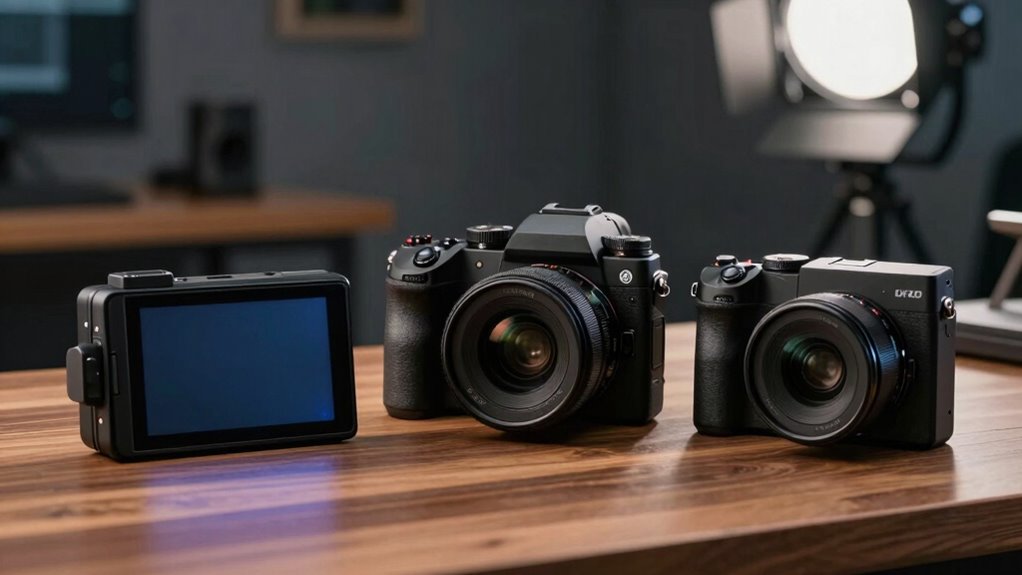

Choosing a cinema camera as a beginner is less about chasing the longest specification list and more about finding a setup you can afford to operate, learn, and grow into. I rank the Sony FX30 bundle first for its included stabilized zoom, approachable autofocus, and 4K high-frame-rate recording. The Blackmagic Pocket Cinema Camera 4K Power Bundle is my pick for learning a deliberate, edit-focused workflow, while the Sony FX2 is the full-frame option for new filmmakers who already expect to work with Log footage.

Get the latest gadgets delivered free with Prime
- Fast, free delivery on millions of items
- Prime Video, Amazon Music and more included
- Member-only deals all year
The differences are practical: a bundled lens gets you filming sooner, a cinema-first codec can give you more control in post, and full-frame cameras bring a different low-light and lens-field-of-view proposition. Those benefits come with tradeoffs in cost of building a system, menu and workflow demands, or camera size. I compare these five choices by how much they help a beginner make finished work—not by treating every professional feature as an automatic advantage.
Complete the kit



Key Takeaways
- The Sony FX30 bundle is the easiest entry point here because it includes an OSS zoom, card, software, and accessories, though the lens aperture changes across its zoom range.
- The Blackmagic Pocket Cinema Camera 4K offers Blackmagic RAW, ProRes, and DaVinci Resolve Studio, but its manual-oriented workflow and digital stabilization ask more of a beginner.
- The FX30 body and FX30 bundle share a compact Super 35/APS-C direction, but only the bundle listing specifies a lens; verify package contents and card capacity before buying.
- The Sony FX2 pairs a 33MP full-frame sensor with Log tools and an adjustable EVF, making it more attractive to a learner who already has a lens and wants room to grow.
- The Sony FX6 is the most production-oriented choice, with built-in electronic variable ND and 4K 120p, but its larger setup and professional feature set can be unnecessary for a first camera.
| Sony FX30 Cinema Camera Bundle with 18-135mm Lens and Accessories |  | Best Overall for Beginners | Sensor: 26.1MP APS-C BSI CMOS | Video: UHD 4K up to 120p | Color depth: 10-bit 4:2:2 | VIEW ON AMAZON | See Our Full Breakdown |
| Blackmagic Design Pocket Cinema Camera 4K Power Bundle |  | Best for Learning a Cinema-First Workflow | Sensor: Four Thirds CMOS | Resolution: 4096 × 2160 | Frame rates: 4K up to 60 fps; 1080p up to 120 fps | VIEW ON AMAZON | See Our Full Breakdown |
| Sony Cinema Line FX30 Super 35 Camera, Gray |  | Best Compact Body for Growing Skills | Sensor: 20.1MP APS-C/Super 35 CMOS | Video resolution: 1080p and 2160p listed | Image profiles: S-Cinetone and S-Log3 | VIEW ON AMAZON | See Our Full Breakdown |
| Sony FX2 Full-Frame Cinema Camera Body Only, Gray |  | Best Full-Frame Step-Up for Log Learning | Sensor: 33MP full-frame Exmor R CMOS | Processor: BIONZ XR | Dynamic range: 15+ stops in Log mode | VIEW ON AMAZON | See Our Full Breakdown |
| Sony FX6 Full-Frame Cinema Camera with SEL24105G Lens |  | Best for Beginners Entering Paid Production | Sensor: 10.2MP full-frame back-illuminated Exmor R CMOS | Dynamic range: 15+ stops | ISO: Up to 409,600 | VIEW ON AMAZON | See Our Full Breakdown |
| cinema camera for beginner | Sensor | Dynamic range |
|---|---|---|
| Sony FX30 Cinema Camera Bundle | 26.1MP APS-C BSI CMOS | — |
| Blackmagic Design Pocket Cinem | Four Thirds CMOS | 13 stops |
| Sony Cinema Line FX30 Super 35 | 20.1MP APS-C/Super 35 CMOS | — |
| Sony FX2 Full-Frame Cinema Cam | 33MP full-frame Exmor R CMOS | 15+ stops in Log mode |
| Sony FX6 Full-Frame Cinema Cam | 10.2MP full-frame back-illuminated Exmor R CMOS | 15+ stops |
More Details on Our Top Picks
Sony FX30 Cinema Camera Bundle with 18-135mm Lens and Accessories
I put the Sony FX30 bundle first because it removes a major beginner hurdle: the package includes a camera, stabilized 18-135mm zoom, memory card, editing software, and accessories. That range covers wide establishing shots through tighter framing, so a new filmmaker can explore different compositions before committing to more lenses. Phase-detection autofocus with face and eye tracking also helps when working alone or filming people who move unpredictably.
For learning video craft, the FX30 records UHD 4K up to 120p and 10-bit 4:2:2. Slow motion can give a beginner more expressive options, while 10-bit recording offers more latitude for color work than simpler formats, provided the computer and editing workflow can handle it. Compared with the Blackmagic 4K, this bundle leans more toward fast setup and autofocus than a hands-on RAW-first process. Compared with the FX2, its included lens makes it much closer to a ready-to-shoot kit.
The tradeoff is that the included lens has a variable f/3.5-5.6 aperture, limiting light and changing exposure as you zoom. It is useful for learning and flexible framing, but not the ideal choice for consistently shallow focus or dim interiors. The listing also describes inconsistent memory-card capacities, so I would verify what arrives. This is my strongest beginner recommendation when getting a workable system quickly matters more than buying a body to build around.
Pros:- Includes a versatile 18-135mm OSS lens and starter accessories
- Records 10-bit 4:2:2 UHD 4K up to 120p
- Phase-detection autofocus includes face and eye tracking
- Dual CFexpress Type A and SDXC card slots support different media choices
Cons:- The included lens has a variable f/3.5-5.6 maximum aperture
- The bundle description gives inconsistent memory-card capacity details
- A full-featured 10-bit workflow can require more storage and editing power
Best for: A first-time filmmaker who wants autofocus, a broad stabilized zoom range, and a starter package for learning varied shots.
Not ideal for: Someone focused on low-light shooting, a bright constant-aperture zoom, or building a carefully chosen lens kit from day one.
- Sensor:26.1MP APS-C BSI CMOS
- Video:UHD 4K up to 120p
- Color depth:10-bit 4:2:2
- Included lens:Sony E 18-135mm f/3.5-5.6 OSS
- Lens equivalent:27-202.5mm
- Card slots:Dual CFexpress Type A/SDXC
- ISO range:100-32000
Our verdict“I recommend this bundle as the most accessible complete starting setup, as long as the buyer checks the card details and accepts the kit lens’s limited aperture.”
Blackmagic Design Pocket Cinema Camera 4K Power Bundle
The Blackmagic Pocket Cinema Camera 4K is my choice for beginners who want to learn how footage is shaped in editing, rather than relying mainly on a quick automatic result. Its Blackmagic RAW and Apple ProRes recording options pair with a DaVinci Resolve Studio activation code, giving a buyer a direct path into a widely used editing and color-grading workflow. The bundle also includes two extra batteries and a charger, practical additions for longer practice sessions.
It records up to 4K at 60 fps, offers 13 stops of stated dynamic range, and has dual native ISO up to 25,600. Its Four Thirds sensor is smaller than the full-frame sensors in the FX2 and FX6, which affects field of view and makes lens choice part of the learning process. Unlike the FX30 bundle, it does not come with a lens in the supplied details, and it does not emphasize face-and-eye autofocus. That makes it less forgiving for solo run-and-gun filming, but more appealing to someone who wants to learn focus, exposure, and post-production deliberately.
The 5-inch LCD is large for framing and menu work, though the camera has no stated weather resistance and relies on digital image stabilization. Handheld movement is not corrected in the same way as with a system offering optical lens stabilization or a gimbal. Its range of storage options—SD/UHS-II, CFast 2.0, and external USB-C SSD—adds flexibility but can also create decisions for someone just starting. Choose it for the codec-and-editing experience, not for the simplest path to polished handheld footage.
Pros:- Records Blackmagic RAW and Apple ProRes
- Bundle includes DaVinci Resolve Studio and additional batteries
- Supports 4K at 60 fps and 1080p at 120 fps
- Offers SD, CFast 2.0, and external USB-C SSD recording options
Cons:- No lens is included in the supplied product details
- Digital stabilization is less helpful for handheld movement
- RAW and ProRes workflows require storage and editing attention
- The camera is not water resistant
Best for: A beginner keen to learn manual camera operation, RAW or ProRes recording, and DaVinci Resolve color work.
Not ideal for: A solo creator who needs dependable tracking autofocus, effective handheld stabilization, or an included lens.
- Sensor:Four Thirds CMOS
- Resolution:4096 × 2160
- Frame rates:4K up to 60 fps; 1080p up to 120 fps
- Dynamic range:13 stops
- Native ISO:Dual native ISO up to 25,600
- Lens mount:Active Micro Four Thirds
- Display:5-inch LCD
- Included:DaVinci Resolve Studio, two batteries, dual charger
Our verdict“I would choose this bundle over the FX30 for hands-on codec and grading practice, but not when autofocus and a ready-to-film lens matter most.”
Sony Cinema Line FX30 Super 35 Camera, Gray
This standalone Sony FX30 makes sense for a beginner who wants a compact Cinema Line body and already has access to compatible lenses. Its APS-C/Super 35 sensor, S-Log3, S-Cinetone, user LUT support, and active stabilization give a learner a clear way to move from straightforward color to a more hands-on grading workflow. The LUT tools can make monitoring Log footage less abstract: a preview can look closer to a finished image while the underlying recording retains a flexible profile.
Compared with the FX30 bundle, this listing is a less complete first purchase: the provided information does not specify an included lens or accessories. That difference matters more than the body name when a buyer is starting from nothing. Compared with the Blackmagic 4K, the FX30 offers autofocus and active stabilization in a smaller camera weighing 1.2 pounds, making it easier to carry for everyday filmmaking. The Sony’s stated recording details list 1080p and 2160p; the 6K oversampling claim describes how a 4K image can be derived, not a confirmed 6K output recording mode.
The FX30 is a more confident choice for someone who values autofocus, compact handling, and Sony E-mount lens options than for a buyer who needs a full kit immediately. The supplied description does not spell out all recording formats or frame-rate limits, so I would check the precise video modes needed before purchase rather than assuming they match the bundle listing. Its greatest limitation for a first-time buyer is not an obvious lack of filmmaking tools; it is the extra planning required to source a lens and supporting gear.
Pros:- Compact 1.2-pound body with active stabilization
- Supports S-Cinetone, S-Log3, and user LUTs
- APS-C/Super 35 sensor uses 6K oversampling for video
- Sony E/FE mount offers a broad lens ecosystem
Cons:- No lens is specified in the supplied product information
- The listed output resolution is up to 2160p, not 6K recording
- The provided details do not spell out complete frame-rate and format options
Best for: A beginner who already owns compatible Sony E-mount lenses or wants to assemble a compact camera kit piece by piece.
Not ideal for: A buyer who needs a complete out-of-box kit or wants confirmed high-frame-rate recording details in the supplied listing.
- Sensor:20.1MP APS-C/Super 35 CMOS
- Video resolution:1080p and 2160p listed
- Image profiles:S-Cinetone and S-Log3
- Stabilization:Active stabilization
- Mount:Sony E/FE
- Display:3 inches
- Weight:1.2 pounds
- Connectivity:HDMI, USB, Wi-Fi, Bluetooth
Our verdict“I favor this body over the Blackmagic for a beginner who prioritizes compact autofocus operation and already has a lens, but the FX30 bundle is the easier first purchase.”
Sony FX2 Full-Frame Cinema Camera Body Only, Gray
I place the Sony FX2 above the FX6 for a beginner who specifically wants a full-frame cinema camera but does not need a production-heavy setup. Its 33MP Exmor R sensor, BIONZ XR processor, and stated 15-plus stops of dynamic range in Log mode give a learner room to work with exposure and color. Dual base ISO settings of 800 and 4000 offer useful choices across different lighting conditions, though they do not replace good lighting or a suitable lens.
The FX2 stands apart from the FX30 models through its full-frame sensor and angle-adjustable EVF. The viewfinder and BIG6 interface offer a more deliberate way to monitor and manage shooting, while flexible ISO, Cine EI, and Cine EI Quick provide different approaches to Log capture. Those modes can be educational, but they add choices a newcomer may not need at the start. Compared with the FX30 bundle, this listing has no included lens, so a buyer who has no compatible glass must budget for and select one before filming.
That body-only format is why I do not rank it first overall. A full-frame camera can be a capable base for a system, yet the FX30 bundle supplies a lens and practical starter items in one package. The FX2 is the better fit for a buyer who already understands the cost and effect of lens choices and wants to build around a full-frame platform. It is less compelling for someone who wants immediate simplicity, autofocus guidance, or a lens included without researching additional equipment.
Pros:- 33MP full-frame Exmor R CMOS sensor
- Stated 15-plus stops of dynamic range in Log mode
- Dual base ISO settings of 800 and 4000
- Angle-adjustable EVF and several Log shooting modes
Cons:- Body-only listing does not include a lens
- Log and Cine EI options add a learning curve
- A full-frame system can require more deliberate lens selection than the FX30 bundle
Best for: A motivated beginner with a lens budget who wants full-frame capture, an EVF, and multiple ways to learn Log exposure.
Not ideal for: A first-time buyer seeking a complete ready-to-record kit or someone who does not want to learn Log workflows.
- Sensor:33MP full-frame Exmor R CMOS
- Processor:BIONZ XR
- Dynamic range:15+ stops in Log mode
- Base ISO:800 and 4000
- Log modes:Flexible ISO, Cine EI, Cine EI Quick
- Viewfinder:Angle-adjustable EVF
- Included:Camera body only
Our verdict“I recommend the FX2 to a beginner who has a lens plan and wants a full-frame platform, not to someone who needs the easiest complete kit.”
Sony FX6 Full-Frame Cinema Camera with SEL24105G Lens
The Sony FX6 is the most production-oriented recommendation here, and I rank it fifth not because it lacks capability, but because a beginner may not need its size or specialized controls. It combines a full-frame back-illuminated sensor, over 15 stops of stated dynamic range, hybrid autofocus with 627 phase-detect points and Eye-AF, and recording up to 4K 120p in 10-bit 4:2:2. The included 24-105mm lens gives it a more complete start than the FX2 body-only listing.
Its defining beginner-friendly tool is the electronically controlled variable ND filter, which can help control exposure in changing light without repeatedly changing external filters. That is useful for documentary-style work and fast-moving shoots. The FX6 also offers exceptionally high listed ISO capability, but a headline maximum does not promise clean results in every dark scene. Compared with the FX30 bundle, this system is more suited to production environments and has a full-frame sensor, while the FX30 kit is the simpler, lighter way to learn general shooting.
The tradeoff is real: the FX6 is large and may be cumbersome for handheld use, and its more advanced control set can distract from basic framing, lighting, and sound. A beginner focused on short films or online video may get more value from learning on the FX30 bundle or Blackmagic 4K. I would move the FX6 up the list only for a buyer who expects demanding client work, needs built-in exposure control, and is ready for a larger camera system.
Pros:- Includes a 24-105mm SEL24105G lens
- Records 4K 120p in 10-bit 4:2:2
- Built-in electronic variable ND filter from 1/4 to 1/128
- Hybrid autofocus includes Eye-AF tracking
Cons:- Large body may be cumbersome for handheld shooting
- Professional production features can be more than a new filmmaker needs
- The supplied lens and camera still form a substantial system to carry
Best for: A new filmmaker already preparing for paid documentary, event, or production work who values built-in ND and a supplied zoom.
Not ideal for: A casual beginner who wants a light handheld camera, a simple menu experience, or a kit focused on basic learning.
- Sensor:10.2MP full-frame back-illuminated Exmor R CMOS
- Dynamic range:15+ stops
- ISO:Up to 409,600
- Autofocus:Hybrid AF, 627 phase-detect points, Eye-AF
- Recording:4K 120p 10-bit 4:2:2; FHD 240p
- Variable ND:Electronic, 1/4 to 1/128
- Included lens:SEL24105G 24-105mm
Our verdict“I would choose the FX6 only when a beginner has clear production needs that justify its built-in ND and advanced recording tools.”

How We Picked
I ranked these cameras around the needs behind the phrase cinema camera for beginners: how quickly a buyer can get a usable setup, how manageable the recording workflow is, and whether the camera leaves useful room to develop. A camera body without a lens can be a sound long-term choice, but it is not as immediately practical as a bundle that supplies a zoom. Likewise, advanced recording formats are useful only if the buyer has the storage, editing software, and time to work with them.
I also compared the systems on focus assistance, exposure control, stabilization, and recording flexibility. Autofocus with face and eye tracking can reduce missed shots while someone learns composition. A built-in variable ND filter can simplify changing light, but it does not make a larger, more production-focused camera the right first purchase for everyone. I treated sensor size and low-light claims as part of the decision, not as a substitute for lenses, lighting, and practice.
The supplied product details do not answer every beginner question. I call out the missing lens information on body-only listings and the variable aperture of the FX30 bundle lens. Its bundle description also gives inconsistent memory-card capacities, so I would confirm the exact card included before relying on it. For the standalone FX30 listing, the stated resolution information does not establish 6K recording output; I distinguish its 6K oversampling claim from actual recorded resolution. The ranking favors useful, supported details over assumptions, and every pick has a reason to choose it—and a reason to pass.
Factors to Consider When Choosing Cinema Camera For Beginners
I would begin with the kind of filming you expect to do, then work backward to the camera. A beginner benefits more from a lens and a manageable workflow than from a feature that remains unused.Start with a complete setup, not just a camera body
A body-only camera is not a finished filming system. You may also need a lens, memory card, batteries, and a way to move footage into editing software. That is why the FX30 bundle ranks above the standalone FX30 and FX2 for a first purchase: it includes a useful zoom and several starter items. The FX6 also includes a lens, but it is a larger and more production-focused system. Before buying any bundle, check the exact contents, especially when a listing gives conflicting card details.
Choose a workflow you can manage
For a newer editor, a camera that supports autofocus and familiar recording choices may help turn more shoots into finished projects. The FX30 bundle is strongest on this front. The Blackmagic 4K takes another route: RAW and ProRes make it attractive for grading practice, and the included DaVinci Resolve Studio activation code helps connect capture with post-production. But those formats can produce substantial files and ask the user to make more decisions. Pick them because you want to learn that workflow, not because the format name sounds advanced.
Make sensor size serve the shot
Full-frame sensors in the FX2 and FX6 may appeal to filmmakers who want that format’s rendering and lens-field-of-view options. APS-C/Super 35 cameras such as the FX30 are capable filmmaking tools, not lesser beginner cameras. The Four Thirds Blackmagic has its own lens and field-of-view considerations. I would choose a sensor format only after considering available lenses, desired framing, and lighting. The included lens can affect the final image and ease of use more directly than a sensor label alone.
Treat stabilization and focus as practical tools
Beginners often film while moving, working alone, or following people. Face and eye tracking on the FX30 bundle and FX6 can help keep a subject in focus, while the standalone FX30 lists autofocus and active stabilization. The Blackmagic 4K uses digital stabilization according to the supplied details, so it may call for steadier technique or support. Stabilization does not replace careful camera movement; neither does autofocus replace choosing a useful composition. Match the tools to the type of shooting you actually do.
Leave room for accessories and learning
Plan for memory media, spare batteries, storage, audio, and editing capacity as well as the camera itself. The Blackmagic bundle includes extra batteries and Resolve Studio; the FX30 bundle supplies a card and software but lists inconsistent card capacities. The FX2 offers Log modes and an adjustable EVF, while the FX6 adds an electronic variable ND filter. These tools can support growth, but they also create a learning curve. I would favor a setup that leaves time and attention for lighting, sound, and editing rather than spending every decision on camera specifications.
Frequently Asked Questions
Which camera is easiest for a complete beginner to start using?
I would start with the Sony FX30 bundle if you are beginning without lenses or accessories. Its included stabilized zoom covers a broad range of shots, and face and eye tracking can reduce focus mistakes when filming people. It also includes a memory card and other items, though the listing gives inconsistent card-capacity details, so verify the package before depending on it. The Blackmagic bundle is a strong learning tool, but it asks for more hands-on focus and editing decisions.
Is the Blackmagic Pocket Cinema Camera 4K a good first cinema camera?
It can be an excellent first camera for someone who wants to learn manual operation, Blackmagic RAW or ProRes, and color grading in DaVinci Resolve. The included Resolve Studio activation code and additional batteries add practical value. It is less suited to a beginner who needs tracking autofocus, effective handheld stabilization, or a lens included. I would choose it for a deliberate, edit-focused learning process, not as the simplest route to polished footage.
Should I choose the FX30 or the FX2?
I would choose the FX30 bundle for a ready-to-shoot setup, accessible autofocus, and 4K high-frame-rate options. The FX2 is the better fit if you specifically want a full-frame sensor, an adjustable EVF, dual base ISO, and several Log shooting modes—and already have a plan for lenses. The FX30 standalone body is another route if you own Sony E-mount glass. For most first-time buyers starting without a lens, the bundle is the more practical of the three.
Does the Sony FX30 record 6K video?
The supplied information describes 6K oversampling for the FX30, which refers to using more image data when producing video at a lower recorded resolution. The standalone listing specifies 1080p and 2160p video resolution, not 6K output recording. I would not buy it on the assumption that it records 6K files. If a particular frame rate or format is central to your work, verify that exact mode in the camera’s full specifications before purchase.
Is the Sony FX6 too advanced for a beginner?
Not necessarily, but it is more camera than many new filmmakers need. The FX6 includes a 24-105mm lens, autofocus, 4K 120p recording, and built-in electronic variable ND, which can be useful for event, documentary, or client production. Its larger size and production-oriented controls make it less convenient for casual handheld learning than the FX30 bundle. I would choose the FX6 when its exposure tools and production features solve a clear need, rather than simply because it has the most professional specification list.
Conclusion
For most first-time filmmakers, I recommend the Sony FX30 bundle: its lens and starter items make it the easiest route from purchase to practice. Choose the Blackmagic Pocket Cinema Camera 4K if learning RAW, ProRes, and grading matters more than autofocus convenience. If you already own Sony lenses, the standalone FX30 is a compact way to develop a Cinema Line workflow; if you have a lens plan and want full-frame Log tools, the FX2 is the step-up choice. I would reserve the Sony FX6 for a beginner moving toward paid production who can make use of its built-in ND, included zoom, and advanced recording modes.
My ranking reflects beginner fit, not a claim that one camera will suit every project. Check the lens and accessory package, confirm recording modes that matter to you, and leave room in your setup for storage, sound, and lighting. A camera that matches your work and gets used regularly is a better starting point than a more complicated system chosen only for its headline features.
Fall Picks
fall essentials
As an affiliate, we earn on qualifying purchases.