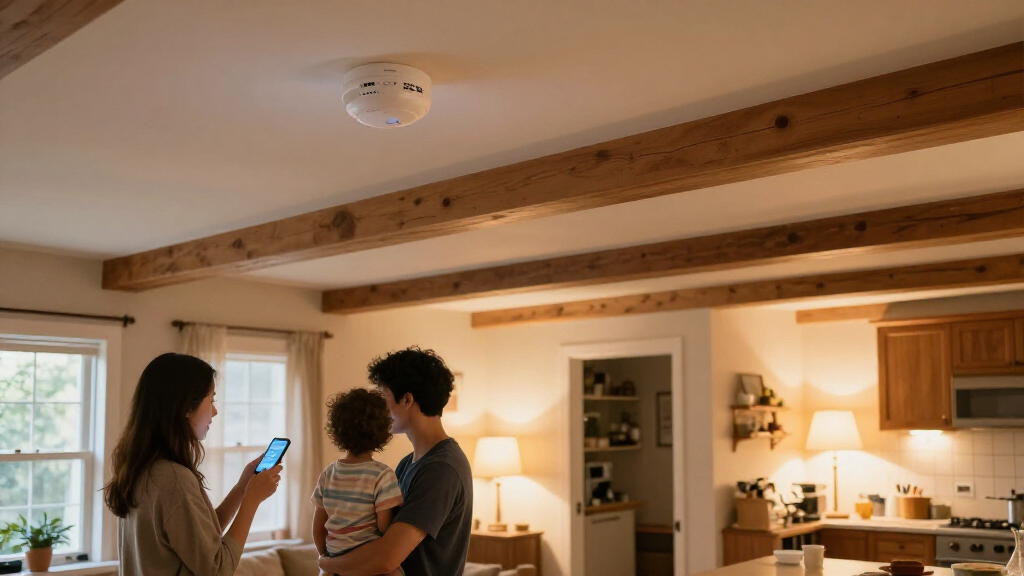
The best smart home smoke detectors pair reliable local alarms with useful phone alerts, without making installation or ongoing upkeep a headache. My best overall pick is the Kidde Smart Smoke and CO Detector with Ring, Hardwired with AA Battery Backup, which combines smoke and carbon monoxide detection with hardwired power and Ring notifications. The First Alert SC5 Battery Smart Smoke and Carbon Monoxide Alarm suits homes where wiring is impractical, while the Heiman S1-R six-pack stands out for whole-home wireless interconnection. The main tradeoffs are hardwired versus battery power, smoke-only versus smoke-and-CO coverage, and whether a product’s app or smart-home platform fits your setup. Read on for how the nine options compare and which type of detector best matches your home.

Get the latest gadgets delivered free with Prime
- Fast, free delivery on millions of items
- Prime Video, Amazon Music and more included
- Member-only deals all year
Complete the kit



Key Takeaways
Hardwired power plus battery backup is the strongest fit for replacing an existing wired alarm while retaining a backup power source; the lineup includes several Kidde and First Alert options in this format.
Smoke-and-CO coverage changes the value calculation. The Kidde Ring and First Alert SC5 combination alarms cover two hazards in one unit, while smoke-only models may suit rooms where CO detection is already handled elsewhere.
Smart-home compatibility is not interchangeable. Ring-oriented Kidde models, First Alert SC5 alarms, and Heiman’s Matter over Thread detector each point toward different app and platform preferences.
Wireless interconnection can matter more than app features in a larger home: the Heiman S1-R six-pack is aimed at linked coverage across several locations, rather than buying alarms one at a time.
Power type and installation narrow the shortlist quickly. Battery models make placement more flexible; hardwired models make more sense when matching existing wiring and maintaining battery backup are priorities.
| Kidde Smart Smoke and CO Detector with Ring, Hardwired with AA Battery Backup (RGCUAR-RW) |  | Best for Ring Households | Detection: Smoke and carbon monoxide | Power: Hardwired with AA battery backup | Connectivity: Ring app and Alexa-enabled devices | VIEW LATEST PRICE | See Our Full Breakdown |
| Heiman Matter over Thread Smart Smoke Detector |  | Best for Local Smart-Home Automation | Brand and model: HEIMAN S1-M | Connectivity: Matter over Thread | Sensor: Dual-beam photoelectric | VIEW LATEST PRICE | See Our Full Breakdown |
| First Alert SC5 Battery Smart Smoke and Carbon Monoxide Alarm |  | Best Battery-Powered Combination Alarm | Brand and model: First Alert SMCO600NV | Alarm type: Combination smoke and carbon monoxide alarm | Power source: Battery powered | VIEW LATEST PRICE | See Our Full Breakdown |
| Heiman S1-R Wireless Interconnected Smoke Detector Kit with Gateway, 6-Pack |  | Best for Whole-Home Smoke Coverage | Brand and model: HEIMAN S1-R | Included: 6 smoke detectors and 1 gateway | Certification: UL 217 10th Edition, CSFM, FCC | VIEW LATEST PRICE | See Our Full Breakdown |
| First Alert SC5 Hardwired Smart Smoke and Carbon Monoxide Alarm |  | Best Hardwired Upgrade | Brand and model: First Alert SMCO600NV-AC | Alarm type: Combination smoke and carbon monoxide alarm | Power source: Corded electric | VIEW LATEST PRICE | See Our Full Breakdown |
| Kidde Smart Smoke Detector with Ring, AA Battery, RGSDR-RW | 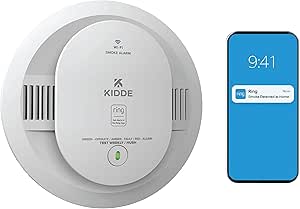 | Best for Ring Homes Without Existing Wiring | Power: 2 AA alkaline batteries, included | Detection: Smoke | Connectivity: Ring app, wire-free interconnectivity, Alexa-enabled devices | VIEW LATEST PRICE | See Our Full Breakdown |
| Kidde Smart Smoke Detector with Ring, Hardwired with AA Battery Backup, RGSAR-RW |  | Best for Updating a Hardwired Ring-Compatible System | Model: RGSAR-RW | Power: Hardwired with AA battery backup | Detection: Smoke | VIEW LATEST PRICE | See Our Full Breakdown |
| Kidde Smart Smoke and CO Detector with Ring, AA Battery, RGCUDR-RW |  | Best Battery-Powered Smoke-and-CO Coverage | Power: 2 AA alkaline batteries, included | Detection: Smoke and carbon monoxide | Connectivity: Ring app, wireless interconnectivity, Alexa-enabled devices | VIEW LATEST PRICE | See Our Full Breakdown |
| Kidde Hardwired Smart Smoke and Carbon Monoxide Detector with App, Voice Alerts, and Battery Backup |  | Best for Local Voice Hazard Identification | Model: 30CUAR-W | Power: 120V AC hardwired | Backup batteries: 2 AA batteries, included | VIEW LATEST PRICE | See Our Full Breakdown |
| smart home smoke detector | Connectivity | Detection | Power |
|---|---|---|---|
| Kidde Smart Smoke and CO Detec | Ring app and Alexa-enabled devices | Smoke and carbon monoxide | Hardwired with AA battery backup |
| Heiman Matter over Thread Smar | Matter over Thread | — | — |
| First Alert SC5 Battery Smart | — | — | — |
| Heiman S1-R Wireless Interconn | — | — | — |
| First Alert SC5 Hardwired Smar | First Alert app alerts; compatible with Google Nest Protect | — | — |
| Kidde Smart Smoke Detector wit | Ring app, wire-free interconnectivity, Alexa-enabled devices | Smoke | 2 AA alkaline batteries, included |
| Kidde Smart Smoke Detector wit | — | Smoke | Hardwired with AA battery backup |
| Kidde Smart Smoke and CO Detec | Ring app, wireless interconnectivity, Alexa-enabled devices | Smoke and carbon monoxide | 2 AA alkaline batteries, included |
| Kidde Hardwired Smart Smoke an | 2.4 GHz Wi-Fi | Smoke and carbon monoxide | 120V AC hardwired |
More Details on Our Top Picks
Kidde Smart Smoke and CO Detector with Ring, Hardwired with AA Battery Backup (RGCUAR-RW)
This Kidde is the clearest fit for a home already built around Ring alerts: it reports smoke, carbon monoxide, and low-battery warnings through the Ring app, while compatible hardwired alarms can relay whole-home mobile alerts. Its smoke-and-CO coverage makes it more versatile than the smoke-only Heiman S1-M, and enhanced sensing is intended to cut down on cooking-related nuisance alarms. Hardwiring with AA backup suits homes that already have compatible wiring, but it is less flexible to place than the battery-powered First Alert SC5. Remote access is convenient; 24/7 monitoring requires an optional subscription, and whole-home alerts depend on a connected hardwired alarm setup. I’d choose it for Ring users who want an integrated upgrade, not for buyers seeking a stand-alone battery unit.
Pros:- Detects both smoke and carbon monoxide.
- Sends Ring app alerts, including low-battery warnings.
- Can extend mobile alerts across connected hardwired alarms.
- Enhanced sensing is designed to reduce cooking-related false alarms.
Cons:- Whole-home alerts depend on a compatible hardwired alarm setup.
- 24/7 monitoring requires an optional Ring subscription.
- Hardwired installation offers less placement flexibility than battery-powered options such as the First Alert SC5.
Best for: Ring households with existing hardwired alarms that want app alerts for both smoke and carbon monoxide.
Not ideal for: Renters or buyers without compatible hardwired alarms, especially those who want whole-home connectivity without an existing wired setup or subscription-based monitoring.
- Detection:Smoke and carbon monoxide
- Power:Hardwired with AA battery backup
- Connectivity:Ring app and Alexa-enabled devices
- Whole-home alerts:Mobile alerts for connected hardwired alarms
- Certification:UL 217 and FCC standards
- Optional monitoring:Ring subscription available
Our verdict“Choose this Kidde if you use Ring and have compatible hardwiring; pick the battery-powered First Alert SC5 for more flexible placement.”
Heiman Matter over Thread Smart Smoke Detector
The Heiman S1-M suits buyers who want local Matter-over-Thread automations rather than relying on a cloud app for every smart-home action. Its dual-beam photoelectric sensor is designed to detect fine smoke and smoldering fires, while the 85 dB alarm provides an audible warning at the detector. Unlike the Heiman S1-R six-pack, this is a single detector without a gateway for remote phone or email alerts; its smart features instead depend on a compatible Matter hub with a Thread Border Router. That local approach can fit an existing smart-home setup, but it adds a hardware requirement that the First Alert SC5 app-connected alarms handle differently. A CR123A battery powers the unit, and the stated 10-year life reduces routine replacement concerns. Skip it if your hub lacks Thread support.
Pros:- Matter over Thread supports local smart-home automations.
- Dual-beam photoelectric sensing targets fine smoke and smoldering fires.
- Includes an 85 dB alarm and test and silence controls.
- UL 217 10th Edition certified with a stated 10-year alarm life.
Cons:- Smart connectivity requires a compatible Matter hub with a Thread Border Router.
- Detects smoke only, unlike the Kidde RGCUAR-RW and First Alert SC5 combination alarms.
- A single detector does not include the gateway and multi-unit coverage of the Heiman S1-R kit.
Best for: Smart-home owners with a Matter-compatible hub and Thread Border Router who want local smoke-alarm automations.
Not ideal for: Buyers seeking remote phone alerts without adding a compatible Matter hub, or those wanting carbon monoxide detection in the same alarm.
- Brand and model:HEIMAN S1-M
- Connectivity:Matter over Thread
- Sensor:Dual-beam photoelectric
- Power source:CR123A battery, included
- Alarm volume:85 dB
- Certification:UL 217 10th Edition; CSFM listed
- Alarm life:10 years
- Smart-home requirement:Compatible Matter hub with Thread Border Router
Our verdict“Pick the S1-M for local Matter automations if you already have Thread infrastructure and do not need carbon monoxide detection.”
First Alert SC5 Battery Smart Smoke and Carbon Monoxide Alarm
The battery-powered First Alert SC5 is a practical choice when you want smoke and carbon monoxide detection without replacing a hardwired alarm. It sends alerts through the First Alert app, and its voice warnings identify the danger type and location—useful when several compatible alarms are interconnected. Compared with the hardwired SC5, this version is easier to place where wiring is unavailable, though it does not bring that model’s corded power and backup arrangement. It also differs from the smoke-only Heiman S1-M by covering CO in the same unit, at the cost of using a CR123A lithium battery. The listed specifications do not state a battery-life figure, so buyers should factor battery replacement into ownership. This makes the most sense for homes wanting app-connected combination coverage without hardwiring.
Pros:- Combines smoke and carbon monoxide detection in one alarm.
- Sends alerts to a phone through the First Alert app.
- Voice alerts identify the type and location of danger.
- Compatible alarms can sound together and provide low-battery notifications.
Cons:- Uses a CR123A lithium battery that will need replacement.
- Battery life is not specified in the supplied product data.
- Smartphone alerts and interconnection depend on compatible First Alert devices and setup.
Best for: Homeowners or renters who need a battery-powered smoke-and-CO alarm with app and voice alerts, without hardwired installation.
Not ideal for: Buyers who prefer hardwired power, want a stated long battery-life interval, or need the Matter-over-Thread automation offered by the Heiman S1-M.
- Brand and model:First Alert SMCO600NV
- Alarm type:Combination smoke and carbon monoxide alarm
- Power source:Battery powered
- Battery:3V CR123A lithium
- Interconnectivity:Compatible alarms sound together
- Smartphone alerts:First Alert app
- Dimensions:5.75 × 1.6 × 5.75 in
- Weight:16 oz
Our verdict“Choose the battery SC5 for app-connected smoke and CO coverage where hardwiring is not practical.”
Heiman S1-R Wireless Interconnected Smoke Detector Kit with Gateway, 6-Pack
For buyers outfitting several rooms at once, the Heiman S1-R kit stands apart through six interconnected detectors and a gateway for smartphone or email alerts. The alarms can still interconnect locally without Wi-Fi, so a network outage does not remove their shared audible warning. Each unit uses dual-beam photoelectric sensing and a stated 10-year CR123A battery, which reduces battery-change chores compared with the First Alert SC5 battery alarm. Remote alerts, however, require the gateway and a 2.4 GHz Wi-Fi network; this is a less direct setup than the First Alert app-connected single alarm. The system supports up to 24 detectors and listed smart-home integrations, but those integrations can call for extra compatible equipment or setup. It detects smoke only, so homes needing CO coverage will need separate alarms.
Pros:- Six detectors and one gateway provide a multi-room starting setup.
- Detectors interconnect locally even without Wi-Fi.
- 10-year CR123A batteries reduce routine battery replacement.
- Supports up to 24 detectors and lists integrations including Home Assistant, IFTTT, Google Home, and SmartThings.
Cons:- Remote alerts require the gateway and a 2.4 GHz Wi-Fi network; 5 GHz is not supported.
- Smart-home integrations may need compatible hubs or additional setup.
- Smoke-only coverage means separate carbon monoxide alarms are needed.
Best for: Households covering multiple rooms that want linked smoke alarms, local interconnection, and gateway-based remote alerts.
Not ideal for: Buyers who need carbon monoxide detection in the same device, have only 5 GHz Wi-Fi, or want a simple single-alarm installation.
- Brand and model:HEIMAN S1-R
- Included:6 smoke detectors and 1 gateway
- Certification:UL 217 10th Edition, CSFM, FCC
- Battery:10-year CR123A lithium battery
- Alarm volume:85 dB
- Sensor:Dual-beam photoelectric
- Wi-Fi:2.4 GHz; not compatible with 5 GHz
- Interconnection capacity:Up to 24 smoke detectors
- Mounting:Magnetic pads or mounting hardware
Our verdict“Choose the S1-R kit to link smoke detection across a larger home, but add separate CO alarms and confirm 2.4 GHz Wi-Fi access.”
First Alert SC5 Hardwired Smart Smoke and Carbon Monoxide Alarm
This hardwired SC5 makes the most sense when a home already has alarm wiring and the goal is to add app-connected smoke and CO protection without giving up backup power. It sends First Alert app notifications and uses voice warnings to name the danger and its location, helping distinguish an event across interconnected compatible alarms. Compared with the battery-powered First Alert SC5, this model suits fixed installations better; compared with the Kidde RGCUAR-RW, its supplied details emphasize First Alert app alerts and Precision Detection Technology rather than Ring integration. A lithium battery pack provides coverage during power outages, and the Quick Connect Plug can simplify replacement without rewiring. The tradeoff is installation dependence: it is not as easy to place as a battery unit, and smart features rely on compatible devices and app setup.
Pros:- Combines smoke and carbon monoxide detection.
- Sends First Alert app alerts and voice warnings identifying danger type and location.
- Battery backup maintains protection during power outages.
- Quick Connect Plug can simplify replacement without rewiring.
Cons:- Hardwired power limits placement and may require an existing compatible connection.
- App alerts and interconnection depend on compatible alarms and setup.
- The supplied product data does not specify the backup battery’s runtime.
Best for: Homeowners replacing a hardwired alarm who want smoke and CO detection, app alerts, voice warnings, and battery backup.
Not ideal for: Renters or buyers without existing alarm wiring, or households that prefer Ring-based alerts and integration.
- Brand and model:First Alert SMCO600NV-AC
- Alarm type:Combination smoke and carbon monoxide alarm
- Power source:Corded electric
- Backup battery:3V lithium battery pack
- Connectivity:First Alert app alerts; compatible with Google Nest Protect
- Interconnect:Compatible alarms sound together
- Dimensions:5.75 × 1.6 × 5.75 inches
- Weight:16 ounces
- Color:White
Our verdict“Choose this SC5 when upgrading an existing wired alarm location and you want app and voice alerts with battery backup.”
Kidde Smart Smoke Detector with Ring, AA Battery, RGSDR-RW
I’d choose this battery-powered smoke-only alarm for a Ring household that needs app alerts but does not have alarm wiring. Smoke and low-battery notifications arrive through the Ring app without a subscription, while wire-free interconnection can help other compatible Kidde alarms sound when one detects smoke. Its cooking-nuisance reduction design may also mean fewer interruptions near a kitchen. Compared with the Kidde Smart Smoke and CO Detector with Ring, AA Battery, this model leaves carbon monoxide detection to a separate alarm, so it is a narrower choice rather than a whole-hazard upgrade. The two included AA batteries avoid wiring work, but they also make battery replacement part of ongoing ownership. Optional 24/7 monitoring is a separate paid service; app notifications alone do not provide that monitored response.
Pros:- Ring app smoke and low-battery alerts do not require a subscription
- Battery power avoids hardwired installation
- Wire-free interconnection can relay alerts through compatible Kidde alarms
- Sensing technology is designed to reduce cooking-related nuisance alarms
Cons:- Detects smoke only, unlike the battery-powered Kidde smoke-and-CO model
- Requires AA battery replacement over time
- 24/7 smoke monitoring requires an optional paid subscription
Best for: Ring users who need a wire-free smoke alarm with app alerts and already have separate carbon monoxide coverage.
Not ideal for: Buyers seeking one device for both smoke and carbon monoxide, or those who want 24/7 monitoring without a subscription.
- Power:2 AA alkaline batteries, included
- Detection:Smoke
- Connectivity:Ring app, wire-free interconnectivity, Alexa-enabled devices
- App alerts:Smoke and low-battery alerts without a subscription
- Standards:UL 217 and FCC
- Optional monitoring:24/7 smoke monitoring available through an optional paid subscription
Our verdict“Pick this for subscription-free Ring app alerts in a wire-free smoke-only setup, but choose the battery-powered Kidde smoke-and-CO model if you also need carbon monoxide detection.”
Kidde Smart Smoke Detector with Ring, Hardwired with AA Battery Backup, RGSAR-RW
For a home with existing alarm wiring, this hardwired, smoke-only model brings Ring app alerts to connected hardwired alarms without making a subscription a condition of basic notifications. That makes it a more natural retrofit than the battery-powered Kidde Smart Smoke Detector with Ring, which avoids wiring but is aimed at places without it. Alexa compatibility and sensing designed to reduce cooking-related nuisance alarms add useful connected-home convenience. The tradeoff is a more involved installation and the need to keep the AA backup batteries ready for outages. It detects smoke, not carbon monoxide, so households still need a separate CO alarm. Optional 24/7 monitoring costs extra, and any faster-detection claim supplied for this family is based on internal testing rather than an independent comparison.
Pros:- Ring app smoke and low-battery notifications do not require a subscription
- Can provide mobile alerts for connected hardwired alarms throughout the home
- AA battery backup supports operation during a power interruption
- Designed to reduce cooking-related nuisance alarms
Cons:- Hardwired installation is less flexible than the battery-powered Ring model
- Detects smoke only, so a separate carbon monoxide alarm is needed
- 24/7 smoke monitoring requires an optional paid subscription
Best for: Homeowners with existing hardwired smoke alarms who want Ring app alerts across connected alarms and already have separate CO protection.
Not ideal for: Renters or buyers without compatible wiring, and households seeking a single alarm for both smoke and carbon monoxide.
- Model:RGSAR-RW
- Power:Hardwired with AA battery backup
- Detection:Smoke
- App alerts:Smoke and low-battery alerts via Ring app
- Smart home compatibility:Alexa-enabled devices
- Standards:UL 217 and FCC
- Optional monitoring:24/7 smoke monitoring available through an optional paid subscription
Our verdict“Choose this to add Ring alerts to an existing hardwired smoke-alarm setup; skip it if you need a wire-free or smoke-and-CO unit.”
Kidde Smart Smoke and CO Detector with Ring, AA Battery, RGCUDR-RW
This is the strongest fit among these battery-powered Ring options when one alarm needs to cover both smoke and carbon monoxide. It sends Ring app alerts, including low-battery and low-level CO warnings, without requiring a subscription for notifications. Compared with the Kidde Smart Smoke Detector with Ring, AA Battery, the added CO sensing gives it a broader job and can reduce the need for separate devices in a suitable location. Wire-free interconnection and Alexa notifications support a connected alarm setup without hardwiring. The tradeoff is still battery upkeep: it runs on two AA alkaline batteries, unlike a hardwired alternative with backup power. Optional 24/7 monitoring is a paid add-on, so app notifications should not be mistaken for a monitored service.
Pros:- Detects both smoke and carbon monoxide
- Ring app alerts are available without a subscription
- Battery power avoids hardwired installation
- Wireless interconnection can link compatible Kidde alarms
Cons:- Requires AA battery replacement over time
- 24/7 monitoring requires an optional paid subscription
- May provide redundant CO coverage for homes with existing CO alarms
Best for: Ring households without alarm wiring that want one battery-powered device to detect smoke and carbon monoxide.
Not ideal for: Buyers who already have reliable CO coverage and only need a smoke alarm, or those who prefer a hardwired installation with battery backup.
- Power:2 AA alkaline batteries, included
- Detection:Smoke and carbon monoxide
- Connectivity:Ring app, wireless interconnectivity, Alexa-enabled devices
- App alerts:Smoke, low-battery, and low-level CO warnings
- Standards:UL 217 and FCC
- Optional monitoring:24/7 monitoring available through an optional paid subscription
Our verdict“Choose this battery-powered Ring model when you need smoke and CO detection without wiring; choose the smoke-only AA version if CO is already covered.”
Kidde Hardwired Smart Smoke and Carbon Monoxide Detector with App, Voice Alerts, and Battery Backup
I’d favor this hardwired Kidde when the key priority is knowing which hazard triggered the alarm: voice alerts identify smoke or carbon monoxide, while Wi-Fi sends mobile notifications at home or away. It also detects both hazards, includes a hush feature, and uses sensing designed to reduce cooking-related false alarms. Unlike the Kidde Smart Smoke Detector with Ring, Hardwired, this model adds CO detection and is described as connecting directly to Wi-Fi rather than relying on Ring app integration. That can make its alert approach a better fit for buyers who want direct app notifications and spoken hazard details. The tradeoffs are installation and network requirements: it needs hardwiring and a 2.4 GHz Wi-Fi network. AA backup batteries help during power loss, but do not remove the wiring requirement.
Pros:- Detects both smoke and carbon monoxide
- Voice alerts identify the detected hazard
- Sends mobile notifications for smoke, CO, and low batteries
- Hush feature and nuisance-alarm-reduction sensing support kitchen-adjacent use
Cons:- Requires hardwired installation
- Wi-Fi setup requires a 2.4 GHz network
- AA backup batteries still require replacement over time
Best for: Homeowners with compatible wiring who want smoke-and-CO detection, direct Wi-Fi alerts, and voice alerts that identify the hazard.
Not ideal for: Renters, homes without existing alarm wiring, or buyers whose Wi-Fi setup does not support 2.4 GHz.
- Model:30CUAR-W
- Power:120V AC hardwired
- Backup batteries:2 AA batteries, included
- Detection:Smoke and carbon monoxide
- Connectivity:2.4 GHz Wi-Fi
- Alerts:Mobile notifications and voice alerts
- Features:Hush feature; sensing designed to reduce cooking-related false alarms
- Standards:UL 217, UL 2034, and FCC
Our verdict“Choose this hardwired model for direct Wi-Fi alerts and spoken smoke-or-CO identification, but pick a battery-powered Ring model if you cannot install a wired alarm.”
How We Picked
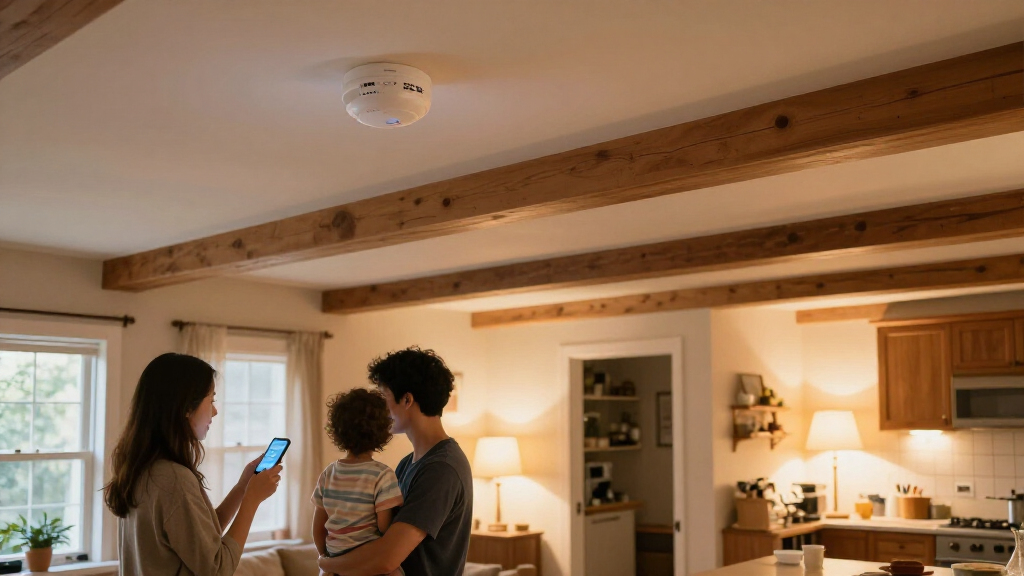
I compared these detectors on the factors that affect safety and day-to-day use: whether they detect smoke alone or carbon monoxide too, how they are powered, what kind of connected alerts they offer, and how alarms can communicate across the home. I also considered installation fit, including the difference between replacing a hardwired unit and adding a battery-powered detector where wiring is unavailable. These distinctions matter more than app connectivity alone: a connected alarm still needs to suit the room, power setup, and household alert plan.
The ranking favors products with a useful balance of hazard coverage, dependable installation fit, and practical connected features. The Kidde hardwired smoke-and-CO model with Ring leads for combining two hazards, backup power, and remote alerts. Battery-powered combination alarms and the multi-unit Heiman kit follow for buyers whose homes or coverage needs differ. Smoke-only models rank lower for broad household coverage, but can be a sensible fit when carbon monoxide detection is already covered or a dedicated smoke alarm is the goal. Platform fit and the need for a gateway or compatible ecosystem can change which pick is right for a particular home.
| smart home smoke detector | Detection |
|---|---|
| Kidde Smart Smoke and CO Detec | Smoke and carbon monoxide |
| Heiman Matter over Thread Smar | — |
| First Alert SC5 Battery Smart | — |
| Heiman S1-R Wireless Interconn | — |
| First Alert SC5 Hardwired Smar | — |
| Kidde Smart Smoke Detector wit | Smoke |
| Kidde Smart Smoke Detector wit | Smoke |
| Kidde Smart Smoke and CO Detec | Smoke and carbon monoxide |
| Kidde Hardwired Smart Smoke an | Smoke and carbon monoxide |
Factors to Consider When Choosing Smart Home Smoke Detectors
Before choosing a model, I would match the alarm to the home’s wiring, hazard coverage, and existing connected devices. A feature-rich detector is not automatically a better fit if it requires a platform you do not use or leaves a coverage gap elsewhere.
Match the power source to the existing alarm location
Start by checking whether the alarm you are replacing is hardwired, battery-powered, or part of an interconnected system. A hardwired detector can simplify a like-for-like replacement, but compatibility with the existing connector and installation requirements still matters. Battery models offer more placement flexibility when there is no wiring, though you will need a plan for battery checks and replacement. Avoid choosing only by the product’s smart features before confirming how it mounts and powers. If you are changing power type or unsure about wiring, check local requirements and consult a qualified installer.
Decide whether each location needs carbon monoxide detection
Combination smoke-and-CO alarms provide both kinds of detection in one device, which can reduce the number of separate units a household manages. Smoke-only alarms may be suitable where the home already has adequate CO coverage or where a dedicated smoke detector is needed. Do not assume one combination unit covers every level or sleeping area; placement and quantity depend on the home layout and applicable safety guidance. Map existing alarms before buying, noting which detect smoke, which detect CO, and where coverage is missing. This avoids paying for overlapping features in one room while leaving another location unprotected.
Treat app alerts as a layer, not a substitute for an alarm
Phone notifications can help when nobody is near the detector, but they depend on the alarm’s connectivity, the home network, and the relevant app or service. A local audible alarm remains the immediate warning inside the home, so remote features should supplement rather than replace it. Check whether alerts require a hub, gateway, account, or compatible smart-home platform before committing. Also ask who will receive alerts and whether more than one household member can access them. If a connected service stops working, the detector should still perform its basic alarm function according to its specifications.
Check interconnection across rooms and floors
In a larger or multi-story home, an alarm in one room may be hard to hear elsewhere, making interconnected alarms a meaningful feature. Interconnection can be wired or wireless, and systems from different product families may not communicate with one another. Confirm whether the proposed units link directly or rely on a gateway, and whether every alarm in the planned group is compatible. A multi-pack can make coordinated coverage easier, but it may be excessive for a small home or an owner replacing just one failed unit. Plan the whole alarm network before mixing brands or models.
Choose a smart-home platform you will actually maintain
Smart-home support is useful only when it fits the devices and routines already in the home. Ring-focused models are a more natural match for households already using Ring, while Matter over Thread may appeal to buyers building around compatible Matter and Thread equipment. Platform names alone do not guarantee every alert or automation will be available; check the product’s current compatibility details. Keep the setup simple enough that household members can find alarm status and respond to notifications. Avoid buying a detector based on a hoped-for integration until you confirm it works with your specific hub and phone setup.
Plan for maintenance and end-of-life replacement
Smart alerts do not remove the need to test alarms and follow the maker’s instructions for cleaning, battery service, and replacement. Compare how each model handles backup power and how clearly it signals low battery or a fault. A sealed or long-life battery can reduce routine changes, while replaceable batteries may be easier to service with supplies already at home. Keep the detector’s age and replacement guidance accessible, since connectivity cannot make an expired sensor reliable. Before installing several units, consider whether you can maintain every device, not just complete the initial setup.
Frequently Asked Questions
Should I choose a hardwired smart detector or a battery-powered one?
Choose a hardwired model when you are replacing a compatible wired alarm and want to retain that installation style, especially if the detector also has battery backup. A battery model is often easier to place where no suitable wiring exists. The decision is not just about convenience: connector compatibility, local rules, and whether the existing alarms are interconnected all affect the replacement. Do not remove or alter a wired alarm setup without checking the manufacturer’s instructions and applicable requirements. If you are uncertain about wiring, get qualified help before installation.
Do I need a smoke-and-CO detector in every room?
Not necessarily; the right number and placement depend on the home layout, local requirements, and the type of appliances or fuel-burning equipment present. A combination alarm can cover two hazards in one location, but it does not automatically replace smoke alarms elsewhere. Make a room-by-room map of existing smoke and CO coverage and compare it with local fire-safety guidance. This is especially useful before choosing smoke-only models, since they may leave a CO coverage gap if separate CO alarms are absent. Follow the detector maker’s placement instructions as well.
Will a smart smoke detector still work if Wi-Fi or the internet goes down?
Connected alerts may be unavailable during a network or service outage, but a detector’s local alarm should still operate according to its product design. Check the manual for what functions depend on the internet, a hub, or a gateway. This distinction matters if you are choosing a detector mainly for remote notifications: connectivity adds reach, not a replacement for an audible warning. Consider whether people at home can hear the alarms and whether interconnected units provide enough coverage. Confirm the outage behavior for the specific model before purchase.
Can I mix different brands of smart smoke detectors in one home?
You can use different brands in one home, but do not assume they will interconnect or share alerts. Each product may rely on its own wireless protocol, gateway, app, or compatible smart-home platform. Check the exact model documentation for alarm-to-alarm compatibility and any limits on linking units. If coordinated alarms across rooms are a priority, choosing a compatible set is usually simpler than assembling a mixed system. Keep any separate app notifications distinct from the home’s audible alarm network.
Is Matter over Thread a better choice than a Ring-connected detector?
Neither is automatically better; the right fit depends on the smart-home equipment you already own and how you want to receive alerts. Heiman’s Matter over Thread option is aimed at homes with compatible Matter and Thread infrastructure, while the Ring-connected Kidde models suit buyers already using Ring services. Confirm which devices, hubs, and app features your setup supports before selecting either path. A protocol label by itself does not guarantee every feature will work across every platform. If you do not need smart-home integration, prioritize alarm coverage, power, and installation fit instead.
Conclusion
For the broadest mix of connected convenience and hazard coverage, I recommend the Kidde Smart Smoke and CO Detector with Ring, Hardwired with AA Battery Backup as the best overall, particularly for a compatible wired location in a Ring household. The First Alert SC5 Battery Smart Smoke and Carbon Monoxide Alarm is my best value-style fit for buyers who need a battery-powered combination alarm, while the First Alert SC5 Hardwired is the stronger premium-style choice for a wired installation where its platform fits. For a beginner, I would pick the model that matches the existing alarm’s power and app setup rather than adding a new ecosystem; the Ring-connected Kidde smoke-and-CO option is a clear route for Ring users. For whole-home linked coverage, consider the Heiman S1-R six-pack; for a Matter over Thread setup, look at the Heiman Matter detector. Choose a smoke-only Kidde model only when CO detection is already covered where needed.
Halloween Picks
halloween
As an affiliate, we earn on qualifying purchases.