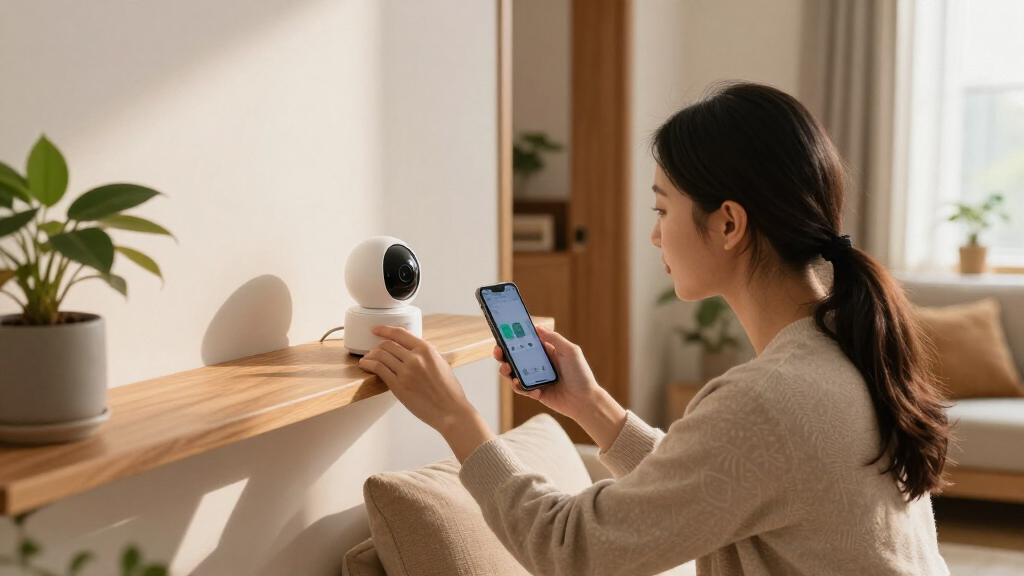

The best smart home security cameras balance useful detection, dependable coverage, manageable setup, and storage that fits how you want to monitor your home. I’d put the Wyze Cam v4 forward as the best overall starting point for its indoor-outdoor flexibility, 2.5K video, and color night vision. For a multi-camera wireless setup, the Blink Outdoor 4 systems stand out for battery-powered coverage, while the Reolink 4K solar cellular camera is built for remote locations without reliable Wi-Fi. The main tradeoffs are wired convenience versus battery flexibility, subscription services versus local recording, and single-camera simplicity versus whole-home coverage. Read on for the full breakdown and a guide to choosing the right setup.

Get the latest gadgets delivered free — and shop member deals
- Fast, free delivery on millions of items
- Access to Prime Big Deal Days deals on October 6–7
- Prime Video, Amazon Music and more included
Complete the kit



Key Takeaways
- The Wyze Cam v4 is the most flexible single-camera pick in this lineup, combining indoor-outdoor use with 2.5K video and color night vision; buyers should still check its storage and connectivity needs.
- Blink Outdoor 4 is the clearest choice for battery-powered multi-camera coverage, with two-, three-, and five-camera configurations that let households match the kit size to their property.
- The Reolink solar cellular model addresses a specific coverage gap: it can suit remote areas where Wi-Fi is unavailable, but cellular service and solar exposure become part of the setup.
- Indoor models split by how much movement coverage matters: Kasa and Tapo offer pan-and-tilt monitoring, while Ring and the Blink Mini 2K+ two-packs favor straightforward fixed-view coverage.
- System cameras bring more than video monitoring: SimpliSafe adds an optional professional-monitoring path, while VTimes and ANSQUE package cameras with a monitor or multi-camera outdoor system.





| smart home security camera | Connectivity | Night vision | Power |
|---|---|---|---|
| Ring Indoor Cam | Wi-Fi 802.11 b/g/n, 2.4GHz | Color night vision | 6.5 ft Micro USB power cable and adapter |
| Reolink 4K Solar Wireless Outd | 4G LTE | — | — |
| VTimes Smart Home Security Cam | — | — | — |
| Blink Mini 2K+ Indoor Security | Wi-Fi | Yes | Plug-in; power adapters included |
| Wyze Cam v4 | 2.4GHz Wi-Fi | Color night vision with Starlight sensor | — |
| Kasa 1080p Indoor Pan/Tilt Wir | 2.4GHz Wi-Fi | Up to 30 feet | — |
| ANSQUE Home Security Cameras W | Dual-band 2.4GHz and 5GHz Wi-Fi | 2K color night vision with smart IR | Solar-powered; stated two hours of sunlight for all-day operation |
| Anona 4K UHD Indoor Security C | Dual-band Wi-Fi 6, 2.4GHz and 5GHz | — | Corded electric, 5V and 10W |
| Tapo 1080P Indoor Security Cam | Wi-Fi | Full-color up to 30 feet | Wired; solar compatible |
| SimpliSafe 7 Piece Wireless Ou | — | Color night vision | Rechargeable battery or outdoor power cable |
| Blink Mini 2K+ | 2.4 GHz 802.11b/g/n Wi-Fi | — | Two indoor USB-C power adapters; no built-in battery |
| Blink Outdoor 4 Wireless Smart | — | Infrared | — |
| Blink Outdoor 2K+ Wireless Sma | 2.4 GHz Wi-Fi 802.11b/g/n | — | — |
| Blink Outdoor 4 Wireless Smart | 2.4 GHz 802.11b/g/n Wi-Fi | — | 2 AA lithium batteries per camera; Sync Module Core powered by AC |
| Blink Outdoor 4 Wireless Smart | — | Infrared | — |
More Details on Our Top Picks
Ring Indoor Cam (Newest Model) – 1080p HD Security Camera, White
For straightforward indoor coverage, I’d choose the Ring Indoor Cam when easy setup and two-way conversation matter more than high resolution or outdoor use. Its 1080p video, color night vision, and noise-canceling audio provide a practical view of a room and a way to speak to someone there. Compared with the Blink Mini 2K+, it records at a lower resolution, but its privacy cover is included and its compact design suits a shelf or wall mount. Customizable motion detection helps limit unwanted alerts, while the included power adapter keeps operation simple. The tradeoff is that full features and video storage depend on a Ring subscription; it is also strictly an indoor camera. I’d skip it if local storage or outdoor coverage is a priority.
Pros:- 1080p video with color night vision for day-and-night room monitoring
- Two-way audio with noise cancellation
- Included privacy cover and flexible mounting options
- Customizable motion detection and a straightforward setup
Cons:- Full features and video storage depend on a Ring Protect subscription
- Indoor-only design limits where it can be installed
- 2.4GHz Wi-Fi connectivity only
Best for: Ring households and renters who want an easy-to-install camera for checking a specific indoor room and speaking through it.
Not ideal for: Buyers who need outdoor coverage, local video storage, or the sharper footage offered by the Blink Mini 2K+.
- Video resolution:1080p HD
- Field of view:143° diagonal, 115° horizontal, 59° vertical
- Audio:Two-way with noise cancellation
- Night vision:Color night vision
- Connectivity:Wi-Fi 802.11 b/g/n, 2.4GHz
- Power:6.5 ft Micro USB power cable and adapter
- Dimensions:1.93 × 1.93 × 3.81 in.
- Included privacy accessory:Privacy cover
Our verdict“Choose the Ring Indoor Cam for simple, subscription-supported indoor monitoring; pick the Wyze Cam v4 if you want local storage or outdoor use.”
Reolink 4K Solar Wireless Outdoor Security Camera with Cellular Connectivity
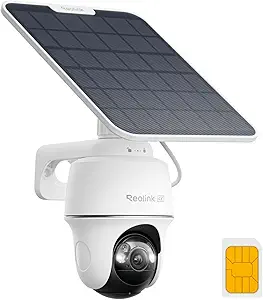
The Reolink 4K Solar Wireless Outdoor Security Camera fits a particular gap: watching a remote property where home Wi-Fi is unavailable. Its 4G LTE connection and solar power avoid the need to run a network cable or keep the camera near an outlet, while pan-and-tilt coverage can follow activity across a wide area. People, vehicle, and animal detection with customizable zones can make alerts more useful than motion-only notifications. Compared with the Wyze Cam v4, Reolink is better suited to disconnected locations and offers 355° horizontal coverage, but Wyze is the simpler fit for a home with Wi-Fi and supports local microSD recording. Reolink’s reliance on cellular coverage, a compatible carrier, and adequate sunlight narrows its usefulness. Data service may add ongoing costs, and cloudy conditions can affect solar charging.
Pros:- 4K video for detailed outdoor monitoring
- Solar-powered and wireless, avoiding a nearby power outlet
- 4G LTE connectivity for locations without Wi-Fi
- 355° horizontal coverage with people, vehicle, and animal detection
Cons:- Requires compatible cellular coverage and may need a separate data plan
- Solar charging can be affected by weather and installation conditions
- More specialized setup than the Wi-Fi-connected Wyze Cam v4
Best for: Owners of farms, cabins, construction sites, or other remote properties with compatible AT&T or T-Mobile LTE coverage but no dependable Wi-Fi.
Not ideal for: Households with reliable Wi-Fi seeking a simple fixed camera, or buyers without cellular service and enough sunlight at the installation point.
- Resolution:4K
- Power source:Solar
- Connectivity:4G LTE
- Coverage:355° horizontal, 140° vertical
- AI detection:People, vehicles, and animals
- Compatible carriers:AT&T and T-Mobile
- Camera movement:Adjustable pan and tilt with preset positions
Our verdict“Choose Reolink when a remote site needs cellular-connected, solar-powered coverage; for a typical Wi-Fi home, the Wyze Cam v4 is the more straightforward fit.”
VTimes Smart Home Security Camera System Wireless Outdoor with Monitor
I’d shortlist the VTimes camera system for households that want a dedicated screen for checking several outdoor cameras instead of relying on a phone for every glance. The included 10.1-inch monitor and four-channel system make it easier to keep an eye on multiple views from one place; its wireless installation avoids complicated cabling. AI human detection, two-way audio, and infrared night vision cover common monitoring needs, and the IPX6 rating supports outdoor installation. Unlike the Reolink 4K Solar, VTimes does not claim 4K or cellular connectivity, so it is less suited to remote sites and high-detail long-distance footage. Its 1080p resolution and stated 5-meter night-vision range are more modest. Buyers should also account for the separately purchased SD card and the battery-recharging needs; phone live viewing depends on the monitor being powered on.
Pros:- Included 10.1-inch IPS monitor provides a dedicated viewing point
- Four channels support monitoring multiple camera views
- AI human detection, two-way audio, and infrared night vision
- IPX6 water resistance and wireless installation
Cons:- 1080p resolution is lower than the 4K Reolink camera
- Compatible SD card is sold separately, and battery cameras need recharging
- Phone live footage depends on the monitor being powered on
Best for: Households that want a multi-camera outdoor setup with a dedicated monitor for checking feeds at home.
Not ideal for: Remote-property owners who need cellular connectivity, or buyers who prioritize 4K detail, long-range night vision, or minimal battery maintenance.
- Video resolution:1080p
- Channels:4
- Monitor:10.1-inch IPS
- Night vision range:5 meters
- Frame rate:30 fps
- Recording mode:Continuous recording
- Water resistance:IPX6
- Power source:Battery powered
Our verdict“Choose VTimes if a dedicated monitor and multi-camera home setup matter more than 4K resolution or cellular independence.”
Blink Mini 2K+ Indoor Security Camera (2-Pack)
For covering two indoor rooms at once, the Blink Mini 2K+ two-pack is a more purposeful choice than buying a single camera and moving it between spaces. Its 2K video gives it a detail advantage over the 1080p Ring Indoor Cam, while included power adapters and mounting kits make placement fairly simple. Enhanced audio and two-way talk help when a camera needs to serve as more than a silent monitor, and Alexa compatibility can suit an existing Blink or Alexa setup. The tradeoff is that person and vehicle detection requires a subscription, and cloud storage becomes a paid service after the trial. Despite the name, outdoor use needs a separately sold weather-resistant power adapter; this is not a battery-powered outdoor system. I’d pass if subscription-free storage is a priority, since the Wyze Cam v4 supports local microSD recording.
Pros:- Two cameras cover separate rooms in one package
- 2K resolution offers more detail than the 1080p Ring Indoor Cam
- Enhanced two-way audio with noise cancellation
- Includes power adapters, USB cables, and mounting kits
Cons:- Person and vehicle detection requires a subscription
- Cloud storage becomes a paid service after the trial
- Outdoor use requires a separately sold weather-resistant power adapter
Best for: Alexa-oriented households that want two plug-in cameras for indoor rooms and value 2K footage over subscription-free storage.
Not ideal for: Buyers seeking local recording without a subscription, battery-powered placement, or ready-to-install outdoor weather protection.
- Video resolution:2K
- Pack size:Two cameras
- Night vision:Yes
- Audio:Enhanced audio with noise cancellation
- Detection:Person and vehicle detection; requires subscription
- Power:Plug-in; power adapters included
- Connectivity:Wi-Fi
- Outdoor use:Requires optional weather-resistant power adapter
Our verdict“Choose the Blink Mini 2K+ pack for two subscription-supported indoor views, but choose the Wyze Cam v4 if local recording without a subscription matters more.”
Wyze Cam v4 (Latest Model) 2.5K AI Security Camera, Indoor & Outdoor, Color Night Vision, No Subscription Required
The Wyze Cam v4 is my pick for buyers who want one camera to move between indoor and outdoor duties without making cloud storage a requirement. Its 2.5K resolution and 120° view provide more detail and a wider fixed frame than the 1080p Ring Indoor Cam, while IP65 weather resistance supports outdoor placement. Color night vision, a motion-activated spotlight, and a 100 dB siren add tools for seeing and responding to activity. People, package, pet, and vehicle alerts broaden its usefulness, and local recording supports a microSD card up to 512 GB, sold separately. Compared with the Blink Mini 2K+, Wyze is the stronger fit for outdoor use and local storage; Blink’s two-pack is better if two indoor viewpoints are the goal. Wyze still requires 2.4GHz Wi-Fi, and its spotlight and siren may be too disruptive indoors.
Pros:- 2.5K resolution and 120° field of view
- IP65 weather resistance for indoor or outdoor installation
- Color night vision with a motion-activated spotlight and siren
- Local microSD recording without requiring a subscription
Cons:- MicroSD card is sold separately
- Requires a 2.4GHz Wi-Fi connection
- Spotlight and 100 dB siren may be disruptive for indoor use
Best for: Homeowners who want a Wi-Fi camera for indoor or outdoor use and prefer recording to a separately purchased microSD card.
Not ideal for: People who need cellular connectivity, battery-powered installation, or a quiet camera without a spotlight and siren.
- Resolution:2.5K (2560 × 1440)
- Field of view:120°
- Weather resistance:IP65
- Night vision:Color night vision with Starlight sensor
- Local storage:Up to 512 GB microSD; card sold separately
- AI detection:People, packages, pets, and vehicles
- Spotlight and siren:72 lumens; 100 dB
- Connectivity:2.4GHz Wi-Fi
Our verdict“Choose the Wyze Cam v4 for flexible indoor/outdoor monitoring and local recording, but look elsewhere if you need a cellular or battery-powered camera.”
Kasa 1080p Indoor Pan/Tilt Wired Security Camera, Baby & Pet Monitor
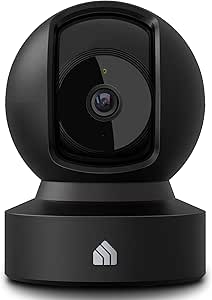
The Kasa EC71 makes more sense when covering a whole room matters more than capturing fine detail. Its 360° horizontal pan and 113° tilt let it follow movement across a space, while motion tracking and two-way audio help caregivers check in without placing several fixed cameras around the room. Compared with the Tapo C100, this Kasa model can physically turn to follow activity; the tradeoff is that both record at 1080p rather than offering the sharper footage of the Anona 4K pair. Night vision reaches 30 feet, and buyers can choose a microSD card or cloud storage. I’d shortlist it for a nursery or pet area, but remember the card is sold separately, full operation depends on Wi-Fi, and advanced cloud features require a subscription.
Pros:- 360° horizontal pan and 113° tilt cover more of a room than a fixed camera
- Motion tracking can follow activity across the camera’s view
- Two-way audio supports remote check-ins
- Local microSD and cloud storage give buyers recording choices
Cons:- 1080p video offers less detail than the Anona 4K cameras
- MicroSD card is not included, and advanced cloud features require a subscription
- Full functionality depends on a Wi-Fi connection
Best for: Parents and pet owners who want one camera to pan across a room and check in through two-way audio.
Not ideal for: Buyers who need 4K detail, outdoor coverage, or camera operation during a Wi-Fi outage.
- Resolution:1080p HD
- Pan and tilt:360° horizontal, 113° vertical
- Night vision:Up to 30 feet
- Storage:MicroSD up to 256 GB or cloud storage
- Connectivity:2.4GHz Wi-Fi
- Audio:Two-way
- Smart home compatibility:Alexa and Google Home
Our verdict“Choose the Kasa EC71 for flexible, room-wide indoor monitoring, but pick the Anona pair if sharper 4K footage matters more than value.”
ANSQUE Home Security Cameras Wireless Outdoor, Solar Powered, 4-Cam System
The ANSQUE system suits buyers who want to cover several outdoor angles without running power cables to each camera. Its four solar-powered cameras, detachable panels, and built-in 32GB storage make it a more self-contained property setup than the SimpliSafe 7 Piece system, which centers on a broader alarm and optional professional monitoring service. ANSQUE also provides 2K color night vision, PTZ movement, and customizable AI detection zones, helping owners distinguish activity and reduce alerts from areas they do not need watched. The main compromise is dependence on sunlight: the stated two hours of sunlight supports all-day operation, but shaded mounting locations may be a poor fit. Storage can expand to 512GB, though remote properties may also face connectivity limitations despite dual-band Wi-Fi.
Pros:- Four cameras provide broad property coverage from one system
- Solar power reduces the need for routine battery charging or nearby outlets
- 2K color night vision and AI detection zones support more informative alerts
- Built-in 32GB local storage is expandable up to 512GB
Cons:- Solar charging may be unreliable at shaded mounting locations
- Wi-Fi connectivity may be a limitation at remote parts of a property
- Storage expansion is capped at 512GB
Best for: Homeowners who need several outdoor viewpoints, local recording, and solar power where cameras receive reliable sunlight.
Not ideal for: People with shaded camera locations, weak Wi-Fi coverage, or a preference for professionally monitored alarm protection.
- Camera count:4
- Resolution:2K HD
- Night vision:2K color night vision with smart IR
- Storage:Built-in 32GB, expandable up to 512GB
- Power:Solar-powered; stated two hours of sunlight for all-day operation
- Connectivity:Dual-band 2.4GHz and 5GHz Wi-Fi
- Coverage:360° panoramic view with PTZ
- Detection:AI motion detection with customizable zones
Our verdict“Choose ANSQUE for multi-angle outdoor coverage with local storage and dependable sunlight, but choose SimpliSafe if professional monitoring is the priority.”
Anona 4K UHD Indoor Security Camera with Pan-Tilt and AI Detection (2 Pack)
For indoor buyers who want to inspect details, the Anona pair stands apart with 4K resolution and 8x digital zoom, plus pan-and-tilt coverage to follow activity around a room. That added clarity is useful for checking what triggered an alert, while AI can distinguish people, pets, and crying. Compared with the Kasa EC71, Anona offers substantially higher stated resolution and detection categories, and it includes two cameras for covering separate spaces. The tradeoffs are practical: these cameras need a wired power connection, record at 15 fps, and require a microSD card purchase for local recording. Setup may also take more effort than a straightforward 1080p indoor model. I’d favor them for detail-focused home monitoring, not for buyers who need battery operation or outdoor placement.
Pros:- 4K UHD resolution and 8x digital zoom provide more detail than 1080p indoor options
- Two cameras can cover separate rooms
- 360° pan and 110° tilt support broad room coverage
- AI detection includes people, pets, and crying
Cons:- Each camera requires a wired power connection
- 15 fps is a lower frame rate than some buyers may expect from a 4K camera
- MicroSD cards are not included, and setup may be more involved
Best for: Households that want two indoor cameras, 4K detail, and AI alerts for people, pets, or a crying child.
Not ideal for: Renters or homeowners who need battery-powered cameras, outdoor coverage, or the simplest possible setup.
- Camera count:2
- Resolution:4K UHD, 8 MP
- Zoom:8x digital
- Pan and tilt:360° pan, 110° tilt
- Connectivity:Dual-band Wi-Fi 6, 2.4GHz and 5GHz
- Storage:MicroSD up to 512GB or encrypted cloud storage
- Frame rate:15 fps
- Detection:AI person, pet, and crying detection
- Power:Corded electric, 5V and 10W
Our verdict“Pick the Anona pair when indoor detail and multi-category AI detection matter more than battery freedom or quick setup.”
Tapo 1080P Indoor Security Camera, Baby Monitor, Dog Camera, Wired, C100
The Tapo C100 is the straightforward choice for buyers who want an indoor camera without paying for motorized pan-and-tilt features they may not use. Its 1080p video, two-way audio, and customizable alarms cover everyday room monitoring, while local microSD storage up to 512GB provides an alternative to cloud recording. Against the Kasa EC71, the key difference is that Tapo’s listed specs do not include pan-and-tilt or motion tracking, so camera placement matters more; the Kasa is better for following activity across a room. The Tapo description also lists IP65 weather resistance and solar compatibility, but this product is presented as an indoor camera, so I would confirm the intended installation and power setup before relying on outdoor use. It’s a pared-back pick, not the sharper, more feature-heavy Anona 4K pair.
Pros:- 1080p video supports everyday indoor monitoring
- Two-way audio and customizable alarms add useful response options
- MicroSD storage supports cards up to 512GB, alongside cloud storage
- Works with Amazon Alexa and Google Assistant
Cons:- No pan-and-tilt or motion-tracking feature is listed, unlike the Kasa EC71
- 1080p resolution provides less detail than the Anona 4K pair
- The indoor-camera listing’s IP65 and solar-compatible claims leave installation details unclear
Best for: Buyers who want a simple fixed-view indoor camera with two-way audio, alarm options, and local recording.
Not ideal for: People who need a camera that pans to track movement, want 4K footage, or require clearly specified outdoor installation details.
- Resolution:1080p
- Night vision:Full-color up to 30 feet
- Storage:MicroSD up to 512GB or cloud with Tapo Care
- Weather resistance:IP65
- Power:Wired; solar compatible
- Connectivity:Wi-Fi
- Audio:Two-way
- Compatibility:Amazon Alexa and Google Assistant
Our verdict“Choose the Tapo C100 for uncomplicated fixed-view monitoring and local storage, but pick the Kasa EC71 if you need a camera that follows movement.”
SimpliSafe 7 Piece Wireless Outdoor Camera Home Security System – Optional 24/7 Professional Monitoring – No Contract – Compatible with Alexa and Google Assistant
SimpliSafe is the pick for buyers who see cameras as one part of a broader home-security system. The seven-piece kit combines two outdoor cameras with entry sensors, a base station, and a key fob, while optional professional monitoring adds a response path that standalone camera systems such as the ANSQUE four-camera set do not list. Its 140° field of view and color night vision support outdoor checks, and a 100 dB siren adds an audible deterrent. That system-level approach brings compromises: there are only two cameras, monitoring requires an extra service, and some advanced features need a wired connection. Buyers focused solely on camera count or local storage may prefer ANSQUE’s four-camera, solar-powered setup. SimpliSafe makes more sense when sensors, app control, and the option of professional monitoring carry equal weight.
Pros:- Combines two cameras with entry sensors, a base station, and a key fob
- Optional 24/7 professional monitoring provides a response option beyond self-monitoring
- Color night vision and a 140° field of view support outdoor surveillance
- Rechargeable battery and outdoor power cable offer installation choices
Cons:- Professional monitoring costs extra
- Two cameras provide fewer viewpoints than the four-camera ANSQUE system
- Some advanced features require a wired connection, and availability is limited to the US
Best for: Households seeking outdoor cameras alongside entry sensors and the option of 24/7 professional monitoring.
Not ideal for: Buyers who want a four-camera solar system, local-storage details, or professional monitoring without an added service cost.
- Kit:7 pieces, including 2 cameras, entry sensors, a base station, and a key fob
- Camera resolution:1080p HD
- Field of view:140 degrees
- Night vision:Color night vision
- Power:Rechargeable battery or outdoor power cable
- Alarm siren:100 dB
- Monitoring:Optional 24/7 professional monitoring
- Compatibility:Alexa and Google Assistant
Our verdict“Choose SimpliSafe if you want cameras integrated with sensors and optional professional monitoring, rather than the larger camera count of ANSQUE.”
Blink Mini 2K+ (Newest Model) Indoor Security Camera – 2 Pack
I’d choose the Blink Mini 2K+ when clear indoor detail matters more than wireless placement. Its 2K resolution gives it an image-quality advantage over the 1080p Blink Outdoor 4 models, which can help when checking on pets or identifying activity in a room. Two cameras in the box also make it easier to cover separate spaces without buying a second package. Two-way talk with noise cancellation adds practical value for calling to a pet or speaking to someone at home.
The tradeoff is that these cameras need constant power, unlike the battery-powered Outdoor 4 systems. They’re also indoor cameras as supplied; weather protection is an optional accessory, not a reason to treat them as outdoor-ready. Advanced detection and cloud storage may require a subscription, so I’d skip this pair if cable-free installation or subscription-free recording is a priority.
Pros:- 2K video provides more detail than the 1080p Blink Outdoor 4 cameras.
- Two-way audio with noise cancellation supports clearer conversations.
- Two cameras and mounting kits are included for monitoring separate rooms.
- Compact design and included stands support straightforward installation.
Cons:- Both cameras need continuous power, limiting placement near outlets.
- Advanced detection and cloud storage require a subscription.
- Weather resistance is optional and sold separately.
Best for: Households that want detailed, plug-in monitoring of two indoor rooms, such as a living area and a pet space.
Not ideal for: Renters or homeowners who need battery-powered placement, outdoor coverage, or advanced detection and cloud storage without a subscription.
- Resolution:2K (2560 x 1440)
- Field of view:138° diagonal
- Included cameras:2
- Connectivity:2.4 GHz 802.11b/g/n Wi-Fi
- Dimensions:2 x 2 x 1.57 inches
- Weight:65 g
- Power:Two indoor USB-C power adapters; no built-in battery
- Warranty:1-year limited
Our verdict“Choose this two-pack for detailed indoor monitoring near outlets, but pick a Blink Outdoor 4 system for cable-free coverage.”
Blink Outdoor 4 Wireless Smart Security Camera System (3 Cameras, Sync Module Core)
For a buyer who wants outdoor coverage across a few locations without wiring, I’d favor this three-camera Blink Outdoor 4 kit over the two-camera version: it adds a third viewpoint while keeping the same basic 1080p, infrared night-vision setup. The stated battery life of up to two years can reduce routine battery changes, while two-way audio and Alexa compatibility make everyday checks simple. Compared with the five-camera Outdoor 4 package, this bundle suits smaller properties that don’t need cameras on every approach.
The main compromise is recording flexibility. The included Sync Module Core does not include local storage, and additional storage options are sold separately; person detection also requires a subscription. Its 1080p video is less detailed than the 2K Blink Outdoor 2K+ system, so I’d choose that model when image detail and color in low light matter more than keeping the setup straightforward.
Pros:- Three cameras cover more areas than the two-camera Outdoor 4 bundle.
- Battery life is rated for up to two years.
- 1080p video, infrared night vision, and two-way audio support everyday monitoring.
- Alexa compatibility and included mounting accessories simplify setup.
Cons:- Sync Module Core does not include local storage.
- Person detection requires a subscription, and additional storage options cost extra.
- 1080p footage is less detailed than the 2K Blink Outdoor 2K+ system.
Best for: Owners of smaller homes who want three battery-powered outdoor viewpoints and simple app and Alexa control.
Not ideal for: Buyers who need 2K detail, included local storage, or person detection without a subscription.
- Included cameras:3
- Video resolution:1080p HD
- Battery life:Up to 2 years
- Night vision:Infrared
- Two-way audio:Yes
- Included module:Sync Module Core
- Included accessories:Batteries, mounting kits, USB-C cable, and power adapter
Our verdict“Pick this kit for practical, multi-point outdoor coverage on a modest setup; choose the Outdoor 2K+ system if sharper footage is the priority.”
Blink Outdoor 2K+ Wireless Smart Security Camera System, 5 Cameras, Black
This is the strongest fit in this group for buyers who want to cover several outdoor approaches and still prioritize image detail. The five-camera Blink Outdoor 2K+ records at 2K, while the five-camera Blink Outdoor 4 provides 1080p footage; that difference can make the higher-resolution model more useful when reviewing activity across a yard or driveway. Its IP-65 weather resistance, color vision in low light, and battery-powered design give it a broader outdoor role than the plug-in Mini 2K+ pair.
That coverage comes with limits: the cameras use 2.4 GHz Wi-Fi only, and smart detection requires an optional subscription. The included batteries are AA lithium, not rechargeable, so long rated battery life doesn’t remove the cost or waste of eventual replacements. I’d choose the five-camera 1080p Outdoor 4 instead if resolution matters less than a larger basic camera system.
Pros:- 2K video offers more detail than the five-camera 1080p Outdoor 4 system.
- Five cameras and mounting kits support broad property coverage.
- IP-65 weather resistance suits outdoor installation.
- Color vision in low light and up to two years of stated battery life add flexibility.
Cons:- Smart detection features require an optional subscription.
- Included AA lithium batteries are not rechargeable.
- Connectivity is limited to 2.4 GHz Wi-Fi.
Best for: Homeowners seeking multiple weather-resistant outdoor views with higher-resolution footage and color vision in low light.
Not ideal for: Buyers with only 5 GHz Wi-Fi, those seeking rechargeable batteries, or anyone who wants subscription-free smart detection.
- Video resolution:2K (2560 x 1440)
- Field of view:115° x 62° x 135°
- Included cameras:5
- Battery life:Up to 2 years
- Batteries:10 AA 1.5V lithium batteries included
- Weather resistance:IP-65
- Connectivity:2.4 GHz Wi-Fi 802.11b/g/n
- Camera dimensions:2.8 x 2.8 x 1.6 inches
- Operating temperature:-4° to 113°F (-20° to 45°C)
Our verdict“Choose this system for expansive outdoor coverage where 2K detail and low-light color are worth subscription and battery tradeoffs.”
Blink Outdoor 4 Wireless Smart Security Camera System (5 Cameras, 2-Year Battery Life)
I’d pick this five-camera Outdoor 4 bundle when the number of monitored locations matters more than maximum image detail. It offers the same 1080p resolution and up-to-two-year battery-life rating as the three-camera Outdoor 4 kit, but adds two cameras for broader coverage of entrances, a garage, or a yard. Compared with the five-camera Blink Outdoor 2K+, this version gives up 2K video and color vision in low light; in return, it keeps the setup focused on straightforward 1080p monitoring.
The limitations are especially relevant for a system this large: person alerts require a subscription, and the Sync Module Core does not include local storage. Cloud storage also requires a subscription, while battery life varies with use and conditions. This makes sense for buyers who value multiple wireless viewpoints and can accept those recording limits, not for anyone seeking local recording out of the box.
Pros:- Five cameras provide more coverage points than the three-camera Outdoor 4 kit.
- 1080p video, infrared night vision, and two-way audio cover core monitoring needs.
- Up to two years of stated battery life reduces frequent battery changes.
- Included mounting kits and Sync Module Core support a coordinated setup.
Cons:- The Sync Module Core does not include local storage.
- Cloud storage and person detection require a subscription.
- Battery life varies with environmental and usage conditions, and resolution is limited to 1080p.
Best for: Households that need five battery-powered outdoor camera locations and are comfortable with 1080p video.
Not ideal for: Buyers who want 2K footage, included local storage, or person alerts without a subscription.
- Included cameras:5
- Camera resolution:1080p HD
- Field of view:143° diagonal
- Photo resolution:640 x 360
- Frame rate:Up to 30 fps
- Power:2 AA lithium batteries per camera; Sync Module Core powered by AC
- Connectivity:2.4 GHz 802.11b/g/n Wi-Fi
- Two-way audio:Yes
- Operating temperature:-4° to 113°F
Our verdict“Choose this bundle when five outdoor viewpoints matter more than 2K detail, but look to the Outdoor 2K+ for sharper footage and low-light color.”
Blink Outdoor 4 Wireless Smart Security Camera System (2 Cameras, Sync Module Core)
For a first outdoor camera system or a small property, I’d start with this two-camera Blink Outdoor 4 kit. It delivers the same 1080p video, infrared night vision, and two-way audio as the three- and five-camera Outdoor 4 bundles, but avoids paying for coverage points a buyer may not need. Its wireless design and up-to-two-year battery-life rating make placement simpler than the plug-in Mini 2K+, especially near an entrance or detached area where power is inconvenient.
The tradeoff is scale and recording options. Two cameras may not cover a larger property as well as the three-camera kit, and the Sync Module Core does not include local storage; person detection and additional storage options may involve extra costs. It also records at 1080p, rather than the 2K offered by the five-camera Outdoor 2K+. I’d choose this bundle for basic coverage, not for fine image detail or subscription-free smart detection.
Pros:- Two cameras suit basic coverage without the larger five-camera bundle.
- Up to two years of stated battery life supports flexible placement.
- 1080p video, infrared night vision, and two-way audio cover everyday outdoor monitoring.
- Includes Sync Module Core, batteries, mounting kits, and power accessories.
Cons:- The Sync Module Core does not include local storage.
- Person detection requires an optional subscription, and additional storage options are sold separately.
- Two cameras may not be enough for larger properties, and resolution is limited to 1080p.
Best for: First-time buyers or residents of smaller homes who need two wireless outdoor viewpoints and Alexa-compatible monitoring.
Not ideal for: Owners of larger properties who need broad multi-camera coverage, 2K footage, or local recording included.
- Included cameras:2
- Video resolution:1080p HD
- Battery life:Up to 2 years
- Night vision:Infrared
- Two-way audio:Yes
- Included module:Sync Module Core
- Included accessories:4 AA batteries, mounting kits, USB-C cable, and power adapter
Our verdict“Choose this kit for straightforward wireless coverage of two outdoor areas; step up to a larger bundle if your property needs more viewpoints.”
How We Picked
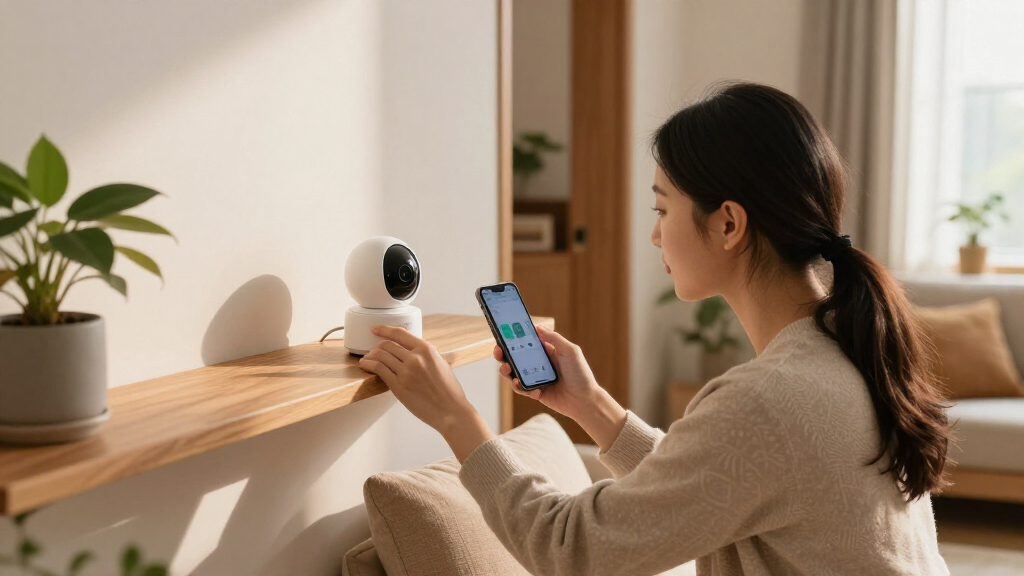
I ranked these cameras by how well each setup answers common home-security needs: clear coverage, usable detection, practical installation, dependable power, and a sensible path for viewing or storing footage. I also weighed whether a camera works indoors, outdoors, or both; whether it needs a wired connection, batteries, solar power, cellular service, or a hub; and how much effort a household may face when expanding the system. These factors affect day-to-day usefulness more than a headline resolution alone.
The order favors flexible cameras and systems that can serve a broad range of homes, then moves toward products with narrower strengths such as indoor pan-and-tilt monitoring, bundled monitors, professional monitoring, or larger camera counts. A higher resolution or a bigger bundle did not automatically earn a higher place: setup demands, connectivity limits, and dependence on particular storage or service arrangements matter too. Since the product list includes variants and bundles, I treat camera count and included equipment as meaningful differences, not as proof that one model is inherently better.
Factors to Consider When Choosing Best Smart Home Security Cameras
Before choosing a camera, I’d map the actual security problem: which areas need coverage, what power and network access those spots have, and how you want to review recordings. These broader decisions can prevent a common mistake—buying a larger bundle or a higher-resolution model that does not suit the installation.
Match Camera Placement to Power and Network Access
Start by checking whether each planned location has an outlet, a dependable Wi-Fi signal, and a useful view of the area. Wired indoor cameras can be straightforward in rooms with nearby power, but a cord may limit placement or be accessible to children and pets. Battery models avoid that cable, yet require a plan for battery changes and may not fit locations where frequent access is inconvenient. Solar can reduce charging chores outdoors, though shade, seasonal daylight, and panel placement affect how well that arrangement works. Cellular models can reach beyond home Wi-Fi, but only where a supported mobile signal is available. I’d confirm power and network conditions before choosing resolution or camera count.
Choose Storage Before You Choose a Bundle
Camera ownership is not just about viewing a live feed; it is also about whether useful clips remain available after an alert. Check whether recording relies on a subscription, local storage, a hub, or a combination, and find out what happens when a trial or service plan ends. Local recording can limit dependence on a recurring service, but it may require compatible equipment and a routine for managing storage. Cloud plans can simplify remote access and clip history, though ongoing service costs and feature limits vary by brand. A common mistake is to compare cameras by video quality while overlooking how recordings are saved and retrieved. I’d choose the recording model that matches how often you expect to review footage.
Prioritize Detection Quality Over Resolution Alone
Higher resolution can help reveal detail, but it does not guarantee that alerts will be useful or that a subject will be clear at night. Field of view, camera angle, lighting, night vision, and motion detection all shape what a clip captures. AI detection may help separate people, pets, or other movement, but capabilities can depend on the model, app, or service plan. Before mounting a camera, consider whether trees, passing traffic, reflective surfaces, or a busy hallway could trigger unwanted notifications. A camera aimed at a smaller, well-chosen zone may provide more useful evidence than one with a broad view full of distractions. I’d prioritize the view and alert behavior that suit the location, then treat resolution as one part of that choice.
Plan Coverage by Zone, Not by Camera Count
Bundled systems make it tempting to cover every wall or room at once, but overlapping views and blind spots matter more than the number on the box. List the entry points, approaches, and indoor spaces you actually need to monitor, then decide whether each needs a dedicated view. Outdoor cameras often benefit from placement that captures faces or movement near an entrance rather than a distant, sweeping view of the yard. Indoors, pan-and-tilt models can follow activity in a room, while fixed cameras may be simpler for watching one doorway or crib. Extra cameras add setup work and more alerts, so I’d start with the locations that matter most and expand only when a clear gap remains.
Check Compatibility and Privacy Before Installation
Smart-home compatibility affects how conveniently cameras fit into routines, but a label for Alexa or Google Assistant does not mean every feature works through voice control. Check which functions are available in the app, which require a hub, and whether the camera can join the smart-home platform you already use. For indoor cameras, consider who can access the feed, how accounts are protected, and whether the camera offers a physical privacy control or a simple way to disable monitoring. Place cameras so they cover the intended area without unnecessarily recording private spaces or neighboring property. If several people need access, confirm how household sharing and permissions work. These details can matter more to everyday comfort than adding another camera to the system.
Frequently Asked Questions
Do I need a subscription to use these smart home security cameras?
Not every camera in this lineup has the same recording and service requirements, so check the exact model and bundle before buying. Some products advertise recording or AI features without a required subscription, while others offer optional monitoring or features tied to a plan. Live viewing, saved clips, longer video history, and smart detection may follow different rules. I’d check what remains available after any trial ends, rather than relying on the product title alone. If avoiding recurring services is a priority, choose a camera whose local or included recording method covers the features you actually need.
Can I use an outdoor camera where my home Wi-Fi does not reach?
Most Wi-Fi cameras need a stable connection at the installation point to send alerts and support remote viewing. The Reolink solar model in this roundup is designed with cellular connectivity for locations where home Wi-Fi is not available, but it still depends on compatible cellular coverage. Solar power does not solve a weak network connection, and cellular connectivity does not remove the need to check signal strength. If neither Wi-Fi nor cellular service reaches the location, a connected camera may not work as expected. Test coverage at the exact mounting spot before committing to an installation.
Should I buy a multi-camera bundle or start with one camera?
A bundle makes sense when you have several clearly defined areas to monitor and want cameras configured within one system. For a single entrance, nursery, or pet area, one well-placed camera can be simpler than managing extra alerts and devices. This roundup includes Blink Outdoor 4 kits with different camera counts, as well as other multi-camera packages, so bundle size should reflect your layout rather than drive it. I’d identify entry points and likely blind spots first, then compare that map with the included cameras. Starting smaller can also reveal whether the app, alert settings, and storage approach suit your household before you expand.
Is a 4K camera always a better choice than a 1080p or 2.5K camera?
No. Resolution can help capture fine detail, but the lens, lighting, field of view, network quality, and recording settings also affect the footage you can use. A 4K model may be a strong fit when detail or a remote outdoor view is a priority, while a lower-resolution camera may be enough for a small indoor room. Higher-resolution video can also require more bandwidth and storage, depending on the camera’s recording setup. I’d first consider what you need to identify in the footage and how far the subject will be from the camera. Then compare image quality with the practical demands of your network and storage.
Is a battery-powered camera a good fit for a front door that gets frequent activity?
It can be, particularly when running a cable to the door is impractical, but frequent activity makes battery life and recording behavior more important. Busy streets, passing neighbors, and repeated motion can create more alerts and increase how often the camera wakes to record. Placement and motion zones can help reduce unnecessary triggers, though they may take adjustment. A wired model may suit a high-traffic area better if a safe power source is available and you prefer not to manage charging. I’d compare the convenience of wire-free installation with the maintenance demands of the exact location.
Conclusion
For most households comparing the best smart home security cameras, I’d start with the Wyze Cam v4 as the best overall thanks to its indoor-outdoor flexibility and 2.5K video. For best value in a multi-camera setup, the Blink Outdoor 4 bundles offer a practical way to match camera count to coverage needs; the right kit depends on how many zones you need to watch. The Reolink 4K solar cellular model is my premium pick for remote locations without dependable home Wi-Fi, provided cellular coverage and solar exposure are suitable. Beginners who want simple indoor monitoring can compare the fixed-view Ring Indoor Cam with the pan-and-tilt Kasa or Tapo models. For specific needs, choose SimpliSafe if optional professional monitoring is a priority, VTimes if a bundled monitor fits your setup, or an indoor two-pack when you need room-to-room coverage. The best match is the one whose power, network, storage, and camera count fit the places you actually need to monitor.
Halloween Picks
halloween
As an affiliate, we earn on qualifying purchases.