
For most homes, I’d start with the eufy Security SoloCam S340: its solar charging and dual-lens design make it a flexible pick for watching outdoor areas without routing power. The Tapo C520WS is a strong alternative if you want pan-and-tilt coverage from a Wi-Fi camera, while the Ring Floodlight Cam Wired Plus suits buyers who prefer a wired camera with motion-activated lighting. The main tradeoffs are power source, field of view, installation effort, and whether you want one camera or a coordinated kit. I compare all 15 options below so you can match coverage and upkeep to your home.

Get the latest gadgets delivered free — and shop member deals
- Fast, free delivery on millions of items
- Access to Prime Big Deal Days deals on October 6–7
- Prime Video, Amazon Music and more included
Complete the kit



Key Takeaways
- Power source shapes the shortlist: solar kits such as the eufy SoloCam E42 and SEHMUA 2K reduce routine charging, while the Ring Floodlight Cam Wired Plus needs a wired installation.
- Pan-and-tilt cameras trade simplicity for adjustable coverage: the Tapo C500, Tapo C520WS, and eufy C37 can follow broader areas, while fixed-view cameras may suit a driveway or gate with a clear sightline.
- Multi-camera kits are better for coordinated coverage: aosu’s D1 Classic and eufy’s four-camera kits bundle several viewpoints, while standalone models make more sense for a single gap.
- Higher resolution is not the only measure of useful detail: lens placement, night lighting, and camera angle affect whether footage captures the area you need to identify.
- Installation and upkeep separate the convenient picks: battery and solar models avoid some wiring work, but they still need suitable mounting positions, wireless coverage, and occasional maintenance.
| TP-Link Tapo C500 1080p Outdoor Pan/Tilt Security Camera | 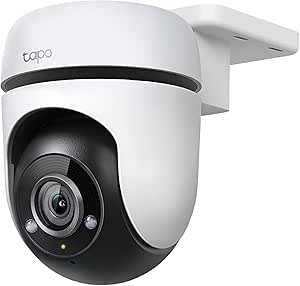 | Best for Wide-Area Coverage | Resolution: 1080p Full HD | Viewing range: 360° horizontal, 130° vertical | Night vision: Infrared, up to 98 ft | VIEW LATEST PRICE | See Our Full Breakdown |
| 2K Wireless Outdoor Security Camera with Full-Color Night Vision |  | Best for Wire-Free Installation | Resolution: 2K UHD | Night vision: Full color | Battery: 5200 mAh; stated 60 days at 100 motion triggers per day, or up to 6 months at lower trigger frequency | VIEW LATEST PRICE | See Our Full Breakdown |
| Tapo C660 KIT 4K Outdoor Pan/Tilt Security Camera with Solar Panel |  | Best Premium Solar Camera | Video resolution: 4K | Photo sensor: 8 MP | Pan and tilt: 326° pan, 53° tilt | VIEW LATEST PRICE | See Our Full Breakdown |
| 4MP Solar-Powered Wireless Outdoor Security Camera System, 4-Camera Kit |  | Best Multi-Camera Kit | Camera count: 4 | Resolution: 4MP | Storage: 128GB encrypted local storage | VIEW LATEST PRICE | See Our Full Breakdown |
| TP-Link Tapo C520WS 2K QHD Outdoor Pan/Tilt Wi-Fi Security Camera |  | Best Wired 2K Pick | Resolution: 2K QHD | Coverage: 360° horizontal, 130° vertical | Night vision: Color, up to 98 ft | VIEW LATEST PRICE | See Our Full Breakdown |
| SEHMUA 2K Solar Wireless Outdoor Security Cameras, 2-Pack |  | Best Two-Camera Solar Coverage | Camera count: 2 | Power: Solar powered; 6000 mAh battery capacity | Video: Marketed as 2K; supplied effective video resolution is 1080 pixels | VIEW LATEST PRICE | See Our Full Breakdown |
| aosu D1 Classic 4-Camera Wireless Outdoor Security Camera Kit | 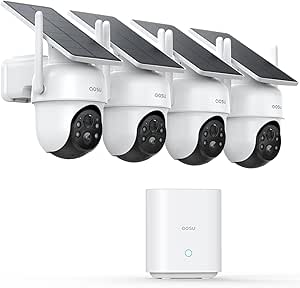 | Best Four-Camera Local-Storage Value | Camera count: 4 | Resolution: 2K / 3 MP | Coverage: 360-degree field of view with motion tracking | VIEW LATEST PRICE | See Our Full Breakdown |
| eufy Security eufyCam C37 4-Camera Kit with 360° Pan and Tilt |  | Best Expandable Local-Storage Kit | Camera count: 4 | Resolution: 2K | Pan and tilt: 360 degrees with auto tracking | VIEW LATEST PRICE | See Our Full Breakdown |
| Realhide 2K UHD Wireless Outdoor Security Camera |  | Best Single-Camera Wi-Fi Flexibility | Resolution: 2K UHD (2000 pixels) | Frame rate: 30 fps | Night vision: Full color with built-in spotlight | VIEW LATEST PRICE | See Our Full Breakdown |
| Blink Outdoor 4 XR Wireless Security Camera System, 4-Camera Kit |  | Best for Long-Range, Low-Maintenance Coverage | Camera count: 4 | Hub: Sync Module XR | Wireless range: Up to 1,000 ft open air; up to 400 ft typical use | VIEW LATEST PRICE | See Our Full Breakdown |
| Blink Outdoor 4 and Wired Doorbell 2K+ Home Security System, 3 Cameras, Sync Module Core, Black |  | Best for a Multi-Entry Starter Setup | Included devices: Three Outdoor 4 cameras, one Wired Doorbell 2K+, and one Sync Module Core | Outdoor 4 resolution: 1080p HD | Doorbell resolution: 1920 × 1920 | VIEW LATEST PRICE | See Our Full Breakdown |
| eufy Security SoloCam E42 4-Camera Kit, 4K Solar Security Cameras |  | Best for High-Detail, Subscription-Free Coverage | Camera count: Four SoloCam E42 cameras | Video resolution: 4K UHD | Coverage: 360° pan and tilt | VIEW LATEST PRICE | See Our Full Breakdown |
| aosu T2 Pro Solar-Powered 3K Dual-Camera Outdoor Security Camera |  | Best for Wide-Angle and Tracking Coverage | Camera lenses: 170° fixed wide-angle and 360° PTZ | Video resolution: 3K | Zoom: Up to 8× hybrid zoom | VIEW LATEST PRICE | See Our Full Breakdown |
| Ring Floodlight Cam Wired Plus, 1080p HD Outdoor Security Camera with Motion-Activated Floodlights, White |  | Best for Lighting a Fixed Entry or Driveway | Video: 1080p HD, Live View, and color night vision | Field of view: 140° horizontal and 80° vertical | Floodlights: Two; 2000 lumens, 3000 K | VIEW LATEST PRICE | See Our Full Breakdown |
| eufy Security SoloCam S340 3K Dual-Lens Solar Security Camera |  | Best Compact Solar Pan-and-Tilt Camera | Video resolution: 3K | Zoom: 8× hybrid zoom | Field of view: 360° | VIEW LATEST PRICE | See Our Full Breakdown |
| outdoor security camera | Storage | Connectivity | Power |
|---|---|---|---|
| TP-Link Tapo C500 1080p Outdoo | microSD up to 512 GB (sold separately) or cloud storage | 2.4 GHz Wi-Fi | — |
| 2K Wireless Outdoor Security C | Free cloud storage with SD-quality recordings; supports SD cards up to 256 GB (not included) | 2.4 GHz and 5 GHz Wi-Fi | — |
| Tapo C660 KIT 4K Outdoor Pan/T | microSD up to 512 GB; card not included | Dual-band 2.4 GHz and 5 GHz Wi-Fi | — |
| 4MP Solar-Powered Wireless Out | 128GB encrypted local storage | 2.4 GHz and 5 GHz Wi-Fi | Solar panel with 8000 mAh battery |
| TP-Link Tapo C520WS 2K QHD Out | microSD up to 512 GB (sold separately) or cloud storage | Wi-Fi and Ethernet | — |
| SEHMUA 2K Solar Wireless Outdo | Memory card up to 128 GB (not included); optional cloud storage | — | Solar powered; 6000 mAh battery capacity |
| aosu D1 Classic 4-Camera Wirel | 32 GB local storage in included aosuBase | — | Solar powered |
| eufy Security eufyCam C37 4-Ca | 64 GB built in; expandable up to 1 TB via microSD | — | 3 W detachable solar panels |
| Realhide 2K UHD Wireless Outdo | Rolling cloud storage or local SD card up to 256 GB | — | — |
| Blink Outdoor 4 XR Wireless Se | — | — | — |
| Blink Outdoor 4 and Wired Door | — | — | — |
| eufy Security SoloCam E42 4-Ca | HomeBase 3 with 16 GB built-in, expandable up to 16 TB; supports microSD up to 128 GB | Wireless Wi-Fi | Battery powered with removable solar panels; 55.98 Wh battery capacity |
| aosu T2 Pro Solar-Powered 3K D | MicroSD up to 256 GB (card not included) or optional cloud storage | — | 5 W solar panel and built-in 9200 mAh battery |
| Ring Floodlight Cam Wired Plus | — | 2.4 GHz 802.11 b/g/n Wi-Fi | Hardwired, 110–240 V |
| eufy Security SoloCam S340 3K | Built-in 8 GB | Wireless Wi-Fi | Solar-powered with removable solar panel |
More Details on Our Top Picks
TP-Link Tapo C500 1080p Outdoor Pan/Tilt Security Camera
The Tapo C500 is a practical choice when one fixed camera would leave too many blind spots. Its 360° horizontal and 130° vertical movement, paired with person detection and motion tracking, lets it follow activity across a broad area rather than simply record one angle. That makes it more flexible for watching a driveway or yard than the fixed-view 2K Wireless Outdoor Security Camera, though the latter is battery-powered and records at a higher resolution. The C500’s 98-foot infrared night vision is useful for dark spaces, but it does not provide the color night view offered by the Tapo C520WS. This is a wired, 2.4 GHz-only camera, so buyers need a suitable power outlet and network. Local microSD storage is available, but the card is sold separately.
Pros:- 360° horizontal and 130° vertical pan-and-tilt coverage
- Person detection and motion tracking can follow activity across the view
- Infrared night vision reaches up to 98 feet
- Two-way audio and a physical privacy mode
Cons:- Requires a wired power connection
- Connects only to 2.4 GHz Wi-Fi
- microSD card is sold separately
Best for: Homeowners with a power outlet and a wide driveway, yard, or entry area to monitor from a single camera.
Not ideal for: Renters or anyone needing a wire-free installation, or households whose Wi-Fi uses only 5 GHz.
- Resolution:1080p Full HD
- Viewing range:360° horizontal, 130° vertical
- Night vision:Infrared, up to 98 ft
- Connectivity:2.4 GHz Wi-Fi
- Storage:microSD up to 512 GB (sold separately) or cloud storage
- Detection:Person detection and motion tracking
- Weather resistance:IP65
- Audio:Two-way audio with customizable sound alarm
Our verdict“Choose the Tapo C500 if broad, trackable coverage matters more than higher-resolution video or wire-free installation.”
2K Wireless Outdoor Security Camera with Full-Color Night Vision
This battery-powered camera suits buyers who want 2K video without running a power cable. Its compact body and support for both 2.4 GHz and 5 GHz Wi-Fi make placement more flexible than the wired Tapo C520WS, which needs a power connection. Full-color night vision can also make nighttime scenes easier to interpret than the Tapo C500’s infrared-only view. The tradeoff is that battery life depends on how much activity triggers recording: the stated estimate is 60 days at 100 triggers per day, with longer life possible at lower activity. Storage needs a closer look, too: free cloud recordings are limited to SD quality, while higher-capacity local storage requires a separate SD card. It has less pan-and-tilt flexibility than the Tapo cameras, so it works best aimed at a defined area.
Pros:- 2K UHD recording with full-color night vision
- Rechargeable battery supports wire-free placement
- Works with both 2.4 GHz and 5 GHz Wi-Fi
- Two-way audio and AI motion alerts
Cons:- Battery life varies with activity and environmental conditions
- Free cloud recordings are limited to SD quality
- SD card is not included
Best for: Homeowners who need a camera in a spot without convenient wiring and want flexible placement on either 2.4 GHz or 5 GHz Wi-Fi.
Not ideal for: People monitoring busy areas who want to avoid regular battery charging, or buyers who need rotating coverage from one camera.
- Resolution:2K UHD
- Night vision:Full color
- Battery:5200 mAh; stated 60 days at 100 motion triggers per day, or up to 6 months at lower trigger frequency
- Connectivity:2.4 GHz and 5 GHz Wi-Fi
- Storage:Free cloud storage with SD-quality recordings; supports SD cards up to 256 GB (not included)
- Weather resistance:IP66
- Audio:Two-way audio
- Dimensions:2.25 x 2.25 x 3.32 inches
Our verdict“Pick this model for flexible, wire-free placement, but choose a pan-and-tilt camera if one fixed angle will not cover the area.”
Tapo C660 KIT 4K Outdoor Pan/Tilt Security Camera with Solar Panel
The Tapo C660 KIT combines a solar panel, a 10,000 mAh battery, and 4K video for buyers who want detailed, moving coverage without a direct power connection. Its detection covers people, vehicles, and pets, giving it a broader monitoring brief than the person-focused Tapo C500. It also records at higher resolution than the C520WS, while the included solar panel can reduce the need to remove the camera for charging. The tradeoffs are practical: its 326° pan and 53° tilt ranges do not match the C500’s stated 360° horizontal and 130° vertical movement, and solar charging depends on available sunlight. Charging is limited to temperatures from 32°F to 113°F. Local microSD recording avoids a required subscription, but the card is not included.
Pros:- 4K video with an 8 MP photo sensor
- Includes a solar panel and 10,000 mAh battery for wire-free operation
- Detects and tracks people, vehicles, and pets
- Supports local microSD storage up to 512 GB
Cons:- Solar charging depends on sunlight
- Charging is limited to temperatures from 32°F to 113°F
- microSD card is not included
Best for: Homeowners who want detailed, solar-assisted pan-and-tilt monitoring and need alerts for people, vehicles, and pets.
Not ideal for: Buyers in shaded locations, areas with limited winter sunlight, or anyone who wants a camera that can charge outdoors below 32°F.
- Video resolution:4K
- Photo sensor:8 MP
- Pan and tilt:326° pan, 53° tilt
- Coverage:Up to 360° horizontal and 98° vertical
- Battery:10,000 mAh
- Connectivity:Dual-band 2.4 GHz and 5 GHz Wi-Fi
- Storage:microSD up to 512 GB; card not included
- Weather resistance:IP65
- Operating and charging temperatures:Operating: -4°F to 113°F; charging: 32°F to 113°F
Our verdict“Choose the Tapo C660 KIT for solar-assisted 4K tracking and broader detection, provided its mounting spot gets adequate sun.”
4MP Solar-Powered Wireless Outdoor Security Camera System, 4-Camera Kit
This kit is the clear choice in this group for covering several sides of a home at once: it includes four solar-powered cameras and a hub with 128GB of encrypted local storage. That bundled storage sets it apart from the Tapo C660 KIT, which supports local recording but requires a separate microSD card. The system also avoids a required subscription and offers color night vision, pan-and-tilt coverage, and AI human detection. Its 4MP cameras have lower stated resolution than the C660’s 4K image, so buyers choosing between them are weighing whole-property coverage against detail from a single camera. Auto tracking must be enabled in the app, and keeping the cameras charged depends on daily sunlight. It is a stronger fit for broad coverage than for a shaded property or a buyer seeking the sharpest single-camera image.
Pros:- Four cameras help cover multiple outdoor locations
- 128GB encrypted local storage is included
- Solar-powered design avoids routine wired power connections
- Color night vision, pan-and-tilt, and AI human detection
Cons:- Auto tracking must be enabled manually in the app
- Solar charging depends on daily sunlight
- 4MP resolution is lower than the Tapo C660 KIT’s 4K
Best for: Homeowners who want to monitor multiple outdoor areas with one kit and prefer included, subscription-free local recording.
Not ideal for: People with shaded camera locations or buyers who prioritize 4K detail over covering several parts of the property.
- Camera count:4
- Resolution:4MP
- Storage:128GB encrypted local storage
- Power:Solar panel with 8000 mAh battery
- Solar panel output:5W
- Connectivity:2.4 GHz and 5 GHz Wi-Fi
- Night vision range:Up to 65 ft
- Field of view:355 degrees
- Weather resistance:IP66
Our verdict“Choose this kit to cover several parts of a property with included local storage, but favor the Tapo C660 KIT for higher resolution from one camera.”
TP-Link Tapo C520WS 2K QHD Outdoor Pan/Tilt Wi-Fi Security Camera
The Tapo C520WS is a good fit for buyers who can provide power and want more detail than the 1080p Tapo C500 without moving to a battery-and-solar setup. It pairs 2K QHD video with 360° horizontal and 130° vertical coverage, motion tracking, and detection for people, pets, and vehicles. Color night vision reaching up to 98 feet gives it a useful advantage over the C500’s infrared night view, while Ethernet support offers an alternative to Wi-Fi. Compared with the battery-powered 2K Wireless Outdoor Security Camera, the C520WS avoids battery-life limits but cannot be placed as freely. It supports local microSD or cloud storage, though the card is sold separately. Buyers should also plan around its outdoor power connection.
Pros:- 2K QHD video with 360° horizontal and 130° vertical coverage
- Color night vision reaches up to 98 feet
- Detects people, pets, and vehicles and tracks motion
- Supports Wi-Fi, Ethernet, two-way audio, and local or cloud storage
Cons:- Requires an outdoor power connection
- microSD card is sold separately
- Cloud storage is an alternative to local recording, not a substitute for a supplied memory card
Best for: Homeowners with an outdoor power source who want 2K, color night vision, and tracking for people, pets, and vehicles.
Not ideal for: Renters or anyone who needs a battery-powered camera for a location without a suitable power connection.
- Resolution:2K QHD
- Coverage:360° horizontal, 130° vertical
- Night vision:Color, up to 98 ft
- Detection:Person, pet, and vehicle detection with motion tracking
- Storage:microSD up to 512 GB (sold separately) or cloud storage
- Connectivity:Wi-Fi and Ethernet
- Audio:Two-way audio with customizable alarms
- Dimensions:4.88 x 4.84 x 4.22 inches
- Mount type:Wall mount
Our verdict“Choose the C520WS for powered 2K pan-and-tilt coverage with color night vision, but pick a battery camera when installation flexibility matters more.”
SEHMUA 2K Solar Wireless Outdoor Security Cameras, 2-Pack
The SEHMUA set suits buyers who want two independently aimed solar cameras without stepping up to a four-camera system. Pan-and-tilt control, a stated 355-degree viewing angle, and PIR alerts make it easier to monitor broad areas such as a driveway and side entrance. Color night vision, a spotlight, infrared LEDs, and two-way audio add useful ways to identify and respond to activity. Compared with the aosu D1 Classic, which includes four cameras and local storage, SEHMUA provides fewer viewpoints and does not include a memory card. There is also a specification caveat: the product is marketed as 2K, while the supplied information lists still and effective video resolution as 1080 pixels. Its 2.4 GHz-only Wi-Fi may also rule it out for some network setups.
Pros:- Solar power supports ongoing outdoor use without routine battery changes.
- Pan-and-tilt control gives each camera broad, adjustable coverage.
- PIR motion alerts and two-way audio help users respond to activity.
- IP65 weather resistance suits exposed outdoor installations.
Cons:- Supplied resolution details list 1080-pixel effective video despite the 2K marketing claim.
- Supports 2.4 GHz Wi-Fi only.
- Memory card is not included, and cloud storage is optional.
Best for: Homeowners who need two solar-powered, pan-and-tilt cameras for separate outdoor areas and can use a 2.4 GHz Wi-Fi network.
Not ideal for: Buyers who need verified 2K capture, 5 GHz Wi-Fi, included local storage, or a four-camera kit.
- Camera count:2
- Power:Solar powered; 6000 mAh battery capacity
- Video:Marketed as 2K; supplied effective video resolution is 1080 pixels
- Viewing angle:355 degrees
- Wi-Fi:2.4 GHz; 5 GHz not supported
- Night vision:Color with spotlight and infrared LEDs
- Storage:Memory card up to 128 GB (not included); optional cloud storage
Our verdict“Choose SEHMUA if two solar-powered cameras with adjustable views matter more than four-camera coverage or confirmed 2K resolution.”
aosu D1 Classic 4-Camera Wireless Outdoor Security Camera Kit
The aosu D1 Classic is a strong fit for buyers who want to cover several sides of a home while keeping recordings on a local base rather than behind a required subscription. Its four solar-powered cameras deliver 2K/3 MP video, color night vision, two-way audio, and 360-degree coverage with motion tracking. The included 32 GB aosuBase gives this kit a more complete recording setup than the two-camera SEHMUA bundle, which requires a separate memory card for local storage. Motion tracking can help a camera follow activity across its view instead of leaving a moving subject at the edge of the frame. The tradeoff is dependence on both Wi-Fi and sunlight; shaded locations may not suit solar charging, and there is no stated cellular fallback. Buyers who want expandable base storage may prefer the eufy C37 kit.
Pros:- Four cameras provide coverage across multiple outdoor areas.
- Included 32 GB aosuBase supports local recording without a required subscription.
- Solar power reduces routine battery maintenance.
- 360-degree coverage, motion tracking, color night vision, and two-way audio add monitoring flexibility.
Cons:- Recording and app access depend on Wi-Fi connectivity.
- Solar charging depends on access to adequate sunlight.
- The listed local storage is 32 GB, with no expansion capacity specified.
Best for: Homeowners covering multiple entrances or sides of a property who want solar cameras and included local recording without a required subscription.
Not ideal for: Buyers with heavily shaded mounting spots, unreliable Wi-Fi, or a need for stated expandable storage beyond 32 GB.
- Camera count:4
- Resolution:2K / 3 MP
- Coverage:360-degree field of view with motion tracking
- Storage:32 GB local storage in included aosuBase
- Power:Solar powered
- Weather resistance:IP65
- Night vision:Color
- Audio:Two-way audio
Our verdict“Pick the aosu D1 Classic for four solar cameras and included local recording, provided your Wi-Fi and sun exposure are dependable.”
eufy Security eufyCam C37 4-Camera Kit with 360° Pan and Tilt
The eufyCam C37 stands out for a four-camera system that pairs included local storage with room to expand. Its HomeBase Mini starts with 64 GB built in and can support up to 1 TB through a microSD card, giving it more stated storage headroom than the aosu D1 Classic’s 32 GB. Each camera offers 360-degree pan and tilt, auto tracking, 2K color night vision, and a detachable 3 W solar panel. That combination suits buyers who want to cover several areas without a required monthly subscription. There are compatibility limits: the listed AI features need a compatible HomeBase, and this kit does not work with HomeBase 2 or HomeKit. Its 15 fps frame rate and six-meter night-vision range are also worth weighing if motion detail or longer-range night monitoring is a priority.
Pros:- Four cameras combine broad coverage with 360-degree pan and tilt and auto tracking.
- Includes 64 GB local storage, expandable up to 1 TB with a microSD card.
- Detachable solar panels support outdoor charging flexibility.
- No monthly subscription is required for the described local-storage setup.
Cons:- Listed AI features require a compatible HomeBase and specified minimum firmware versions.
- Not compatible with HomeBase 2 or HomeKit.
- The listed 15 fps frame rate and six-meter night-vision range may limit detail at distance.
Best for: Homeowners who want four solar-assisted cameras, subscription-free local recording, and the option to expand storage substantially.
Not ideal for: HomeKit users, owners relying on HomeBase 2, or buyers who need a higher stated frame rate or longer night-vision range.
- Camera count:4
- Resolution:2K
- Pan and tilt:360 degrees with auto tracking
- Power:3 W detachable solar panels
- Storage:64 GB built in; expandable up to 1 TB via microSD
- Wi-Fi:2.4 GHz
- Frame rate:15 fps
- Night vision range:6 meters
- Compatibility:HomeBase 3 V3.7.8.4+ or HomeBase Mini V4.0.5.6+; not compatible with HomeBase 2 or HomeKit
Our verdict“Choose the C37 if expandable local storage and four solar-assisted pan-and-tilt cameras outweigh its ecosystem and compatibility restrictions.”
Realhide 2K UHD Wireless Outdoor Security Camera
Realhide is the most straightforward fit here for someone who needs one wireless camera with flexible network and storage choices, rather than a multi-camera kit. It supports both 2.4 and 5 GHz Wi-Fi, records 2K UHD at 30 fps, and offers full-color night vision with a built-in spotlight. That faster listed frame rate gives it a clearer specification advantage over the four-camera eufy C37, which is listed at 15 fps, while Realhide avoids a separate hub. Owners can choose rolling cloud storage or a local SD card up to 256 GB. The tradeoff is that battery life is stated as up to six months and varies with detection activity, so frequent alerts can shorten time between charging. The SD card is not stated as included, and this single-camera option lacks the multi-camera coverage of aosu or eufy kits.
Pros:- Supports both 2.4 GHz and 5 GHz Wi-Fi.
- Records 2K UHD video at a listed 30 fps.
- Offers full-color night vision with a built-in spotlight.
- Provides rolling cloud storage or local SD storage up to 256 GB.
Cons:- Battery life varies with detection activity despite the stated up-to-six-month figure.
- The SD card is not stated to be included.
- A single camera cannot match the multi-area coverage of the aosu D1 Classic or eufy C37 kits.
Best for: Buyers who need one app-controlled camera, have a 5 GHz network, and want a choice between rolling cloud storage and local SD recording.
Not ideal for: Households seeking a four-camera system, solar charging, or a battery interval they can predict regardless of motion activity.
- Resolution:2K UHD (2000 pixels)
- Frame rate:30 fps
- Night vision:Full color with built-in spotlight
- Wi-Fi:2.4 GHz and 5 GHz
- Storage:Rolling cloud storage or local SD card up to 256 GB
- Battery life:Up to 6 months, depending on detection activity
- Weather resistance:IP66
- Audio:Two-way audio
Our verdict“Choose Realhide for a single 2K camera with dual-band Wi-Fi and flexible storage, not for broad property coverage or solar operation.”
Blink Outdoor 4 XR Wireless Security Camera System, 4-Camera Kit
The Blink Outdoor 4 XR is the lineup’s clearest choice for buyers who need to place cameras farther from the main system and want fewer battery changes. Its Sync Module XR lists wireless reach up to 1,000 feet in open air or 400 feet in typical use, plus up to two years of operation from the included lithium AA batteries. Those traits distinguish it from the solar-powered aosu D1 Classic and eufy C37, whose charging depends on sun exposure. Blink also includes four cameras and supports up to 10 Blink devices through the app. The compromises are a 900 MHz wireless band rather than the Wi-Fi connections used by those kits, and storage that is less turnkey: local microSD is sold separately, while cloud storage requires a subscription after the 30-day trial. The supplied details do not specify video resolution.
Pros:- Sync Module XR extends listed range up to 1,000 feet in open air and 400 feet in typical use.
- Included lithium AA batteries are rated for up to two years.
- Four-camera kit and app support for up to 10 Blink devices.
- Supports cloud or optional local clip storage.
Cons:- MicroSD card for local storage is sold separately.
- Cloud storage requires a subscription after the 30-day trial.
- Supplied product details do not state video resolution.
Best for: Owners who need four cameras placed at a distance from the module and value long battery life over solar charging or specified video resolution.
Not ideal for: Buyers who want included local-storage media, subscription-free cloud recording, solar power, or a clearly stated video resolution.
- Camera count:4
- Hub:Sync Module XR
- Wireless range:Up to 1,000 ft open air; up to 400 ft typical use
- Battery life:Up to 2 years
- Batteries:8 included AA lithium batteries
- Wireless band:900 MHz
- Local storage:MicroSD card up to 256 GB; sold separately
- App capacity:Up to 10 Blink devices
Our verdict“Pick Blink Outdoor 4 XR when range and long battery life are the main priorities, and accept separate local-storage media or a cloud subscription.”
Blink Outdoor 4 and Wired Doorbell 2K+ Home Security System, 3 Cameras, Sync Module Core, Black
I’d choose this bundle when the goal is to cover several outdoor approaches and the front door from one app. It combines three weather-resistant 1080p cameras with a 2K wired doorbell, so the door gets sharper detail while the other cameras handle wider property coverage. Night vision, two-way audio, and Alexa support round out the basics. Compared with the eufy SoloCam E42 kit, this Blink set has lower camera resolution and does not include solar charging or the same local-storage emphasis, but it adds a doorbell and uses familiar AA batteries. The tradeoff is ongoing upkeep: the batteries are non-rechargeable, and person or vehicle detection requires a separate Blink plan. I’d also rule it out if the doorbell location lacks compatible wiring.
Pros:- Bundle covers three outdoor locations plus the front door
- 2K doorbell video adds detail at the entry
- Weather resistance, night vision, and two-way audio support outdoor use
- Works with the Blink app and Alexa
Cons:- Doorbell needs compatible existing wiring
- Outdoor 4 cameras use non-rechargeable AA lithium batteries
- Person and vehicle detection features require a separately sold Blink plan
Best for: Homeowners who want one coordinated setup for a wired front door and three outdoor camera locations, with Alexa integration.
Not ideal for: Renters or buyers without compatible doorbell wiring, and anyone prioritizing 4K cameras, rechargeable power, or included advanced detection.
- Included devices:Three Outdoor 4 cameras, one Wired Doorbell 2K+, and one Sync Module Core
- Outdoor 4 resolution:1080p HD
- Doorbell resolution:1920 × 1920
- Field of view:Outdoor 4: 143° diagonal; doorbell: 140° horizontal and vertical
- Outdoor 4 battery life:Up to two years based on default settings
- Included batteries:Six AA lithium metal batteries
- Wi-Fi:2.4 GHz 802.11b/g/n
- Operating temperature:-4°F to 113°F (-20°C to 45°C)
- Doorbell power:12–24V AC, 10–40 VA, 50/60 Hz, or 24V DC, 0.42A
Our verdict“Choose this bundle if you need a wired doorbell and several straightforward outdoor views more than 4K resolution or solar power.”
eufy Security SoloCam E42 4-Camera Kit, 4K Solar Security Cameras
This kit is my pick for buyers who want four 4K views, solar-assisted power, and local recording without a monthly fee. Each SoloCam E42 can pan and tilt through 360° coverage, while AI detection and tracking help follow activity rather than leaving a fixed frame to do all the work. HomeBase 3 comes with 16 GB of storage and can expand substantially, giving this set a stronger local-storage foundation than the Blink Outdoor 4 bundle. The removable solar panels can reduce charging chores, but their benefit depends on direct sunlight; shaded eaves may not provide the stated two hours a day. The kit also lacks a doorbell, and a microSD card for supported camera storage is not included. I’d favor it over the single-camera SoloCam S340 when broad multi-zone coverage matters more than a compact setup.
Pros:- Four 4K cameras provide detailed coverage across multiple areas
- 360° pan and tilt with AI detection and tracking
- Solar panels can reduce routine battery charging in suitable sunlight
- HomeBase 3 provides local storage with expansion support and no monthly fee
Cons:- Solar charging depends on direct sunlight at each camera location
- MicroSD card is not included
- The four-camera kit does not include a doorbell
Best for: Homeowners covering several sunny outdoor areas who want 4K detail, tracking, and local recording without a monthly subscription.
Not ideal for: People with heavily shaded mounting spots, buyers seeking a doorbell in the same kit, or anyone who wants a smaller one-camera installation.
- Camera count:Four SoloCam E42 cameras
- Video resolution:4K UHD
- Coverage:360° pan and tilt
- Solar charging:SolarPlus 2.0; stated charging support from two hours of direct sunlight daily
- Storage:HomeBase 3 with 16 GB built-in, expandable up to 16 TB; supports microSD up to 128 GB
- Power:Battery powered with removable solar panels; 55.98 Wh battery capacity
- Connectivity:Wireless Wi-Fi
- Mounting:Wall mount
- Subscription:No monthly fee
Our verdict“Pick the E42 kit for detailed, expandable local monitoring across four sunny zones without recurring subscription costs.”
aosu T2 Pro Solar-Powered 3K Dual-Camera Outdoor Security Camera
The T2 Pro stands apart by pairing two views in one unit: a 170° fixed wide-angle lens watches the broader scene while a 360° PTZ camera can follow movement. That arrangement suits an open driveway or yard where a fixed camera might miss activity outside its frame. It also brings dual 3K video, color night vision, on-device AI alerts, and two-way audio, plus solar charging for a wire-free installation. Compared with the eufy SoloCam S340, this aosu model offers a fixed wide-angle view alongside its moving camera, rather than relying on one 360° camera design. Its compromises are practical: it needs 2.4 GHz Wi-Fi, local microSD is not included, and solar charging depends on direct sunlight. I’d skip it if a shaded mount or included storage is a priority.
Pros:- Combines a 170° fixed view with a 360° PTZ camera
- Dual 3K video and up to 8× hybrid zoom
- Solar panel and built-in battery support wire-free installation
- On-device AI alerts, color night vision, and two-way audio
Cons:- Requires a 2.4 GHz Wi-Fi network
- MicroSD card is not included, and cloud storage is optional
- Solar charging depends on direct sunlight
Best for: Owners of open driveways or yards who want a broad fixed view and a separate tracking view from one solar-powered camera.
Not ideal for: Buyers with only 5 GHz Wi-Fi, shaded installation points, or a preference for included local storage.
- Camera lenses:170° fixed wide-angle and 360° PTZ
- Video resolution:3K
- Zoom:Up to 8× hybrid zoom
- Night vision:Full color with spotlights and infrared LEDs
- Power:5 W solar panel and built-in 9200 mAh battery
- Wi-Fi:2.4 GHz
- Storage:MicroSD up to 256 GB (card not included) or optional cloud storage
- Weather resistance:IP65 waterproof
- Compatibility:Android, iOS, Amazon Alexa, and Google Assistant
Our verdict“Choose the T2 Pro when one camera needs to watch a wide scene while also tracking activity across it.”
Ring Floodlight Cam Wired Plus, 1080p HD Outdoor Security Camera with Motion-Activated Floodlights, White
I’d put the Ring Floodlight Cam Wired Plus on a garage or entry where bright motion-activated lighting matters as much as video. Its two 2000-lumen floodlights can illuminate activity, while 1080p video, color night vision, customizable motion zones, two-way audio, and a remote siren add deterrence and communication. Unlike the solar-powered eufy SoloCam S340, this Ring camera needs hardwired power and a compatible electrical box, so installation takes more planning; in return, it avoids battery charging. The fixed field of view also makes placement more consequential than with the aosu T2 Pro’s pan-and-tilt coverage. Some video features require a separately sold Ring Protect subscription, so buyers seeking local, subscription-free recording should look elsewhere. This is a focused lighting-and-camera choice, not a flexible multi-camera kit.
Pros:- Two 2000-lumen floodlights illuminate motion
- Color night vision and 1080p video
- Customizable motion zones help focus alerts on selected areas
- Hardwired power supports continuous operation without battery charging
Cons:- Requires hardwired installation and a compatible electrical box
- Some video features require a separately sold Ring Protect subscription
- Fixed viewing coverage depends heavily on mounting position
Best for: Homeowners with an existing compatible electrical box who want a fixed camera and strong motion-triggered lighting over a garage, driveway, or entry.
Not ideal for: Renters, buyers without suitable wiring, or people who want solar installation, pan-and-tilt coverage, or subscription-free video features.
- Video:1080p HD, Live View, and color night vision
- Field of view:140° horizontal and 80° vertical
- Floodlights:Two; 2000 lumens, 3000 K
- Motion detection:Advanced Motion Detection with customizable zones
- Audio:Two-way audio with noise cancellation
- Siren:Remote-activated, 105 dB
- Power:Hardwired, 110–240 V
- Connectivity:2.4 GHz 802.11 b/g/n Wi-Fi
- Operating conditions:-4°F to 122°F (-20°C to 50°C); weather resistant
Our verdict“Choose Ring’s wired floodlight camera for a fixed outdoor area where illumination and continuous power matter more than flexible positioning.”
eufy Security SoloCam S340 3K Dual-Lens Solar Security Camera
For a single hard-to-cover outdoor zone, the SoloCam S340 offers a compact alternative to buying a multi-camera bundle. Its 3K video, 8× hybrid zoom, and 360° pan and tilt let one camera inspect a broad area and bring distant activity closer, while solar power and a removable panel support a wire-free setup. Built-in 8 GB storage and no monthly fee also make it simpler than the aosu T2 Pro if you want storage included rather than buying a microSD card. The tradeoff is scale: unlike the four-camera eufy SoloCam E42 kit, this is one camera with limited built-in storage, so it is not the right fit for monitoring several separate sides of a property. Its alerts are motion-only, which may feel basic to buyers seeking richer event filtering.
Pros:- 3K video with 8× hybrid zoom
- 360° pan-and-tilt coverage from one camera
- Solar power and removable panel support wire-free installation
- Built-in 8 GB storage with no monthly fee
Cons:- Built-in storage is limited to 8 GB
- Motion-only alerts offer less event filtering
- A single camera cannot cover multiple separated mounting locations
Best for: Homeowners who need one compact, solar-powered camera for a broad area and want included local storage without a monthly fee.
Not ideal for: People monitoring several separated zones, needing expanded storage, or wanting more than motion-only alerts.
- Video resolution:3K
- Zoom:8× hybrid zoom
- Field of view:360°
- Power:Solar-powered with removable solar panel
- Connectivity:Wireless Wi-Fi
- Storage:Built-in 8 GB
- Mount type:Wall mount
- Dimensions:3.42 × 3.42 × 4.72 inches
- Weight:630 g
Our verdict“Pick the SoloCam S340 for one broad outdoor zone when solar power, pan-and-tilt coverage, and included local storage are the priority.”

How We Picked
I compared these cameras by how well their designs address common outdoor security needs: dependable coverage, useful image detail, night visibility, weather-ready installation, and practical power options. I also weighed how much effort a buyer may face after installation, including charging, positioning solar panels, connecting multiple cameras, and maintaining a stable network connection.
The ranking favors cameras and kits that offer a useful balance of coverage, installation flexibility, and day-to-day practicality. A multi-camera kit can rank ahead of a single camera for whole-property coverage, while a wired floodlight model may be a better fit for a specific entry point than for a home without suitable wiring. Since the lineup includes different power and coverage styles, I treat each pick according to its intended role rather than assuming every buyer needs the same setup.
Factors to Consider When Choosing Best Outdoor Security Cameras
Before choosing a camera, I’d map the areas you need to watch and the practical limits of your property. A camera that looks feature-rich on paper can be a poor fit if it cannot reach your Wi-Fi, faces direct glare, or needs a power source you do not have.
Choose coverage before counting cameras
Start by listing the areas that matter: an entry, driveway, side passage, or detached garage. One pan-and-tilt camera can cover a broader space than a fixed-view camera, but it may not watch every direction at once. Multiple fixed cameras can provide overlapping views and keep key areas in frame simultaneously. A common mistake is buying a kit based on camera count without checking whether each mounting point has a useful angle. Sketch sightlines from likely mounting spots, including walls, eaves, trees, and vehicles that could block the view. Choose the fewest cameras that cover the approaches you actually need to monitor.
Match power to the mounting location
Battery, solar, and wired cameras solve different installation problems. Battery models avoid running a cable, but you will need to recharge them; solar panels can reduce that upkeep only when they receive suitable sunlight and can be positioned correctly. Wired cameras avoid battery charging, though installation may require an existing power connection or electrical work. Do not assume a solar camera will stay charged in a shaded spot or through long periods of poor sunlight. Check where the panel can sit, whether its cable reaches the camera, and how easy the camera is to remove for service. Pick the power arrangement you can maintain reliably through the seasons.
Check the network at the camera, not just indoors
Outdoor walls, garages, and long distances can weaken Wi-Fi, even when internet service is fast near the router. A weak connection can affect live viewing, alerts, and footage access, so test signal strength at the intended camera location before mounting it. A multi-camera system may also depend on a hub or base station, which adds another device and a placement requirement. Buyers sometimes focus on camera resolution and overlook the network path that carries the footage. If coverage is marginal, consider improving the home network or moving the camera closer to a reliable connection point. Make sure the system’s recording and remote-access approach fits how you plan to review events.
Think about night scenes and identification
Night footage is only useful when the camera can see the area you care about under its actual lighting conditions. Full-color night vision may depend on ambient light or built-in illumination, while infrared footage can show activity without producing natural colors. Floodlights can illuminate an entrance, but bright surfaces, headlights, and nearby windows may create glare. Resolution alone does not guarantee that a face or vehicle detail will be clear at a distance. Consider the range from camera to subject and whether the camera will capture a person approaching or only a small figure across the yard. Aim for a position and lighting setup that make relevant details visible without pointing into neighbors’ private spaces.
Compare recording, alerts, and ongoing effort
Before buying, check how each system stores footage and what features require an account, hub, or subscription. A camera that sends motion alerts but offers limited clip access may not suit someone who needs to review incidents later. Alert quality also depends on placement and motion sensitivity; busy streets, tree movement, and pets can create unwanted notifications. Multi-camera kits can simplify managing several viewpoints, but they may tie those cameras to one app or recording system. Read the setup and storage details for the exact model rather than assuming features carry over across a brand’s product range. Favor the arrangement that makes reviewing useful clips straightforward without creating more maintenance than you want.
Pay for features that solve a real coverage problem
Spend more when a feature addresses a specific limitation, such as needing several coordinated views, remote pan-and-tilt coverage, or a floodlight at a dark entrance. Extra resolution may not help much if the camera is aimed too far away or the network cannot reliably deliver footage. Likewise, a large kit is poor value if several cameras would point at the same area while leaving another approach uncovered. Beginners may prefer a straightforward single-camera setup, while property owners with several entrances may benefit from a coordinated kit. List your coverage gaps, power access, and recording needs before choosing add-ons. That small planning step can prevent paying for capabilities you will not use.
Frequently Asked Questions
Should I buy a multi-camera kit or start with one outdoor camera?
I’d start with one camera if you have a single clear coverage gap, such as a porch or driveway entrance, and can place it where it has a reliable connection. A kit makes more sense when several sides of the property need separate views or when you want the cameras managed together. Avoid buying extra cameras before checking their angles; overlapping views can leave another approach unmonitored. You can also begin with a standalone camera and add compatible units later, but confirm compatibility and recording requirements first. The right choice depends more on the number of distinct sightlines than on the size of the kit.
Are solar outdoor cameras a good choice for a shaded yard?
Solar can reduce charging work, but it is not a dependable shortcut when the panel receives little direct light. Check whether the panel can be mounted in a sunnier location and whether its cable can reach the camera without creating an awkward installation. Seasonal shade, roof overhangs, and tree growth can change how much light the panel receives. If no suitable position is available, a rechargeable battery model or a wired camera may be a better fit. Plan for occasional battery checks even with a solar setup rather than treating it as maintenance-free.
Do I need 4K or 3K resolution for outdoor security?
Higher resolution can preserve more detail, especially when footage needs to be cropped, but it does not fix poor lighting, a distant subject, or a camera pointed in the wrong direction. For a close entrance, a lower-resolution model may capture useful footage if it has a clear view and suitable night performance. For a large yard or a camera positioned farther from the subject, extra detail may help, provided the camera and network handle the footage well. Compare the camera’s field of view and night image alongside its resolution. Choose based on the distance and details you need to record, not the largest number on the box.
Is a wired floodlight camera better than a battery camera?
A wired floodlight model fits a location where you want continuous power and bright motion-triggered lighting, such as an existing exterior light point. A battery camera is easier to place where wiring is unavailable, but charging becomes part of ownership. Wiring can limit where you install the camera and may call for professional help, while battery placement still depends on wireless signal and a practical mounting height. Floodlight brightness can also create glare if the camera faces reflective surfaces or windows. Pick wired lighting for a fixed, powered entry point and battery operation when placement flexibility matters more.
What should I check before mounting a camera outside?
Check the Wi-Fi or hub connection at the exact mounting spot, then confirm the camera can see the approach you want to monitor without being blocked by eaves, plants, or parked vehicles. Consider sunlight, rain exposure, glare, and whether a solar panel has a usable position. Make sure the mounting point is stable and reachable for battery charging, cleaning, or adjustments. Review privacy boundaries so the camera does not unnecessarily capture a neighbor’s windows or private areas. A temporary test at the intended angle can reveal blind spots before drilling holes or routing cables.
Conclusion
For a versatile single-camera setup, my best overall choice is the eufy Security SoloCam S340, while the best value direction is a simpler standalone option such as the TP-Link Tapo C500 when pan-and-tilt coverage matters more than premium resolution. Buyers building coverage across several outdoor areas should compare the eufy SoloCam E42 and aosu D1 Classic kits; the best premium fit depends on whether 4K solar coverage or a coordinated multi-camera system better matches the property. For beginners, the straightforward Tapo C500 offers a practical place to start, while the Ring Floodlight Cam Wired Plus is the focused pick for a powered entrance that needs motion lighting. Choose by coverage layout and power access first: the best camera is the one you can install where it sees the right area and keep operating without unwanted upkeep.
Halloween Picks
halloween
As an affiliate, we earn on qualifying purchases.