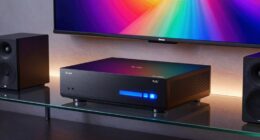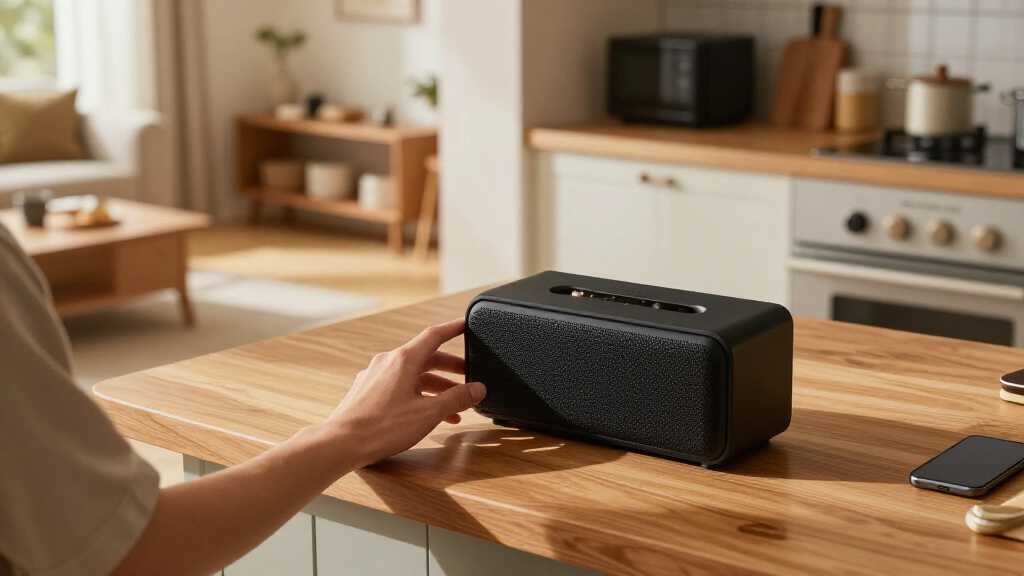

For most homes, I’d start with the Sonos Era 100: it pairs room-by-room expansion with a mature multiroom platform, while the Google Nest Audio 3-Pack is a simpler route to filling several rooms at once. For buyers who want a bundled system rather than separate smart speakers, the Avantree Harmony 2 stands out for its coordinated multi-speaker setup. The main tradeoffs are ecosystem flexibility, connection method, sound scale, and how much setup you want to manage. A speaker that groups easily with your existing devices may suit you better than a more powerful model tied to a different system. Read on for the full breakdown and a guide to choosing speakers that fit your rooms and listening habits.

Get the latest gadgets delivered free — and shop member deals
- Fast, free delivery on millions of items
- Access to Prime Big Deal Days deals on October 6–7
- Prime Video, Amazon Music and more included
Complete the kit



Key Takeaways
Platform fit matters more than a single speaker’s features: Sonos Era 100 and Era 100 SL suit buyers building room by room, while the Google Nest Audio 3-Pack offers a ready-made multi-room starting point for Google users.
Bundled systems take a different approach: Avantree Harmony 2, Harmony A1, Harmony A2, and Rocksteady Stadium bundle multiple speakers or a subwoofer, which may appeal to buyers who want coordinated hardware without assembling a set one device at a time.
The lineup splits between compact room speakers and larger listening anchors: Sonos Five, Denon Home 400, and Bose SoundTouch 30 are better candidates for a main listening space than for discreet coverage in every room.
Wireless does not mean one universal grouping method: Wi-Fi, Bluetooth, Auracast, and brand-specific platforms differ in range, compatibility, and control, so check how the system connects to your current phone, network, and audio sources.
Microphone preference can shape the shortlist: The Sonos Era 100 SL removes microphones, while the standard Era 100 includes Alexa support; buyers should decide whether voice control or a microphone-free design matters more.
| Denon Home 150 Wireless Smart Speaker, Black |  | Best for Flexible Sources | Multi-room platform: HEOS | Connectivity: Wi-Fi, Bluetooth, AirPlay 2, USB, auxiliary input | Tweeter: 1 inch | VIEW LATEST PRICE | See Our Full Breakdown |
| Bose Stereo Music Set with Two Lifestyle Ultra Wireless Speakers |  | Best Ready-Made Stereo Pair | Included speakers: 2 | Connectivity: Wi-Fi, Bluetooth, AirPlay, Spotify, Google Cast | Input: AUX | VIEW LATEST PRICE | See Our Full Breakdown |
| Avantree Harmony 2 Multi-Room Wireless Speaker System |  | Best for Simple TV-to-Room Audio | Latency: Under 30 ms | Connectivity: Optical, AUX, Bluetooth | Setup: No app required; speakers auto-connect | VIEW LATEST PRICE | See Our Full Breakdown |
| Google Nest Audio Smart Speakers, 3-Pack |  | Best for Google Home Households | Quantity: 3 speakers | Connectivity: Wi-Fi, Bluetooth | Voice assistant: Google Assistant | VIEW LATEST PRICE | See Our Full Breakdown |
| Sonos Era 100 SL Compact Microphone-Free Speaker, Black |  | Best Compact Microphone-Free Pick | Color: Black | Connectivity: Wi-Fi, Bluetooth, line-in | Audio components: Dual angled tweeters and midwoofer | VIEW LATEST PRICE | See Our Full Breakdown |
| Sonos Era 100 Wireless Smart Speaker with Alexa, Black | 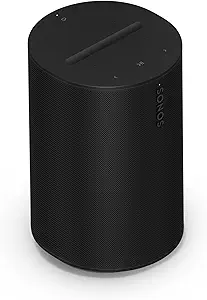 | Best Compact Sonos Pick | Color: Black | Connectivity: Wi-Fi, Bluetooth | Voice assistant: Alexa enabled | VIEW LATEST PRICE | See Our Full Breakdown |
| WiiM Sound Lite Smart Speaker, White (2-Pack) |  | Best Value Two-Room Starter Set | Pack size: 2 speakers | Amplifier power: 100W peak | Audio resolution: Up to 24-bit/192 kHz | VIEW LATEST PRICE | See Our Full Breakdown |
| Rocksteady Stadium 4 Bluetooth Speakers and Subwoofer Bundle |  | Best Portable Multiroom Bundle | Included: Four Stadium 2 speakers and one Stadium Subwoofer | Battery life: Up to 30 hours at 50% volume | Bluetooth range: Up to 150 ft | VIEW LATEST PRICE | See Our Full Breakdown |
| Avantree Harmony A1 Auracast Multi-Room Wireless Speaker System |  | Best for Simple Shared Audio | Included components: Transmitter and 3 speakers | Wireless technology: Auracast | Wireless range: Up to 100 meters, depending on environment | VIEW LATEST PRICE | See Our Full Breakdown |
| Sonos Five Wireless HiFi Speaker, White |  | Best Premium Room-Filling Speaker | Drivers: 6: three woofers and three tweeters | Connectivity: Wi-Fi, Apple AirPlay 2, 3.5 mm line-in | Audio output modes: Mono, Stereo | VIEW LATEST PRICE | See Our Full Breakdown |
| Dio Node Multiroom Wi-Fi Home Speakers, 5-Pack |  | Best for Apple AirPlay 2 Households | Pack size: 5 speakers | Connectivity: Wi-Fi, Apple AirPlay 2 | Speaker type: Surround sound | VIEW LATEST PRICE | See Our Full Breakdown |
| Bose SoundTouch 30 Wireless Speaker |  | Best for Preset-Based Listening | Model: 738102-1100 | Connectivity: Wi-Fi, Bluetooth | Voice assistant: Alexa via Alexa-enabled devices | VIEW LATEST PRICE | See Our Full Breakdown |
| Avantree Harmony A1 Auracast Multi-Room Wireless Speaker System (1 Transmitter, 4 Speakers) |  | Best for Long-Range Auracast Audio Sharing | Technology: Auracast Bluetooth | Wireless range: Up to 100 meters | Included components: 1 transmitter, 4 Auracast Bluetooth speakers | VIEW LATEST PRICE | See Our Full Breakdown |
| Denon Home 400 Wireless Smart Speaker, Charcoal |  | Best Premium Single-Speaker Hub | Driver array: Six drivers, each with its own amplifier | Audio feature: Dolby Atmos Music with built-in height speakers | Connectivity: Wi-Fi, Bluetooth, AirPlay 2, USB, aux input | VIEW LATEST PRICE | See Our Full Breakdown |
| Avantree Harmony A2 Wireless Auracast Speaker System | 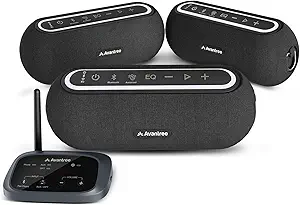 | Best for Venue Background Audio | Audio output: Stereo | Speaker type: Multi-room | Inputs: Bluetooth, Optical, AUX | VIEW LATEST PRICE | See Our Full Breakdown |
| multiroom wireless speaker | Connectivity |
|---|---|
| Denon Home 150 Wireless Smart | Wi-Fi, Bluetooth, AirPlay 2, USB, auxiliary input |
| Bose Stereo Music Set with Two | Wi-Fi, Bluetooth, AirPlay, Spotify, Google Cast |
| Avantree Harmony 2 Multi-Room | Optical, AUX, Bluetooth |
| Google Nest Audio Smart Speake | Wi-Fi, Bluetooth |
| Sonos Era 100 SL Compact Micro | Wi-Fi, Bluetooth, line-in |
| Sonos Era 100 Wireless Smart S | Wi-Fi, Bluetooth |
| WiiM Sound Lite Smart Speaker | Wi-Fi 6E, Bluetooth 5.3, Ethernet, 3.5 mm Aux-In |
| Rocksteady Stadium 4 Bluetooth | — |
| Avantree Harmony A1 Auracast M | — |
| Sonos Five Wireless HiFi Speak | Wi-Fi, Apple AirPlay 2, 3.5 mm line-in |
| Dio Node Multiroom Wi-Fi Home | Wi-Fi, Apple AirPlay 2 |
| Bose SoundTouch 30 Wireless Sp | Wi-Fi, Bluetooth |
| Avantree Harmony A1 Auracast M | — |
| Denon Home 400 Wireless Smart | Wi-Fi, Bluetooth, AirPlay 2, USB, aux input |
| Avantree Harmony A2 Wireless A | — |
More Details on Our Top Picks
Denon Home 150 Wireless Smart Speaker, Black
The Denon Home 150 is a strong fit for a multiroom setup built around varied music sources. Its HEOS support handles room-to-room playback, while Wi-Fi, Bluetooth, AirPlay 2, USB, and auxiliary input give it more ways to connect than the Google Nest Audio 3-Pack, which centers on Wi-Fi and Bluetooth streaming. That flexibility is useful if you want to play from Apple devices or connect a wired source without changing speakers.
Its compact cabinet uses a 3.5-inch woofer and 1-inch tweeter, but stereo requires a second Home 150. Compared with the included two-speaker Bose Lifestyle Ultra set, that means building stereo one speaker at a time. Choose it for adaptable connections and supported high-resolution formats; skip it if you want an out-of-the-box stereo pair or a complete surround setup without adding compatible Denon gear.
Pros:- HEOS supports multiroom playback across compatible speakers.
- Wi-Fi, Bluetooth, AirPlay 2, USB, and auxiliary input offer varied playback options.
- Supports audio formats including FLAC, ALAC, and DSD.
- Can pair with another Home 150 for stereo sound.
Cons:- A second Home 150 is needed for stereo playback.
- A full 5.1 surround setup requires additional compatible Denon equipment.
Best for: Listeners building a HEOS multiroom system who want AirPlay 2, Bluetooth, and wired-source options in a compact speaker.
Not ideal for: Buyers who want stereo from the outset or a ready-made surround system without purchasing additional compatible Denon equipment.
- Multi-room platform:HEOS
- Connectivity:Wi-Fi, Bluetooth, AirPlay 2, USB, auxiliary input
- Tweeter:1 inch
- Woofer:3.5 inches
- Amplifiers:Two Class D
- Supported audio formats:MP3, WAV, AAC, WMA, ALAC, FLAC, DSD
- Maximum audio resolution:192 kHz/24-bit
- Color:Black
Our verdict“Choose the Home 150 if flexible connections and HEOS room grouping matter more than having stereo speakers included in the box.”
Bose Stereo Music Set with Two Lifestyle Ultra Wireless Speakers
This Bose two-speaker set has a clear advantage for buyers who want stereo and multiroom playback without assembling a pair separately. Both speakers are included, and the set can also connect with other speakers for listening across rooms. Compared with the Denon Home 150, which needs a second unit for stereo, Bose makes paired listening the starting point rather than a later addition.
Its streaming options span Wi-Fi, Bluetooth, AirPlay, Spotify, and Google Cast, with adjustable EQ and voice or app controls for tailoring playback. TrueSpatial Audio and CleanBass add sound-shaping options, though the product data does not specify speaker drivers or physical inputs beyond AUX. The main catch is reliance on the Bose app for software updates and feature access. This set suits households that want a coordinated pair and broad streaming support; it is less appealing if avoiding app-dependent management is a priority.
Pros:- Includes two speakers for stereo playback without buying a second unit separately.
- Can connect with other speakers for multiroom listening.
- Supports Wi-Fi, Bluetooth, AirPlay, Spotify, and Google Cast.
- Offers adjustable EQ and touch, app, and voice controls.
Cons:- Software updates and access to features require the Bose app.
- The provided product information does not specify driver sizes or a wider set of physical inputs.
Best for: Households that want two speakers ready for stereo listening, with the option to add multiroom playback and adjust sound in the Bose app.
Not ideal for: Listeners who want to avoid app-based setup and feature management, or who need detailed driver specifications before choosing.
- Included speakers:2
- Connectivity:Wi-Fi, Bluetooth, AirPlay, Spotify, Google Cast
- Input:AUX
- Controls:Touch, app, voice commands
- Audio features:Adjustable EQ, TrueSpatial Audio, CleanBass
- Playback options:Stereo pairing and multiroom listening
Our verdict“Pick this Bose set if you want an included stereo pair with multiple streaming routes and are comfortable managing features through its app.”
Avantree Harmony 2 Multi-Room Wireless Speaker System
The Avantree Harmony 2 takes a different approach to multiroom listening: connect a TV, phone, or laptop through optical, AUX, or Bluetooth, and its speakers auto-connect without an app. Its under-30-ms latency is especially relevant when audio needs to stay in sync across rooms, making it a more straightforward choice for shared TV sound than app-centered systems such as the Google Nest Audio 3-Pack.
This simplicity comes with a narrower use case. The Harmony 2 is designed for indoor listening, and its limited maximum volume makes it a poor match for large spaces or outdoor gatherings. It also does not accept USB, direct XLR, or 3.5 mm TRRS headset microphones; microphone use requires a line-level 3.5 mm TRS or RCA output. Unlike the Wi-Fi-focused Denon Home 150, this system prioritizes direct connections and automatic linking over a broader smart-speaker feature set.
Pros:- Synchronizes audio across speakers with latency under 30 ms.
- Connects to TVs, phones, and laptops through optical, AUX, or Bluetooth.
- Speakers auto-connect without requiring an app.
- Supports indoor multiroom listening from a directly connected source.
Cons:- Limited maximum volume restricts use in large spaces and outdoors.
- Microphone compatibility is limited to line-level 3.5 mm TRS or RCA outputs.
- Does not support USB or direct XLR microphone connections.
Best for: People who want synchronized indoor TV or device audio in multiple rooms without configuring an app or relying on a Wi-Fi speaker platform.
Not ideal for: Buyers needing high volume for large or outdoor areas, or those who plan to connect USB, XLR, or headset microphones.
- Latency:Under 30 ms
- Connectivity:Optical, AUX, Bluetooth
- Setup:No app required; speakers auto-connect
- Intended use:Indoor multi-room audio
- Microphone input requirement:Line-level 3.5 mm TRS or RCA output
- Incompatible microphone types:USB, direct XLR, 3.5 mm TRRS headset
Our verdict“Choose the Harmony 2 for low-lag, app-free indoor audio from a TV or other connected device, not for high-volume or microphone-flexible setups.”
Google Nest Audio Smart Speakers, 3-Pack
The Google Nest Audio 3-Pack is the most natural fit here for buyers who want several rooms covered at once and already use Google Assistant. Three speakers support multiroom playback or stereo pairing, while voice control can handle music, timers, weather, and compatible smart-home devices. Compared with the two-speaker Bose Lifestyle Ultra set, this bundle provides an additional speaker for spreading sound across rooms, though Bose offers a stated set of sound-adjustment features that are not listed for the Nest Audio.
Wi-Fi and Bluetooth cover common streaming paths, and compatibility includes Android, iOS, Chromecast-enabled apps, and compatible smart-home devices. Its main limitation is ecosystem fit: buyers who do not use Google Assistant or compatible services may gain less from its voice and home-control features. The product information also gives fewer source and sound-tuning details than the Denon Home 150, so it is a better match for convenient Google-centered room coverage than for connection flexibility.
Pros:- Three speakers make it straightforward to cover multiple rooms.
- Supports multiroom playback and stereo pairing.
- Built-in Google Assistant handles voice requests and compatible smart-home controls.
- Wi-Fi and Bluetooth support streaming from devices and services.
Cons:- Its voice and smart-home benefits depend on using Google Assistant and compatible devices.
- The provided product details do not list wired inputs or audio-format support.
- Sound adjustment features are not specified in the product information.
Best for: Google Assistant households that want to place speakers in several rooms and use voice commands for music and compatible smart-home devices.
Not ideal for: Buyers outside the Google ecosystem who want extensive wired inputs, stated audio-format support, or documented sound-tuning controls.
- Quantity:3 speakers
- Connectivity:Wi-Fi, Bluetooth
- Voice assistant:Google Assistant
- Audio features:Multiroom playback, stereo pairing
- Compatibility:Android, iOS, Chromecast-enabled apps, compatible smart-home devices
Our verdict“Choose this three-pack if Google Assistant and room-by-room coverage matter more to you than extensive inputs or specified audio-tuning options.”
Sonos Era 100 SL Compact Microphone-Free Speaker, Black
The Sonos Era 100 SL suits listeners who want a compact speaker for a Sonos multiroom system but do not want a built-in microphone. It combines dual angled tweeters with a midwoofer for stereo sound and deep bass, while Wi-Fi and Bluetooth provide wireless playback. A line-in connection also gives it a route for a turntable or another wired source—useful flexibility that is not listed for the Google Nest Audio 3-Pack.
Trueplay room tuning can adapt the sound to its placement, although the provided details do not specify how the tuning is performed. Compared with the Bose two-speaker set, the Era 100 SL is sold as a single compact speaker rather than a ready-made stereo pair, so expanding coverage may mean adding units. Its microphone-free design is also a deliberate tradeoff: choose it for room-aware sound and wired input, but skip it if you want hands-free voice commands from the speaker itself.
Pros:- Dual angled tweeters and a midwoofer deliver stereo sound with deep bass.
- Wi-Fi and Bluetooth support wireless streaming.
- Line-in allows connection of a turntable or another device.
- Trueplay tuning adapts sound to the room.
Cons:- No built-in microphone for hands-free voice control.
- Sold as a single speaker, unlike the included pair in the Bose Lifestyle Ultra set.
- The product details do not specify the line-in adapter or cable requirements.
Best for: Sonos-system owners who want a compact room speaker with Bluetooth, line-in, room tuning, and no built-in microphone.
Not ideal for: Buyers who want an included stereo pair or hands-free voice control directly through the speaker.
- Color:Black
- Connectivity:Wi-Fi, Bluetooth, line-in
- Audio components:Dual angled tweeters and midwoofer
- Microphone:None
- Room tuning:Trueplay
Our verdict“Pick the Era 100 SL for compact Sonos room coverage and wired-source flexibility if you do not need built-in voice control.”
Sonos Era 100 Wireless Smart Speaker with Alexa, Black
The Sonos Era 100 suits buyers who want to build a Sonos multiroom setup without giving a shelf or counter to a larger speaker. Its dual tweeters create stereo separation from a compact cabinet, while the larger midwoofer is designed to add fuller bass than a smaller single-driver speaker. Wi-Fi supports room grouping, and Bluetooth offers a direct option when you want to play audio without starting from a network stream. Trueplay tuning can adapt the sound to the room, though auxiliary playback requires a separate Line-In Adapter. Compared with the bigger Sonos Five, the Era 100 takes up less space and costs you less room-filling scale; choose the Five when fuller stereo sound and a built-in line-in matter more than a compact footprint.
Pros:- Compact size suits shelves, counters, desks, and nightstands.
- Dual tweeters provide stereo separation from one speaker.
- Wi-Fi and Bluetooth give flexible playback options.
- Trueplay tuning can adjust sound for the room.
Cons:- Auxiliary audio requires a separate Sonos Line-In Adapter.
- Its compact format cannot match the Sonos Five for room-filling scale.
Best for: Sonos households adding a compact speaker for a bedroom, office, or kitchen, especially those who want both Wi-Fi streaming and Bluetooth.
Not ideal for: Listeners who need a built-in analog input or want the fuller, more room-filling output of a larger speaker like the Sonos Five.
- Color:Black
- Connectivity:Wi-Fi, Bluetooth
- Voice assistant:Alexa enabled
- Acoustic architecture:Dual tweeters
- Midwoofer:25% larger
- Tuning:Trueplay
- Auxiliary input:Requires Sonos Line-In Adapter
Our verdict“Choose the Era 100 for compact Sonos multiroom listening with Bluetooth flexibility, but pick the Five if stronger room-filling sound is the priority.”
WiiM Sound Lite Smart Speaker, White (2-Pack)
This two-speaker WiiM set is a practical starting point for buyers who want synchronized audio in more than one room without assembling a system one speaker at a time. Its Wi-Fi 6E, Ethernet, Bluetooth, and Aux-In cover a wider range of network and wired setups than the Sonos Era 100, while the WiiM Home App supports grouping and stereo pairing. Hi-Res playback up to 24-bit/192 kHz and AI RoomFit tuning give listeners more control over source quality and room placement. The tradeoff is that these speakers are not water resistant, and voice control depends on compatible devices. Compared with the portable Rocksteady Stadium bundle, WiiM is the better fit for fixed home listening and network features, not outdoor use or battery-powered flexibility.
Pros:- Two speakers provide an immediate starting point for multiroom playback.
- Wi-Fi 6E, Bluetooth 5.3, Ethernet, and Aux-In offer flexible connections.
- AI RoomFit adjusts sound for the speaker’s placement.
- Supports Hi-Res playback up to 24-bit/192 kHz and stereo pairing.
Cons:- Not water resistant, limiting placement in damp or outdoor spaces.
- Voice control requires compatible devices.
- The 11-pound listed item weight makes this a less convenient option for frequent relocation.
Best for: Listeners furnishing two indoor rooms who want varied network and wired connections, app-based grouping, and room-correction tools.
Not ideal for: People who need speakers for patios, bathrooms, or other wet areas, or buyers who expect voice control to work without compatible devices.
- Pack size:2 speakers
- Amplifier power:100W peak
- Audio resolution:Up to 24-bit/192 kHz
- Connectivity:Wi-Fi 6E, Bluetooth 5.3, Ethernet, 3.5 mm Aux-In
- Drivers:4-inch paper-cone woofer and dual 1-inch silk-dome tweeters
- Dimensions:5.8 × 5.8 × 7.6 inches
- Water resistance:Not water resistant
- Control:App, voice, physical buttons
Our verdict“Pick this WiiM two-pack for connection flexibility and room grouping across two indoor spaces, but skip it if you need weather-ready or portable speakers.”
Rocksteady Stadium 4 Bluetooth Speakers and Subwoofer Bundle
The Rocksteady Stadium bundle takes a different path from Wi-Fi-focused systems: it combines four portable speakers with a wireless subwoofer for spreading Bluetooth audio across indoor and outdoor spaces. Its water-resistant design and stated playback time of up to 30 hours at 50% volume make it more suitable for gatherings away from outlets than the corded Sonos Five. A dedicated subwoofer also adds a bass component that the compact Era 100 does not aim to provide at the same scale. The tradeoff is that this is a Bluetooth-based setup rather than the more network-centered WiiM two-pack, and the battery estimate is tied to moderate volume. No specific water-resistance rating is provided, so I would not treat it as suitable for submersion or severe weather.
Pros:- Bundle includes four speakers and a dedicated wireless subwoofer.
- Portable design supports listening indoors or outdoors.
- Playback is stated at up to 30 hours at 50% volume.
- Speakers support multi-room expansion with channel assignment.
Cons:- Playback time is stated at 50% volume and may be shorter at louder levels.
- No specific water-resistance rating is supplied.
- Bluetooth connectivity is less network-oriented than the WiiM Sound Lite system.
Best for: Hosts who want several portable speakers and a subwoofer for indoor-outdoor gatherings without relying on Wi-Fi coverage.
Not ideal for: Buyers seeking a Wi-Fi-based household audio system, a clearly specified weather rating, or long playback at consistently high volume.
- Included:Four Stadium 2 speakers and one Stadium Subwoofer
- Battery life:Up to 30 hours at 50% volume
- Bluetooth range:Up to 150 ft
- Inputs:Bluetooth and 3.5 mm aux
- Subwoofer drivers:5.11-inch front-facing bass driver and 6.7 × 4.5-inch rear-facing bass drum
- Water resistance:Water resistant; rating not specified
- Charging:USB-C; plays while charging
Our verdict“Choose the Rocksteady bundle for portable, bass-supported Bluetooth audio across gathering spaces, not for a Wi-Fi-first home system.”
Avantree Harmony A1 Auracast Multi-Room Wireless Speaker System
The Avantree Harmony A1 is built around a straightforward job: sending one audio source to three speakers for shared listening across rooms or a small venue. Its transmitter accepts Bluetooth, optical, and AUX sources, which makes it easier to connect existing devices than a setup that depends on a particular streaming app. The listed wireless range reaches up to 100 meters, though walls and other obstacles can reduce it. Unlike the app-centered WiiM Sound Lite pair, this system is oriented toward distributing source audio rather than offering the same stated Hi-Res playback, Ethernet, or room-tuning features. It can expand with compatible Harmony A1 speakers and Auracast-enabled devices, but buyers should check device compatibility and keep the Bluetooth source close to the transmitter for reliable operation.
Pros:- Includes a transmitter and three speakers for multi-room distribution.
- Bluetooth, optical, and AUX inputs accommodate different source devices.
- Can expand with compatible Harmony A1 speakers and Auracast-enabled devices.
Cons:- The stated wireless range can fall with obstacles and room layout.
- Bluetooth source devices work best near the transmitter.
- The supplied details do not list the room-tuning and Hi-Res playback features found on the WiiM Sound Lite.
Best for: People who want one audio source shared across several rooms or a small venue and need optical or AUX input options.
Not ideal for: Listeners who want detailed app-based room management, stated Hi-Res specifications, or a system with a range unaffected by walls and surroundings.
- Included components:Transmitter and 3 speakers
- Wireless technology:Auracast
- Wireless range:Up to 100 meters, depending on environment
- Inputs:Bluetooth, optical, AUX
- Expansion:Compatible Harmony A1 speakers and Auracast-enabled devices
- System purpose:Multi-room audio distribution
Our verdict“Choose the Harmony A1 when simple source-to-multiple-room audio and broad input options matter more than app-led streaming features.”
Sonos Five Wireless HiFi Speaker, White
The Sonos Five is the strongest fit here when sound scale in a main listening room matters more than portability or a small footprint. Its six-driver design, with three woofers and three tweeters, is intended to produce room-filling stereo sound, while Wi-Fi and AirPlay 2 make it easy to include in a Sonos or Apple-centered multiroom setup. The built-in 3.5 mm line-in also gives it a useful advantage over the Era 100, whose auxiliary connection needs a separate adapter. That larger output comes with real limits: the Five needs corded power, is not water resistant, and weighs 14 pounds. Compared with the compact Era 100, it suits a living room or dedicated listening space better, but it is a poor match for moving between rooms or placing outdoors.
Pros:- Six-driver layout is designed for room-filling stereo sound.
- Wi-Fi and Apple AirPlay 2 support multiroom playback.
- Built-in 3.5 mm line-in connects turntables and other audio sources.
- Trueplay tuning adapts the sound to the room.
Cons:- Requires corded electric power, unlike the portable Rocksteady speakers.
- Not water resistant.
- At 14 pounds and over 14 inches wide, it takes more space than the Sonos Era 100.
Best for: Sonos and Apple households that want a powerful main-room speaker with AirPlay 2 and a built-in analog line-in.
Not ideal for: People who need a portable or water-resistant speaker, or who want compact speakers distributed throughout smaller rooms.
- Drivers:6: three woofers and three tweeters
- Connectivity:Wi-Fi, Apple AirPlay 2, 3.5 mm line-in
- Audio output modes:Mono, Stereo
- Dimensions:8.03 × 14.33 × 6.06 inches
- Weight:14 lb
- Power source:Corded electric
- Water resistance:Not water resistant
- Color:White
Our verdict“Choose the Sonos Five for a substantial, connected speaker in a main listening room, but choose the Era 100 for smaller spaces or easier placement.”
Dio Node Multiroom Wi-Fi Home Speakers, 5-Pack
The five-speaker bundle makes it easier to place audio in several rooms at once, while Wi-Fi and Apple AirPlay 2 let compatible Apple devices send music across the system. Compared with the Avantree Harmony A1, which uses Auracast Bluetooth and includes a transmitter, the Dio Node is the more direct fit for homes already built around AirPlay 2. App and touch controls offer ways to manage playback, and the lack of built-in microphones suits buyers who prefer speakers without voice-listening hardware. The tradeoff is a narrower compatibility story: the listing specifically emphasizes AirPlay 2, so it may be a less flexible choice for mixed-device households. Its four-inch speakers are also not water resistant, ruling out damp rooms and outdoor placement.
Pros:- Five speakers provide coverage for multiple rooms in one system.
- Wi-Fi and Apple AirPlay 2 support multiroom playback from compatible Apple devices.
- App-based and touch controls give users more than one way to manage playback.
- No built-in microphones for buyers who prefer microphone-free speakers.
Cons:- AirPlay 2-focused compatibility may be limiting for households that rely on other platforms.
- Not waterproof or water resistant, so placement is limited to dry indoor areas.
- The listed frequency response is 220 Hz, with no further range detail provided.
Best for: Apple households wanting a five-speaker Wi-Fi system for shared music across indoor rooms without built-in microphones.
Not ideal for: Mixed-platform households seeking broad device compatibility, or anyone who needs speakers for bathrooms, patios, or other wet areas.
- Pack size:5 speakers
- Connectivity:Wi-Fi, Apple AirPlay 2
- Speaker type:Surround sound
- Speaker size:4 inches
- Controls:App-based, touch
- Mounting:Shelf mount
- Enclosure materials:Metal, polycarbonate
- Water resistance:Not water resistant
Our verdict“Choose the Dio Node if your household uses Apple AirPlay 2 and wants five microphone-free speakers for dry indoor rooms.”
Bose SoundTouch 30 Wireless Speaker
The SoundTouch 30 suits listeners who want one-touch access to favorite stations or services, with six personalized presets managed through the SoundTouch app. Wi-Fi and Bluetooth offer more connection options than the Wi-Fi-focused Dio Node, while Alexa-enabled devices can provide hands-free voice control. That makes this Bose a useful fit as a main listening speaker that can also join a SoundTouch setup, rather than a multi-speaker package like the five-unit Dio Node. The tradeoff is that the supplied details describe a single speaker, not a multiroom bundle, so buyers planning room-by-room coverage may need additional compatible equipment. Full app control also depends on a smartphone or tablet, and voice assistance is limited to Alexa integration.
Pros:- Six personalized presets provide quick access to frequently used listening choices.
- Wi-Fi and Bluetooth support different ways to connect.
- Alexa-enabled devices can provide hands-free voice control.
- Supports AAC, Apple Lossless, MP3, and WMA audio formats.
Cons:- The listed product is a single speaker, not a multiroom speaker bundle.
- Full SoundTouch app control requires a smartphone or tablet.
- Voice assistant integration is limited to Alexa-enabled devices.
Best for: Listeners who want a central home speaker with quick-access presets, Wi-Fi and Bluetooth, and Alexa control through an enabled device.
Not ideal for: Buyers seeking a ready-made multi-speaker package or households that depend on a voice assistant other than Alexa.
- Model:738102-1100
- Connectivity:Wi-Fi, Bluetooth
- Voice assistant:Alexa via Alexa-enabled devices
- Presets:6 personalized presets
- Supported audio formats:AAC, Apple Lossless, MP3, WMA
- Control app:SoundTouch app
- Color:Black
Our verdict“Pick the SoundTouch 30 if presets and flexible Wi-Fi or Bluetooth playback matter more than getting several room speakers in one package.”
Avantree Harmony A1 Auracast Multi-Room Wireless Speaker System (1 Transmitter, 4 Speakers)
The Harmony A1 system pairs one transmitter with four speakers and uses Auracast Bluetooth to share audio across compatible devices. Its stated range of up to 100 meters gives it a different use case from the Wi-Fi-and-AirPlay-based Dio Node: this Avantree system is aimed at flexible distribution from a transmitter, with Optical and AUX inputs alongside Bluetooth. Three EQ modes—Clear Voice, Bass, and Balance—help adapt playback to speech or background music. The main catch is compatibility: the broader multi-device sharing benefits depend on Auracast support in the devices you want to connect. Unlike the Harmony A2, this package explicitly includes a transmitter and four Auracast speakers, but it is not described as a Wi-Fi system, which may not suit buyers seeking app-led home audio across platforms.
Pros:- Includes one transmitter and four Auracast Bluetooth speakers.
- Stated wireless range reaches up to 100 meters.
- Bluetooth, Optical, and 3.5 mm AUX inputs support varied audio sources.
- Three EQ modes provide options for voice, bass, or balanced playback.
Cons:- Full multi-device sharing depends on Auracast-compatible devices.
- The listed connection approach is Auracast Bluetooth rather than Wi-Fi multiroom audio.
- The product data does not specify battery life or speaker dimensions.
Best for: Households or small venues that want a transmitter-based four-speaker setup, long stated wireless range, and Optical or AUX input options.
Not ideal for: Buyers who need Wi-Fi-based multiroom control or want to share audio with devices that do not support Auracast.
- Technology:Auracast Bluetooth
- Wireless range:Up to 100 meters
- Included components:1 transmitter, 4 Auracast Bluetooth speakers
- Inputs:Bluetooth, Optical, 3.5 mm AUX
- Sound modes:Clear Voice, Bass, Balance
Our verdict“Choose the Harmony A1 if a transmitter, four included speakers, and long-range Auracast sharing fit your setup better than Wi-Fi-based control.”
Denon Home 400 Wireless Smart Speaker, Charcoal
With six individually amplified drivers and built-in height speakers, the Denon Home 400 is the most feature-focused single-speaker pick here for listeners who want expansive playback before adding other rooms. HEOS multiroom audio connects it to a compatible Denon ecosystem, while Wi-Fi, Bluetooth, AirPlay 2, USB, and aux provide more source options than the Bose SoundTouch 30 listing specifies. Dolby Atmos Music and support for formats including DSD, FLAC, and ALAC make it better suited to a listener prioritizing immersive and varied music playback than someone simply seeking a multi-speaker starter bundle like the Dio Node. The tradeoff is that this is one speaker, not a multiroom pack, and wireless surround sound requires a compatible Denon soundbar. Buyers should also be prepared to use the HEOS ecosystem for room-to-room expansion.
Pros:- Six drivers, each with its own amplifier, form a substantial speaker array.
- Built-in height speakers support Dolby Atmos Music.
- HEOS provides a route to multiroom playback with compatible Denon products.
- Wi-Fi, Bluetooth, AirPlay 2, USB, and aux accommodate varied sources.
Cons:- The product is a single speaker rather than a multiroom bundle.
- Wireless surround sound requires a compatible Denon soundbar.
- Multiroom expansion depends on using compatible HEOS products.
Best for: Listeners building a Denon HEOS home who want a feature-rich main speaker with Atmos Music and several wired and wireless source options.
Not ideal for: Buyers who want several speakers included, or those seeking wireless surround sound without a compatible Denon soundbar.
- Driver array:Six drivers, each with its own amplifier
- Audio feature:Dolby Atmos Music with built-in height speakers
- Connectivity:Wi-Fi, Bluetooth, AirPlay 2, USB, aux input
- Multiroom platform:HEOS app
- Audio formats:DSD, FLAC, ALAC, WAV, WMA, MP3
- Color:Charcoal
Our verdict“Choose the Denon Home 400 as a capable main speaker if you plan to expand through HEOS and accept that extra room speakers are separate.”
Avantree Harmony A2 Wireless Auracast Speaker System
The Harmony A2 is framed around synchronized background sound for conference rooms, restaurants, and showrooms, rather than the app-led home setup offered by the Dio Node. It supports Bluetooth, Optical, and AUX, with Balance, Voice, and Bass EQ modes for adjusting playback to music or speech. Auracast compatibility also gives it a path to connect with supported devices across brands, and the stated range reaches 100 meters. Compared with the Harmony A1, whose package is specified as one transmitter and four speakers, the A2’s listed details emphasize system expansion and venue use but do not specify the number of included speakers. That makes package configuration worth checking before choosing it. Bluetooth is most reliable near the transmitter, and continuous operation may require a firmware update, so it is less appealing for unattended, all-day use without setup checks.
Pros:- Designed to synchronize speakers for background audio in venues.
- Supports Bluetooth, Optical, and AUX input sources.
- Auracast compatibility supports connection with compatible devices across brands.
- Balance, Voice, and Bass EQ modes tailor playback to different content.
Cons:- The listed product details do not state how many speakers are included.
- Bluetooth works best when the source device is near the transmitter.
- Continuous operation may require a firmware update.
Best for: Small businesses and venue operators who need synchronized background audio, flexible inputs, and a system that can expand with compatible Auracast devices.
Not ideal for: Home buyers who want a clearly specified speaker bundle or anyone needing dependable Bluetooth playback far from the transmitter.
- Audio output:Stereo
- Speaker type:Multi-room
- Inputs:Bluetooth, Optical, AUX
- EQ modes:Balance, Voice, Bass
- Maximum range:100 meters
- Bluetooth range:50 feet
- Water resistance:Water resistant
- Power and batteries:Transmitter uses external power; speakers use internal batteries; 3 lithium-ion batteries included
Our verdict“Consider the Harmony A2 for expandable venue background audio, but verify the included speaker count and firmware needs before buying.”
How We Picked
I ranked these speakers by how well they support reliable listening across multiple rooms, not by sound quality or feature count in isolation. My main criteria were the clarity of the grouping approach, compatibility with common home setups, ease of adding speakers, useful room-to-room control, and whether the product format makes sense for its likely role. I also weighed versatility, build and placement practicality, and how clearly the product’s strengths justify its tradeoffs.
That logic puts flexible, established room-by-room options near the top, followed by bundled systems that can cover several spaces with less piecemeal buying. More specialized picks rank lower for general use when they depend on a particular ecosystem, use a less familiar connection method, or focus on one large room rather than whole-home expansion. Models that appear in multiple bundle configurations are judged by the specific listing’s included hardware; buyers should confirm the contents before choosing.
Factors to Consider When Choosing Best Multiroom Wireless Speakers
The best multiroom setup is the one that works with the devices and routines you already have. Before choosing by speaker count or sound claims, I’d map where music needs to play, what sources you use, and how much control you want from one app or system.
Choose the grouping platform before the speaker
Multiroom audio depends on every speaker being able to join the same playback group, so a familiar brand name does not automatically mean compatibility with your existing devices. Check whether grouping happens through a manufacturer’s app, a smart-home platform, Wi-Fi casting, Bluetooth, or Auracast. These methods can have different limits for synchronized playback, range, and supported sources. A common mistake is buying several capable speakers and discovering they cannot play the same stream together. If you expect to add rooms over time, favor a platform with a clear expansion path rather than a one-off bundle. If you only need a fixed set of speakers, a dedicated system may be simpler.
Plan room coverage, not just speaker count
Three compact speakers do not necessarily cover a home better than two well-placed units, since walls, floor plans, and listening distance affect what reaches each room. Identify the spaces where you want independent volume control and those where synchronized background music is enough. Open-plan kitchens and living areas may need fewer speakers than separated bedrooms or rooms behind thick walls. Avoid placing a speaker in every room before checking whether you actually want audio there; extra units add setup and control overhead. For a main listening room, a larger speaker may make more sense than duplicating small models. For casual coverage, a multi-pack can be a tidy starting point.
Match wireless connection to your home and sources
Wi-Fi systems typically suit fixed home listening, while Bluetooth-based arrangements can be convenient when you want a direct connection without relying on a home network. Auracast may allow compatible equipment to share audio, but support varies across phones, transmitters, and speakers. Confirm the connection method on both ends instead of assuming any wireless device can join any group. Also check whether playback continues if the controlling phone leaves the room or disconnects. A network-dependent system may be a poor fit where Wi-Fi coverage is unreliable. If your router struggles at the far end of the home, solve coverage before expanding the speaker setup.
Decide how much control you want in each room
Some households want one shared queue and synchronized playback; others need different music and volume in different rooms. Those are separate capabilities, so check how the system handles grouped and independent zones. Think about who will control playback: a dedicated app, voice assistant, phone casting, or physical controls can all shape everyday usability. Microphones are useful for hands-free commands but may not suit people who prefer a microphone-free speaker. A system that looks simple during setup can still frustrate guests or family members if controls are hard to find. Choose the control style your household will actually use, not the one with the longest feature list.
Spend for the room that matters most
It is easy to overbuy every room when only one space needs fuller, more powerful sound. Consider placing a stronger speaker in the living room and using smaller units for kitchens, bedrooms, or background listening. Subwoofers and stereo pairs can add scale, but they also take up more space and may be unnecessary for spoken audio or casual music. Before paying for premium hardware, decide whether the improvement will be audible at your normal listening level and distance. Bundles can reduce the effort of matching components, while separate speakers offer more flexibility in placement and future upgrades. A mixed system is sensible only if the products can still group in the way you need.
Check longevity, expansion, and household fit
A multiroom system often grows over several years, so support and compatibility matter beyond the initial setup. Look for clear information about app availability, firmware support, and whether newer speakers can join older ones. Think about shared use, too: a setup that relies on one person’s phone or account can be awkward for a household. Confirm what comes in each box, especially when listings use similar names for different speaker counts or transmitter bundles. Keep placement and power in mind, since wireless playback does not remove the need for outlets. A practical system is one you can maintain and expand without rebuilding your whole setup.
Frequently Asked Questions
Can I mix Sonos, Google, Bose, and Avantree speakers in one multiroom group?
Do not assume speakers from different brands can form one synchronized group. Each product may rely on its own app, streaming protocol, or transmitter, and those systems do not always share group controls. Some speakers can accept the same source through a common casting method, but that is not the same as broad, dependable platform integration. Check the exact model’s supported services and grouping features before buying across brands. If one whole-home group is your priority, choosing a single platform is usually the safer path.
Will multiroom speakers stay synchronized if I stream music from my phone?
That depends on how the speakers receive audio and how the system manages grouped playback. A system designed for app-based multiroom streaming may handle synchronization differently from a Bluetooth connection or a separate transmitter-and-speaker bundle. Bluetooth can be convenient for a nearby source, but range and grouping behavior vary by product. Check whether the phone acts as the source for every speaker or simply starts playback through a home network system. For music across adjacent rooms, use a grouping mode the manufacturer specifically supports rather than relying on a general wireless connection.
Is a multi-speaker bundle better than buying speakers one at a time?
A bundle can make setup more straightforward when its included speakers are designed to work together, and it may suit buyers who already know which rooms they want to cover. Buying one at a time gives you more control over speaker size, placement, and the order in which you expand. The tradeoff is that separate purchases can leave you with mismatched devices or incompatible grouping methods. Compare the included hardware and connection approach, not just the number of units in the package. If your room needs are uncertain, starting with a single expandable speaker can reduce the risk of buying more than you use.
Should I buy a premium speaker for every room?
Usually, no: different rooms have different listening needs, and a large speaker may be wasted in a small bedroom used mainly for background audio. Put the strongest model where you listen most actively, then use compact speakers where coverage and convenience matter more. If you often play the same music throughout the home, consistent grouping may matter more than matching every speaker’s sound output. A premium model can be worthwhile for a primary listening area, but it does not automatically improve the experience in every space. Plan around room size, listening distance, and typical volume before choosing a uniform set.
What should I check before buying an Auracast multiroom speaker system?
Confirm that the transmitter and speakers in the specific package support the connection setup you intend to use. Check the included speaker count, whether a transmitter is supplied, and how the system handles range and playback control. Auracast compatibility on a phone or another device can vary, so do not assume your current hardware will act as the source without checking its specifications. Also decide whether the system’s group format gives you the room-by-room control you want or mainly shares one audio feed. These checks can prevent a bundle from fitting the hardware plan but not the way your household listens.
Conclusion
For a flexible room-by-room system, my best overall recommendation is the Sonos Era 100; choose the Era 100 SL instead if you prefer a microphone-free design. The Google Nest Audio 3-Pack is my best value-style pick for beginners who want several rooms covered with a familiar smart-speaker approach, while the Avantree Harmony 2 suits buyers who prefer a coordinated bundle. For a premium main-room speaker, compare the Sonos Five and Denon Home 400, choosing based on the platform that best fits your home. If you need a specific bundled setup, such as an Auracast system or speakers with a subwoofer, consider the Avantree Harmony A1 or A2 and Rocksteady Stadium, after checking compatibility and package contents. The right choice comes down to whether you value easy expansion, a complete multi-speaker package, stronger sound in one room, or a particular connection method.
Fall Picks
fall essentials
As an affiliate, we earn on qualifying purchases.