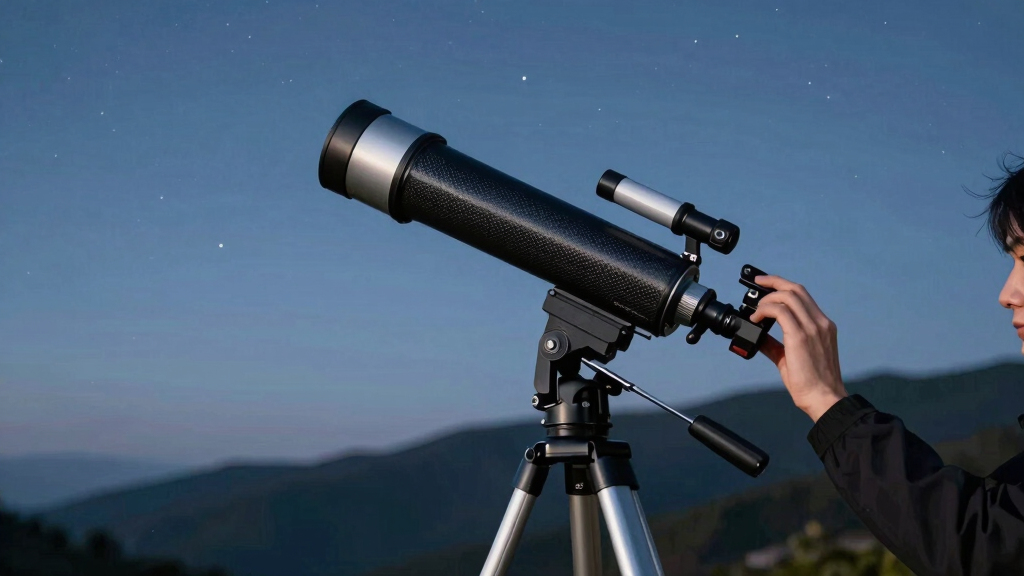

The Celestron StarSense Explorer DX 130AZ is my best overall pick among the 13 best telescopes for astronomy because its smartphone-guided aiming pairs a capable 130mm reflector with an approachable alt-azimuth mount. For more light-gathering power, the MEEZAA 150EQ stands out, while the Gskyer 90mm refractor offers a simpler option for lunar and planetary viewing. The main tradeoffs are aperture versus portability, manual setup versus guided finding, and a more capable mount versus an easier learning curve. Read on for the full breakdown, plus advice on choosing a telescope that fits your observing style.
Complete the kit



Key Takeaways
- The StarSense Explorer DX 130AZ leads on usability: its phone-guided object finding gives beginners a practical advantage over the manually aimed reflectors in this lineup.
- The MEEZAA 150EQ offers the largest listed aperture: its 150mm mirror gathers more light than the 130mm reflectors, but its equatorial mount asks more of a new owner.
- Several 130mm reflectors trade convenience for reach: the Gskyer 130EQ, SOLOMARK Polaris 130EQ, Celestron PowerSeeker 127EQ, and SOLOMARK 130mm alt-az model offer larger optics than the small refractors, with more setup or alignment decisions.
- The 80mm and 90mm refractors favor simpler observing: models such as the MEEZAA 90mm and Gskyer 90mm are better suited to lunar and planetary sessions than faint deep-sky targets.
- Portability and accessories vary as much as aperture: the EACONN’s backpack and the SOLOMARK alt-az package’s phone adapters and Moon filter address convenience, but accessories do not replace a stable mount or good optics.
| Gskyer 130EQ Reflector Telescope |  | Best for Equatorial-Mount Beginners | Telescope type: Reflector | Aperture: 130 mm (5.1 inches) | Focal length: 650 mm | VIEW ON AMAZON | See Our Full Breakdown |
| Koolpte 80mm Aperture, 600mm Focal Length Telescope with Tripod and Phone Adapter | 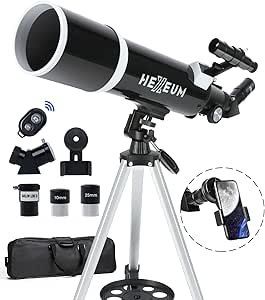 | Best Portable Starter Kit | Aperture: 80 mm | Focal length: 600 mm | Focal ratio: f/6.7 | VIEW ON AMAZON | See Our Full Breakdown |
| MEEZAA 90mm Aperture Refractor Telescope, 800mm Focal Length | 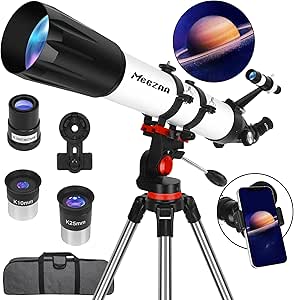 | Best Refractor for Lunar and Planetary Viewing | Telescope type: Refractor | Aperture: 90 mm | Focal length: 800 mm | VIEW ON AMAZON | See Our Full Breakdown |
| EACONN 80mm Aperture, 600mm Refractor Telescope with Backpack |  | Best for Stargazing on the Go | Telescope type: Refractor | Aperture: 80 mm | Focal length: 600 mm | VIEW ON AMAZON | See Our Full Breakdown |
| MEEZAA 150EQ Newtonian Reflector Telescope with Equatorial Mount |  | Best for Maximum Aperture in This Batch | Telescope type: Newtonian reflector | Aperture: 150 mm | Focal length: 650 mm | VIEW ON AMAZON | See Our Full Breakdown |
| Celticbird 80mm Aperture Refractor Telescope, 600mm Focal Length |  | Best Compact Beginner Kit | Telescope type: Refractor | Aperture: 80mm | Focal length: 600mm | VIEW ON AMAZON | See Our Full Breakdown |
| WOSPORTS 90mm Refractor Telescope with Adjustable Tripod |  | Best Refractor for Flexible Magnification | Telescope type: Refractor | Aperture: 90mm | Focal length: 600mm | VIEW ON AMAZON | See Our Full Breakdown |
| Celestron PowerSeeker 127EQ Reflector Telescope |  | Best for Learning Equatorial Tracking | Telescope type: Newtonian reflector | Objective lens diameter: 127mm | Focal length: 1000mm | VIEW ON AMAZON | See Our Full Breakdown |
| SOLOMARK Polaris 130EQ Newtonian Reflector Telescope |  | Best for Aperture on an Equatorial Mount | Telescope type: Newtonian reflector | Aperture: 130mm | Focal length: 650mm | VIEW ON AMAZON | See Our Full Breakdown |
| SOLOMARK 130mm Astronomical Telescope, 650mm Focal Length, Alt-Az Mount, Phone Adapters and Moon Filter |  | Best 130mm Reflector for Straightforward Setup | Objective lens diameter: 130mm | Focal length: 650mm | Eyepieces: WAK 10mm and WAK 20mm | VIEW ON AMAZON | See Our Full Breakdown |
| ToyerBee 70 mm Refractor Telescope, 300 mm Focal Length, 15×–150× Magnification |  | Best for Daytime and Moon Viewing | Telescope type: Refractor | Aperture: 70 mm | Focal length: 300 mm | VIEW ON AMAZON | See Our Full Breakdown |
| Celestron StarSense Explorer DX 130AZ Smartphone-Guided Newtonian Telescope | 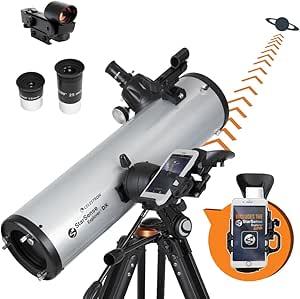 | Best for Smartphone-Guided Sky Finding | Optical design: Newtonian reflector | Objective diameter: 130 mm | Focal length: 650 mm | VIEW ON AMAZON | See Our Full Breakdown |
| Gskyer 90mm Astronomical Refractor Telescope, 600mm Focal Length |  | Best Refractor for Brighter, More Detailed Views | Telescope type: Refractor | Aperture: 90 mm | Focal length: 600 mm | VIEW ON AMAZON | See Our Full Breakdown |
| telescopes for astronomy | Focal length | Mount | Telescope type | Aperture |
|---|---|---|---|---|
| Gskyer 130EQ Reflector Telesco | 650 mm | German equatorial (EQ-130) | Reflector | 130 mm (5.1 inches) |
| Koolpte 80mm Aperture | 600 mm | Altazimuth | — | 80 mm |
| MEEZAA 90mm Aperture Refractor | 800 mm | Altazimuth | Refractor | 90 mm |
| EACONN 80mm Aperture | 600 mm | Altazimuth | Refractor | 80 mm |
| MEEZAA 150EQ Newtonian Reflect | 650 mm | Manual German equatorial | Newtonian reflector | 150 mm |
| Celticbird 80mm Aperture Refra | 600mm | Altazimuth | Refractor | 80mm |
| WOSPORTS 90mm Refractor Telesc | 600mm | Altazimuth | Refractor | 90mm |
| Celestron PowerSeeker 127EQ Re | 1000mm | Manual German equatorial | Newtonian reflector | — |
| SOLOMARK Polaris 130EQ Newtoni | 650mm | German equatorial | Newtonian reflector | 130mm |
| SOLOMARK 130mm Astronomical Te | 650mm | Altazimuth with coarse and fine adjustments | — | — |
| ToyerBee 70 mm Refractor Teles | 300 mm | — | Refractor | 70 mm |
| Celestron StarSense Explorer D | 650 mm | Manual altazimuth with dual-axis slow-motion controls | — | — |
| Gskyer 90mm Astronomical Refra | 600 mm | — | Refractor | 90 mm |
More Details on Our Top Picks
Gskyer 130EQ Reflector Telescope
The 130 mm aperture gives this reflector a broader reach than the 80 mm Koolpte and EACONN refractors, particularly for brighter deep-sky targets. Its 650 mm focal length and f/5 optics also suit wide-field views, while the German equatorial mount can follow objects with slow adjustments once aligned. That tracking setup gives it a different learning curve from the simpler altazimuth mounts on the MEEZAA 90800 and Koolpte. The bundle includes three eyepieces, a 3× Barlow, a finder and a Bluetooth camera remote, so buyers have several ways to start observing and capture phone images. The tradeoffs are a manual mount and focus, plus a listed weight of 30.1 lb that makes frequent carrying less appealing. Its advertised 307× maximum should not be treated as a promise of useful detail under typical conditions.
Pros:- 130 mm aperture gathers more light than the 80 mm Koolpte and EACONN refractors.
- German equatorial mount supports manual tracking after alignment.
- Includes three eyepieces, a 3× Barlow lens, finderscope and Bluetooth camera remote.
- 650 mm focal length and f/5 ratio suit views of the Moon and brighter wide-field targets.
Cons:- At a listed 30.1 lb, it is less convenient to carry and set up away from home.
- Manual focusing and equatorial alignment require practice.
- The listed 307× maximum magnification may not deliver usable detail in many conditions.
Best for: Beginners willing to learn equatorial alignment who want a larger aperture for the Moon, planets and brighter deep-sky objects.
Not ideal for: Observers who need a light grab-and-go setup or want simple point-and-move controls; its listed 30.1 lb weight and equatorial alignment add effort.
- Telescope type:Reflector
- Aperture:130 mm (5.1 inches)
- Focal length:650 mm
- Focal ratio:f/5
- Mount:German equatorial (EQ-130)
- Maximum magnification:307×
- Weight:30.1 lb
- Included accessories:Three eyepieces, 3× Barlow lens, finderscope, adjustable tripod and Bluetooth camera remote
Our verdict“Choose the Gskyer if aperture and equatorial tracking matter more to you than a lightweight, simple setup.”
Koolpte 80mm Aperture, 600mm Focal Length Telescope with Tripod and Phone Adapter
The Koolpte is the most travel-minded choice in this group: its 80 mm aperture keeps expectations centered on the Moon, planets and bright targets, while the carrying bag and tool-free setup make it less involved to bring out than the heavier Gskyer 130EQ. Its altazimuth mount is also simpler to move by hand than either reflector’s equatorial mount, a useful advantage for first-time observers. The kit adds two eyepieces, a 3× Barlow, finder, phone adapter and wireless remote, giving beginners a straightforward start with visual observing and phone capture. Those extras do not change the limits of the aperture, and the listed magnification figures vary with eyepiece and Barlow combinations. Compared with the longer-focal-length MEEZAA 90800, the Koolpte is positioned more around portability than reaching higher advertised magnification.
Pros:- Tool-free setup and carrying bag make it easy to store and take along.
- Altazimuth mount offers simple hand-guided movement for beginners.
- Includes 25 mm and 10 mm eyepieces, 3× Barlow lens and 5×24 finder.
- Phone adapter and wireless remote support basic smartphone imaging.
Cons:- 80 mm aperture gathers less light than the 90 mm MEEZAA 90800 and 130 mm reflectors.
- Manual focus and tracking require hands-on adjustment.
- Magnification claims depend on the eyepiece and Barlow combination and may exceed useful viewing power.
Best for: First-time observers and families who want a portable, tool-free telescope kit for casual Moon and bright-planet viewing.
Not ideal for: Buyers focused on faint deep-sky objects or demanding high-power planetary detail; the 80 mm aperture limits light gathering, and the stated magnifications are not equally practical.
- Aperture:80 mm
- Focal length:600 mm
- Focal ratio:f/6.7
- Mount:Altazimuth
- Eyepieces:25 mm and 10 mm
- Magnification:24× and 60× with included eyepieces; up to 72× and 180× with 3× Barlow
- Finder scope:5×24
- Included accessories:Tripod, phone adapter, wireless remote, carrying bag, 3× Barlow lens and two eyepieces
Our verdict“Pick the Koolpte for an easy-to-carry first telescope kit, not for chasing faint objects or high-power views.”
MEEZAA 90mm Aperture Refractor Telescope, 800mm Focal Length
With a 90 mm aperture and 800 mm focal length, the MEEZAA 90800 takes a more planet-and-Moon-oriented approach than the shorter 600 mm Koolpte and EACONN refractors. Its longer focal length supports higher magnification with a given eyepiece, while the larger aperture than those 80 mm models gathers more light. Fully multi-coated optics, two eyepieces and a 3× Barlow give buyers useful starting combinations, though the stated 240× upper figure is not a guarantee of steady, detailed views. The altazimuth mount avoids the alignment learning curve of the Gskyer 130EQ, but it still relies on manual pointing and focus. A phone adapter, adjustable tripod and carry bag make the package beginner-friendly; compared with the Gskyer, it gives up aperture and equatorial tracking for a refractor format and simpler operation.
Pros:- 90 mm aperture gathers more light than the 80 mm Koolpte and EACONN.
- 800 mm focal length better suits lunar and planetary magnification than the shorter 600 mm refractors.
- Fully multi-coated optics and included 10 mm and 25 mm eyepieces provide several viewing options.
- Phone adapter, carry bag and adjustable tripod are included.
Cons:- Manual altazimuth pointing and focusing require ongoing adjustments.
- The advertised 240× upper magnification may be difficult to use in many viewing conditions.
- Less aperture than the 130 mm Gskyer and 150 mm MEEZAA reflectors for faint deep-sky targets.
Best for: Beginners prioritizing the Moon and planets who want a refractor with more aperture and focal length than the 80 mm portable models.
Not ideal for: Observers seeking the strongest faint-object performance or automated tracking; the 90 mm aperture and manual altazimuth mount set clear limits.
- Telescope type:Refractor
- Aperture:90 mm
- Focal length:800 mm
- Focal ratio:f/8.88
- Mount:Altazimuth
- Magnification:32×–240×
- Eyepieces and Barlow:10 mm and 25 mm eyepieces; 3× Barlow lens
- Tripod height:28–46 inches
Our verdict“Choose the MEEZAA 90800 for a beginner-friendly refractor aimed more at the Moon and planets than faint deep-sky observing.”
EACONN 80mm Aperture, 600mm Refractor Telescope with Backpack
The EACONN’s standout is its 840 g listed weight paired with a carrying backpack, making it the easiest of these five to frame as a take-along telescope. Its 80 mm aperture and 600 mm focal length put it in the same broad viewing class as the Koolpte, but its listed 30×–66× range is more modest than the Koolpte’s combinations with a Barlow. That restrained range may be a better match for a simple visual kit than chasing high magnification. The refractor can also serve for daytime landscapes and wildlife, broadening its use beyond astronomy. Two eyepieces, a 5×24 crosshair finder and smartphone adapter are included. Compared with the MEEZAA 90800, the EACONN sacrifices aperture and focal length, but its light listed weight favors portability. Manual focus and limited aperture remain meaningful constraints.
Pros:- Listed weight of 840 g and included backpack favor carrying and storage.
- Refractor design works for both night-sky viewing and daytime landscapes or wildlife.
- Includes K20 mm and K9 mm eyepieces plus a 5×24 crosshair finder.
- Smartphone adapter and adjustable tripod come in the package.
Cons:- 80 mm aperture gathers less light than the MEEZAA 90800 and the reflectors in this batch.
- Listed 30×–66× magnification range offers less reach than the MEEZAA refractors’ advertised ranges.
- Manual focus and mount movement need user adjustment.
Best for: Travelers and casual observers who want a lightweight refractor for Moon viewing, wide daytime scenes and occasional phone snapshots.
Not ideal for: Astronomy buyers seeking stronger light gathering or close planetary detail; its 80 mm aperture and 30×–66× listed range are modest beside the 90 mm MEEZAA.
- Telescope type:Refractor
- Aperture:80 mm
- Focal length:600 mm
- Mount:Altazimuth
- Magnification:30×–66×
- Eyepieces:K20 mm and K9 mm
- Weight:840 g
- Included accessories:Smartphone adapter, adjustable tripod and carrying backpack
Our verdict“Choose the EACONN if low weight and daytime versatility matter more than aperture or high-magnification astronomy.”
MEEZAA 150EQ Newtonian Reflector Telescope with Equatorial Mount
The MEEZAA 150EQ has the largest aperture in this batch: its 150 mm Newtonian mirror gathers more light than the Gskyer 130EQ and the three refractors, making it the strongest candidate here for brighter deep-sky targets as well as lunar and planetary observing. Its manual German equatorial mount includes slow-motion controls, so tracking can be smoother than nudging an altazimuth telescope once the mount is aligned. That advantage comes with a learning curve the Koolpte and MEEZAA 90800 avoid. The package includes 25 mm and 10 mm eyepieces, a 2× Barlow and a Moon filter, along with a phone adapter and carry bag. Its listed range tops out at 130×, lower than some advertised figures elsewhere, so buyers should value aperture and controlled tracking over headline magnification.
Pros:- 150 mm aperture is larger than the Gskyer 130EQ and all refractors in this batch.
- Manual German equatorial mount has slow-motion controls for tracking.
- Includes two eyepieces, 2× Barlow lens and Moon filter.
- Phone adapter, adjustable stainless steel tripod and carry bag are included.
Cons:- Equatorial alignment and manual tracking have a steeper learning curve than the Koolpte’s altazimuth setup.
- Listed magnification range tops out at 130×, below the advertised maximums of several alternatives.
- Manual focusing and tracking require hands-on adjustments.
Best for: Astronomy learners who want the largest aperture in this batch for brighter deep-sky objects and are prepared to learn equatorial tracking.
Not ideal for: Buyers who need a quick, lightweight setup or a simple altazimuth mount; equatorial alignment takes practice, and the listed magnification range tops out at 130×.
- Telescope type:Newtonian reflector
- Aperture:150 mm
- Focal length:650 mm
- Magnification:26× to 130×
- Mount:Manual German equatorial
- Eyepieces and Barlow:25 mm and 10 mm eyepieces; 2× Barlow lens
- Finderscope:Red dot
- Included accessories:Moon filter, phone adapter, carry bag, accessory tray and instructions
Our verdict“Choose the MEEZAA 150EQ if gathering more light is your priority and you are willing to learn an equatorial mount.”
Celticbird 80mm Aperture Refractor Telescope, 600mm Focal Length
The Celticbird is the portability-minded choice among these five: at 5.8 pounds, it comes with a backpack, adjustable tripod, and useful starter accessories. Its 80mm aperture and fully coated optics suit lunar viewing and brighter targets, while the two eyepieces provide straightforward 30× and 66× views. Compared with the larger-aperture SOLOMARK 130mm reflectors, it gathers less light, so faint deep-sky objects are a less natural fit. Its short 600mm focal length and manual altazimuth mount keep setup approachable, but you’ll need to aim and focus by hand, and the supplied eyepieces limit magnification choices. I’d choose it for easy transport and uncomplicated introductory observing, not for the greatest light-gathering capacity in this group.
Pros:- 80mm aperture with fully coated optics is suited to bright lunar and planetary views
- Backpack and 5.8-pound weight make it relatively easy to carry
- Includes a Moon filter and smartphone adapter
- Two eyepieces provide distinct 30× and 66× magnifications
Cons:- Smaller aperture gathers less light than either 130mm SOLOMARK reflector
- Manual focus and altazimuth aiming require hands-on adjustment
- Only the two included eyepiece magnifications are specified
Best for: Beginners who want a lightweight telescope kit for Moon and bright-object viewing at home or on trips
Not ideal for: Observers prioritizing faint deep-sky targets, more light gathering, or a broad range of magnifications
- Telescope type:Refractor
- Aperture:80mm
- Focal length:600mm
- Focal ratio:f/6.7
- Mount:Altazimuth
- Eyepieces:20mm and 9mm
- Magnification:30× and 66×
- Weight:5.8 lbs
- Included accessories:Backpack, smartphone adapter, Moon filter, adjustable aluminum tripod
Our verdict“Choose the Celticbird for a portable, accessory-rich introduction to bright-object astronomy rather than maximum aperture or observing flexibility.”
WOSPORTS 90mm Refractor Telescope with Adjustable Tripod
With a 90mm aperture and a supplied 3× Barlow lens, the WOSPORTS gives beginners more room to vary magnification than the Celticbird’s fixed 30× and 66× eyepiece setup. Its 25mm and 10mm eyepieces span a stated range of 24× to 180×, though the highest settings will depend on viewing conditions and steady support. Fully multi-coated optics, a smartphone adapter, and carrying case add practical value for casual observing. Against the 130mm SOLOMARK reflectors, this refractor has less light-gathering area, but its 5-pound weight and simpler altazimuth mount favor easier carrying and pointing. Manual focus still takes practice, and the supplied details don’t establish how steady the tripod is at high magnification. I’d put it ahead of the Celticbird for magnification options, not for deep-sky reach.
Pros:- 90mm aperture is larger than the Celticbird’s 80mm
- Two eyepieces and a 3× Barlow offer several magnification combinations
- Fully multi-coated optics and an erect-image diagonal are included
- Carrying case, smartphone adapter, and adjustable tripod support portable use
Cons:- Manual focus and manual altazimuth aiming require user adjustment
- The 90mm aperture gathers less light than the 130mm SOLOMARK reflectors
- High magnification can be difficult to use steadily on an adjustable tripod
Best for: New observers who want a portable refractor with multiple magnification combinations and a carrying case
Not ideal for: Buyers seeking the greater light gathering of a 130mm reflector or effortless high-magnification viewing
- Telescope type:Refractor
- Aperture:90mm
- Focal length:600mm
- Mount:Altazimuth
- Eyepieces:25mm and 10mm
- Magnification range:24×–180×
- Optics coating:Fully multi-coated
- Weight:5 lbs
- Included accessories:3× Barlow lens, smartphone adapter, carrying case
Our verdict“Pick the WOSPORTS if you want a lightweight beginner refractor with more magnification combinations than the Celticbird provides.”
Celestron PowerSeeker 127EQ Reflector Telescope
The PowerSeeker 127EQ pairs a 127mm Newtonian reflector with a manual German equatorial mount, making it the pick here for buyers willing to learn a more involved way to track the sky. Once aligned, the mount’s slow-motion controls let you follow an object with small adjustments rather than repeatedly repositioning the tube as on the altazimuth Celticbird or SOLOMARK 130mm. Its 20mm and 4mm eyepieces plus a 3× Barlow provide several combinations, but the supplied short eyepiece and Barlow can make high magnification demanding rather than automatically useful. At 13 pounds, it is less portable than the small refractors, and manual setup takes patience. I’d choose it for the equatorial experience and larger aperture, while the SOLOMARK 130mm altazimuth model makes a simpler path to manual pointing.
Pros:- 127mm reflector aperture offers more light gathering than the 80mm and 90mm refractors
- German equatorial mount includes slow-motion controls for tracking
- Two eyepieces and a 3× Barlow provide multiple viewing combinations
- Includes an accessory tray, astronomy software, and a two-year US warranty
Cons:- Equatorial mount requires alignment and has a steeper learning curve than an altazimuth mount
- At 13 pounds, it is heavier than the portable refractors in this batch
- Manual focusing and tracking require ongoing adjustments
Best for: Beginners prepared to learn equatorial alignment who want a larger-aperture telescope for lunar, planetary, and brighter deep-sky observing
Not ideal for: First-time users seeking quick setup, lightweight transport, or simple point-and-look operation
- Telescope type:Newtonian reflector
- Objective lens diameter:127mm
- Focal length:1000mm
- Mount:Manual German equatorial
- Eyepieces:20mm and 4mm
- Barlow lens:3×
- Weight:13 lbs
- Optical-tube length:43.6cm
- Warranty:Two-year US warranty
Our verdict“Choose the PowerSeeker 127EQ if learning equatorial tracking matters more to you than the simpler setup of an altazimuth telescope.”
SOLOMARK Polaris 130EQ Newtonian Reflector Telescope
The Polaris 130EQ brings the largest stated aperture in this batch, 130mm, to a Newtonian reflector with a German equatorial mount. That combination favors buyers who want more light gathering than the 127mm PowerSeeker or the refractors, plus a mount intended for manual tracking as objects move across the sky. The included Moon filter, two eyepieces, and 1.5× Barlow give it a more observing-focused accessory set than the bare essentials, while the smartphone adapter offers a basic route to phone photography. Its tradeoff is the learning curve: like the PowerSeeker, it needs hands-on alignment and tracking, unlike the simpler altazimuth SOLOMARK 130mm. The supplied details don’t list eyepiece focal lengths or weight, so it’s harder to judge magnification options and portability. I’d favor it for aperture and tracking over quick setup.
Pros:- 130mm aperture is the largest specified among these five products
- German equatorial mount supports manual tracking
- Includes two eyepieces, a 1.5× Barlow, and a 13% transmission Moon filter
- Smartphone adapter and adjustable aluminum tripod are included
Cons:- Equatorial alignment and manual tracking take more learning than the altazimuth SOLOMARK 130mm
- Manual focus and mount adjustments require ongoing user input
- Supplied details do not specify eyepiece focal lengths or telescope weight
Best for: Observers seeking a 130mm reflector with equatorial manual tracking and included lunar-viewing accessories
Not ideal for: Beginners who want a quick, intuitive altazimuth setup or clear details on weight and eyepiece magnifications
- Telescope type:Newtonian reflector
- Aperture:130mm
- Focal length:650mm
- Mount:German equatorial
- Focus type:Manual
- Optics coating:Fully coated
- Optical-tube length:65cm
- Tripod:Adjustable aluminum alloy
- Included accessories:Two eyepieces, 1.5× Barlow lens, 13% transmission Moon filter, smartphone adapter
Our verdict“Choose the Polaris 130EQ for its 130mm aperture and equatorial mount if you’re comfortable trading simple setup for manual tracking.”
SOLOMARK 130mm Astronomical Telescope, 650mm Focal Length, Alt-Az Mount, Phone Adapters and Moon Filter
This SOLOMARK pairs the same 130mm aperture and 650mm focal length as the Polaris 130EQ with an altazimuth mount, making it the more approachable of the two for buyers who want to point the telescope without equatorial alignment. Coarse and fine adjustments on both axes help with aiming, while tool-free assembly is listed as taking under 10 minutes. The 20mm and 10mm eyepieces provide 32.5× and 65× magnification; that’s a simple starting range, but less flexible than the WOSPORTS refractor’s eyepiece-and-Barlow combinations. Two phone adapters and a Moon filter round out the kit. The tradeoff is manual tracking: unlike the Polaris 130EQ, this mount doesn’t offer the same equatorial approach to following objects. I’d pick it for accessible setup and aperture, not a wider eyepiece selection.
Pros:- 130mm aperture matches the larger Polaris 130EQ for light-gathering potential
- Altazimuth mount with coarse and fine adjustments simplifies manual pointing
- Tool-free assembly is listed as taking under 10 minutes
- Includes two smartphone adapters and a 13% transmission Moon filter
Cons:- Manual altazimuth tracking requires repositioning as objects move
- Only two eyepieces are included, providing 32.5× and 65× magnification
- Does not offer the equatorial mount design of the Polaris 130EQ
Best for: Newer astronomers who want a 130mm reflector, uncomplicated altazimuth aiming, and tool-free assembly
Not ideal for: Buyers who want equatorial tracking or more than the two specified eyepiece magnifications
- Objective lens diameter:130mm
- Focal length:650mm
- Eyepieces:WAK 10mm and WAK 20mm
- Magnification:65× and 32.5×
- Mount:Altazimuth with coarse and fine adjustments
- Finder scope:5×24
- Tripod:Height-adjustable aluminum, 2-inch diameter
- Moon filter:13% transmission
- Assembly:Tool-free; under 10 minutes
Our verdict“Choose this SOLOMARK over the Polaris 130EQ if you want the same stated aperture with simpler altazimuth setup rather than equatorial tracking.”
ToyerBee 70 mm Refractor Telescope, 300 mm Focal Length, 15×–150× Magnification
The ToyerBee 70 mm Refractor is a lightweight starter for buyers who want one telescope for the Moon, casual sky viewing, and daytime scenery. Its 3.5-pound weight and included tripod, phone adapter, remote, and star chart make it easier to take out and try than the heavier Celestron StarSense Explorer DX 130AZ. The tradeoff is a smaller aperture and a short 300 mm focal length, which favor wide, simple views over detailed planetary or deep-sky observing. Its advertised 150× ceiling should not be treated as a reliable everyday target; image clarity depends on conditions, and lower magnifications are likely to be more useful. Compared with the longer-focal-length Gskyer 90 mm refractor, this ToyerBee is more portable but less suited to close-up celestial views.
Pros:- Light 3.5-pound body is easier to carry and set up than larger reflectors such as the Celestron StarSense Explorer DX 130AZ.
- Includes a smartphone adapter and wireless remote for basic phone photography.
- Fully multi-coated optics and two eyepieces support a range of beginner viewing.
- Can be used for both celestial targets and terrestrial scenery.
Cons:- The 70 mm aperture gathers less light than the 90 mm Gskyer refractor or 130 mm Celestron reflector.
- The short 300 mm focal length is less suited to detailed views of planets.
- Manual focusing and a modest lightweight setup require hands-on adjustment, while 150× may be difficult to use clearly.
Best for: Beginners and families who want a light, quick-to-carry telescope for the Moon, bright targets, and daytime scenery, with phone-photo accessories included.
Not ideal for: Observers focused on planetary detail or faint galaxies, or buyers who expect the advertised 150× magnification to deliver sharp views routinely.
- Telescope type:Refractor
- Aperture:70 mm
- Focal length:300 mm
- Listed magnification:15×–150×
- Eyepieces:20 mm and 6 mm
- Barlow lens:3×
- Finderscope:5×24
- Weight:3.5 lb
- Included accessories:Tripod, smartphone adapter, wireless camera remote, and star chart
Our verdict“Choose the ToyerBee for portable, mixed daytime and beginner lunar viewing, not for high-magnification planetary detail.”
Celestron StarSense Explorer DX 130AZ Smartphone-Guided Newtonian Telescope
The Celestron StarSense Explorer DX 130AZ earns its place for beginners who need help locating objects, not just a larger aperture. Its StarSense app uses a compatible phone to guide users around the sky, while the 130 mm reflector gathers more light than the ToyerBee 70 mm refractor and can show brighter deep-sky targets alongside the Moon and planets. The manual altazimuth mount needs no external power, but users still move and track the telescope by hand; the app assists with finding objects rather than automating the mount. At 18 pounds, it is also less convenient to carry than the ToyerBee or smaller refractors in this roundup. Buyers without a compatible modern smartphone lose the defining feature, so the included phone dock alone is not a reason to choose it.
Pros:- StarSense sky recognition provides guided help locating celestial objects.
- The 130 mm aperture gathers more light than the ToyerBee 70 mm refractor.
- Dual-axis slow-motion controls allow more deliberate manual adjustments while tracking.
- Operates manually without an external power source.
Cons:- Guided features depend on a compatible modern smartphone.
- The manual mount does not track objects automatically, so users must keep repositioning it.
- At 18 pounds, it is heavier to transport than the ToyerBee and several small refractors.
Best for: New observers with a compatible recent Android phone or iPhone who want guided help locating lunar, planetary, and brighter deep-sky targets.
Not ideal for: Buyers without a compatible smartphone, those seeking motorized tracking, or observers who prioritize a lightweight setup for frequent transport.
- Optical design:Newtonian reflector
- Objective diameter:130 mm
- Focal length:650 mm
- Mount:Manual altazimuth with dual-axis slow-motion controls
- Eyepieces:10 mm and 25 mm
- Field of view:2 degrees
- Weight:18 lb
- Power:Manual operation; no external power required
- Smartphone compatibility:Android 12 or later; iOS 18 or later, including iPhone XR and newer
Our verdict“Pick this Celestron if smartphone guidance and a larger aperture matter more than portability or automatic tracking.”
Gskyer 90mm Astronomical Refractor Telescope, 600mm Focal Length
For buyers set on a refractor, the Gskyer 90 mm offers a stronger aperture-and-focal-length combination than the ToyerBee 70 mm: its larger objective gathers more light, and its 600 mm focal length is better suited to closer views of the Moon and planets. Three eyepieces provide several starting magnifications, while the included erecting prism also supports upright terrestrial viewing. This makes it a more versatile refractor choice than the ToyerBee, though not the easiest one to carry: at 17.5 pounds, it is far heavier than that 3.5-pound model. The included 3× Barlow produces a listed maximum of 360×, but that figure is not a promise of sharp views; atmospheric conditions and the telescope’s practical limits matter. Choose it for aperture and flexibility, not easy portability.
Pros:- Its 90 mm aperture gathers more light than the ToyerBee 70 mm refractor.
- The 600 mm focal length and three eyepieces offer more flexibility for lunar and planetary viewing.
- The erecting prism supports upright views of terrestrial objects.
- Includes a 6×30 finderscope and adjustable aluminum tripod.
Cons:- At 17.5 pounds, it is substantially less portable than the ToyerBee.
- The listed 360× with the Barlow is unlikely to be useful for sharp viewing in many conditions.
- Manual focus and an altazimuth mount require users to make adjustments and track objects themselves.
Best for: Refractor buyers who want a larger aperture, multiple eyepieces, and both astronomy and terrestrial viewing in one setup.
Not ideal for: Travelers and children who need a lightweight telescope, or buyers choosing mainly for the advertised 360× maximum magnification.
- Telescope type:Refractor
- Aperture:90 mm
- Focal length:600 mm
- Focal ratio:f/6.7
- Eyepieces:25 mm, 10 mm, and 5 mm
- Listed magnification:24×, 60×, and 120×; up to 360× with included 3× Barlow
- Finderscope:6×30
- Mount and tripod:Altazimuth mount; adjustable aluminum tripod, approximately 31.5–49 inches
- Weight:17.5 lb
Our verdict“Choose the Gskyer for a more capable, multi-use refractor if its weight and manual operation fit your observing routine.”

How We Picked
I compared these telescopes for practical astronomy use, weighing aperture and optical design against what a buyer must manage to observe successfully. Aperture affects how much light a telescope collects, while refractor and reflector designs bring different tradeoffs in portability, maintenance, and suitability for bright or faint targets. I also considered the mount, aiming method, included accessories, and whether the package appears approachable for a first-time observer.
The ranking favors a useful balance of observing potential and ease of use rather than aperture alone. That puts the StarSense Explorer DX 130AZ first for its guided aiming and 130mm optics; the larger MEEZAA 150EQ ranks highly for light gathering but sits behind it for setup complexity. Compact refractors rank well for straightforward lunar and planetary viewing, but below larger reflectors for faint targets. Product names and listed specifications are treated as supplied; no unlisted performance claims are assumed.
| telescopes for astronomy | Telescope type | Mount |
|---|---|---|
| Gskyer 130EQ Reflector Telesco | Reflector | German equatorial (EQ-130) |
| Koolpte 80mm Aperture | — | Altazimuth |
| MEEZAA 90mm Aperture Refractor | Refractor | Altazimuth |
| EACONN 80mm Aperture | Refractor | Altazimuth |
| MEEZAA 150EQ Newtonian Reflect | Newtonian reflector | Manual German equatorial |
| Celticbird 80mm Aperture Refra | Refractor | Altazimuth |
| WOSPORTS 90mm Refractor Telesc | Refractor | Altazimuth |
| Celestron PowerSeeker 127EQ Re | Newtonian reflector | Manual German equatorial |
| SOLOMARK Polaris 130EQ Newtoni | Newtonian reflector | German equatorial |
| SOLOMARK 130mm Astronomical Te | — | Altazimuth with coarse and fine adjustments |
| ToyerBee 70 mm Refractor Teles | Refractor | — |
| Celestron StarSense Explorer D | — | Manual altazimuth with dual-axis slow-motion controls |
| Gskyer 90mm Astronomical Refra | Refractor | — |
Factors to Consider When Choosing 13 Best Telescopes For Astronomy
Choosing a telescope is less about chasing the highest magnification figure and more about matching the instrument to your sky, storage space, and patience for setup. These broader checks can help you avoid buying a telescope that looks capable on paper but is awkward to use regularly.
Match Aperture to the Objects You Want to See
Aperture governs light collection, which matters most when you want to see faint galaxies, nebulae, or clusters. A larger mirror can reveal more under dark skies, but it cannot remove light pollution or poor atmospheric conditions. The 130mm and 150mm reflectors in this roundup have a potential advantage for deep-sky observing over the 70mm to 90mm refractors. For the Moon and bright planets, a smaller refractor can still provide satisfying views and may be easier to handle. Avoid choosing by the largest advertised magnification: useful power depends on optics, steadiness, and sky conditions. Start with the targets you will actually observe, then decide how much size and setup effort you are willing to accept.
Choose a Mount You Will Want to Set Up
The mount shapes the observing experience as much as the optical tube. An alt-azimuth mount moves up, down, left, and right, a familiar pattern for casual viewing, while an equatorial mount requires alignment and has a learning curve but can track the apparent motion of the sky when set up correctly. That distinction helps explain why a guided alt-az model such as the StarSense Explorer DX 130AZ may suit a new observer better than a larger equatorial reflector. Lightweight tripods can be convenient to carry, yet vibration makes focusing and high-power viewing frustrating. Check how the telescope will be used: a backyard setup can tolerate more bulk than a walk to a dark-sky site. A stable, manageable mount is often a better purchase than extra aperture on a shaky support.
Think About Your Sky and Viewing Routine
Your location changes what a telescope can show. In a bright urban or suburban sky, the Moon, planets, and brighter star clusters are more rewarding starting targets than faint nebulae and galaxies. Darker skies make aperture more useful for deep-sky observing, while a portable instrument may help you reach those skies more often. Refractors in the 80mm to 90mm range can be appealing for quick sessions because they avoid the mirror alignment associated with Newtonian reflectors. Reflectors may need occasional collimation, a process of aligning their mirrors, so buyers should be comfortable learning basic upkeep. Before prioritizing a larger tube, consider where it will be stored, how far it must be carried, and how often you can observe.
Treat Magnification Claims and Accessories Carefully
Magnification is not a measure of image quality, and very high claims can distract from the factors that make a telescope useful. The eyepiece and telescope focal length determine magnification, but atmospheric turbulence and mount shake set practical limits during a session. A phone adapter can help frame or share a view, yet it does not improve the telescope’s optical resolution and can take patience to align. A Moon filter may reduce brightness when viewing the Moon, but it is an accessory rather than a substitute for appropriate magnification and comfortable observing. Compare what is actually included, especially eyepieces and finders, and check whether a phone-guidance feature depends on a compatible device. Put more weight on stable support and straightforward aiming than on a long accessory list.
Decide When Paying for More Makes Sense
Spend more for capability you will use, not for a specification that sounds impressive. A larger reflector is a sensible step if you have storage room, darker skies, and a willingness to learn collimation and mount setup. A guided telescope can justify its added complexity for someone who wants help locating objects, especially when unfamiliar star patterns make manual searching slow. If your sessions will mostly focus on the Moon and bright planets, a smaller refractor may be a better fit than a heavier reflector. Beginners also benefit from leaving room in their budget for a stable observing spot, a red-light flashlight, or a basic star chart rather than buying accessories they may not need. The right upgrade is the one that removes a real barrier to observing.
Frequently Asked Questions
Which telescope in this roundup is the easiest starting point for a beginner?
I would start with the Celestron StarSense Explorer DX 130AZ if smartphone guidance is appealing, because finding targets is often harder than focusing on them for a new observer. Its 130mm aperture also leaves room to explore beyond the Moon and planets. If you prefer a simpler optical format and do not need phone guidance, a small refractor such as the Gskyer 90mm is another approachable direction. A phone feature still requires setup and a compatible device, so it is not a fully automatic telescope. Choose the option whose aiming process you are most likely to use consistently.
Is a 150mm reflector a better choice than a 130mm reflector for astronomy?
A 150mm reflector collects more light than a 130mm reflector, which can help reveal fainter objects when the sky and conditions cooperate. That advantage does not make it the better choice for every buyer: the MEEZAA 150EQ’s equatorial mount can take more time to learn and align than an alt-azimuth design. A 130mm option may be easier to manage or offer a more convenient aiming system. For someone who values deep-sky potential and accepts extra setup, the larger aperture is appealing. For a first telescope or frequent quick sessions, ease of use may matter more than the aperture difference.
Should I choose a refractor or a Newtonian reflector for my first telescope?
A refractor is often simpler to maintain because it does not require the mirror alignment that a Newtonian reflector may need. That makes an 80mm or 90mm refractor a reasonable fit for casual lunar and planetary observing. A reflector of 130mm or 150mm usually offers more aperture for the same general class of beginner instrument, which can help with dimmer targets, but it adds bulk and upkeep. Neither design is universally better: your target list, storage space, and comfort with basic maintenance should decide. If you want broader deep-sky potential, lean toward a reflector; if simple handling matters most, look at refractors.
Can these telescopes show galaxies and nebulae from a city?
Some bright deep-sky objects may be visible from a city, but light pollution reduces contrast and hides faint detail regardless of telescope size. The larger reflectors in this roundup collect more light than the small refractors, yet they cannot make a washed-out sky dark. Planets, the Moon, and bright star clusters are usually more satisfying urban targets. If galaxies and nebulae are your priority, access to darker skies can matter as much as upgrading aperture. A portable scope you can take out of town may serve you better than a larger telescope that stays at home.
Do I need a phone adapter or smartphone-guided telescope to find objects?
No, but guidance can shorten the learning curve. The StarSense Explorer DX 130AZ uses a smartphone-guided approach to help locate objects, while phone adapters on other packages are mainly for connecting a phone to the eyepiece rather than automatically aiming the telescope. Manual finding with a chart or astronomy app is possible, but it takes practice and depends on knowing the sky and aligning the finder. Phone features also add setup steps and depend on a compatible device and app. Pick guidance if locating targets is likely to discourage you; choose manual aiming if you want to learn the sky directly.
Conclusion
For most first-time astronomy buyers, my best overall choice is the Celestron StarSense Explorer DX 130AZ: its guided aiming and 130mm reflector make a useful balance of access and capability. The best value depends on your priorities, but the Gskyer 90mm refractor is a sensible straightforward pick for bright lunar and planetary viewing, while the SOLOMARK 130mm alt-az package brings more aperture and useful accessories for buyers willing to manage a larger reflector. For best premium capability, choose the MEEZAA 150EQ if you have room and want its larger aperture enough to accept equatorial setup. The Gskyer 90mm or MEEZAA 90mm suits beginners who favor a refractor’s simpler upkeep; the EACONN 80mm is the specific pick for buyers who value a backpack for carrying their telescope. Match the mount and optical design to your habits, and you are more likely to use the telescope often.