As a parent, you may notice toddlers spending hours with ChatGPT, blending automation with their need for connection and learning. Kids use ChatGPT for homework, companionship, and exploring new skills, often turning to it for reassurance and guidance. This shift impacts how you manage their screen time, safety, and emotional needs. To understand how this trend influences modern parenting and what steps you can take, keep exploring these evolving interactions.
Key Takeaways
- Toddlers are increasingly engaging with AI chatbots like ChatGPT for learning and entertainment, sometimes spending hours interacting.
- Parents use automation tools to monitor and manage toddlers’ AI interactions, aiming to ensure safety and appropriate use.
- Concerns exist over toddlers developing dependency on AI for companionship, which may impact social and emotional development.
- Parental controls and AI literacy efforts are being implemented to create safer environments for young children’s AI use.
- Balancing AI interaction with traditional parenting is essential to support healthy growth while integrating technology responsibly.
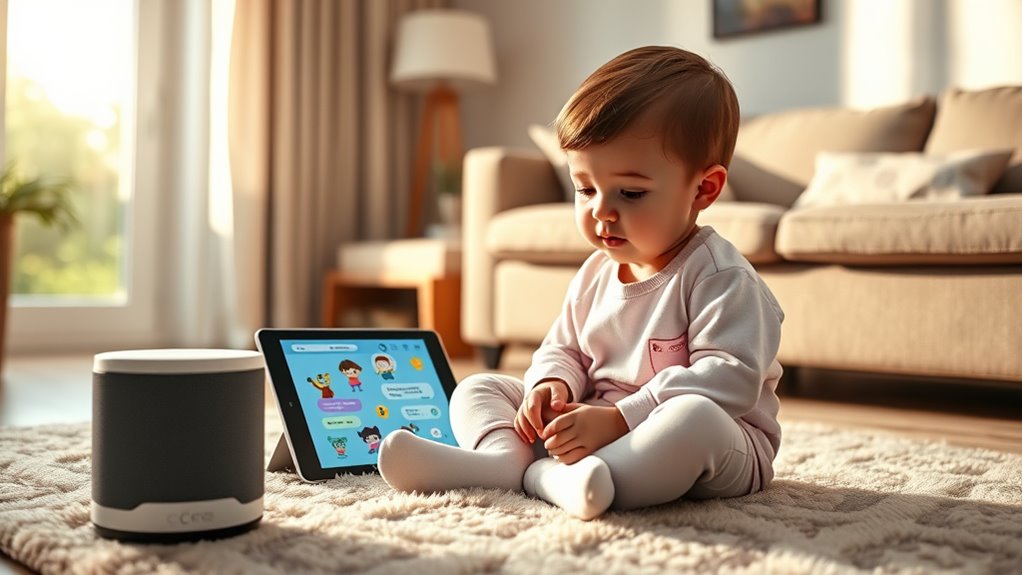
As AI becomes more integrated into daily life, parents are increasingly turning to tools like ChatGPT to support their parenting routines. You might notice that your children, especially as they grow older, are using ChatGPT not just for homework but also for companionship and advice. In 2024, about 26% of kids have used ChatGPT, doubling the previous year’s figure. This trend is especially prominent among teenagers in 11th and 12th grades, with up to 31% of them engaging with the AI tool. Curiously, usage varies among different ethnic groups, with Black and Hispanic teens using ChatGPT more frequently (31%) than White teens (22%). These numbers highlight how AI adoption is becoming a common part of childhood, influencing how young people learn, socialize, and seek support.
Parents are adopting AI tools to help manage daily routines more efficiently. Many use these technologies to organize schedules, get personalized advice, and enhance their children’s education. AI-generated parenting content is gaining trust, sometimes even replacing traditional advice, though ethical questions remain. You might find yourself relying on ChatGPT to mediate sibling disputes or to help plan family activities, saving time while maintaining a personal touch. Features like memory and personalization allow the AI to adapt responses to your family’s unique dynamics, making interactions more relevant and helpful over time. Automation is making it easier to handle complex tasks with minimal oversight, freeing you to focus on meaningful connections with your children. Additionally, color accuracy in home cinema projectors can provide enhanced visual experiences during family movie nights.
However, safety is a concern. OpenAI plans to introduce parental controls for ChatGPT, giving you tools to monitor and limit your child’s AI use. Many parents still feel uncertain about setting up these safeguards, highlighting the need for guidance and support from schools and tech providers. Schools are also stepping in by teaching kids and parents about responsible AI use, aiming to create a safer environment. Parental controls are designed to prevent misuse, like reliance on AI for completing assignments or seeking mental health advice without supervision. Combining these controls with AI literacy education can help ensure your children benefit from AI safely and responsibly.
Kids primarily use ChatGPT for homework help, research, and solving math problems, with acceptance rates of 54% and 29%. This widespread academic use sparks debate on how AI impacts children’s learning integrity. Older teens are more likely to incorporate ChatGPT into their study routines, reflecting its role in higher-level education. Some educators also leverage AI for curriculum development, illustrating its influence in classrooms. Besides academics, children are using AI for informal learning and skill-building, making it a versatile tool in their development.
Children also turn to AI chatbots for companionship and mental health support, which can offer comfort but also pose risks if unchecked. Excessive reliance on AI for emotional needs has led to negative incidents, stressing the importance of parental guidance. Ultimately, automation aims to free up parents’ time for more meaningful interactions, helping restore family bonds. By using AI thoughtfully, you can support your child’s growth while ensuring their safety and well-being.

Safe Vision: control YouTube for kids
- Parental control over YouTube content: Manage what kids watch on YouTube
- Selective content approval: Whitelist videos and channels
- Ad-free viewing experience: No ads or sidebar videos
As an affiliate, we earn on qualifying purchases.
As an affiliate, we earn on qualifying purchases.
Frequently Asked Questions
How Does Prolonged Chatgpt Use Affect Toddler Development?
Prolonged ChatGPT use can hinder your toddler’s development by reducing neural engagement in key learning areas, which may slow their cognitive growth. It can weaken their memory, critical thinking, and problem-solving skills, as they rely too much on AI rather than active exploration. This dependence might limit their creativity and delay language acquisition, ultimately impairing their ability to develop essential neural pathways needed for lifelong learning and independence.
Can Chatgpt Replace Human Interaction in Parenting?
Can ChatGPT truly replace human interaction in parenting? No, it can’t. While AI provides quick, accessible information and support, it lacks the emotional empathy, nuanced understanding, and genuine bonding only humans can offer. You might use ChatGPT as a helpful supplement, but never as a substitute. Your child’s emotional needs require real connection, empathy, and guidance that only you, as a parent, can provide.
What Are the Safety Concerns for Toddlers Using Chatgpt?
You’re right to worry about safety concerns when toddlers use ChatGPT. It may expose them to inappropriate content, as the AI isn’t filtered for age-appropriate material. There’s also a risk of misinformation, and without emotional understanding, ChatGPT can’t recognize or respond to a toddler’s distress. Parental controls are limited, so constant supervision is crucial to prevent accidental exposure, guarantee safe interactions, and guide their learning effectively.
How Can Parents Monitor Their Child’s Chatgpt Activity Effectively?
Monitoring your child’s ChatGPT activity is like keeping watch over a busy playground. You should set strict time limits and use parental controls like Apple Screen Time or Google Family Link. Regularly review their browsing history and app access. Have open conversations about AI use, privacy, and safety. Combine these tech tools with active supervision, so you catch any inappropriate content or emotional distress early and guide your child responsibly.
Are There Age-Appropriate Chatgpt Features for Toddlers?
Currently, ChatGPT doesn’t offer specific age-appropriate features for toddlers. You should rely on external parental controls like device restrictions and supervision to keep your child safe. Consider using platforms designed for young children, which include built-in safety measures and age-appropriate content. These specialized tools better guarantee your toddler’s interactions are educational, safe, and aligned with their developmental needs, reducing exposure to unsuitable content.
Conclusion
As a parent, it’s natural to worry about over-reliance on technology, but when used thoughtfully, ChatGPT can complement your child’s learning and curiosity. Remember, automation isn’t replacing your role; it’s enhancing it, giving you more opportunities for meaningful interactions. By setting boundaries and engaging actively, you guarantee your child benefits from this tool without losing the essential human connection that shapes their growth. Embrace these innovations wisely—you’re still the most important part of their development.