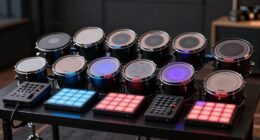
Virtual Reality 2.0 is transforming your immersive experiences by combining advanced sensory technology, such as refined haptic feedback, spatial audio, and high-fidelity visuals. These innovations make virtual environments feel more lifelike and engaging, allowing you to feel textures, hear sounds in three dimensions, and see realistic surroundings. Faster hardware and better sensors guarantee smoother interactions, deepening your sense of presence. Keep exploring to discover how these advancements are shaping the future of virtual experiences.
Key Takeaways
- Immersive tech now offers highly realistic sensory experiences through advanced haptic feedback, tactile interaction, and spatial audio.
- Hardware improvements, such as faster processors and precise sensors, enhance responsiveness and natural user interactions.
- Content realism has increased, creating believable virtual environments that deepen user engagement and emotional connection.
- Applications expand across social, training, and entertainment sectors, benefiting from heightened immersion and sensory integration.
- Future goals focus on seamless sight, sound, and touch integration to create complete, emotionally engaging sensory worlds.

Have you ever wondered what the future of virtual reality looks like? It’s an exciting time, with tech advancing so rapidly that what once seemed like science fiction is now within reach. One of the biggest leaps forward is how immersive experiences feel more real than ever. Haptic feedback plays an essential role here, allowing you to physically feel sensations that match what you see and hear. Imagine grabbing a virtual object and feeling its texture, weight, or even resistance, all through your controllers or wearable gloves. This tactile interaction bridges the gap between digital and physical worlds, making experiences more convincing and engaging. When combined with sophisticated spatial audio, these sensations become even more immersive. Spatial audio creates a three-dimensional sound environment, so sounds originate from specific directions and distances, mimicking real-world hearing. Whether you’re walking through a bustling city street or exploring a quiet forest, spatial audio makes the environment feel alive, heightening your sense of presence.
This combination of haptic feedback and spatial audio transforms VR from simple visual entertainment into a multi-sensory experience. You don’t just see and hear your surroundings; you feel them. For instance, in a virtual game, you might hear footsteps approaching from behind, feel the recoil of a weapon in your hand, or sense the texture of a virtual wall when you touch it. These enhancements are possible because of faster processors, better sensors, and more refined hardware designed specifically for immersive tech. They allow for more precise tracking of your movements and the delivery of realistic sensations, making interactions feel more natural. Additionally, advances in content realism are making virtual environments more believable and engaging for users.
As these technologies become more accessible, you’ll find yourself more deeply immersed in virtual environments. Social interactions, training simulations, and entertainment all benefit from these advancements. You could attend a concert, shake hands with a virtual friend, or explore a distant city with a sense of presence that’s hard to distinguish from real life. The goal of Virtual Reality 2.0 isn’t just about creating stunning visuals but building complete sensory worlds where every touch and sound enhances your experience. As developers continue to refine haptic feedback systems and spatial audio techniques, your VR experiences will feel more intuitive, realistic, and emotionally engaging. The future promises a seamless blend of sight, sound, and touch, transforming how you work, play, and connect in digital spaces.
VR haptic feedback gloves
As an affiliate, we earn on qualifying purchases.
As an affiliate, we earn on qualifying purchases.
Frequently Asked Questions
How Does VR 2.0 Improve User Comfort and Reduce Motion Sickness?
VR 2.0 improves your comfort and reduces motion sickness through ergonomic design, ensuring the headset fits snugly without causing strain. It uses advanced sensors for precise motion tracking, minimizing lag and disorienting effects. Enhanced display technology offers higher refresh rates and better resolution, which decreases visual discomfort. Overall, ergonomic design and improved hardware work together to create a smoother, more comfortable experience, letting you enjoy VR longer without feeling sick.
What Are the Environmental Impacts of Developing Advanced VR Hardware?
You should consider that developing advanced VR hardware impacts the environment through increased energy consumption and resource use. To minimize this, manufacturers are adopting sustainable manufacturing practices, like recycling components and reducing waste. While innovation boosts performance, it also demands more energy, so supporting energy-efficient designs and renewable energy sources helps lessen the environmental footprint of VR technology development, making it more eco-friendly for you and future users.
How Accessible Are VR 2.0 Experiences for Differently-Abled Users?
You’ll find VR 2.0 experiences increasingly welcoming thanks to accessible design and adaptive interfaces. Developers are actively working to guarantee differently-abled users can enjoy immersive worlds, with features like customizable controls and voice commands. While there’s still room for growth, the industry’s efforts are making these experiences more user-friendly and inclusive. Embracing these advancements means everyone can explore virtual environments comfortably and effortlessly, enriching your overall VR journey.
What Are the Privacy Concerns Associated With Immersive VR Data Collection?
You might worry about privacy when using VR 2.0, as it collects sensitive data like your movements and interactions. Data security becomes vital to protect this information from breaches, while user consent guarantees you’re aware of what’s being collected and how it’s used. Always review privacy policies and enable security settings to control your data, so you stay informed and protected during immersive experiences.
You’ll find that VR 2.0 transforms social interactions, with 65% of users reporting increased virtual friendships and community engagement. This technology makes it easier to connect beyond physical boundaries, fostering deeper relationships and shared experiences. You’ll participate in immersive events and collaborative projects, strengthening bonds within virtual communities. As a result, social interactions become more meaningful, enabling you to build and sustain a vibrant, connected digital community like never before.

Meta Quest 3 512GB | VR Headset — Thirty Percent Sharper Resolution — 2X Graphical Processing Power — Virtual Reality Without Wires — Access to 40+ Games with a 3-Month Trial of Meta Horizon+ Included
NEARLY 30% LEAP IN RESOLUTION — Experience every thrill in breathtaking detail with sharp graphics and stunning 4K…
As an affiliate, we earn on qualifying purchases.
As an affiliate, we earn on qualifying purchases.
Conclusion
With these advancements, VR 2.0 is transforming how you experience digital worlds. Did you know that the VR market is projected to reach $45 billion by 2025? As immersive tech becomes more accessible and realistic, you’ll find yourself more immersed than ever before—whether for gaming, education, or work. Embrace these innovations and step into a new era of virtual experiences that are more engaging, seamless, and life-like than ever imagined.
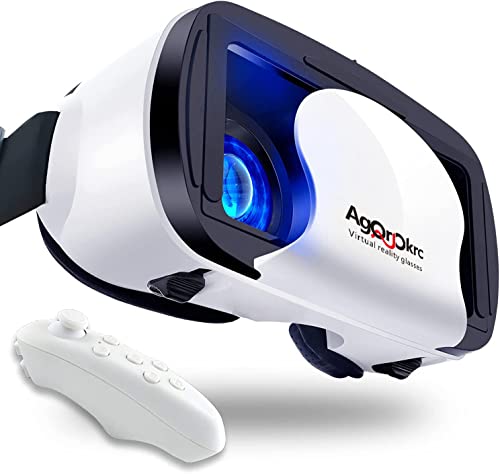
VR Headset with Controller Adjustable 3D VR Glasses Virtual Reality Headset HD Blu-ray Eye Protected Support 5~7 Inch for Phone/Android (White) 1215
Anti-blue light, comfortable to wear: VR Headsets Easy to set up and easy to use, just open a…
As an affiliate, we earn on qualifying purchases.
As an affiliate, we earn on qualifying purchases.
Meta Quest 3 512GB | VR Headset — Thirty Percent Sharper Resolution — 2X Graphical Processing Power — Virtual Reality Without Wires — Access to 40+ Games with a 3-Month Trial of Meta Horizon+ Included
NEARLY 30% LEAP IN RESOLUTION — Experience every thrill in breathtaking detail with sharp graphics and stunning 4K…
As an affiliate, we earn on qualifying purchases.
As an affiliate, we earn on qualifying purchases.