A premium 7.2-channel AV receiver can power a 5.1.2 Dolby Atmos setup or a conventional 7.2 system, but the right choice depends on HDMI needs, room setup, and how much control you want. My best overall pick is the Onkyo TX-NR6100, which combines THX certification, network features, and support for current gaming and video formats. The Yamaha RX-A4A stands out for its AVENTAGE build and broad surround processing, while the Denon AVR-X2800H is a strong fit for buyers who want 8K-era connectivity and Denon’s accessible setup approach. Across these receivers, the main tradeoffs are premium processing and construction versus simpler setup, feature coverage, and system flexibility. Read on for the full comparison and guidance on matching a receiver to your room and gear.

Get the latest gadgets delivered free with Prime
- Fast, free delivery on millions of items
- Prime Video, Amazon Music and more included
- Member-only deals all year
Complete the kit



Key Takeaways
- The Onkyo TX-NR6100 leads this group for balanced capability: it pairs 7.2-channel flexibility and THX certification with networked features, without leaning as heavily on premium positioning as the AVENTAGE models.
- Yamaha’s AVENTAGE receivers serve buyers who prioritize refinement: the RX-A4A adds the broadest processing ambitions here, while the RX-A2A is a more restrained route into the same product family.
- Denon’s lineup gives buyers several levels of feature coverage: the AVR-X2800H and AVR-X1700H suit different HDMI needs, while the S970H and S980H emphasize practical home-theater and streaming functions.
- Newer video support is not the only measure of value: models such as the Pioneer VSX-935 and Denon AVR-X1700H may fit systems that do not need every current HDMI feature.
- All 14 receivers are 7.2-channel designs: buyers seeking more speaker channels for larger immersive setups should look beyond this roundup rather than assume premium branding adds channels.
| Onkyo TX-NR6100 7.2-Channel THX Certified Network AV Receiver |  | Best for Gaming and THX-Certified Home Theater | Channels: 7.2 | Power output: 100 watts per channel | Audio formats: Dolby Atmos, DTS:X | VIEW ON AMAZON | See Our Full Breakdown |
| Yamaha RX-A4A AVENTAGE 7.2-Channel AV Receiver |  | Best Premium for Room Tuning and Connectivity | Channels: 7.2 | Power output: 110 watts | HDMI: 7 inputs; 3 outputs | VIEW ON AMAZON | See Our Full Breakdown |
| Denon AVR-X2900H 7.2-Channel AV Receiver, 95 W per Channel, Wi-Fi and Bluetooth |  | Best for Audyssey Room Correction | Channels: 7.2 | Power output: 95 W per channel | Audio formats: Dolby Atmos, DTS:X | VIEW ON AMAZON | See Our Full Breakdown |
| Yamaha RX-V6A 7.2-Channel AV Receiver with MusicCast | 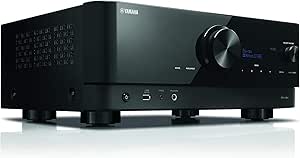 | Best for Yamaha Streaming and Everyday Versatility | Channels: 7.2 | Output power: 100 watts | HDMI ports: 8 | VIEW ON AMAZON | See Our Full Breakdown |
| Yamaha RX-A2A AVENTAGE 7.2-Channel AV Receiver | 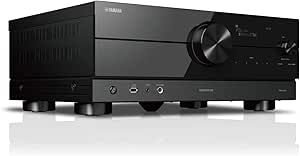 | Best for Yamaha Ecosystem and Zone 2 | Channels: 7.2 | Audio formats: Dolby Atmos, DTS:X | HDMI: 7 inputs; 1 output | VIEW ON AMAZON | See Our Full Breakdown |
| Denon AVR-S980H 7.2-Channel Receiver, Bluetooth, Wi-Fi & HEOS |  | Best for HEOS Multi-Room Listening | Channels: 7.2 | Power output: 90 watts per channel | Audio formats: Dolby Atmos, DTS:X | VIEW ON AMAZON | See Our Full Breakdown |
| Sony STR-AN1000 7.2-Channel 8K A/V Receiver |  | Best for Multi-Zone Flexibility | Channels: 7.2 | Power output: 165 W at 6 ohms, 1 kHz, one channel driven, 0.9% THD | HDMI connectivity: HDMI 2.1; 6 inputs, 2 outputs | VIEW ON AMAZON | See Our Full Breakdown |
| Sony STR-AZ1000ES 7.2-Channel 8K A/V Receiver |  | Best for Custom Installation | Channels: 7.2 | Output power: 100 watts | HDMI ports: 8 total: 6 inputs, 2 outputs | VIEW ON AMAZON | See Our Full Breakdown |
| Pioneer VSX-935 7.2-Channel Network AV Receiver |  | Best for Straightforward Source Connectivity | Channels: 7.2 | Power output: 80 watts per channel at 8 ohms, 20 Hz–20 kHz, two channels driven | HDMI ports: 8 | VIEW ON AMAZON | See Our Full Breakdown |
| Denon AVR-X1700H 7.2-Channel AV Receiver with HEOS Built-In |  | Best for Flexible Streaming | Channels: 7.2 | Output power: 80 watts per channel | HDMI connectivity: 6 inputs, 1 output | VIEW ON AMAZON | See Our Full Breakdown |
| Denon AVR-X2800H 7.2-Channel 8K Home Theater AV Receiver |  | Best for Flexible Home Theater Setups | Channels: 7.2 | Output power: 95 watts per channel | HDMI ports: 8 total: 6 inputs and 2 outputs | VIEW ON AMAZON | See Our Full Breakdown |
| Onkyo TX-NR5100 7.2-Channel 8K AV Receiver |  | Best for HDMI 2.1 Gaming | Channels: 7.2 | Output power: 80 watts | HDMI ports: 4 | VIEW ON AMAZON | See Our Full Breakdown |
| Denon AVR-S970H 7.2-Channel 8K UHD AV Receiver |  | Best for Gaming and Everyday Streaming | Channels: 7.2 | Output power: 90 watts per channel | HDMI ports: 8 total: 6 inputs and 2 outputs | VIEW ON AMAZON | See Our Full Breakdown |
| Yamaha RX500A 7.2-Channel Home Theater AV Receiver |  | Best for Automatic Room Correction | Channels: 7.2 | Speaker layouts: 5.2.2 and 7.2 | Output power: 70 watts | VIEW ON AMAZON | See Our Full Breakdown |
| channel av receiver premium | Channels | Audio formats | Video support | Output power |
|---|---|---|---|---|
| Onkyo TX-NR6100 7.2-Channel TH | 7.2 | Dolby Atmos, DTS:X | 8K/60Hz and 4K/120Hz HDR pass-through | — |
| Yamaha RX-A4A AVENTAGE 7.2-Cha | 7.2 | Dolby Atmos, DTS:X, Auro-3D | 8K/60Hz and 4K/120Hz | — |
| Denon AVR-X2900H 7.2-Channel A | 7.2 | Dolby Atmos, DTS:X | 4K and 8K; Dolby Vision | — |
| Yamaha RX-V6A 7.2-Channel AV R | 7.2 | Dolby Atmos, DTS:X | 8K/60Hz and 4K/120Hz | 100 watts |
| Yamaha RX-A2A AVENTAGE 7.2-Cha | 7.2 | Dolby Atmos, DTS:X | 4K/60Hz on all inputs; 8K/60Hz and 4K/120Hz on three inputs | — |
| Denon AVR-S980H 7.2-Channel Re | 7.2 | Dolby Atmos, DTS:X | 4K/120Hz, 8K/60Hz, Dolby Vision | — |
| Sony STR-AN1000 7.2-Channel 8K | 7.2 | Dolby Atmos, DTS:X | 8K, 4K/120 | — |
| Sony STR-AZ1000ES 7.2-Channel | 7.2 | Dolby Atmos, DTS:X | — | 100 watts |
| Pioneer VSX-935 7.2-Channel Ne | 7.2 | Dolby Atmos, DTS:X, WAV | — | — |
| Denon AVR-X1700H 7.2-Channel A | 7.2 | Dolby Atmos, Dolby Atmos Height Virtualization, DTS:X, DTS Virtual:X | 8K/60Hz, select 4K/120Hz pass-through | 80 watts per channel |
| Denon AVR-X2800H 7.2-Channel 8 | 7.2 | Dolby Atmos, DTS:X, Dolby Surround, and DTS Neural:X | 8K/60Hz pass-through and upscaling; HDR10+, HLG, HDR, Dolby Vision, and Dynamic HDR | 95 watts per channel |
| Onkyo TX-NR5100 7.2-Channel 8K | 7.2 | Dolby Atmos, DTS-HD Master Audio, DTS:X, and Dolby TrueHD | 8K and 4K/120Hz HDR pass-through | 80 watts |
| Denon AVR-S970H 7.2-Channel 8K | 7.2 | Dolby Atmos and DTS:X | — | 90 watts per channel |
| Yamaha RX500A 7.2-Channel Home | 7.2 | Dolby Atmos and DTS:X | 4K/120 and 8K/60 | 70 watts |
More Details on Our Top Picks
Onkyo TX-NR6100 7.2-Channel THX Certified Network AV Receiver
The Onkyo TX-NR6100 is a strong fit for a premium 7.2-channel setup where gaming connections and immersive formats matter as much as movie playback. Its 40 Gbps HDMI 2.1 inputs pass 4K/120Hz and 8K/60Hz video, while VRR, ALLM, and QFT target smoother, more responsive play. THX Select certification and Dolby Atmos/DTS:X support give it a clear theater focus. Compared with the Yamaha RX-A4A, it offers fewer HDMI inputs but includes three HDMI outputs, useful when routing video to more than one display. The tradeoff is a less clearly defined long-term software update outlook, and its 7.2-channel amplification limits you to two height channels in a 5.2.2 layout. I’d shortlist it for gamers who also want a capable surround system, not for buyers planning a larger Atmos expansion.
Pros:- 40 Gbps HDMI 2.1 supports 4K/120Hz and 8K/60Hz pass-through
- VRR, ALLM, and QFT support responsive gaming
- THX Select certification alongside Dolby Atmos and DTS:X
- Three HDMI outputs and discrete Zone 2 audio/video
Cons:- Seven amplified channels restrict immersive layouts to two height channels
- Software update support date is unspecified
Best for: Console and PC gamers building a 7.2 or 5.2.2 theater who want 4K/120Hz support, variable refresh rate, and THX certification.
Not ideal for: Buyers planning more than two height speakers or prioritizing a clearly specified long-term software update schedule.
- Channels:7.2
- Power output:100 watts per channel
- Audio formats:Dolby Atmos, DTS:X
- THX certification:THX Select
- HDMI:8 inputs; 3 outputs
- HDMI bandwidth:40 Gbps
- Video support:8K/60Hz and 4K/120Hz HDR pass-through
- Wireless connectivity:Wi-Fi, Bluetooth
- Dimensions:21 x 18.64 x 10.64 in (D x W x H)
Our verdict“Choose the TX-NR6100 if gaming-focused HDMI features and THX-certified 7.2-channel theater performance matter more than extra amplified channels.”
Yamaha RX-A4A AVENTAGE 7.2-Channel AV Receiver
The Yamaha RX-A4A AVENTAGE earns its premium place through broad connectivity and room setup tools rather than extra speaker channels. Its YPAO R.S.C. multipoint calibration measures several listening positions, which can help households with more than one preferred seat, while Surround:AI adjusts sound effects during playback. It also supports Dolby Atmos, DTS:X, Auro-3D, eARC, and 8K/60Hz or 4K/120Hz pass-through across its HDMI inputs. Compared with the Yamaha RX-A2A, the A4A lists more HDMI inputs and adds Auro-3D, making it better suited to equipment-heavy systems. Both remain 7.2-channel receivers, so neither is the answer for a theater needing more amplified height speakers. I’d skip this model if a straightforward setup matters more than its calibration and ecosystem options.
Pros:- YPAO R.S.C. provides 3D multipoint measurement and precision EQ
- HDMI inputs support 8K/60Hz and 4K/120Hz at up to 40 Gbps
- Supports Dolby Atmos, DTS:X, and Auro-3D
- Wide streaming and ecosystem support, including AirPlay 2, MusicCast, and Works with Sonos
Cons:- Seven amplified channels limit height-speaker expansion
- Works with Sonos requires a separately purchased Sonos Port
- Its broad calibration and network feature set may be unnecessary for a simple system
Best for: Home theater owners with several source devices and multiple listening seats who want multipoint room calibration, streaming options, and a premium Yamaha feature set.
Not ideal for: Buyers seeking more than seven amplified channels, or those who want a simpler receiver without extensive calibration and network features.
- Channels:7.2
- Power output:110 watts
- HDMI:7 inputs; 3 outputs
- HDMI bandwidth:40 Gbps
- Video support:8K/60Hz and 4K/120Hz
- Audio formats:Dolby Atmos, DTS:X, Auro-3D
- Room calibration:YPAO R.S.C. with 3D multipoint measurement
- Wireless connectivity:Wi-Fi, Bluetooth, AirPlay 2, MusicCast
Our verdict“Pick the RX-A4A if room calibration, multiple HDMI sources, and Yamaha’s network ecosystem justify a feature-rich 7.2-channel receiver.”
Denon AVR-X2900H 7.2-Channel AV Receiver, 95 W per Channel, Wi-Fi and Bluetooth
The Denon AVR-X2900H stands out for combining Audyssey MultEQ XT with current video and gaming support in a 7.2-channel design. Room correction is useful when speaker placement or room acoustics are less than ideal, while HEOS, Wi-Fi, and Bluetooth make it easier to add music playback beyond movie sessions. The listed 95 watts per channel and support for Dolby Atmos and DTS:X suit a conventional 7.2 system or a 5.2.2 layout. Compared with the Onkyo TX-NR6100, the Denon adds Audyssey and HEOS, but its potential Dirac Live upgrade is not included by default. There is also no path to more than two powered height channels with this receiver. I’d favor it over a feature-light option when room tuning is a priority, but not if you expect Dirac to be part of the out-of-box package.
Pros:- Audyssey MultEQ XT helps tune speaker output to the listening room
- Supports Dolby Atmos and DTS:X in 7.2 or 5.2.2 configurations
- 4K/120Hz gaming support includes VRR, ALLM, and AMD FreeSync
- Wi-Fi, Bluetooth, and HEOS provide network and multiroom audio options
Cons:- Dirac Live requires an optional upgrade
- Seven amplified channels limit a 5.2.2 setup to two height speakers
Best for: Movie and music listeners building a 7.2 or 5.2.2 system who want Audyssey room correction and HEOS multiroom streaming.
Not ideal for: Buyers who require more than two powered height speakers or expect Dirac Live room correction without an optional upgrade.
- Channels:7.2
- Power output:95 W per channel
- Audio formats:Dolby Atmos, DTS:X
- Video support:4K and 8K; Dolby Vision
- Gaming features:4K/120Hz, VRR, ALLM, AMD FreeSync
- Room correction:Audyssey MultEQ XT; optional Dirac Live upgrade
- Multiroom audio:HEOS
- Supported configurations:7.2 or 5.2.2
Our verdict“Choose the AVR-X2900H for Audyssey-led room tuning and HEOS in a modern 7.2-channel system, while treating Dirac Live as an extra rather than a standard feature.”
Yamaha RX-V6A 7.2-Channel AV Receiver with MusicCast
The Yamaha RX-V6A is the lineup’s practical choice for buyers who want a 7.2-channel receiver tied into a flexible home music system. Dolby Atmos and DTS:X handle immersive movie sound, while MusicCast, AirPlay 2, Wi-Fi, and Bluetooth offer several ways to send music to the receiver or connect it with compatible Yamaha gear. Its stated 8K/60Hz and 4K/120Hz support also makes it suitable for newer displays and consoles. Compared with the more feature-dense Yamaha RX-A4A, the RX-V6A is the simpler fit for streaming and everyday home theater, but the product data does not list the A4A’s multipoint YPAO R.S.C. calibration or Auro-3D support. The supplied information also omits specific drawbacks, so I’d verify HDMI behavior and setup needs before choosing it for a complex system.
Pros:- Supports Dolby Atmos and DTS:X
- Lists 8K/60Hz and 4K/120Hz video support
- MusicCast, AirPlay 2, Wi-Fi, and Bluetooth support varied listening setups
- Voice control and streaming-service support add hands-free and network options
Cons:- Product information does not specify advanced room-calibration features
- Detailed HDMI input and output counts are not provided in the supplied specifications
Best for: Households building a 7.2-channel theater that also want MusicCast, AirPlay 2, and wireless streaming for shared music listening.
Not ideal for: Buyers who need documented advanced multipoint calibration, Auro-3D, or detailed HDMI input specifications before planning a complex installation.
- Channels:7.2
- Output power:100 watts
- HDMI ports:8
- Video support:8K/60Hz and 4K/120Hz
- Audio formats:Dolby Atmos, DTS:X
- Wireless connectivity:Wi-Fi, Bluetooth, AirPlay
- Dimensions:6.25 x 17.3 x 14.9 in
- Weight:4.5 kg
- Warranty:3 years
Our verdict“The RX-V6A suits buyers who value Yamaha streaming and a 7.2-channel feature mix more than documented advanced calibration or expanded format support.”
Yamaha RX-A2A AVENTAGE 7.2-Channel AV Receiver
The Yamaha RX-A2A AVENTAGE is a considered pick for buyers who want a 7.2-channel theater plus a second-zone and streaming setup. It pairs Dolby Atmos and DTS:X with YPAO R.S.C. multipoint measurement, eARC, and gaming features including ALLM and VRR. Its HDMI layout is a point of difference: seven inputs and one output, with three inputs specified for 8K/60Hz and 4K/120Hz, rather than the broader all-input 8K/4K120 specification listed for the Yamaha RX-A4A. That makes the A2A a better match when a few modern sources are enough, while the A4A suits a more crowded rack. Zone 2, a phono input, MusicCast, and AirPlay 2 widen its use beyond the main theater. Sonos integration requires a separate Port, and seven amplified channels still cap Atmos expansion.
Pros:- YPAO R.S.C. multipoint measurement supports room-specific calibration
- Zone 2 and a phono input serve secondary-room and turntable setups
- AirPlay 2, Spotify Connect, and MusicCast support network listening
- Three HDMI inputs support 8K/60Hz and 4K/120Hz video
Cons:- Only three inputs are specified for 8K/60Hz and 4K/120Hz, unlike the RX-A4A’s all-input support
- Works with Sonos requires a separately purchased Sonos Port
- Seven amplified channels restrict Atmos layouts to two height speakers
Best for: Yamaha MusicCast users who want a 7.2-channel theater, a phono connection, and Zone 2 playback with a limited number of high-bandwidth HDMI sources.
Not ideal for: Owners with many 8K or 4K/120Hz sources, or buyers planning a larger Atmos layout beyond two height channels.
- Channels:7.2
- Audio formats:Dolby Atmos, DTS:X
- HDMI:7 inputs; 1 output
- HDMI standard:HDCP 2.3; eARC
- Video support:4K/60Hz on all inputs; 8K/60Hz and 4K/120Hz on three inputs
- Gaming features:ALLM, VRR
- Room calibration:YPAO R.S.C. with multipoint measurement
- Wireless and streaming:Wi-Fi, Bluetooth, AirPlay 2, Spotify Connect, MusicCast
- Additional features:Zone 2, phono input, Roon Tested, Works with Sonos
Our verdict“Pick the RX-A2A if Zone 2, Yamaha streaming, and room calibration matter more than having high-bandwidth video support across every HDMI input.”
Denon AVR-S980H 7.2-Channel Receiver, Bluetooth, Wi-Fi & HEOS
The AVR-S980H is a strong fit for buyers who want one receiver to connect a modern TV and game system while also feeding music around the home. Its listed 90 watts per channel, Dolby Atmos and DTS:X support, and Audyssey room calibration make it a flexible foundation for a 7.2 setup that can grow from conventional surround sound to an Atmos layout. HEOS multi-room streaming is its clearest distinction from the Sony STR-AN1000, which offers Chromecast, AirPlay, and Spotify Connect alongside Zone 2 and Zone 3 audio. Denon instead makes HEOS the center of its whole-home approach. The tradeoff is that the supplied data does not specify HDMI port counts, and its seven-channel design is not aimed at buyers planning a larger speaker layout. Its 90-watt rating is also less generous on paper than Sony’s stated peak-condition figure, which uses different test conditions.
Pros:- HEOS supports multi-room audio with the same or different content in separate rooms
- Dolby Atmos and DTS:X provide object-based surround sound options
- Audyssey room calibration can adapt sound to the listening space
- 4K/120Hz and 8K/60Hz support suits current gaming and high-resolution video sources
Cons:- The provided specifications do not state how many HDMI inputs or outputs are available
- Seven channels limit expansion compared with receivers designed for larger speaker layouts
- Power figures are not directly comparable with models rated under different test conditions
Best for: Buyers building a 7.2-channel living-room theater who also want HEOS speakers to play music in other rooms.
Not ideal for: People who need confirmed HDMI input counts or want to expand beyond a seven-channel speaker configuration.
- Channels:7.2
- Power output:90 watts per channel
- Audio formats:Dolby Atmos, DTS:X
- Video support:4K/120Hz, 8K/60Hz, Dolby Vision
- Wireless connectivity:Bluetooth, Wi-Fi
- Multi-room audio:HEOS
- Room calibration:Audyssey
Our verdict“Choose the AVR-S980H if HEOS whole-home audio matters as much as immersive 7.2-channel sound and current video support.”
Sony STR-AN1000 7.2-Channel 8K A/V Receiver
Sony gives this 7.2-channel receiver a broader multi-zone brief than most options here: Zone 2 and Zone 3 can serve additional listening areas, while Chromecast, Spotify Connect, and Apple AirPlay make it easy to bring in music from different ecosystems. That range makes it a better match for households with several streaming preferences than the HEOS-centered Denon AVR-S980H. It also supports HDMI 2.1, 8K, and 4K/120, plus Dolby Atmos and DTS:X, so the main room is ready for modern games and immersive film sound. The stated 165-watt figure is measured at 6 ohms, 1 kHz, with one channel driven; I would not compare it directly with full-range, multiple-channel ratings. Its six HDMI inputs and two outputs are specified, but buyers should still check that the layout fits their devices.
Pros:- Zone 2 and Zone 3 support audio in two additional areas
- Chromecast, Spotify Connect, and Apple AirPlay cover several popular streaming routes
- Six HDMI inputs and two outputs provide defined connection capacity
- Supports Dolby Atmos, DTS:X, 8K, and 4K/120
Cons:- The 165-watt rating uses a one-channel, 1 kHz test condition and does not indicate output with all channels driven
- The 7.2-channel configuration limits expansion for buyers planning a larger immersive system
- Its streaming and zone features may be unnecessary complexity for a single-room setup
Best for: Households that want one receiver for a 7.2-channel theater plus audio in two additional zones, with flexible streaming choices.
Not ideal for: Buyers seeking a clearly comparable continuous-power rating or a receiver built for speaker layouts larger than 7.2 channels.
- Channels:7.2
- Power output:165 W at 6 ohms, 1 kHz, one channel driven, 0.9% THD
- HDMI connectivity:HDMI 2.1; 6 inputs, 2 outputs
- Video support:8K, 4K/120
- Audio formats:Dolby Atmos, DTS:X
- HDR formats:Dolby Vision, HDR10, Hybrid Log Gamma, IMAX Enhanced
- Wireless and streaming:Bluetooth, Wi-Fi, Chromecast built-in, Spotify Connect, Apple AirPlay
- Multi-zone audio:Zone 2 and Zone 3
Our verdict“Pick the STR-AN1000 when multi-zone playback and broad streaming support matter more than a simple single-room setup.”
Sony STR-AZ1000ES 7.2-Channel 8K A/V Receiver
The STR-AZ1000ES is the installation-minded Sony in this group: its custom integration features, compatibility with Sonos, and room calibration make it a more natural fit for a planned theater system than the general-purpose Pioneer VSX-935. It also supplies a useful eight HDMI ports—six inputs and two outputs—along with HDMI 2.1, 8K, and 4K/120 support. For immersive playback, Dolby Atmos and DTS:X are covered, while Chromecast, Spotify Connect, AirPlay, Wi-Fi, and Bluetooth offer plenty of ways to stream. The stated 100-watt output is not accompanied here by test conditions, so I would avoid treating it as a direct power comparison with the Sony STR-AN1000’s differently qualified 165-watt figure. This model still tops out at 7.2 channels, and its integration-oriented features bring less value to a basic, standalone setup.
Pros:- Eight HDMI ports, including six inputs and two outputs, allow multiple sources and displays
- Custom integration features and Sonos compatibility suit planned system control
- Wi-Fi, Bluetooth, Chromecast, Spotify Connect, and AirPlay provide varied streaming options
- Dolby Atmos, DTS:X, 8K, and 4K/120 support current theater and gaming formats
Cons:- The listed 100-watt rating does not include conditions needed for a precise comparison with competing models
- Seven-channel processing is a limit for buyers planning a larger immersive speaker system
- Custom integration features may add little for a simple receiver-and-TV installation
Best for: Home-theater owners working with an installer or using Sonos who want custom integration and eight HDMI connections.
Not ideal for: Buyers who want a straightforward receiver for a basic setup or need more than 7.2 channels of speaker processing.
- Channels:7.2
- Output power:100 watts
- HDMI ports:8 total: 6 inputs, 2 outputs
- HDMI and video support:HDMI 2.1; 8K, 4K/120
- Audio formats:Dolby Atmos, DTS:X
- HDR formats:Dolby Vision, HDR10, Hybrid Log Gamma, IMAX Enhanced
- Wireless and streaming:Bluetooth, Wi-Fi, Chromecast built-in, Spotify Connect, Apple AirPlay
- Integration compatibility:Google Assistant, Sonos
Our verdict“Choose the STR-AZ1000ES for a custom-integrated 7.2-channel theater with abundant HDMI connections, not for a basic plug-and-play system.”
Pioneer VSX-935 7.2-Channel Network AV Receiver
The VSX-935 makes a practical case for buyers with several wired sources and a conventional 7.2-channel plan. Its eight HDMI ports, plus USB, Bluetooth, Wi-Fi, and IR connectivity, give it a flexible connection mix; ARC compatibility and voice control add useful everyday convenience. Dolby Atmos and DTS:X provide immersive-format decoding, while surround upmixing can make non-Atmos material more engaging through a surround speaker setup. Compared with the Denon AVR-X1700H, the Pioneer lists more HDMI ports, while the Denon specifies HEOS, AirPlay 2, and select 4K/120 pass-through. The VSX-935’s listed 80 watts per channel is rated with two channels driven across 20 Hz–20 kHz, a more useful condition than its separate 170-watt figure, which should not be treated as the same kind of rating. Its older-generation feature set may be less compelling for buyers prioritizing detailed current gaming-video support.
Pros:- Eight HDMI ports help accommodate a large collection of connected sources
- Dolby Atmos, DTS:X, and surround upmixing support immersive and legacy content
- Bluetooth, Wi-Fi, USB, and IR cover varied connection and control needs
- The 80-watt rating is specified with two channels driven across a broad frequency range
Cons:- The supplied specifications do not list 8K or 4K/120 video support
- The 170-watt figure uses different conditions from the 80-watt-per-channel rating
- Streaming details are less extensive than the Denon AVR-X1700H’s stated HEOS and AirPlay 2 options
Best for: Buyers with many HDMI-connected devices who want a 7.2-channel receiver with wired and wireless source options.
Not ideal for: Gamers who need explicitly specified 4K/120 or 8K pass-through, or buyers seeking HEOS or AirPlay 2 streaming.
- Channels:7.2
- Power output:80 watts per channel at 8 ohms, 20 Hz–20 kHz, two channels driven
- HDMI ports:8
- Connectivity:Bluetooth, HDMI, USB, Wi-Fi, IR
- Audio formats:Dolby Atmos, DTS:X, WAV
- Audio features:Surround upmixing
- Dimensions:14.56 × 17.13 × 6.81 inches
- Weight:20.7 pounds
Our verdict“Choose the VSX-935 if eight HDMI connections and broad source compatibility matter more than specified next-generation video pass-through.”
Denon AVR-X1700H 7.2-Channel AV Receiver with HEOS Built-In
The AVR-X1700H is a capable pick for buyers who want their receiver to handle both surround sound and a mix of streaming services. HEOS Built-in, AirPlay 2, and Bluetooth give it several routes for music playback, while support for Alexa, Google Assistant, Siri, and Josh.ai lets owners choose from multiple voice-control ecosystems. It decodes Dolby Atmos and DTS:X and supports 8K/60Hz plus select 4K/120Hz pass-through, making it relevant for newer consoles and displays. Compared with the Pioneer VSX-935, the Denon gives more detail about modern video and streaming features, but Pioneer lists eight HDMI ports while this Denon has six inputs and one output. The main compromise is that high-frame-rate pass-through is limited to select inputs, so device placement matters. Its 80-watt-per-channel rating is also below the AVR-S980H’s listed 90 watts, though their ratings alone do not settle real-world speaker matching.
Pros:- HEOS Built-in, AirPlay 2, and Bluetooth offer flexible music streaming
- Supports Dolby Atmos, Dolby Atmos Height Virtualization, DTS:X, and DTS Virtual:X
- Compatibility with four named voice-assistant platforms broadens control options
- 8K/60Hz and select 4K/120Hz pass-through support newer displays and gaming sources
Cons:- Only select HDMI inputs support 8K and 4K/120Hz pass-through
- Six HDMI inputs may be limiting for buyers with many source devices
- The 80-watt-per-channel rating is lower on paper than the AVR-S980H’s stated 90 watts
Best for: Listeners who want a 7.2-channel theater with HEOS, AirPlay 2, voice-assistant options, and support for newer video sources.
Not ideal for: Owners with more than six HDMI sources or several devices that all require 4K/120 pass-through.
- Channels:7.2
- Output power:80 watts per channel
- HDMI connectivity:6 inputs, 1 output
- Video support:8K/60Hz, select 4K/120Hz pass-through
- Audio formats:Dolby Atmos, Dolby Atmos Height Virtualization, DTS:X, DTS Virtual:X
- Connectivity:Bluetooth, Ethernet, HDMI, USB, Wi-Fi
- Streaming:HEOS Built-in, AirPlay 2
- Voice assistants:Amazon Alexa, Google Assistant, Apple Siri, Josh.ai
Our verdict“Pick the AVR-X1700H for varied streaming and voice control, provided its six inputs and select-input high-frame-rate support fit your system.”
Denon AVR-X2800H 7.2-Channel 8K Home Theater AV Receiver
The AVR-X2800H earns its place for buyers who want room to connect several sources without giving up modern video or immersive audio. Its eight HDMI ports, including three 8K-capable inputs, give it an advantage over the Onkyo TX-NR5100, which has four HDMI ports. That extra capacity is useful for a console, streaming device, disc player, and other components connected at once. Dolby Atmos and DTS:X support 7.2-channel layouts, while HEOS, AirPlay 2, Wi-Fi, and Bluetooth offer multiple ways to stream music.
The tradeoff is that virtualized height audio is not a substitute for dedicated overhead speakers. Buyers seeking a more complete gaming feature set may prefer the Denon AVR-S970H, which lists VRR, QFT, and ALLM. I’d choose the X2800H for its broader connections and streaming options, not as a shortcut to true overhead sound.
Pros:- Eight HDMI ports, with three supporting 8K video
- Supports Dolby Atmos and DTS:X
- HEOS, Wi-Fi, AirPlay 2, and Bluetooth provide varied streaming options
- Dual subwoofer outputs allow two subwoofers in a compatible setup
Cons:- Virtualized height audio cannot reproduce the overhead placement of dedicated height speakers
- The listed features do not include gaming options such as VRR or ALLM
Best for: Home theater owners connecting several HDMI devices who also want built-in multi-room and wireless music options.
Not ideal for: Buyers who want genuine overhead effects without installing height speakers, or who prioritize gaming features such as VRR and ALLM.
- Channels:7.2
- Output power:95 watts per channel
- HDMI ports:8 total: 6 inputs and 2 outputs
- 8K HDMI inputs:3
- Video support:8K/60Hz pass-through and upscaling; HDR10+, HLG, HDR, Dolby Vision, and Dynamic HDR
- Audio formats:Dolby Atmos, DTS:X, Dolby Surround, and DTS Neural:X
- Wireless connectivity:Wi-Fi, Bluetooth, AirPlay 2, and HEOS
- Subwoofer outputs:2
Our verdict“Choose the AVR-X2800H if you need generous HDMI connections and flexible streaming, but plan on dedicated height speakers for convincing overhead effects.”
Onkyo TX-NR5100 7.2-Channel 8K AV Receiver
The TX-NR5100 is the gaming-focused choice in this group, with 4K/120Hz pass-through and VRR, ALLM, and QFT for compatible consoles and displays. Those features make it a stronger fit for players who want responsive high-frame-rate video than the Denon AVR-X2800H, whose supplied specifications emphasize a larger HDMI count and streaming ecosystem instead. It also supports Dolby Atmos and DTS:X, so a gaming-centered system can handle immersive movie sound as well.
The main compromise is connectivity: four HDMI ports leave less room for multiple consoles and video sources than the eight on either Denon reviewed here. Chromecast built-in, AirPlay 2, Bluetooth, and DTS Play-Fi cover several streaming preferences, but the listed information gives no software update support date. I’d favor this Onkyo when gaming features matter more than having plentiful HDMI inputs.
Pros:- 4K/120Hz pass-through with VRR, ALLM, and QFT
- Supports 8K video and eARC
- Dolby Atmos and DTS:X support immersive home theater audio
- Chromecast built-in, AirPlay 2, Bluetooth, and DTS Play-Fi offer varied streaming choices
Cons:- Four HDMI ports provide less connection capacity than the Denon AVR-X2800H and AVR-S970H
- Software update support date is not specified
Best for: Console gamers building a 7.2-channel system around 4K/120Hz video and current HDMI gaming features.
Not ideal for: Households with many HDMI sources or buyers who want a stated software update support timeline.
- Channels:7.2
- Output power:80 watts
- HDMI ports:4
- Video support:8K and 4K/120Hz HDR pass-through
- Gaming features:VRR, ALLM, and QFT
- Audio formats:Dolby Atmos, DTS-HD Master Audio, DTS:X, and Dolby TrueHD
- Connectivity:Bluetooth, eARC, Chromecast built-in, AirPlay 2, and DTS Play-Fi
- Dimensions:12.9 x 17.13 x 6.3 inches
Our verdict“Pick the TX-NR5100 for its gaming-oriented HDMI features, provided four HDMI ports are enough for your equipment.”
Denon AVR-S970H 7.2-Channel 8K UHD AV Receiver
The AVR-S970H brings together 8K/60Hz pass-through, VRR, QFT, and ALLM with Dolby Atmos and DTS:X, making it a well-rounded pick for a mixed gaming and movie setup. Like the AVR-X2800H, it has eight HDMI ports and three 8K-capable connections, so it suits systems with several sources better than the four-input Onkyo TX-NR5100. The Denon’s HEOS, Wi-Fi, and Bluetooth also make wireless music straightforward, and its phono input is a useful extra for turntable owners.
At 90 watts per channel, its listed output is slightly below the X2800H’s 95 watts per channel. The descriptions also point to setup that may take more attention when building a multi-channel system; this is not a plug-in-and-forget alternative to a simpler stereo arrangement. I’d choose it over the X2800H when the specified gaming features and phono input matter more than the latter’s higher rated output.
Pros:- Eight HDMI ports, including three 8K-capable inputs
- VRR, QFT, and ALLM support for compatible gaming systems
- HEOS, Wi-Fi, and Bluetooth enable wireless music streaming
- Phono input accommodates a turntable
Cons:- At 90 watts per channel, its listed output is lower than the AVR-X2800H’s 95 watts per channel
- Configuring a multi-channel home theater system may take extra setup
Best for: Buyers combining console gaming, 8K video, multi-channel movie sound, and a turntable in one system.
Not ideal for: First-time receiver owners seeking a particularly simple setup, or buyers who specifically want the higher listed output of the AVR-X2800H.
- Channels:7.2
- Output power:90 watts per channel
- HDMI ports:8 total: 6 inputs and 2 outputs
- 8K HDMI inputs:3
- Video pass-through:8K/60Hz
- Audio formats:Dolby Atmos and DTS:X
- Connectivity:Wi-Fi, Bluetooth, and HEOS
- Gaming features:VRR, QFT, and ALLM
Our verdict“Choose the AVR-S970H for a gaming-ready Denon with plentiful HDMI connections and a phono input, if its setup demands suit you.”
Yamaha RX500A 7.2-Channel Home Theater AV Receiver
The Yamaha RX500A stands apart for buyers who want automatic room correction alongside Dolby Atmos and DTS:X support. Its listed 5.2.2 layout can use two height channels for overhead effects, rather than relying only on virtualized height audio as an option with the Denon AVR-X2800H. It also handles 4K/120 and 8K/60 video, with ALLM and VRR for compatible gaming systems, so its lower listed output does not rule out a modern mixed-use setup.
The tradeoffs are clear: 70 watts of output is less than the Onkyo TX-NR5100’s listed 80 watts, and the Yamaha has just five HDMI ports with one output. That gives it less connection flexibility than either eight-port Denon. Its range of streaming services—including Google Cast, AirPlay, and Spotify Connect—helps offset that limitation for music-focused buyers. I’d pick it for room adjustment and streaming variety, not for a large collection of HDMI components.
Pros:- Automatic room correction helps adapt sound to the listening space
- Supports a 5.2.2 Dolby Atmos and DTS:X speaker layout
- 4K/120 and 8K/60 video support with ALLM and VRR
- Streaming options include Google Cast, AirPlay, Spotify Connect, TIDAL Connect, and Qobuz Connect
Cons:- 70 watts of output is lower than the Onkyo TX-NR5100’s listed 80 watts
- Five HDMI ports and one output offer less connection flexibility than the Denon models
Best for: Buyers building a 5.2.2 Atmos system who want automatic room correction, modern gaming support, and broad music-streaming options.
Not ideal for: Owners with many HDMI devices, or listeners who need greater listed output power and two HDMI outputs.
- Channels:7.2
- Speaker layouts:5.2.2 and 7.2
- Output power:70 watts
- HDMI ports:5 total: 4 inputs and 1 output
- Video support:4K/120 and 8K/60
- Audio formats:Dolby Atmos and DTS:X
- Gaming features:ALLM and VRR
- Room correction:Automatic
Our verdict“Choose the RX500A for automatic room correction and a 5.2.2 Atmos layout, but skip it if you need numerous HDMI connections.”

How We Picked
I compared these receivers on the features that affect real system choices: 7.2-channel configuration, immersive-audio support, HDMI and gaming compatibility, network playback, setup tools, and build positioning. I also weighed how clearly each model serves a particular buyer, since a receiver with more processing features is not automatically the better fit for a straightforward living-room system. Product names and stated capabilities informed the comparison; I do not present these picks as hands-on test results.
The ranking favors balanced performance and useful flexibility first, then separates specialist strengths such as premium construction, easy setup, gaming connectivity, or straightforward value. Receivers with overlapping features are distinguished by their role in the lineup, while older or more modestly equipped options remain relevant for systems whose owners do not need the latest video standards. No 7.2-channel model receives extra credit for features that matter only in a larger, more complex installation.
Factors to Consider When Choosing 72 Channel Av Receiver Premium
Before choosing a receiver, I’d match the model to the system you plan to build, not just the word “premium” in a listing. These broader checks can prevent paying for unused features or buying a receiver that cannot handle your sources.
Match Channel Count to Your Planned Speaker Layout
A 7.2-channel receiver typically supports a conventional 7.2 layout or a smaller layout with height speakers, such as 5.1.2, depending on the model’s processing and assignment options. Decide whether surround-back speakers or overhead effects matter more before buying, since those layouts use the available amplifier channels differently. A common mistake is to count subwoofers as extra speaker channels; the “.2” usually refers to subwoofer outputs, not two additional amplified speaker positions. Also check whether the receiver can process the exact layout you want, rather than relying only on the channel count in its name. If you expect to add more height speakers later, a 7.2 model may be a limit rather than a future-proof choice.
Check HDMI Features Against Every Source
Make a list of the TV, game console, streaming device, and disc player you actually connect, then check the receiver’s HDMI support against their required formats. Features such as 4K/120, 8K pass-through, HDR format support, and eARC can matter for newer displays and consoles, but they do little for a system built around older sources. Confirm how many inputs support the feature you need; a headline specification does not always mean every HDMI input offers identical capability. If your TV handles video switching well, eARC may let the receiver focus on audio, though it is still worth checking compatibility across devices. Avoid choosing solely by a future format label when your current setup has a more pressing limitation, such as too few inputs.
Separate Room Correction From Room Treatment
Automatic calibration can help balance speaker levels, distances, and tonal response, but it cannot fix every acoustic problem. Room shape, reflective surfaces, speaker placement, and subwoofer position still have a major effect on what you hear. Before paying more for advanced processing, ask whether you will run the setup routine carefully and whether the receiver’s correction system fits your willingness to make manual adjustments. A common misstep is treating an automatic result as a substitute for sensible speaker placement. If your room is asymmetrical or open to other spaces, prioritize usable calibration controls and flexible speaker configuration over a long list of audio formats.
Pay for Premium Construction Only When It Solves a Need
Higher-end product families can bring stronger build positioning, broader processing, or a more elaborate control experience, but those advantages matter most in a system that can use them. Pairing a premium receiver with a basic speaker package may produce less benefit than improving speaker placement or the subwoofer. Check the receiver’s dimensions, ventilation needs, and connection layout before planning a cabinet installation; heat and access can become practical problems in a tight space. Buyers who value a polished component and extensive configuration options may welcome the step-up, while a simple TV-and-console system may be better served by a capable midrange model. Think of premium as a set of specific benefits, not a guarantee of better results in every room.
Plan for Streaming, Control, and Household Use
Network audio, Bluetooth, and multiroom platforms can make a receiver easier to share, but they are not interchangeable. Consider whether you stream from a phone, want playback in other rooms, or mainly use the receiver for TV and discs. Check which ecosystem your household already uses before committing, since app preference and device compatibility can shape daily convenience more than a small specification difference. Also confirm whether the receiver offers the inputs and controls needed for older equipment; a newer network feature does not compensate for a missing connection. For a beginner, straightforward setup and clear everyday controls may be more valuable than niche processing options that will rarely be touched.
Frequently Asked Questions
Can a 7.2-channel receiver power a Dolby Atmos setup?
Yes, many 7.2-channel receivers can run a 5.1.2 arrangement, using two channels for height speakers and the remaining channels for the bed layer. The exact layouts and speaker assignments vary by model, so verify the manual before buying. A 7.2 label does not mean the receiver can power seven surround speakers plus two height speakers at once. If your target is a larger Atmos layout, choose a receiver with more processing and amplification channels instead of planning around an upgrade the unit cannot support.
Should I choose an 8K receiver if my TV and sources are 4K?
Not automatically. An 8K-capable receiver can make sense if you want newer HDMI features or expect to replace your display or sources soon, but it may not improve picture quality from equipment that only outputs 4K. Check support for the specific features you need, including gaming refresh rates and HDR formats, rather than treating 8K support as a complete compatibility guarantee. Also confirm which inputs provide those features. If your devices already connect cleanly through your TV, spending more for video pass-through may not be your best system upgrade.
Is a premium 7.2-channel receiver suitable for a small living room?
It can be, but room size alone does not determine the right receiver. Focus on whether you can place the speakers correctly, manage ventilation, and keep the receiver accessible for connections and setup. A small room may benefit more from careful speaker and subwoofer placement than from a receiver with advanced processing features. Check cabinet depth and airflow requirements before installation, since an enclosed shelf can trap heat. If you only need a basic surround layout, a simpler model may be easier to live with.
What should I check before replacing an older receiver?
Write down the connections and formats your current system uses: speaker layout, HDMI sources, display features, subwoofer connections, and any older audio devices. Then check whether the new receiver supports those devices directly or whether your TV or another component must handle part of the signal path. Pay particular attention to HDMI inputs, eARC compatibility, and the speaker layout you intend to keep. A new receiver can add current video support but still create a setup problem if it lacks a connection you rely on. Keeping this inventory also helps you avoid paying for features that do not address your current limitations.
When should I choose a premium model over a value-focused receiver?
Step up when the more advanced model provides a benefit you will use, such as broader surround processing, more flexible setup, a stronger fit with your source devices, or a build and control experience you prefer. If the system is mainly for TV audio and a console, a well-equipped value model may cover the important jobs without extra complexity. Consider the full system too: speaker quality, subwoofer performance, and room layout can limit the gains from a receiver upgrade. Compare the specific features and connections rather than relying on model tier alone. The best premium choice is the one that addresses a real system need.
Conclusion
For the broadest balance in this group, I’d start with the Onkyo TX-NR6100 as best overall. The Denon AVR-X1700H is my value-oriented pick for buyers who do not need every newer HDMI feature, while the Yamaha RX-A4A is the best premium choice for shoppers drawn to AVENTAGE construction and expanded surround processing. Beginners should compare the Denon AVR-S970H or AVR-S980H for a practical feature set and an approachable path into a 7.2 system. For gaming-focused HDMI needs, look closely at the Sony STR-AN1000 and the newer-video Denon and Onkyo options; for Yamaha’s ecosystem and tuning approach, consider the RX-V6A or RX-A2A. If your plan requires more than seven amplified channels, none of these is the right category—look for a higher-channel receiver instead.