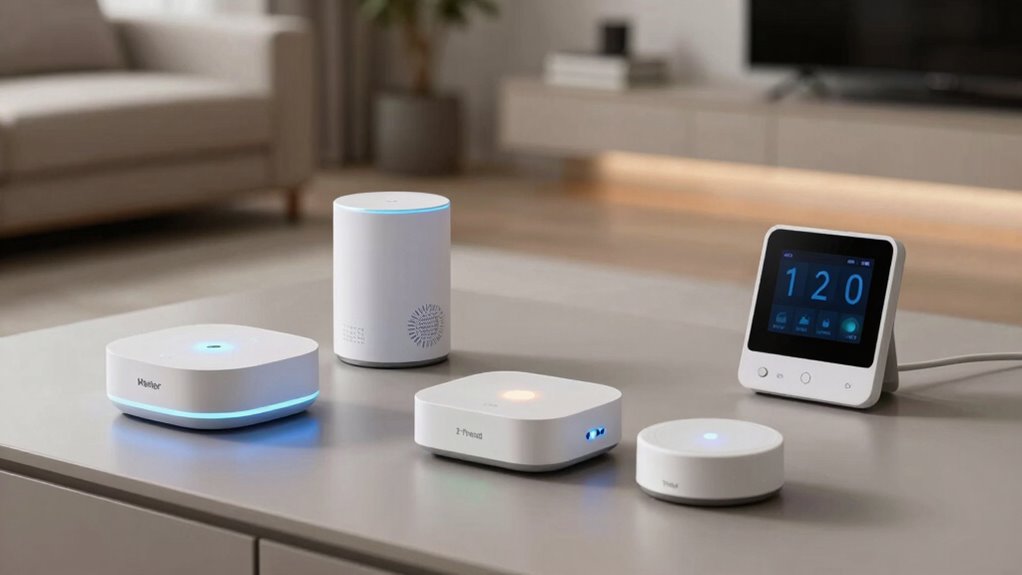

Smart home standards like Matter, Thread, Zigbee, and Z-Wave guarantee your devices work smoothly together for a better experience. They prevent compatibility issues, making setup easier and devices more reliable. These standards improve energy management, simplify automation, and give you more control over your smart home. By using these key protocols, your smart home becomes more user-friendly and dependable. Keep exploring to discover how these standards can help you create a truly integrated smart home.

Get the latest gadgets delivered free with Prime
- Fast, free delivery on millions of items
- Prime Video, Amazon Music and more included
- Member-only deals all year
Key Takeaways
- Matter simplifies device interoperability across different ecosystems, enhancing user experience and reducing setup complexity.
- Thread provides a secure, low-power mesh network ideal for reliable communication among sensors and battery-powered devices.
- Zigbee offers flexible, open support for numerous devices, promoting widespread compatibility and automation.
- Z-Wave emphasizes simplicity and reliability in device control, fostering seamless smart home automation.
- Overall, these standards ensure cohesive, energy-efficient, and user-friendly smart home ecosystems.
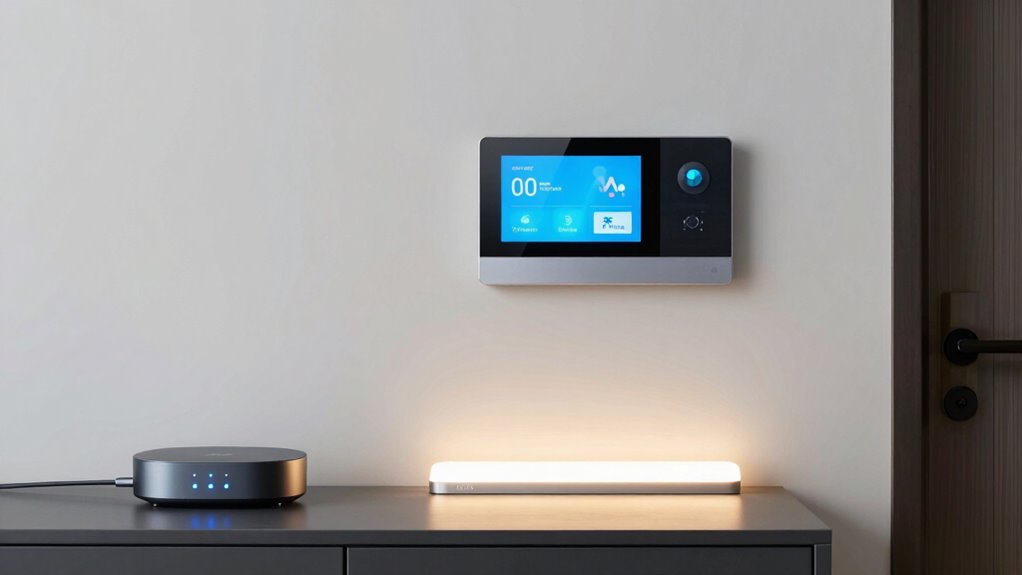
As smart homes become more common, establishing clear standards is vital to guarantee devices work seamlessly together. When you’re integrating various gadgets—like voice recognition assistants, thermostats, security cameras, and lighting—you want them to communicate effortlessly. Without standardized protocols, you might face compatibility issues, device failures, or frustrating setups. That’s where standards like Matter, Thread, Zigbee, and Z-Wave come into play, creating a more unified smart home experience.
Matter, the newest standard, aims to simplify device interoperability. It’s designed to work across different platforms and ecosystems, making it easier for you to add new devices without worrying about compatibility. With Matter, voice recognition devices from different brands can understand and respond to your commands consistently, whether you’re controlling your lights, adjusting the thermostat, or managing energy consumption. This consistency is vital for effective energy management, as you can optimize your system to reduce waste and lower utility bills. Imagine asking your voice assistant to turn off unused appliances, and knowing it will do so regardless of the device brand. That’s the power of Matter’s unified approach. Additionally, the adoption of interoperability standards helps streamline setup processes and reduces the need for multiple hubs or controllers. These standards also promote industry-wide compatibility, making it easier for manufacturers to develop devices that work seamlessly together. Moreover, standardization in communication protocols enhances the overall user experience, ensuring that even less tech-savvy homeowners can enjoy the benefits of automation. As more devices adopt these standards, the smart home industry is becoming increasingly cohesive and user-friendly.
Thread offers a low-power, secure mesh network technology that’s ideal for connecting sensors, smart locks, and other battery-operated devices. Its reliability ensures that your security and energy management systems stay connected even if some nodes go offline. Thread’s self-healing network helps maintain seamless communication, so your voice recognition commands and energy-saving routines execute without interruption. It’s especially beneficial for complex setups where multiple devices need to coordinate smoothly. Additionally, network reliability is enhanced by the adoption of these standards, ensuring your smart home remains responsive at all times. Knowing that your network can recover and adapt to changes without manual intervention adds another layer of convenience.
Zigbee and Z-Wave have been long-standing standards in the smart home industry. Zigbee, being more flexible and open, supports a wide range of devices, making it easier for you to expand your system over time. Z-Wave, with its focus on simplicity and reliability, provides a straightforward way to connect and control devices, such as smart locks or lighting. Both standards enable your voice recognition system to understand commands more accurately and execute energy management tasks efficiently. For example, you can set your lights to dim at specific times or have your thermostat automatically adjust based on occupancy, all coordinated through these reliable protocols. The widespread adoption of these standards also encourages device manufacturers to prioritize compatibility, leading to a more cohesive ecosystem.
In the end, having clear standards like Matter, Thread, Zigbee, and Z-Wave guarantees your smart home functions cohesively. You gain a more intuitive experience, better device compatibility, and optimized energy use—all while enjoying the convenience of voice recognition. These standards are shaping the future where your smart home is smarter, more reliable, and easier to manage.
Products Worth Considering

LG UltraGear 27-Inch QHD OLED Gaming Monitor, 240Hz, 0.03ms, G-SYNC Compatible, FreeSync Premium Pro, HDMI 2.1

Bose QuietComfort Wireless Noise-Cancelling Over-Ear Headphones, Black

Sony WH-1000XM6 Wireless Noise-Canceling Over-Ear Headphones, Blue, Bundle
As an affiliate, we earn on qualifying purchases.
Frequently Asked Questions
How Do Smart Home Standards Impact Device Security?
Smart home standards substantially boost your device security by implementing encryption protocols that protect data transmitted between devices. They also establish privacy safeguards, ensuring your personal information stays confidential. When standards like these are in place, you benefit from safer, more secure connectivity, reducing risks of hacking or unauthorized access. By adhering to these guidelines, your smart home devices become more resilient, giving you peace of mind and better control over your digital environment.
Are All Smart Home Standards Compatible With Existing Devices?
Not all smart home standards are fully compatible with existing devices. You might find that device integration varies, especially if your devices use different protocols or vendor-specific tech. Some standards, like Matter, aim to improve vendor compatibility, making it easier to connect diverse devices. However, before investing, check if your current devices support the standard to guarantee seamless integration and avoid compatibility issues.
What Is the Future Outlook for Smart Home Standard Interoperability?
The future of smart home standard interoperability looks promising as the interoperability evolution accelerates, making devices easier to connect and control across brands. You can expect increased standard adoption trends, with more manufacturers embracing unified protocols like Matter. This shift will enhance compatibility, reduce fragmentation, and simplify your smart home experience. As interoperability improves, you’ll enjoy a more seamless, integrated smart home environment, regardless of the brands or devices you choose.
How Do Standards Influence Smart Home Device Pricing?
Think of smart home standards as the blueprint for a complex city. When standards promote device compatibility, they create a more competitive market, which can lower prices. On the other hand, limited compatibility may lead to higher costs due to specialized or proprietary products. Overall, standards influence market dynamics, encouraging manufacturers to innovate and offer more affordable, interoperable devices, making your smart home setup more accessible and budget-friendly.
Can Third-Party Developers Easily Create Compatible Smart Home Products?
Yes, third-party developers can create compatible smart home products, but they face some compatibility challenges. These challenges often stem from differing standards and protocols, which can complicate integration. However, with the rise of unified standards like Matter, creating compatible devices becomes easier. As a developer, you need to stay updated on these standards and test your products across different ecosystems to guarantee seamless compatibility for users.
Conclusion
Embracing these smart home standards like Matter, Thread, Zigbee, and Z-Wave might seem overwhelming, but they’re designed to make your life easier and more connected. Some worry about compatibility issues, but these standards aim to unify devices across brands, simplifying your setup. By adopting them, you’ll enjoy seamless integration, enhanced security, and future-proofing your smart home. So, don’t hesitate—taking the leap guarantees your home stays smart, secure, and ready for tomorrow’s innovations.