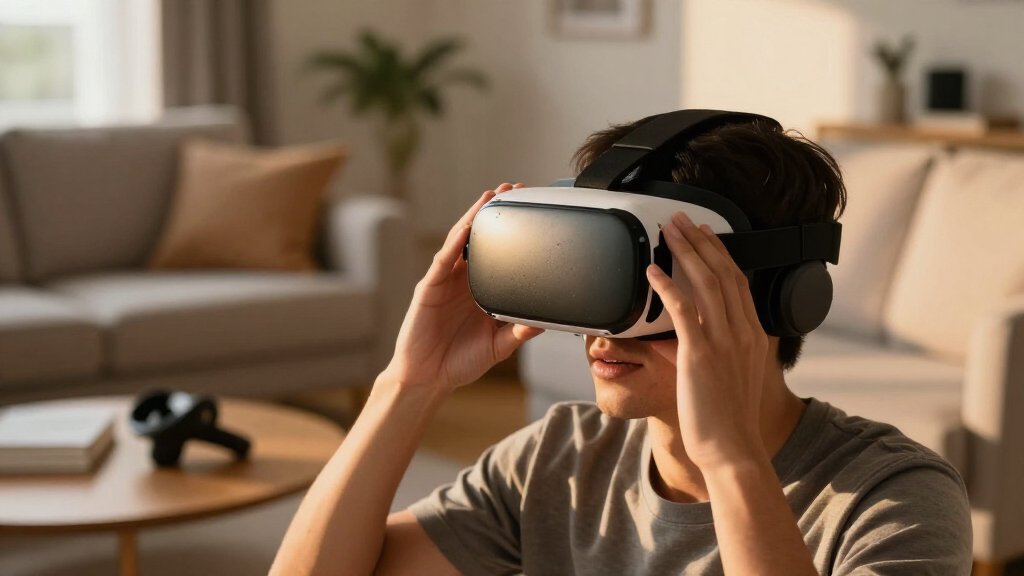

Is VR Sustainable Relying On Mods?
AIThis post was created with the assistance of artificial intelligence (AI).

TL;DR

A recent discussion on Reddit questions if VR’s future depends on mods for longevity. While some see mods as vital, experts warn about potential sustainability issues. The debate highlights ongoing uncertainties about VR’s long-term viability.

Recent discussions on Reddit have brought attention to whether virtual reality (VR) can be sustainable if it relies heavily on mods created by users. This debate highlights concerns about long-term support, stability, and the future of VR ecosystems, making it a key question for industry stakeholders and consumers alike.

On r/virtualreality, users have expressed mixed opinions about the reliance on mods to extend VR content and functionality. Some argue that mods are essential for maintaining interest and expanding capabilities, especially as official content may lag behind user demand. Others warn that dependence on mods could undermine the sustainability of VR platforms, citing issues such as inconsistent quality, security vulnerabilities, and the risk of fragmented ecosystems.

There is no official stance from major VR hardware or software companies confirming that they intend to rely on mods for future development. Industry experts acknowledge that mods have historically played a role in PC gaming’s longevity, but caution that VR’s hardware and software ecosystems face unique challenges that may limit the long-term viability of a mod-dependent model.

Current discussions are primarily anecdotal and speculative, with no concrete data or official policies indicating a shift toward or away from mod reliance in VR development.

At a glance
analysisWhen: ongoing, current debate as of October 2…
The developmentA Reddit discussion raises questions about the sustainability of VR relying heavily on user-created mods, sparking debate among industry observers.
Is VR Sustainable Relying On Mods?
VR ecosystem briefing · ongoing debate

Is VR Sustainable Relying On Mods?

Community mods can extend the life, usefulness, and creative range of virtual reality. But longevity built primarily on volunteer labor also introduces fragile dependencies—from broken updates and uneven quality to security and ecosystem fragmentation.

Community value High
Official support Limited
Evidence base Anecdotal
Long-term outlook Unclear
01 · Why mods matter

A powerful extension layer

PC gaming shows that modding can revive aging titles and sustain communities. VR gains similar benefits, but its tighter connection between software, sensors, motion controls, comfort, and physical safety raises the cost of failure.

Longevity

More life for existing titles

New maps, mechanics, conversions, and quality-of-life improvements can keep users engaged long after official releases slow down.

Innovation

Experiments at community speed

Creators can test niche interactions and accessibility ideas without waiting for a platform holder’s product roadmap.

Adaptation

Hardware stays useful longer

Compatibility fixes and added features may extend device relevance—provided updates do not repeatedly break those additions.

02 · Sustainability test

Helpful layer or critical dependency?

The central distinction is whether mods complement a healthy platform or compensate for missing official investment. The more essential they become, the more volunteer availability and unofficial maintenance turn into systemic risks.

Editorial assessment Mods are best treated as leverage—not infrastructure.

A durable VR ecosystem needs supported content, stable interfaces, security processes, and hardware compatibility beneath its community layer.

Relative concern profile · qualitative
Update compatibility High
Security exposure High
Experience consistency Medium–high
Legal and moderation risk Medium

Directional assessment based on the issues raised in the current debate—not measured industry statistics.

03 · Model comparison

Three possible futures

The most resilient model is neither a closed ecosystem nor a platform abandoned to its modding community. It is a managed partnership with clear boundaries and maintained technical foundations.

Decision factor Supported mod ecosystem Unofficial mod dependency Closed official ecosystem
Creative expansion Broad and discoverable Broad but fragmented Roadmap constrained
Security oversight Review and permissions Inconsistent controls Centralized controls
Update resilience Stable APIs possible Breakage is common ~Depends on vendor
User experience Guided customization Variable and technical More consistent
Long-term sustainability Strongest balance Volunteer-dependent ~Stable but less adaptive
04 · Traceability chain

How mod reliance becomes platform risk

The risk is cumulative. A single compatibility problem can move through creators, content, users, and ultimately platform economics.

01 Official content slows Users seek more experiences.
02 Mods fill the gap Community labor becomes essential.
03 Updates break mods Maintenance debt accumulates.
04 Experience fragments Quality and safety vary.
05 Confidence weakens Users and developers hesitate.
Community enhancement Critical dependency

The debate suggests parts of VR may be drifting toward dependency, but the available evidence does not establish an industry-wide tipping point.

05 · Key questions

What the debate can—and cannot—answer

No major platform policy currently demonstrates that VR intends to rely on mods as its core development model. The most defensible conclusion remains conditional.

Question 01

Can VR survive without mods?

Yes. Sustainability can come from official content, developer investment, services, and dependable platform support. Mods are valuable, but not inherently required.

Question 02

Could mods extend hardware life?

Potentially. New functions and compatibility fixes can preserve relevance, although unsupported software can also become brittle after platform updates.

Question 03

Are VR companies actively supporting mods?

Support remains uneven and generally more limited than in traditional PC gaming. Policies, tooling, and distribution paths vary by platform and title.

Question 04

What are the central risks?

Security vulnerabilities, inconsistent quality, fragmented communities, update breakage, intellectual-property disputes, and moderation burdens.

Question 05

What would make modding sustainable?

Stable APIs, permission controls, versioning, trusted distribution, safety review, creator documentation, update guarantees, and an official content baseline.

06 · Signals to monitor

What happens next matters more than the Reddit verdict

Future platform behavior will provide stronger evidence than today’s speculation. Watch for concrete systems that turn modding from an informal workaround into supported infrastructure.

Signal A

Official mod frameworks

Documented APIs, sandboxes, compatibility guarantees, and safe distribution channels would reduce fragility.

Signal B

Platform policy

Clear rules on moderation, intellectual property, monetization, privacy, and user responsibility would clarify incentives.

Signal C

Measured outcomes

Retention, incident rates, update breakage, creator participation, and hardware lifespan would test sustainability claims.

Evidence check

What is known: mods can expand VR experiences and support engaged communities. What remains unknown: whether that contribution can scale safely and economically across the wider VR market. Current discussion is primarily anecdotal and speculative.

Potential Impacts of Mod Dependency on VR Sustainability

This debate matters because VR’s future growth and stability could hinge on whether user-created content can be sustainably supported. Heavy reliance on mods might foster innovation and extend content lifespan but could also lead to fragmentation, security risks, and inconsistent user experiences, affecting consumer confidence and developer investment.

Amazon

VR headset with mod support

As an affiliate, we earn on qualifying purchases.

As an affiliate, we earn on qualifying purchases.

Role of Mods in VR Development and Community Engagement

Historically, mods have played a significant role in PC gaming, often revitalizing titles and fostering active communities. In VR, mods are increasingly used to customize experiences, add features, and extend hardware capabilities. However, unlike traditional gaming, VR ecosystems involve complex hardware-software integration, raising questions about how well mods can be managed without compromising stability or security.

Recent years have seen a rise in user-generated VR content, but official support for mods remains limited compared to PC gaming. The debate on Reddit reflects broader concerns about whether this trend can be scaled into a sustainable model for VR development.

“Reliance on mods could be a double-edged sword for VR’s future, offering innovation but risking fragmentation and security issues.”

— an anonymous researcher

Unclear Long-Term Viability of Mod-Dependent VR Ecosystems

It is not yet clear whether VR platforms can sustain themselves long-term through user-created mods. Key concerns include security vulnerabilities, ecosystem fragmentation, and inconsistent quality control. No official policies currently endorse or oppose mod reliance, leaving the future uncertain.

Monitoring Industry Responses and Official Policies

Next steps involve observing whether VR companies will develop official support frameworks for mods or move toward more controlled ecosystems. Industry stakeholders may also conduct studies to assess the long-term impacts of mod reliance on platform stability and user engagement. Further discussions and research are expected in the coming months.

Key Questions

Can VR platforms survive without mods?

Yes, but their long-term sustainability may depend on official content and support. Relying solely on mods could pose risks related to security, stability, and ecosystem fragmentation.

Are VR companies actively supporting mods?

Currently, most VR companies offer limited official support for mods. The debate on Reddit reflects ongoing discussions about whether to expand or restrict mod support in the future.

What are the main risks of relying on mods for VR?

Risks include security vulnerabilities, inconsistent quality, ecosystem fragmentation, and potential legal issues related to intellectual property and content moderation.

Could mods extend the lifespan of VR hardware?

Potentially, yes. Mods can add new features and content, keeping hardware relevant longer, but only if sustainability challenges are managed effectively.

Will official VR platforms adopt a mod-based model?

It remains uncertain. Some industry insiders suggest a cautious approach, balancing community-driven content with official support to ensure stability and security.

Source: r/virtualreality

You May Also Like

15 Best Smart Thermostats for a Smarter, More Comfortable Home in 2025

Discover the 15 best smart thermostats for 2025 to enhance your home’s comfort and energy efficiency—find out which one suits your lifestyle best.

Satellite Internet: Connecting the Unconnected

Lifting digital barriers, satellite internet connects even the most remote areas, unlocking new possibilities—discover how it’s transforming connectivity worldwide.

Carbon Capture Technologies: Innovating Climate Solutions

With groundbreaking carbon capture technologies transforming industries, discover how innovative solutions are shaping the future of climate progress and why you should keep reading.

Data Privacy Regulations: What’s Coming Next?

I’m exploring upcoming data privacy regulations that could significantly impact how organizations manage and protect personal information.