
TL;DR
Renji Bijoy, CEO of Immersed, predicts that VR and AR will play a significant role in workplace productivity and collaboration, moving beyond their gaming origins. This shift reflects growing enterprise adoption of immersive technologies.
Renji Bijoy, CEO of Immersed, stated that virtual reality (VR) and augmented reality (AR) are poised to revolutionize the workplace, moving beyond their traditional association with gaming. This development highlights a growing trend of enterprise adoption of immersive technologies, which could reshape how companies collaborate, train, and operate.
During a recent interview with Benzinga, Renji Bijoy emphasized that the focus of VR and AR technology is shifting from entertainment to practical business applications. He noted that companies are increasingly investing in immersive environments to enhance remote collaboration and employee training.
Bijoy highlighted that Immersed’s recent growth reflects this trend, with more corporate clients adopting VR tools for meetings, design work, and onboarding processes. He also mentioned that advancements in hardware and software are making these tools more accessible and affordable for businesses of all sizes.
While VR and AR are gaining traction in workplaces, Bijoy clarified that widespread adoption is still in early stages, with challenges such as hardware costs, user experience, and content development remaining to be addressed. Nonetheless, he sees a clear trajectory toward immersive tech becoming integral to future work environments.
Impact of VR and AR on Future Work Environments
This shift signifies a major transformation in workplace technology, with VR and AR potentially improving remote collaboration, reducing travel costs, and enhancing training efficiency. As enterprises adopt these tools, the traditional office model could evolve into more flexible, immersive workspaces, affecting productivity and organizational culture.
For employees and employers, this means new opportunities for engagement, innovation, and cost savings. However, it also raises questions about accessibility, hardware requirements, and the digital divide, which could influence how quickly these technologies are adopted across industries.
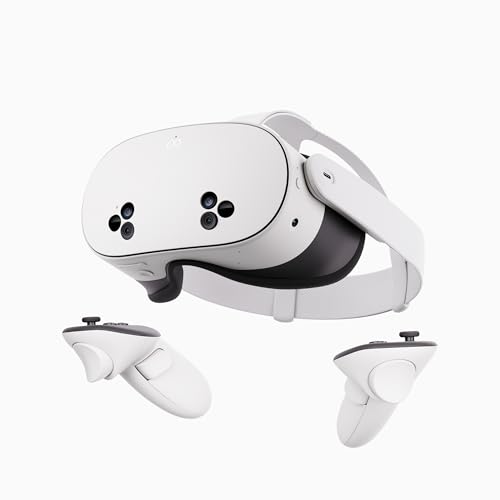
Meta Quest 3S 128GB | VR Headset — Thirty-Three Percent More Memory — Virtual Reality Without Wires — Access to 40+ Games with a 3-Month Trial of Meta Horizon+ Included (Renewed Premium)
- Wireless VR Experience: Untethered gaming and exploration
- Enhanced Graphics Power: Twice the processing for smooth visuals
- Immersive Virtual Reality: Blend virtual objects with real space
As an affiliate, we earn on qualifying purchases.
As an affiliate, we earn on qualifying purchases.
Growing Enterprise Adoption of VR and AR Technologies
Over the past few years, VR and AR have been primarily associated with gaming and entertainment. However, recent developments indicate a shift toward enterprise applications. Companies like Immersed have reported increased interest from corporate clients seeking immersive solutions for remote work, training, and collaboration.
This trend aligns with broader industry movements, including investments in VR/AR startups and the release of more enterprise-focused hardware and software. Despite these advances, widespread adoption remains limited by high hardware costs and content creation challenges, with most deployments still in pilot or early phases.
Historically, the adoption of new workplace technologies has followed a pattern of initial experimentation, followed by gradual integration. The current momentum suggests VR and AR are entering this next phase, with more companies exploring their potential for everyday business use.
“The focus of VR and AR is shifting from gaming to transforming how we work, collaborate, and learn in the enterprise space.”
— Renji Bijoy
Challenges and Barriers to Widespread Adoption
While there is optimism about the future of VR and AR in workplaces, several uncertainties remain. These include the pace of hardware cost reductions, user experience improvements, and the development of industry-specific content. It is not yet clear how quickly these barriers will be overcome or how deeply these technologies will penetrate various sectors.
Additionally, questions about data security, employee privacy, and the long-term impact on organizational culture are still being explored by researchers and industry leaders.
Next Steps for Enterprise VR and AR Integration
Industry analysts expect increased pilot programs and larger-scale deployments over the coming year as hardware prices decline and content ecosystems expand. Companies like Immersed are likely to continue developing enterprise-specific features and partnerships to facilitate broader adoption.
Monitoring how businesses address current challenges and the adoption rate of immersive tools will be key to understanding how VR and AR reshape the workplace in the near future. Further announcements from hardware manufacturers and enterprise software providers are anticipated in the coming months.
Key Questions
How soon will VR and AR become standard tools in workplaces?
It is uncertain; industry experts predict gradual adoption over the next 3-5 years, depending on hardware costs, content availability, and organizational willingness to invest.
What are the main benefits of VR and AR in the workplace?
Benefits include improved remote collaboration, enhanced training experiences, reduced travel costs, and more immersive design and planning processes.
What challenges do companies face in adopting VR and AR?
Challenges include high hardware costs, content development, user comfort, data security concerns, and ensuring accessibility for all employees.
Will VR and AR replace traditional offices?
Most likely not entirely, but they will complement existing workspaces, enabling more flexible and remote work arrangements.
Are there industries leading the adoption of VR and AR?
Yes, sectors like technology, manufacturing, healthcare, and education are at the forefront of integrating VR and AR into their workflows.
Source: rss