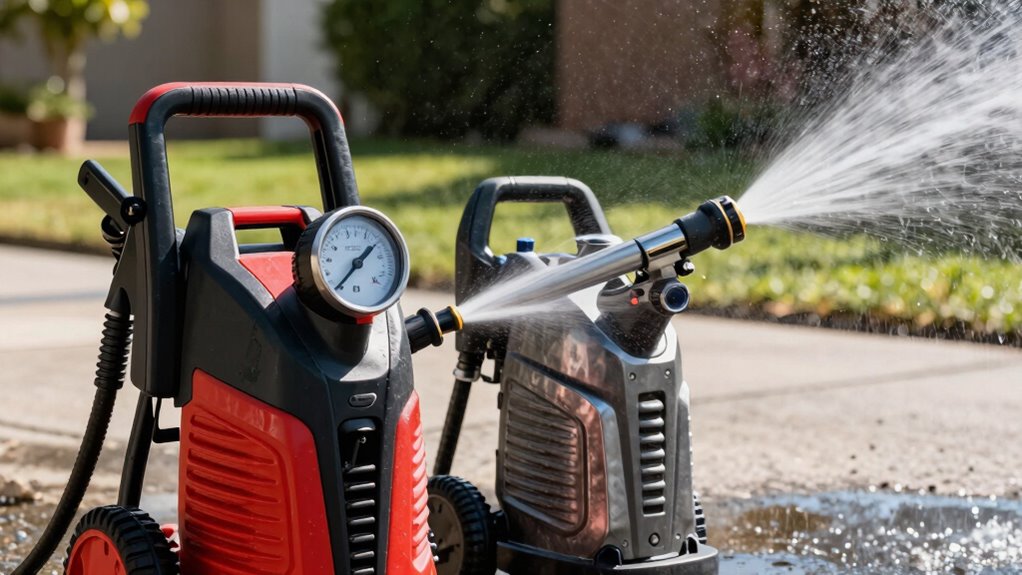

When choosing a pressure washer, don’t focus on PSI alone—higher pressure isn’t always better. You need a good balance between PSI (pressure) and GPM (flow rate) to clean efficiently without damaging surfaces or wasting water. For delicate materials, lower PSI with higher GPM works best, while tough stains on concrete need higher PSI. Understanding how these work together can save you time, money, and avoid mistakes—there’s more to discover that can make your cleaning smarter.

Get the latest gadgets delivered free — and shop member deals
- Fast, free delivery on millions of items
- Access to Prime Big Deal Days deals on October 6–7
- Prime Video, Amazon Music and more included
Key Takeaways
- Higher PSI doesn’t always mean better cleaning; optimal performance depends on the right balance with GPM.
- Many buyers focus solely on PSI, risking surface damage and inefficiency; consider GPM for effective cleaning.
- A higher GPM with moderate PSI can clean faster and more thoroughly than high PSI alone.
- Proper nozzle selection enhances the effectiveness of PSI and GPM settings for different surfaces.
- Prioritize environmental conservation by choosing pressure washers with appropriate flow rates to reduce water waste.
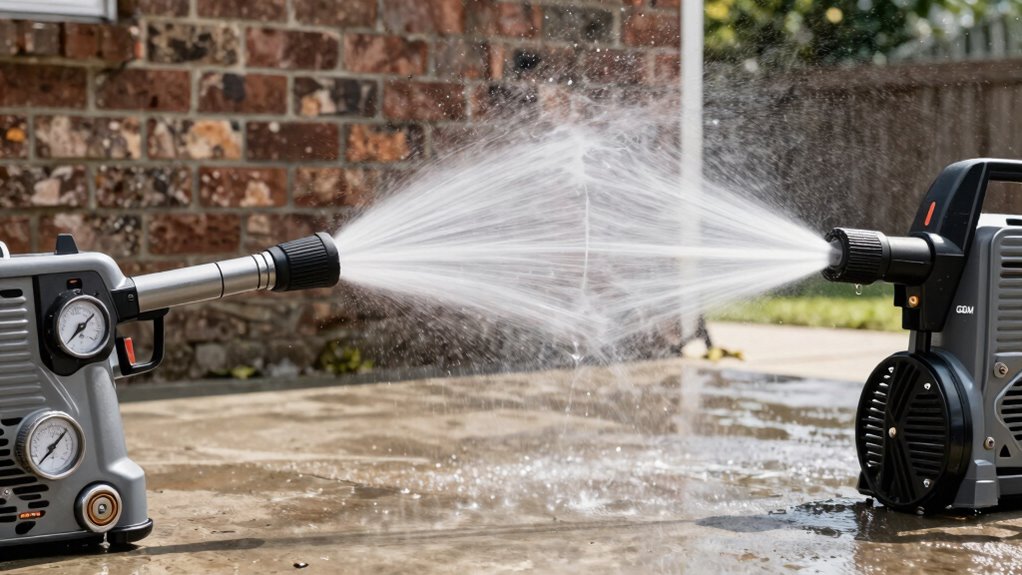
Have you ever wondered how to quickly and effectively clean stubborn dirt and grime from your exterior surfaces? When it comes to choosing a pressure washer, understanding the balance between PSI and GPM is key. Many people make the mistake of focusing solely on PSI—the pounds per square inch—thinking higher pressure always means better cleaning. But that’s not the whole story. The real magic lies in how PSI works with GPM, or gallons per minute, to deliver optimal cleaning power without damaging your surfaces or wasting water.
Before you even start, surface preparation is essential. You want to remove loose dirt and debris first, which makes the pressure washing process more efficient. Proper surface prep also helps you avoid unnecessary water waste. You don’t need high pressure to clean every surface; in fact, using too much pressure can damage delicate materials like wood or siding. Instead, think about matching the pressure to your surface type, which not only protects your property but also conserves water. Water conservation should be a priority, especially if you’re concerned about environmental impact or water costs. A pressure washer with a good GPM rating can clean more quickly and effectively, reducing the total water used.
Many buyers get caught up in the PSI number, believing that higher PSI guarantees cleaner results. While PSI determines the force of water hitting the surface, GPM controls how much water is delivered during each minute of use. A high PSI combined with a low GPM may actually waste water and take longer, because you’re applying intense pressure but not enough water to rinse away grime efficiently. Conversely, a machine with a moderate PSI but high GPM can produce faster, more thorough cleaning while conserving water. This balance helps you complete your job faster and with less water use, which is better for the environment and your water bill. Additionally, understanding the pressure and flow dynamics can help you select the most efficient equipment for different tasks. Knowing how these factors interact can also prevent you from overworking your machine or damaging your surfaces. Incorporating proper nozzle size can further optimize your cleaning process by ensuring the right focus and pressure for each job. To ensure maximum efficiency, it’s also helpful to consider the appropriate nozzle size that complements your PSI and GPM settings.
When choosing the right pressure washer, consider what surfaces you’ll be cleaning. For delicate surfaces, a lower PSI with higher GPM often works best. For tougher jobs, like concrete or heavy grime, a higher PSI combined with adequate GPM will do the trick. Remember, it’s not just about raw power but about matching the right pressure and flow to your task at hand. Proper surface preparation and water conservation go hand-in-hand with selecting the right pressure washer, ensuring you clean effectively without wasting resources or risking damage.
pressure washer with adjustable PSI and GPM
As an affiliate, we earn on qualifying purchases.
As an affiliate, we earn on qualifying purchases.
Frequently Asked Questions
How Do I Determine the Right PSI for My Cleaning Tasks?
To determine the right PSI for your cleaning tasks, consider the surface type and dirt level. Start with a lower PSI and adjust based on water temperature and nozzle selection. For delicate surfaces, use a lower PSI and a wide nozzle, while tougher jobs need higher PSI with a narrower nozzle. Always test in a small area first to avoid damage, ensuring effective cleaning without harm.
Can High GPM Damage Delicate Surfaces?
Yes, high GPM can damage delicate surfaces because increased water flow can cause surface sensitivity and even water damage. When using a pressure washer with a high GPM, you need to be cautious and adjust the nozzle or pressure settings to avoid harming fragile materials like wood, painted surfaces, or siding. Always test on a small area first, and consider lower GPM options for delicate surfaces to prevent damage.
Is a Higher PSI Always Better for Pressure Washers?
A higher PSI isn’t always better for pressure washers because it doesn’t guarantee better cleaning efficiency. Instead, focus on the right pressure ratings for your surface to avoid damage. For delicate surfaces, lower PSI with higher GPM can clean more safely, while tough jobs might need higher PSI. Always match your pressure washer to the task, balancing pressure and flow for ideal cleaning without risking harm.
How Does Pressure Washer Size Affect Portability?
Like a knight’s steed, a smaller pressure washer offers better portability, making it easier to maneuver and store. When choosing size, consider equipment durability—smaller units are often lighter and less prone to wear. Storage considerations also matter; compact washers fit into tight spaces and are perfect for quick jobs. Larger models might handle more power but sacrifice portability, so pick based on your needs for convenience and strength.
What Safety Precautions Should I Take When Using High PSI?
When using high PSI pressure washers, always wear safety gear like goggles, gloves, and ear protection to prevent injuries. Keep your equipment well-maintained, checking hoses and connections for leaks or damage before use. Avoid pointing the spray at yourself or others, and never operate without reading the manual. Regular equipment maintenance guarantees safe operation, reducing the risk of accidents and prolonging your washer’s lifespan.
Conclusion
So, next time you’re eyeing that shiny new pressure washer, remember: it’s not just about PSI or GPM—think of it like choosing between a trusty steed and a blazing chariot. Don’t get caught in the trap of buying wrong, like a knight chasing a mirage. Instead, pick the right balance for your needs, and you’ll be conquering grime with the ease of a hero from legend. Happy cleaning, brave warrior!
Fall Picks
fall essentials
As an affiliate, we earn on qualifying purchases.