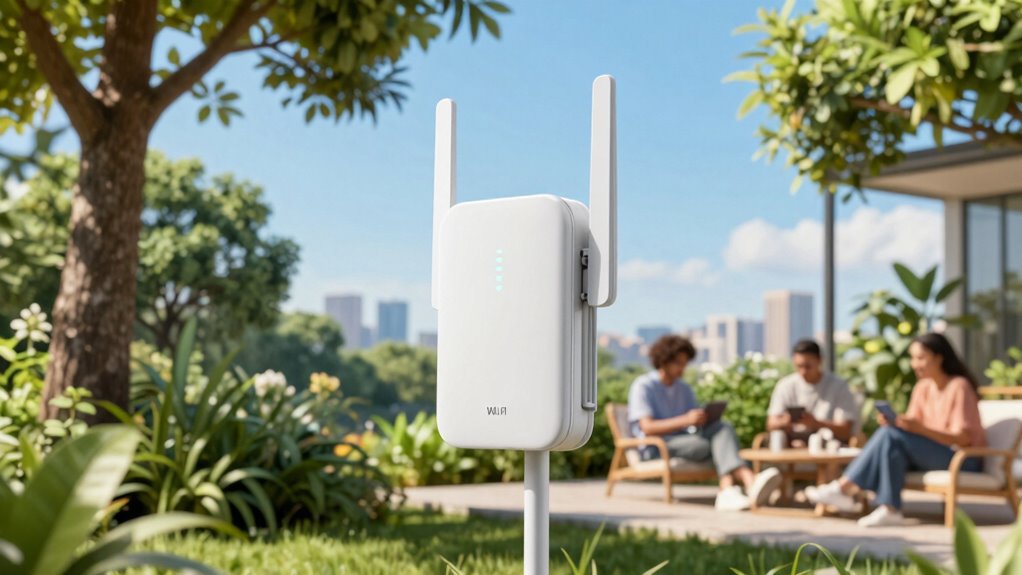

To extend your outdoor Wi-Fi without losing speed, use high-quality outdoor access points or mesh systems, and position them in open, elevated spots away from obstacles. Opt for dual-band routers that support 2.4 GHz and 5 GHz for better coverage and faster speeds. Regularly update firmware and choose channels wisely to minimize interference from nearby networks and devices. Investing in the right hardware and placement can help you enjoy seamless outdoor connectivity—more tips await if you keep exploring.

Get the latest gadgets delivered free with Prime
- Fast, free delivery on millions of items
- Prime Video, Amazon Music and more included
- Member-only deals all year
Key Takeaways
- Choose dual-band routers and access points to optimize coverage and maintain high speeds outdoors.
- Position devices in open, elevated spots away from obstructions and interference sources.
- Use mesh Wi-Fi systems for seamless, wide-area outdoor coverage.
- Regularly update firmware and optimize channel settings to reduce interference.
- Employ weatherproof hardware designed for outdoor conditions to ensure reliable performance.
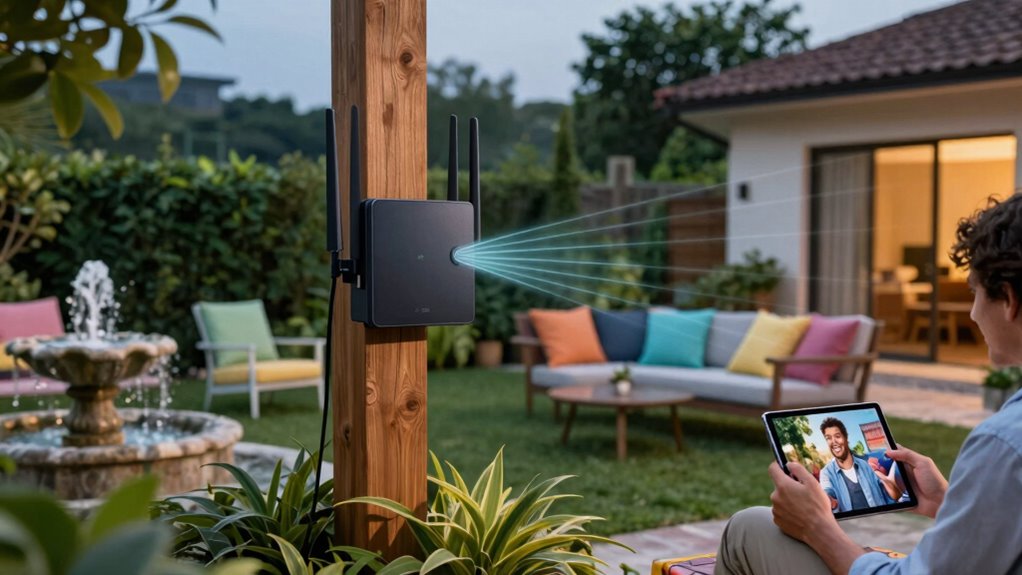
Outdoor Wi-Fi has become an essential feature for enhancing your outdoor experiences, whether you’re relaxing in your backyard, hosting a gathering, or working remotely from a patio. With reliable internet outside, you can stream movies, stay connected with friends, or handle work tasks without constantly running inside. However, setting up outdoor Wi-Fi isn’t just about extending your signal; it also involves guaranteeing security and minimizing disruptions. Wireless security is vital because outdoor networks are more vulnerable to hacking or unauthorized access. You want to encrypt your connection with strong passwords and enable network security features to protect your personal data. Additionally, using a guest network for visitors keeps your main network safer and prevents potential security breaches.
Another challenge you’ll face is signal interference. Outdoor environments are filled with obstacles—trees, walls, furniture—that can weaken your Wi-Fi signal. Plus, other electronic devices, neighboring networks, and even weather conditions can cause interference, reducing your internet speed. To combat this, you should choose a high-quality outdoor access point or Wi-Fi extender designed specifically for outdoor use. These devices are built to withstand weather elements and can broadcast stronger signals over larger areas. Position your equipment in open, elevated spots away from obstructions to maximize coverage and reduce interference. You might also consider dual-band routers that operate on both 2.4 GHz and 5 GHz frequencies. The 2.4 GHz band offers better range but is more prone to interference, while 5 GHz provides faster speeds with less interference but a shorter reach.
To extend coverage without sacrificing speed, strategically place your outdoor access points in areas where the signal tends to weaken. Installing mesh Wi-Fi systems can help create a seamless network, allowing devices to switch smoothly between nodes. This setup ensures you get consistent performance, whether you’re on the patio, poolside, or garden. Keep in mind that reducing signal interference isn’t just about hardware—antenna placement, channel selection, and avoiding sources of electromagnetic noise are equally important. Regularly update your device firmware to fix security vulnerabilities and improve performance. Understanding wireless security best practices can help protect your network from vulnerabilities. Additionally, conducting periodic interference assessments can help identify and mitigate sources of disruption, maintaining optimal network performance.
As an affiliate, we earn on qualifying purchases.
Frequently Asked Questions
How Does Outdoor Wi-Fi Handle Weather Resistance?
Outdoor Wi-Fi handles weather resistance by using weatherproof materials that protect its components from rain, snow, and humidity. These devices are designed to prevent signal degradation caused by weather conditions, ensuring reliable connectivity. You’ll find them sealed tightly and built with durable casings, which help withstand harsh elements. This way, your outdoor network remains strong and stable, even in adverse weather, without sacrificing speed or performance.
What Are the Legal Considerations for Outdoor Wi-Fi Deployment?
You definitely want to check the legal landscape before launching outdoor Wi-Fi. Ignoring regulatory compliance and licensing requirements can turn your project into a criminal comedy. Make sure you adhere to local laws, obtain necessary permits, and comply with spectrum regulations. Otherwise, you risk fines, equipment confiscation, or even a stern visit from the authorities. Play it smart, stay legal, and let your network thrive without legal drama stealing your thunder.
Can Outdoor Wi-Fi Networks Support Multiple Users Simultaneously?
Yes, outdoor Wi-Fi networks can support multiple users simultaneously. To do this effectively, you need to optimize user capacity and guarantee strong signal strength across the area. Proper placement of access points and using high-capacity equipment help maintain fast speeds for everyone. Regularly managing the network and upgrading hardware as needed ensures that multiple users enjoy reliable, high-quality connections without degrading overall performance.
How Secure Is Outdoor Wi-Fi Against Hacking Threats?
Your outdoor Wi-Fi isn’t invincible, but it’s not an open book either. With strong encryption protocols like WPA3, your network keeps hackers at bay, even when signal interference tries to muddy the waters. Regular updates and secure passwords act as your shield, ensuring your connection stays safe. Think of it as locking your doors; it’s not foolproof, but it considerably reduces the risk of falling prey to cyber threats.
What Is the Typical Maintenance Schedule for Outdoor Wi-Fi Equipment?
You should perform regular maintenance routines on outdoor Wi-Fi equipment, typically every three to six months, to guarantee peak performance. Check equipment durability by inspecting for physical damage, corrosion, or wear and tear. Clean vents and antennas to prevent dust buildup, update firmware to patch security vulnerabilities, and test signal strength. Scheduling these routine checks helps keep your outdoor Wi-Fi reliable, secure, and functioning at maximum speed.
Conclusion
With outdoor Wi-Fi, you’re opening a world of endless possibilities, bridging the gap between your devices and the great outdoors. Imagine your signal as a river flowing effortlessly, extending its reach without losing its strength. Don’t let dead zones or slow speeds hold you back—embrace the power of outdoor Wi-Fi and turn your space into a seamless, connected sanctuary. Because, after all, isn’t life better when everything’s just a click away?
Halloween Picks
halloween
As an affiliate, we earn on qualifying purchases.