
TL;DR

Get the latest gadgets delivered free — and shop member deals
- Fast, free delivery on millions of items
- Access to Prime Big Deal Days deals on October 6–7
- Prime Video, Amazon Music and more included
Virtual reality and augmented reality tools are now being used to improve heat pump installation efficiency. These technologies have been shown to cut workload and reduce installation time, marking a significant shift in industry practices. For a deeper dive, see how AI models are transforming industry efficiency. The development is confirmed and ongoing, with potential impacts on cost and safety. Learn more about AI and automation in industry.
Augmented reality (AR) tools are now being utilized by heat pump installers to significantly improve installation efficiency, reducing workload and time required for each unit, according to recent reports. This development marks a notable shift in how HVAC professionals are approaching complex installations, with confirmed benefits in productivity and safety.
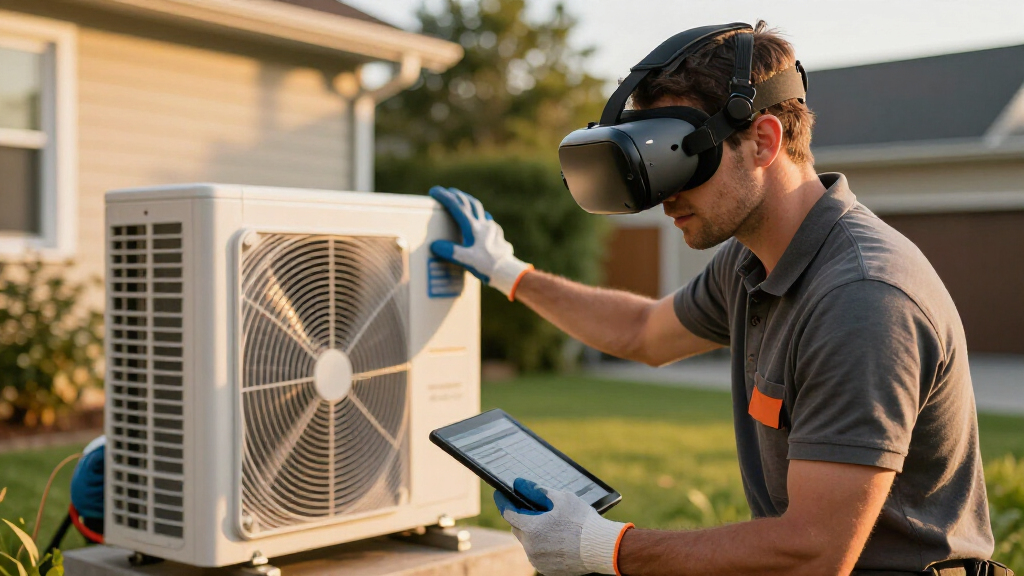
Recent industry reports indicate that augmented reality (AR) and virtual reality (VR) technologies are increasingly integrated into heat pump installation workflows. These tools provide installers with real-time, overlayed visual guidance, enabling them to perform tasks with greater precision and speed. The adoption of AR headsets and tablets allows technicians to see technical schematics, safety instructions, and step-by-step procedures directly overlaid onto physical components, reducing the need for manual referencing and minimizing errors.
According to an industry source, companies employing AR-assisted installation have reported a reduction in labor time by approximately 20-30%, with some projects completing in nearly half the typical duration. This efficiency gain is attributed to the improved accuracy and reduced rework, as installers can verify connections and placements visually during the process. The technology also enhances safety, as it provides real-time hazard alerts and procedural reminders, decreasing the risk of accidents.
While these tools are still being adopted across the industry, early feedback from installers suggests that AR and VR integration not only accelerates installation but also improves training outcomes. New technicians can learn procedures more quickly by following visual cues, which reduces onboarding times and enhances overall workforce capabilities. Experts note that the technology’s scalability and cost-effectiveness are key factors driving wider adoption.
How VR Technology Is Transforming Heat Pump Installation Efficiency
Augmented and virtual reality are bringing visual guidance into the field—helping heat pump technicians work with greater speed and precision while supporting safer procedures and faster training.
Less labor time in some AR-assisted projects
Headsets and tablets bring guidance on site
Visual checks can improve placement accuracy
Industry trials and wider rollout are ongoing
Guidance, right where the work happens
Instead of repeatedly consulting paper plans or screens, technicians can see instructions and reference information in context as they install.
See the next step
AR overlays can place schematics, connection details, and step-by-step procedures beside the physical equipment.
Catch issues earlier
Visual cues help confirm component placement and connections during installation, potentially reducing mistakes and repeat work.
Keep hazards in view
On-screen alerts and procedural reminders can reinforce safety steps while technicians work through complex tasks.
From digital plan to finished system
AR supports the hands-on job with live references. VR can help technicians rehearse procedures and build familiarity before field work.
Prepare
Review the model, site details, and installation sequence.
Guide
Follow visual instructions overlaid on equipment and components.
Verify
Check placements, connections, and safety steps as work progresses.
Learn
Use immersive practice and field feedback to build technician skills.
Early reports point to faster work
The available figure is an industry-reported range, not a guaranteed outcome across all installations.
Potential gains across the workforce
Digital guidance may affect cost, reliability, and how quickly new technicians become confident in the field.
Training that follows the task
Immersive practice and in-context visual cues can help new technicians learn procedures more quickly, complementing existing instruction and hands-on experience.
Efficiency that may reach customers
Fewer labor hours and less rework could lower installation costs and improve consistency. Better execution may also support dependable system performance over time.
Questions for the next phase
Wider adoption depends on whether field tools prove durable, useful, and cost-effective across different business sizes and work conditions.
Will smaller businesses see a return?
Device and integration costs vary. The business case depends on workload, project size, and how well the tools fit existing processes.
Can devices handle tough conditions?
Durability, usability, and comfort in demanding environments remain practical adoption concerns.
How will good practice be defined?
Further trials and industry guidance could clarify how AR-assisted procedures should be evaluated and applied.
What will long-term results show?
Larger-scale evaluations are needed to assess lasting effects on safety, training, productivity, and cost.
Impact of VR and AR on Heat Pump Installation Efficiency
The use of VR and AR in heat pump installation represents a meaningful advancement in HVAC technology, with potential to lower costs and improve safety standards. Faster installation times can reduce labor expenses, making heat pump systems more accessible and affordable for consumers. Additionally, the enhanced precision minimizes errors and rework, leading to more reliable system performance and longer lifespan.
This technological shift could also influence workforce training, allowing companies to onboard new technicians more efficiently and reducing dependency on extensive hands-on experience. As the industry moves toward digital integration, these tools may become standard practice, setting new benchmarks for efficiency and safety in HVAC installations.
As an affiliate, we earn on qualifying purchases.
Background of AR and VR Adoption in HVAC Industry
Over the past few years, augmented reality and virtual reality have gradually entered the HVAC sector, initially in training applications and remote diagnostics. The recent focus has shifted toward integrating these tools directly into installation workflows. Industry trials and pilot programs have demonstrated notable improvements in productivity and safety, prompting broader interest and investment.
Historically, heat pump installations have been labor-intensive, requiring skilled technicians to interpret complex schematics and perform precise connections. Errors can lead to increased costs and delays. The introduction of AR and VR aims to address these challenges by providing real-time, contextual guidance, reducing the likelihood of mistakes and streamlining the process.
Major HVAC manufacturers and service providers have begun testing AR headsets and mobile apps in field operations, with initial results showing promising reductions in installation times and improved accuracy. These developments align with the broader industry trend toward digital transformation and smart technology integration.
Unconfirmed Aspects and Future Adoption Challenges
While early reports are promising, it is not yet clear how widely AR and VR will be adopted across the entire industry or how cost-effective the technology will remain for small and medium-sized companies. Long-term impacts on workforce training and safety standards are still being studied, and some installers have raised concerns about device durability and usability in harsh environments. Additionally, the precise ROI for companies investing in these tools varies depending on project size and technology integration levels.
Next Steps for Industry-Wide Integration and Evaluation
Industry stakeholders plan to conduct larger-scale trials to evaluate the long-term benefits and cost implications of AR and VR tools in heat pump installation. Manufacturers are also working on developing more rugged, user-friendly devices tailored for field conditions. Regulatory bodies and industry associations may soon establish standards for AR-assisted installation practices, and further research is expected to refine these technologies for broader adoption.
Key Questions
How does AR technology improve heat pump installation?
AR provides real-time visual guidance, overlaying schematics and instructions directly onto physical components, which helps installers work faster and more accurately, reducing errors and rework.
Are these AR tools expensive for small businesses?
The cost varies, but early indications suggest that as technology matures, prices will decrease, making AR more accessible for a range of companies. Cost-effectiveness depends on project size and integration levels.
Will AR replace traditional training methods?
AR is expected to complement existing training by providing immersive, hands-on experience, potentially reducing training time and improving skill retention.
What safety benefits does AR offer during installation?
AR can display hazard alerts, procedural reminders, and safety instructions in real-time, helping prevent accidents and ensuring compliance with safety standards.
What are the main challenges to wider adoption?
Challenges include device durability in harsh environments, initial investment costs, and the need for industry standards and training for effective use.
Source: rss
Fall Picks
fall essentials
As an affiliate, we earn on qualifying purchases.