
TL;DR

Get the latest gadgets delivered free with Prime
- Fast, free delivery on millions of items
- Prime Video, Amazon Music and more included
- Member-only deals all year
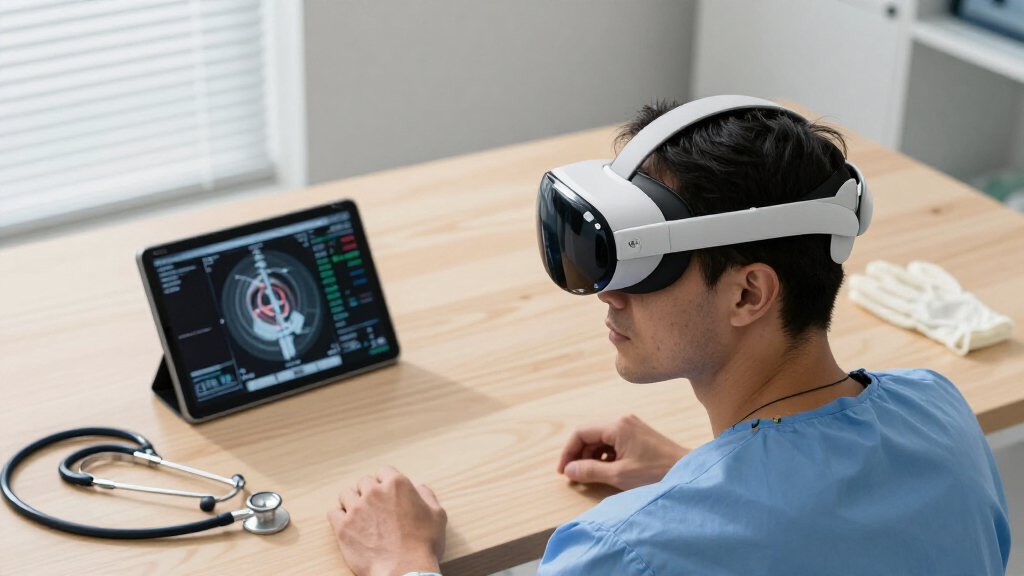
Apple’s Vision Pro headset is being tested for surgical applications, with Stryker submitting an FDA app demonstrating VR use in surgery. The development signals potential future integration of mixed reality in medical procedures, though details remain emerging.
Stryker has submitted an application to the U.S. Food and Drug Administration (FDA) for a new software platform that leverages Apple’s Vision Pro mixed reality headset to assist in surgical procedures. This marks one of the first known instances of a major medical device company exploring the use of Apple’s VR hardware for clinical applications, signaling a potential shift toward immersive, VR-assisted surgery in the healthcare industry.
The FDA submission by Stryker involves a dedicated app designed to integrate Apple Vision Pro’s mixed reality capabilities with surgical planning, intraoperative navigation, and training. Confirmed by Stryker representatives, the app aims to enhance surgeon visualization of anatomy and real-time data during procedures, potentially improving accuracy and reducing operative times. The submission underscores a broader interest in VR and AR technologies within the medical device sector, with Stryker positioning itself at the forefront of this innovation.
While specific technical details of the app remain proprietary, sources indicate that the platform uses the Vision Pro’s high-resolution displays and spatial mapping to overlay critical imaging data directly onto the surgeon’s view. The FDA application is currently under review, with no official approval granted yet. Learn more about the Vision Pro’s capabilities. Stryker has indicated that this development is part of ongoing research and development efforts to explore how mixed reality can transform surgical workflows.
Exploring VR in Apple Vision Pro Surgery
Stryker’s reported FDA submission points toward a future in which spatial computing supports surgical planning, anatomical visualization, navigation, and training. The promise is substantial—but approval, clinical validation, and adoption remain unresolved.
Where spatial computing could enter the operating workflow
The reported platform combines Vision Pro’s spatial mapping and displays with medical software. Detailed functionality remains proprietary, so these areas should be understood as intended or potential capabilities—not confirmed clinical outcomes.
Spatial planning
Three-dimensional imaging could help surgeons examine anatomy, rehearse approaches, and identify critical structures before an operation begins.
Visual guidance
Relevant scans or procedural data could be positioned within the surgeon’s field of view, reducing the need to look away at separate displays.
Immersive training
Interactive simulations and shared spatial views could support rehearsal, instruction, and repeatable training without involving a live patient.
From application to clinical adoption
A regulatory submission is an early milestone. Routine use would require several connected stages, each carrying its own evidence and implementation demands.
Software scope, intended use, and supporting documentation enter regulatory review.
Safety, performance, risk controls, and clinical claims are evaluated.
Trials or pilot programs test effectiveness in realistic surgical settings.
Hospitals connect imaging, navigation, training, and support workflows.
Clinical teams establish training, governance, maintenance, and routine use.
Critical distinction: submission does not equal clearance or approval. Timelines, permitted claims, exact features, and availability remain uncertain until regulators and the developer provide formal details.
What the development signals—and what it does not
| Question | Current signal | Potential value | Evidence still needed |
|---|---|---|---|
| Can surgeons view spatial medical data? | ✓ PLAUSIBLE Enabled by high-resolution displays and spatial mapping. |
More intuitive anatomical context and fewer shifts to remote screens. | Accuracy, latency, registration stability, and usability data. |
| Can it improve surgical precision? | ~ UNPROVEN A stated or inferred objective rather than a confirmed result. |
Better targeting and clearer visualization of critical structures. | Controlled clinical comparisons and procedure-specific outcomes. |
| Can it shorten operating time? | ~ UNPROVEN Workflow gains are possible but not established. |
Faster access to information and more efficient navigation. | Time studies that include setup, calibration, and troubleshooting. |
| Is widespread clinical use approved? | ✗ NOT CONFIRMED The application is described as being under review. |
Future deployment across selected surgical specialties. | Regulatory decision, labeling, training rules, and hospital readiness. |
| Will it replace conventional surgery? | ✗ UNLIKELY The headset is best understood as an assistive layer. |
Additional guidance while preserving established surgical methods. | Clear human-factors standards and safe fallback procedures. |
The strongest use cases are visual—but readiness varies
These relative indicators summarize the opportunity described in the source material. They are editorial assessments, not clinical performance scores.
Clinical maturity
The regulatory decision is only one part of the story
What happens when the system fails?
Clinical use requires clear responses to tracking errors, display interruption, battery limits, network failure, and inaccurate overlays.
Can surgeons use it without added distraction?
Testing must address fatigue, visual overload, disorientation, sterility constraints, and delays in critical decisions.
Which outcomes actually improve?
Claims about precision, operating time, recovery, and patient outcomes need procedure-specific clinical validation.
Can hospitals integrate it responsibly?
Adoption depends on compatibility with imaging systems, staff training, cybersecurity, maintenance, and purchasing priorities.
A meaningful signal, not yet a clinical revolution
Stryker’s reported FDA application suggests that mixed reality is moving closer to regulated surgical workflows. Vision Pro may become a powerful visualization and guidance layer, but its real value will be determined by formal review, clinical evidence, dependable safeguards, and successful hospital integration.
Implications of VR in Surgical Innovation
This development is significant because it suggests a future where surgeons might rely on immersive VR environments for enhanced visualization during operations. The integration of Apple’s Vision Pro into surgical workflows could lead to more precise procedures, shorter recovery times, and improved patient outcomes. Moreover, it signals a growing acceptance of consumer-grade VR hardware in clinical settings, which could lower costs and increase accessibility for advanced surgical tools.
Additionally, the partnership between a major tech company and a leading medical device firm like Stryker indicates a shift toward more technologically integrated healthcare, with potential ripple effects across training, preoperative planning, and intraoperative navigation. The FDA’s review process will be a key indicator of how quickly such innovations might become standard practice.
Apple Vision Pro VR headset for surgery
As an affiliate, we earn on qualifying purchases.
As an affiliate, we earn on qualifying purchases.
Background on VR and Surgical Technology Development
VR and AR have been explored in medicine for several years, primarily in training and simulation. However, recent advances in commercial VR hardware, such as Apple’s Vision Pro, have opened new possibilities for real-time surgical assistance. Stryker’s interest in this space aligns with broader industry trends aiming to incorporate immersive visualization tools into clinical workflows. Prior to this, companies like Microsoft and Magic Leap have demonstrated AR applications for surgery, but Apple’s entry introduces a new level of high-fidelity, consumer-grade hardware into the field.
The FDA’s involvement in reviewing medical device software that utilizes VR/AR is part of an evolving regulatory landscape. As of now, few applications have received approval, making Stryker’s submission notable as a potential pioneer in this domain. The timeline for approval and clinical adoption remains uncertain, with ongoing discussions around safety, efficacy, and training protocols.
Unclear Aspects of FDA Approval and Clinical Use
It is not yet clear when the FDA will complete its review of Stryker’s application or whether the platform will receive approval for widespread clinical use. Details about the specific functionalities, safety measures, and user training protocols of the app remain undisclosed. Additionally, the extent to which hospitals and surgical centers will adopt this technology, and how it will integrate with existing surgical systems, are still uncertain.
Next Steps in Regulatory Review and Clinical Trials
The FDA is expected to conduct a thorough review of Stryker’s application over the coming months. If approved, the company may initiate pilot programs and clinical trials to validate the technology’s safety and effectiveness. Broader adoption will depend on trial outcomes, regulatory clearance, and hospital readiness to incorporate VR tools into surgical workflows. Stryker and Apple may also collaborate on further research and development to refine the platform.
Key Questions
What is the Apple Vision Pro app for surgery?
The app is a software platform designed to utilize Apple’s Vision Pro mixed reality headset to assist surgeons with visualization, planning, and intraoperative guidance during procedures, though detailed functionalities are still under review.
When might VR-assisted surgery become common?
It depends on regulatory approval, clinical trial results, and hospital adoption. If the FDA approves Stryker’s platform soon, widespread use could still take several years as hospitals integrate new technology.
What are the potential benefits of VR in surgery?
VR could improve visualization, increase surgical precision, reduce operative times, and enhance training. However, these benefits need validation through clinical studies.
Are there risks associated with VR in surgery?
Potential risks include technical failures, user disorientation, or delays in critical decision-making. Safety and efficacy assessments are ongoing as part of the regulatory review process.
Will this technology replace traditional surgical methods?
Likely not entirely. VR is expected to complement existing techniques, providing additional visualization and guidance rather than replacing manual skills.
Source: rss
Halloween Picks
halloween
As an affiliate, we earn on qualifying purchases.