Choosing the right dehumidifier depends heavily on your room size, humidity levels, and noise tolerance. The AEOCKY 50-Pint Dehumidifier stands out as the best overall pick for most households due to its balance of capacity, continuous drainage, and energy efficiency. For those needing heavy-duty moisture removal, the ALORAIR 180-Pint Commercial Dehumidifier offers industrial-grade power, while the ToLife Dehumidifier provides a quiet, compact solution for bedrooms. The main tradeoff you will face is between extraction power and noise levels; higher capacity units tend to be louder and bulkier. Continue reading for a detailed breakdown of these options and nine other strong contenders to help you decide which model fits your specific living space.

Get the latest gadgets delivered free with Prime
- Fast, free delivery on millions of items
- Prime Video, Amazon Music and more included
- Member-only deals all year
Complete the kit


Key Takeaways
- The AEOCKY 50-Pint model offers the best balance of coverage area (3,000 sq. ft.) and practical features like a drain hose, making it the most versatile choice for typical homes.
- Commercial-grade units like the ALORAIR 180-Pint are overkill for standard rooms but essential for basements with severe water intrusion or large open floor plans.
- Compact units like the ToLife and PSOS models prioritize sleep mode and low noise over raw extraction power, making them ideal for bedrooms but poor choices for wet basements.
- Energy Star certification, found in models like the KNKA and Ludatido 80-Pint units, correlates with lower long-term operating costs despite sometimes higher upfront hardware complexity.
- Many smaller units (under 50 pints) lack continuous drain options or have small tanks (under 1 liter), requiring frequent manual emptying that negates their convenience factor.
| AEOCKY 50-Pint Dehumidifier for Up to 3,000 Sq. Ft. with Drain Hose |  | Best Compact Compressor Pick | Moisture removal: Up to 50 pints per day at 95°F and 95% RH | Coverage: Up to 3,000 sq. ft. | Tank capacity: 0.5 gal | VIEW ON AMAZON | See Our Full Breakdown |
| ALORAIR 180-Pint Commercial Dehumidifier with Pump |  | Best for Commercial Spaces | Capacity: 180 pints per day at saturation; 85 PPD at AHAM | Coverage area: Up to 2,300 sq. ft. | Airflow: 210 CFM | VIEW ON AMAZON | See Our Full Breakdown |
| ToLife Dehumidifier with 95 oz Tank, Sleep Mode, and Auto Shutoff |  | Best for Quiet Bedrooms | Coverage: Up to 1,000 sq. ft. | Water tank capacity: 95 oz | Technology: Semiconductor condensation | VIEW ON AMAZON | See Our Full Breakdown |
| Compact Dehumidifier for Home, Up to 1,000 Sq. Ft. |  | Best Compact Pick with Drainage Choice | Coverage area: Up to 1,000 sq. ft. | Dehumidification capacity: 1 L/day | Tank capacity: 98 fl oz (2.5 L) | VIEW ON AMAZON | See Our Full Breakdown |
| KNKA Energy Star Dehumidifier, Up to 80 Pints per Day, for Spaces up to 5,500 Sq. Ft. |  | Best for Large Homes | Certification: Energy Star | Coverage: Up to 5,500 sq. ft. | Dehumidification capacity: Up to 80 pints/day at 95°F, 95% RH; 56 pints/day at 86°F, 80% RH | VIEW ON AMAZON | See Our Full Breakdown |
| Ozeeco 34-Pint Dehumidifier with Drain Hose |  | Best for Compact Refrigerant Capacity | Dehumidification capacity: 34 pints per day | Recommended area: Up to 2,500 sq. ft. | Humidity control: 30%–80% | VIEW ON AMAZON | See Our Full Breakdown |
| Ludatido 80-Pint Energy Star Dehumidifier for Home |  | Best for Large, Persistently Damp Areas | Dehumidification capacity: 80 pints per day | Stated coverage: Up to 5,000 sq. ft.; product data also lists a conflicting 0.1-square-meter area | Humidity setting range: 30%–80% | VIEW ON AMAZON | See Our Full Breakdown |
| TABYIK 35 oz Dehumidifier with Auto Shut-Off |  | Best for Quiet, Small-Room Spot Control | Dehumidification capacity: 0.45 liters (16 oz) per day | Coverage area: 280 sq. ft. | Tank capacity: 1,000 ml (35 oz) | VIEW ON AMAZON | See Our Full Breakdown |
| AEOCKY 50-Pint Dehumidifier with Drain Hose |  | Best Mid-Range Capacity with Included Hose | Moisture removal: Up to 50 pints/day at 95°F and 95% RH; 38 pints/day at 86°F and 80% RH | Recommended area: Up to 3,500 sq. ft. (listed in product title) | Tank capacity: 0.8 gallons | VIEW ON AMAZON | See Our Full Breakdown |
| ToLife Dehumidifier, 1000 Sq Ft, 95 oz Tank, Sleep Mode and Auto Shutoff |  | Best for Quiet Portable Room Use | Coverage area: Up to 1,000 sq. ft. | Tank capacity: 95 fl. oz. | Modes: Two speeds: powerful and sleep | VIEW ON AMAZON | See Our Full Breakdown |
| AEOCKY RHEA-001 80-Pint Dehumidifier |  | Best Overall for Large Spaces | Type: Compressor dehumidifier | Coverage Area: Up to 5,500 sq. ft. | Capacity: 80 pints/day (95°F/95% RH) | VIEW ON AMAZON | See Our Full Breakdown |
| PSOS Quiet Home Dehumidifier |  | Best for Quiet Sleep Environments | Type: Semiconductor dehumidifier | Coverage Area: Up to 1,000 sq. ft. | Tank Capacity: 98 oz | VIEW ON AMAZON | See Our Full Breakdown |
| BEDRED 95 oz Dehumidifier | 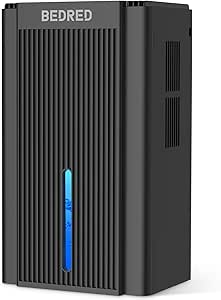 | Best Compact for Small Rooms | Brand: BEDRED | Type: Semiconductor dehumidifier | Coverage Area: Up to 1,000 sq. ft. | VIEW ON AMAZON | See Our Full Breakdown |
| Onsekin CS08 Dehumidifier |  | Best for Continuous Drainage | Brand: Onsekin | Model: CS08 | Technology: Semiconductor condensation | VIEW ON AMAZON | See Our Full Breakdown |
| NineSky CT2 Dehumidifier |  | Best for Portability | Brand: NineSky | Model: CT2 | Coverage Area: 1,000 sq. ft. | VIEW ON AMAZON | See Our Full Breakdown |
| dehumidifier | Tank capacity | Dimensions | Coverage area |
|---|---|---|---|
| AEOCKY 50-Pint Dehumidifier fo | 0.5 gal | 8.03 × 11.1 × 15.75 in | — |
| ALORAIR 180-Pint Commercial De | — | 22.8 × 13.7 × 17.3 in | Up to 2,300 sq. ft. |
| ToLife Dehumidifier with 95 oz | — | 8.27 × 5.55 × 13.78 in | — |
| Compact Dehumidifier for Home | 98 fl oz (2.5 L) | 7.88 × 6.25 × 13.98 in | Up to 1,000 sq. ft. |
| KNKA Energy Star Dehumidifier | — | — | — |
| Ozeeco 34-Pint Dehumidifier wi | 0.45 gallons (3.6 pints) | 10.63 × 6.69 × 15.75 in | — |
| Ludatido 80-Pint Energy Star D | 1.72 gallons | — | — |
| TABYIK 35 oz Dehumidifier with | 1,000 ml (35 oz) | 5.9 × 5.9 × 10.1 in | 280 sq. ft. |
| AEOCKY 50-Pint Dehumidifier wi | 0.8 gallons | — | — |
| ToLife Dehumidifier | 95 fl. oz. | Conflicting listings: 8.27 × 5.55 × 13.78 in and 14 × 6 × 9 in | Up to 1,000 sq. ft. |
| AEOCKY RHEA-001 80-Pint Dehumi | — | 14.45 × 8.66 × 24.09 in | Up to 5,500 sq. ft. |
| PSOS Quiet Home Dehumidifier | 98 oz | 9.44 × 5.9 × 14.17 in | Up to 1,000 sq. ft. |
| BEDRED 95 oz Dehumidifier | 95 fl oz | 6.7 × 8.7 × 14.6 in | Up to 1,000 sq. ft. |
| Onsekin CS08 Dehumidifier | — | — | — |
| NineSky CT2 Dehumidifier | 95 oz | — | 1,000 sq. ft. |
More Details on Our Top Picks
AEOCKY 50-Pint Dehumidifier for Up to 3,000 Sq. Ft. with Drain Hose
The AEOCKY pairs compressor-level capacity with a notably compact body, making it a better fit for a utility corner or tight basement than the much larger ALORAIR commercial unit. Its stated removal rate is up to 50 pints per day under hot, very humid test conditions, and it is designed for spaces up to 3,000 square feet. The included gravity-drain hose and garden-hose adapter can spare you frequent tank trips if there is a suitable drain nearby. Without continuous drainage, though, the 0.5-gallon tank is small for a machine of this capacity. Auto humidity control, constant-humidity, sleep, and laundry-drying modes add flexibility, but the supplied details do not substantiate noise or efficiency claims with independent measurements. I’d choose it for strong capacity in limited floor space, not for hands-off use without a drain.
Pros:- Compact dimensions for a compressor model designed for spaces up to 3,000 square feet
- Includes a gravity-drain hose and garden-hose adapter for continuous drainage
- Multiple modes cover humidity control, sleep, and laundry drying
- Brushless DC inverter motor
Cons:- The 0.5-gallon tank can require frequent emptying when continuous drainage is unavailable
- Noise and efficiency claims are not backed by independent measurements in the supplied information
Best for: Homeowners who need compressor dehumidification for a basement or utility area but have limited floor space and a nearby drain.
Not ideal for: People without a convenient drain who want infrequent tank emptying, or buyers who need independently verified noise and efficiency figures.
- Moisture removal:Up to 50 pints per day at 95°F and 95% RH
- Coverage:Up to 3,000 sq. ft.
- Tank capacity:0.5 gal
- Dimensions:8.03 × 11.1 × 15.75 in
- Drainage:Included gravity-drain hose and garden hose adapter for 3/4-in hose
- Modes:Continuous, Sleep, Auto (45%–55%), Constant Humidity (40%–80%)
- Motor:Brushless DC inverter motor
Our verdict“Choose the AEOCKY if you want substantial compressor capacity in a compact footprint and can use its included drain setup.”
ALORAIR 180-Pint Commercial Dehumidifier with Pump
The ALORAIR is the heavy-duty choice here: its listed capacity reaches 180 pints per day at saturation, with an AHAM figure of 85 pints per day, making it a different class of machine from the residential AEOCKY 50-pint model. A built-in pump and 19.6-foot drain hose let it move condensate to a drain as high as 14.7 feet, useful when gravity drainage will not work. Automatic defrost and auto-restart reduce the need for frequent monitoring, while adjustable humidity control gives operators more control over a work area. The tradeoff is substantial: at 64.3 pounds, it is not easy to reposition, and its coverage rating is lower than the KNKA’s despite its commercial capacity. Defrost cycles can also reduce moisture removal. I’d reserve it for demanding workspaces rather than ordinary rooms.
Pros:- High stated capacity, with both saturation and AHAM figures provided
- Built-in pump and long hose support drainage where gravity flow is impractical
- Automatic defrost and auto-restart reduce routine monitoring
- ETL safety certification and a limited 6-year warranty
Cons:- Weighs 64.3 pounds, making relocation difficult
- Moisture removal can decrease during automatic defrost cycles
- Its up-to-2,300-square-foot coverage is less than the KNKA’s stated coverage
Best for: Contractors, property managers, and owners of damp commercial or work spaces who need pump-assisted drainage and high-capacity moisture removal.
Not ideal for: People seeking a lightweight household unit, or anyone who does not need commercial-level capacity and controls.
- Capacity:180 pints per day at saturation; 85 PPD at AHAM
- Coverage area:Up to 2,300 sq. ft.
- Airflow:210 CFM
- Dimensions:22.8 × 13.7 × 17.3 in
- Weight:64.3 lb
- Power:646 W
- Drainage:Built-in pump; 19.6-ft hose; maximum drain height 14.7 ft
- Features:Automatic defrost, adjustable humidity control, digital display, and auto-restart
- Warranty and certification:Limited 6-year warranty; ETL
Our verdict“Pick the ALORAIR for demanding commercial spaces where its built-in pump and high capacity matter more than portability.”
ToLife Dehumidifier with 95 oz Tank, Sleep Mode, and Auto Shutoff
For a bedroom or small enclosed room, the ToLife puts quiet operation and compact handling ahead of high moisture-removal output. Its semiconductor condensation system has a low-speed sleep mode listed below 30 dB, and the unit shuts off when the tank is full or incorrectly positioned. That makes it a more bedroom-oriented option than the 1 L/day compact model with hose drainage, which gives a more clearly stated capacity and continuous-drain choice. The ToLife’s 95 oz tank and portable dimensions suit occasional use, while its seven-color light can double as ambient lighting. The main limitation is the missing moisture-removal figure: coverage is listed up to 1,000 square feet, but that alone does not show how quickly it can dry a space. I would not choose it for a damp basement or persistent moisture.
Pros:- Sleep mode is listed at less than 30 dB
- Shuts off when the tank is full or incorrectly positioned
- Compact dimensions and handles support portability
- Seven-color lighting can serve as ambient or night lighting
Cons:- No moisture-removal capacity is stated, making performance harder to compare
- Semiconductor technology may be less suited to large spaces or heavy moisture
- No continuous-drain option is listed
Best for: Light sleepers looking for a compact unit for a bedroom or other small room where quiet operation and automatic shutoff are priorities.
Not ideal for: People dealing with heavy, persistent dampness or anyone who needs a stated extraction rate to size a dehumidifier for a large space.
- Coverage:Up to 1,000 sq. ft.
- Water tank capacity:95 oz
- Technology:Semiconductor condensation
- Modes:Powerful mode and low-speed sleep mode
- Sleep-mode noise:Less than 30 dB
- Lighting:Seven color options
- Auto shutoff:When the tank is full or incorrectly positioned
- Dimensions:8.27 × 5.55 × 13.78 in
Our verdict“Choose the ToLife for quiet, light-duty bedroom use, but look to a compressor model for substantial dampness.”
Compact Dehumidifier for Home, Up to 1,000 Sq. Ft.
This compact model is the more practical choice than the ToLife when routine emptying is a concern: it supports both a 98 oz removable tank and continuous hose drainage. Its stated extraction rate is 1 L per day, giving buyers a concrete capacity figure that the ToLife listing does not provide, though it remains a light-duty appliance rather than a match for the AEOCKY compressor unit. At 5.5 pounds, with sleep mode below 30 dB and a carry handle, it can move between small rooms without much effort. A timer, reusable filter, and auto shutoff add useful day-to-day controls. Its up-to-1,000-square-foot coverage claim should not be read as evidence of fast drying: performance depends on the enclosed space, and 1 L per day is modest for serious dampness.
Pros:- Offers both removable-tank collection and included-hose continuous drainage
- Stated 1 L/day capacity makes it easier to compare with the ToLife, which gives no extraction figure
- Sleep mode is listed below 30 dB
- Lightweight 5.5 lb design with auto shutoff and reusable filter
Cons:- The 1 L/day capacity is modest for persistent or heavy moisture
- Actual performance may vary with the enclosed space
- Aroma slot and ambient lighting add features but do not increase moisture-removal capacity
Best for: Apartment dwellers or homeowners seeking a light, small-room unit with the option to drain continuously rather than empty the tank.
Not ideal for: People with a damp basement, large open-plan area, or moisture problem that calls for higher daily extraction than 1 L.
- Coverage area:Up to 1,000 sq. ft.
- Dehumidification capacity:1 L/day
- Tank capacity:98 fl oz (2.5 L)
- Drainage:Removable tank or included drain hose
- Noise:Below 30 dB in sleep mode
- Timer:8, 16, or 24 hours
- Power and weight:80 W; 5.5 lb
- Dimensions:7.88 × 6.25 × 13.98 in
- Features:Two fan speeds, reusable filter, aroma slot, seven-color LED light, and auto shutoff
Our verdict“Choose this model for light moisture in a small room when its hose-drain option and portable build are more useful than high capacity.”
KNKA Energy Star Dehumidifier, Up to 80 Pints per Day, for Spaces up to 5,500 Sq. Ft.
The KNKA is the broad-coverage residential option in this group, combining Energy Star certification with a stated capacity of up to 80 pints per day at 95°F and 95% RH. Its lower listed figure—56 pints per day at 86°F and 80% RH—also helps set expectations across different test conditions. Compared with the ALORAIR, it is aimed at a larger stated area and ordinary home use rather than commercial drying with a built-in pump. A 1.45-gallon tank, full-tank alert and shutoff, casters, and a 6.56-foot continuous-drain hose make ongoing use more manageable. The tradeoffs are that the optional 2.64-gallon external tank is sold separately, and it must stand upright for 24 hours before first use. Its 40–45 dB rating is not as quiet as the small bedroom-focused models.
Pros:- Energy Star certified and rated for up to 5,500 sq. ft.
- Provides capacity figures for two different temperature and humidity conditions
- Tank collection and included continuous-drain hose offer flexible setup
- Casters, washable filter, cord storage, child lock, and full-tank shutoff support household use
Cons:- Optional 2.64-gallon external tank is sold separately
- The 40–45 dB noise rating is higher than the compact models’ listed sleep-mode levels
- Must remain upright for 24 hours before first use
Best for: Households managing humidity across a large basement or home area that want a high-capacity residential unit with Energy Star certification and flexible drainage.
Not ideal for: Buyers seeking a very quiet bedroom appliance, a lightweight portable unit, or a larger external tank included in the box.
- Certification:Energy Star
- Coverage:Up to 5,500 sq. ft.
- Dehumidification capacity:Up to 80 pints/day at 95°F, 95% RH; 56 pints/day at 86°F, 80% RH
- Noise level:40–45 dB
- Internal tank:1.45 gal
- Drainage:6.56-ft (2 m) drain hose; optional 2.64-gal external tank sold separately
- Operating modes:Auto, Dry, and Setting
- Humidity setting range:30%–80% RH
- Other features:12-hour timer, washable reusable filter, child lock, casters, and full-tank alert and shutoff
Our verdict“Choose the KNKA for broad-area home dehumidification with efficient-operation certification and flexible drainage, rather than quiet bedroom use.”
Ozeeco 34-Pint Dehumidifier with Drain Hose
The Ozeeco OD10 offers a step up from small semiconductor units like the TABYIK DH-CS01: its stated 34-pint daily capacity suits damp areas where a tabletop model is unlikely to keep up. Its compact listed footprint and Sleep mode rated at 35 dB also make it a candidate for rooms where noise and floor space matter. For longer runs, the included drain hose avoids repeated tank trips, though its 3.28-foot length may limit where the unit can sit.
The main tradeoff is the 0.45-gallon tank, which is small for a unit with this stated capacity, so continuous drainage is the practical choice in humid conditions. The capacity figure is specified at 95°F and 90% relative humidity, not as a guaranteed rate in every room. Compared with the higher-capacity Ludatido 80-Pint, this is a more modest option for smaller areas, not a whole-home heavy-duty pick.
Pros:- 34-pint daily capacity is a substantial step above compact Peltier models.
- Included drain hose supports continuous drainage.
- Sleep mode is listed at 35 dB.
- Washable filter, auto defrost, timer, and child lock add useful operating controls.
Cons:- The 0.45-gallon tank can need frequent emptying without hose drainage.
- The stated capacity is based on hot, very humid test conditions and may not reflect typical room conditions.
- The 3.28-foot hose can restrict placement relative to a drain.
Best for: People with a damp bedroom, laundry area, or other smaller space who want a hose-drain option and quieter sleep operation.
Not ideal for: Buyers who need high-volume moisture removal across a large home or cannot place the unit near a drain; its capacity is below the Ludatido and its tank is small.
- Dehumidification capacity:34 pints per day
- Recommended area:Up to 2,500 sq. ft.
- Humidity control:30%–80%
- Tank capacity:0.45 gallons (3.6 pints)
- Drain hose length:3.28 ft
- Sleep mode noise:35 dB
- Dimensions:10.63 × 6.69 × 15.75 in
- Weight:8.8 kg
Our verdict“Choose the Ozeeco for a smaller damp space where refrigerant-style capacity and continuous drainage matter more than a large tank or whole-home output.”
Ludatido 80-Pint Energy Star Dehumidifier for Home
Among these five, the Ludatido 80-Pint has the highest stated moisture-removal capacity, making it the clearest fit for a large, persistently damp area rather than a bedroom corner. Its listed coverage reaches 5,000 square feet, and Energy Star certification gives efficiency-conscious buyers a useful distinction from the Ozeeco 34-Pint and the small-room TABYIK. Sleep, fan, dry, and continuous-dehumidification modes let buyers adapt operation to different tasks, while the 24-hour timer adds scheduling flexibility.
High output does not eliminate the need to plan for drainage: the 1.72-gallon tank can still require regular emptying, so its continuous-drain option is valuable for extended use. The 80-pint figure is specified at 95°F and 90% relative humidity, and the product data also contains a conflicting floor-area entry; I would verify room suitability before purchase. It is a much larger-capacity choice than the Ozeeco, but excessive for buyers managing only a small, mildly humid room.
Pros:- Stated 80-pint daily capacity suits heavy moisture loads better than the Ozeeco 34-Pint.
- Energy Star certification is a differentiator for efficiency-focused buyers.
- Continuous drainage supports longer operation without tank emptying.
- Multiple modes and a 24-hour timer allow varied operating schedules.
Cons:- The 1.72-gallon tank may need frequent emptying at high output if the drain option is not used.
- The product data gives conflicting floor-area information, so the coverage claim merits verification.
- Its large-area capacity may be unnecessary for a small bedroom or lightly damp room.
Best for: Owners of large basements or open home areas with persistent humidity who can use continuous drainage and want an Energy Star-certified unit.
Not ideal for: People seeking a small-room or portable bedside dehumidifier, or buyers who need unambiguous coverage information before choosing.
- Dehumidification capacity:80 pints per day
- Stated coverage:Up to 5,000 sq. ft.; product data also lists a conflicting 0.1-square-meter area
- Humidity setting range:30%–80%
- Tank capacity:1.72 gallons
- Drainage:Continuous drainage option
- Noise level:35 dB
- Operating modes:Sleep, fan, dry, continuous dehumidification
- Energy certification:Energy Star
Our verdict“Pick the Ludatido when a large, damp area calls for high stated capacity and continuous drainage, and verify the coverage details before buying.”
TABYIK 35 oz Dehumidifier with Auto Shut-Off
The TABYIK DH-CS01 is the small-room specialist in this group, not a substitute for a high-capacity unit. Its Peltier system collects up to 0.45 liters per day, while 28 dB operation and a compact 5.9-inch-square footprint make it easier to place in a bedroom, closet, or other modest space. The transparent tank shows the collected water, and auto shut-off at approximately 700–800 ml helps limit overflow. Compared with the refrigerant-style Ozeeco 34-Pint, it is quieter and smaller but removes far less moisture.
That distinction matters: the listed 280-square-foot coverage does not make this the right pick for a large basement or severe dampness. Its single operating speed offers little control, and the shut-off point arrives before the nominal 1,000 ml tank is full. Choose it for localized, lower-level humidity management; skip it if you need fast moisture removal or continuous drainage.
Pros:- Quiet listed operation at 28 dB suits noise-sensitive rooms.
- Compact dimensions and 2.2-pound weight make placement and moving easy.
- Transparent tank makes water level visible.
- Auto shut-off helps prevent overflow when the collection level is reached.
Cons:- Its 0.45-liter daily capacity is limited for substantial humidity problems.
- Auto shut-off activates around 700–800 ml, short of the tank’s stated 1,000 ml capacity.
- One operating speed provides little adjustment for changing conditions.
Best for: Apartment dwellers or light sleepers seeking a quiet, compact unit for a small bedroom, closet, or similarly limited space.
Not ideal for: People tackling a damp basement, multiple rooms, or heavy moisture; its Peltier capacity and single speed are modest beside the Ozeeco or Ludatido.
- Dehumidification capacity:0.45 liters (16 oz) per day
- Coverage area:280 sq. ft.
- Tank capacity:1,000 ml (35 oz)
- Auto shut-off:At approximately 700–800 ml
- Noise level:28 dB
- Power:40 W
- Dimensions:5.9 × 5.9 × 10.1 in
- Weight:2.2 lb
Our verdict“Choose the TABYIK for quiet, localized moisture control in a small room, not for large spaces or serious dampness.”
AEOCKY 50-Pint Dehumidifier with Drain Hose
The AEOCKY BOREAS-001 occupies the useful middle ground between the Ozeeco 34-Pint and the Ludatido 80-Pint: it lists up to 50 pints per day in hot, very humid conditions and gives a second capacity figure of 38 pints at 86°F and 80% relative humidity. That additional condition-specific figure helps set expectations better than a single headline number. A 2-meter gravity drain hose supports continuous drainage, while automatic defrost is relevant for cooler residential spaces.
Its 0.8-gallon tank is still modest for a unit intended to remove substantial moisture, so the hose matters if the room is damp for long periods. The unit is listed for up to 3,500 square feet, but the capacity figures are tied to particular conditions rather than a guaranteed daily result in every home. Compared with the Ludatido, it offers lower stated peak output; compared with the Ozeeco, it has a longer hose and higher output. The tank must remain installed during hose drainage.
Pros:- Stated capacity includes figures for both hot, very humid and less extreme conditions.
- Included 2-meter gravity hose offers more placement flexibility than the Ozeeco’s 3.28-foot hose.
- Automatic defrost supports use in cooler spaces.
- Humidity monitoring and a multicolor humidity indicator provide at-a-glance feedback.
Cons:- The 0.8-gallon tank may fill quickly during high-output operation.
- Continuous drainage requires the tank to remain installed.
- Its up-to-50-pint figure applies to hot, very humid conditions and will vary with room conditions.
Best for: Homeowners with a medium-to-large damp area who want a drain hose, automatic defrost, and capacity between the Ozeeco and Ludatido.
Not ideal for: Buyers who need a large onboard reservoir or do not have a suitable gravity-drain location; the tank is small and must stay installed during hose use.
- Moisture removal:Up to 50 pints/day at 95°F and 95% RH; 38 pints/day at 86°F and 80% RH
- Recommended area:Up to 3,500 sq. ft. (listed in product title)
- Tank capacity:0.8 gallons
- Drainage:2-meter gravity drain hose included
- Noise level:Approximately 40 dB
- Defrost:Automatic defrost
- Humidity monitoring:Humidity monitoring with multicolor ambient humidity indicator
- Drain adapter:3/4-inch GHT adapter stored in tank
Our verdict“Choose the AEOCKY when you want more capacity than the Ozeeco and a longer included drain hose without stepping up to the Ludatido’s 80-pint class.”
ToLife Dehumidifier, 1000 Sq Ft, 95 oz Tank, Sleep Mode and Auto Shutoff
The ToLife TZ-C2 is aimed at buyers who value quiet operation and a larger collection tank more than the moisture-removal figures associated with compressor-style models. Its semiconductor design has two speeds, including a Sleep mode below 30 dB, and automatic shutoff when the tank is full or incorrectly positioned. That combination suits a bedroom or frequently occupied room better than the louder high-capacity role of the AEOCKY BOREAS-001. The 95-ounce tank also holds more than the TABYIK’s 35-ounce tank, reducing how often it may need attention.
There are limits to that convenience: the product data does not give a daily removal capacity, and the stated 1,000-square-foot coverage should not be taken as proof of high-output performance. The tank still needs regular emptying, and the listed dimensions conflict between two sets of measurements. Compared with the TABYIK, this offers a larger tank and a second speed, but it is not the pick for heavy or widespread dampness.
Pros:- Sleep mode is listed below 30 dB for noise-sensitive rooms.
- 95-ounce tank is substantially larger than the TABYIK’s 35-ounce tank.
- Automatic shutoff responds to a full tank or incorrect tank placement.
- Two speeds and portable handles support flexible room use.
Cons:- No daily moisture-removal capacity is listed, making output difficult to compare with the Ozeeco or AEOCKY.
- The product information gives conflicting dimensions.
- The tank still requires regular emptying, and semiconductor output may not suit heavy dampness.
Best for: People seeking a portable, low-noise unit for a bedroom or living area who prefer a larger tank than the TABYIK provides.
Not ideal for: Buyers facing heavy dampness or needing dependable large-area moisture removal; no daily capacity is supplied, and the dimensions are inconsistent.
- Coverage area:Up to 1,000 sq. ft.
- Tank capacity:95 fl. oz.
- Modes:Two speeds: powerful and sleep
- Sleep mode noise:Less than 30 dB
- Power:93 W
- Dimensions:Conflicting listings: 8.27 × 5.55 × 13.78 in and 14 × 6 × 9 in
- Weight:2.66 kg
- Safety feature:Automatic shutoff when tank is full or incorrectly positioned
Our verdict“Pick the ToLife for quieter portable use and a larger tank in a modestly damp room, but choose a capacity-rated model for serious moisture problems.”
AEOCKY RHEA-001 80-Pint Dehumidifier
This unit stands out as the Best Overall choice for homeowners battling serious moisture in large areas. Unlike the compact PSOS Quiet Home Dehumidifier, which relies on slower thermoelectric cooling, this model uses a robust compressor to extract up to 80 pints daily. Its ENERGY STAR Most Efficient 2025 certification means it handles heavy loads without spiking your electricity bill, a critical factor for continuous operation in basements. The 44 dB noise level is remarkably low for a machine of this capacity, allowing it to run in living areas without becoming a distraction. However, its size and weight make it less portable than smaller units, so it is best left in one location rather than moved between rooms.
Pros:- High 80-pint daily capacity for rapid humidity control
- ENERGY STAR Most Efficient 2025 certification for lower running costs
- Quiet 44 dB operation suitable for living spaces
- Low-temperature defrost capability for cooler basements
Cons:- Large physical footprint limits placement options
- Heavier weight makes it less portable than compact models
- Tank capacity details are not explicitly stated
Best for: Homeowners with large basements or open-concept spaces up to 5,500 sq. ft. who need high-volume moisture removal and energy efficiency.
Not ideal for: Renters or those needing a portable unit for small bedrooms, as its 31-lb weight and large footprint make relocation difficult.
- Type:Compressor dehumidifier
- Coverage Area:Up to 5,500 sq. ft.
- Capacity:80 pints/day (95°F/95% RH)
- Noise Level:44 dB (minimum)
- Certification:ENERGY STAR Most Efficient 2025
- Dimensions:14.45 × 8.66 × 24.09 in
- Weight:31 lbs
- Material:Pure copper pipes
Our verdict“If you have a large, damp space and want efficient, high-capacity drying, this is the strongest performer in the lineup.”
PSOS Quiet Home Dehumidifier
For light sleepers, the PSOS Quiet Home Dehumidifier earns the title of Best for Quiet Sleep Environments. It operates at less than 30 dBA in sleep mode, significantly quieter than the AEOCKY RHEA-001 and other compressor models. The real-time humidity and temperature display adds a layer of control that many budget thermoelectric units lack, allowing you to monitor conditions directly from the device. While it shares the 1,000 sq. ft. coverage limit of the BEDRED 95 oz Dehumidifier, the PSOS offers superior user feedback through its digital interface. The tradeoff is its reliance on semiconductor cooling, which extracts moisture more slowly than compressor-based systems, making it better for maintenance than heavy-duty drying.
Pros:- Extremely quiet sleep mode below 30 dBA
- Real-time humidity and temperature display
- Auto-defrost system prevents ice buildup
- Compact footprint fits easily on nightstands
Cons:- No specified moisture removal rate per day
- Thermoelectric cooling is slower than compressor technology
- Tank requires frequent emptying in humid conditions
Best for: Individuals who need a silent unit for bedrooms or nurseries and value real-time humidity monitoring.
Not ideal for: Users in very wet climates or large basements who need rapid moisture extraction, as thermoelectric cooling is slower.
- Type:Semiconductor dehumidifier
- Coverage Area:Up to 1,000 sq. ft.
- Tank Capacity:98 oz
- Noise Level:< 30 dBA (Sleep Mode)
- Features:Humidity/Temperature Display, Auto Defrost
- Dimensions:9.44 × 5.9 × 14.17 in
- Min Operating Temp:41°F (5°C)
Our verdict“Choose this model if silence and real-time data are your top priorities over raw drying speed.”
BEDRED 95 oz Dehumidifier
The BEDRED 95 oz Dehumidifier positions itself as the Best Compact for Small Rooms due to its slim profile and straightforward design. It is a direct competitor to the NineSky CT2 Dehumidifier, both targeting the same 1,000 sq. ft. niche with similar tank sizes. However, the BEDRED distinguishes itself with a 220V voltage specification, which may require attention for users in regions with standard 110V outlets. Its thermoelectric cooling is energy-efficient and silent, making it ideal for closets or small bathrooms where a larger unit would be overkill. Unlike the Onsekin CS08, it lacks an included drain hose, meaning you must manually empty the 95 oz tank, which can be frequent in high-humidity areas.
Pros:- Slim design fits in tight spaces like closets
- Sleep mode reduces light and noise interference
- Automatic shutoff prevents overflow
- Low power consumption at 85W
Cons:- Listed at 220V, which may not fit standard US outlets
- No moisture removal rate specified
- Lacks a drain hose for continuous operation
Best for: Users with small, enclosed spaces like RVs, closets, or bathrooms who prioritize a slim footprint and low energy use.
Not ideal for: People in 110V regions without adapters, as the unit is listed at 220V, and those who want continuous drainage.
- Brand:BEDRED
- Type:Semiconductor dehumidifier
- Coverage Area:Up to 1,000 sq. ft.
- Tank Capacity:95 fl oz
- Power:85 W
- Voltage:220 V
- Dimensions:6.7 × 8.7 × 14.6 in
- Features:Auto Shutoff, Sleep Mode, 7-Color Light
Our verdict“This is a solid choice for small, specific areas if you verify your voltage requirements first.”
Onsekin CS08 Dehumidifier
The Onsekin CS08 Dehumidifier takes the Best for Continuous Drainage role by including a drain hose in the box. This feature allows for hands-free operation, a significant advantage over the BEDRED 95 oz Dehumidifier and NineSky CT2 Dehumidifier, which require manual tank emptying. The aromatherapy feature adds a unique dimension, allowing users to diffuse scents while drying the air, though this is secondary to its core function. Its 2 liters per day capacity is modest, suitable for light humidity control rather than heavy basements. The unit is lightweight at 5.5 lbs, making it easy to move, but the inconsistent dimension listings suggest potential fit issues in tight cabinetry.
Pros:- Includes a drain hose for continuous operation
- Lightweight at 5.5 lbs for easy portability
- Aromatherapy feature for scent diffusion
- Auto shut-off for full or misplaced tanks
Cons:- Inconsistent dimension data between description and specs
- Low daily capacity of 2 liters
- Tank must be correctly positioned to operate
Best for: Users who want to avoid emptying water tanks frequently and appreciate the bonus aromatherapy feature.
Not ideal for: Those needing high-volume drying in large rooms, as the 2-liter daily capacity is limited for heavy moisture.
- Brand:Onsekin
- Model:CS08
- Technology:Semiconductor condensation
- Daily Capacity:2 liters
- Sleep Noise:< 45 dB
- Weight:5.5 lbs
- Included:Drain Hose, Tank
- Modes:High Speed, Sleep
Our verdict“Ideal for maintenance drying where convenience and scent matter more than raw power.”
NineSky CT2 Dehumidifier
The NineSky CT2 Dehumidifier earns the Best for Portability distinction thanks to its built-in carry handle and manageable weight. Compared to the PSOS Quiet Home Dehumidifier, which is heavier and less mobile, the NineSky is designed to move between rooms easily. It specifies a 34 oz daily moisture removal rate, offering clearer expectations than the BEDRED 95 oz Dehumidifier, which leaves this metric vague. The 40 dB noise level is quiet enough for daytime use but louder than the PSOS in sleep mode. Its 95 oz tank is standard for this class, requiring regular attention, but the portability makes it a versatile helper for targeted drying in bedrooms or offices.
Pros:- Built-in carry handle for easy transport
- Specific 34 oz/day moisture removal rate
- Quiet operation at ≤40 dB
- Compact grey design fits modern decor
Cons:- Inconsistent dimension listings in product data
- Tank requires frequent emptying
- Noisy compared to sleep-mode specialists
Best for: Users who need to move the dehumidifier between rooms and want a clear understanding of its drying capacity.
Not ideal for: Those requiring silent nighttime operation, as 40 dB is audible compared to sub-30 dB models.
- Brand:NineSky
- Model:CT2
- Coverage Area:1,000 sq. ft.
- Tank Capacity:95 oz
- Moisture Removal:34 oz/day (86°F, 80% RH)
- Noise Level:≤40 dB
- Features:Carry Handle, Auto Shutoff, 7-Color Light
- Color:Grey
Our verdict“The most versatile portable option for users who value mobility and transparent performance specs.”

How We Picked
I evaluated these fifteen dehumidifiers based on extraction capacity relative to rated square footage, noise output levels, and practical usability features like continuous drainage and tank size. A model that claims high capacity but operates at a disruptive decibel level was penalized heavily, as it fails to serve its primary function in living spaces. I also prioritized units with Energy Star certification or efficient compressor designs, as running a dehumidifier 24/7 can significantly impact electricity bills.
Build quality and maintenance requirements were secondary but important factors. I looked for models with accessible filters, clear water level indicators, and robust pump mechanisms where applicable. The ranking reflects a hierarchy of utility: units that solve the most common homeowner problems (moderate humidity in medium-sized spaces) are ranked above niche solutions (tiny deskside units or massive commercial rigs) unless the specific use case demands them.
Factors to Consider When Choosing Dehumidifiers
Selecting a dehumidifier is not just about picking the biggest number on the box. It requires matching the machine’s output to your specific environmental conditions and lifestyle constraints. Here are the key factors that should drive your decision.
Sizing and Extraction Capacity
Manufacturers often list a ‘max’ square footage that assumes a moderately damp space. If your basement is severely wet or has standing water, you need a unit rated for a larger area than your actual square footage to compensate. For example, a 50-pint unit rated for 3,000 sq. ft. might struggle in a 1,000 sq. ft. space that is constantly wet. Under-sizing is the most common mistake; the unit will run continuously without ever reaching the desired humidity level, leading to burnout. Always round up your capacity needs if you have high moisture sources like laundry rooms or unsealed foundations.
Noise Levels and Sleep Modes
Dehumidifiers are essentially fans and compressors working together, which generates noise. For living areas like bedrooms or offices, look for models with a dedicated Sleep Mode or low-decibel ratings (typically under 45 dB). The ToLife and PSOS models in this roundup prioritize this aspect, reducing fan speed at the cost of extraction rate. If you plan to run the unit overnight, a commercial-grade machine like the ALORAIR will be disruptive. Consider the tradeoff: quieter units are less effective at removing large volumes of moisture quickly, so place them in smaller, enclosed rooms for best results.
Maintenance and Drainage Options
Emptying a water tank daily is tedious and leads to inconsistent humidity control if you forget. Continuous drainage via a hose is a superior feature for any unit used in a basement or laundry room. Many compact units lack a hose attachment point entirely, relying solely on small internal tanks. Even if a unit has a tank, check if it is transparent and easy to remove. Units with internal pumps, like the ALORAIR, allow you to drain water uphill to a sink or floor drain, offering flexibility that gravity-fed hose systems do not.
Energy Efficiency and Operating Costs
Dehumidifiers can run for hundreds of hours per year, making energy consumption a significant factor. Look for the Energy Star label, which indicates the unit meets strict efficiency guidelines. Models like the KNKA and Ludatido leverage this certification to keep operating costs down. However, efficiency also depends on usage patterns; a unit that cycles on and off frequently is more efficient than one running at full blast continuously. Use a hygrometer to monitor humidity levels and set your unit to maintain 30-50% relative humidity, which is the sweet spot for health and mold prevention without wasting energy.
Humidity Control and Hygrometers
Basic units run continuously until the tank is full, while advanced models feature built-in hygrometers that let you set a target humidity percentage. This ‘auto-humidistat’ feature is critical for preventing over-drying, which can cause static electricity and dry skin. If your chosen model lacks a built-in sensor, you will need to purchase a separate hygrometer and manually adjust the settings. For precise climate control, prioritize units with digital displays and programmable settings over simple dial-operated models, as they offer better responsiveness to changing humidity levels in the room.
Frequently Asked Questions
Do I really need a dehumidifier if I already have an air conditioner?
While air conditioners remove some moisture as a byproduct of cooling, they are not designed for humidity control. ACs focus on lowering temperature, and if the ambient air is already cool but damp (common in basements or spring/fall months), the AC may not run long enough to dehumidify effectively. A dedicated dehumidifier runs independently of the cooling cycle, allowing you to target moisture levels specifically. In cooler climates or unconditioned spaces like crawlspaces, an AC may not even operate, leaving the dehumidifier as the only viable option for mold prevention.
How often do I need to clean the filter and tank?
Filter cleaning frequency depends on dust levels in your home, but a general rule is to check it every two weeks. A clogged filter restricts airflow, reducing efficiency and potentially overheating the compressor. The water tank should be cleaned weekly to prevent mold and bacteria growth inside the reservoir, especially if you use a continuous drain hose. Units like the ALORAIR with commercial features may have washable, durable filters, whereas compact models often use disposable filters that need regular replacement. Neglecting this maintenance leads to musty odors and reduced extraction performance.
Can I use a dehumidifier in a room with no floor drain?
Yes, but you will need to manage the water collection manually or invest in a unit with a built-in pump. Most standard dehumidifiers rely on gravity, meaning the drain hose must slope downward to a drain or sump pit. If your room lacks a nearby drain, a unit with an internal pump, such as the ALORAIR 180-Pint, can push water up to a sink or outside window. Otherwise, you will be limited to emptying the internal tank daily, which is manageable for small units but impractical for high-capacity models that fill quickly.
Is a 50-pint dehumidifier enough for a whole basement?
It depends on the basement’s size and moisture severity. A 50-pint unit is typically rated for up to 3,000 sq. ft. in moderately damp conditions. If your basement is 1,500 sq. ft. and only slightly humid, a 50-pint model like the AEOCKY is likely sufficient. However, if the space is 2,000 sq. ft. and has wet walls or recent water damage, you should upgrade to an 80-pint or commercial-grade unit. Under-sizing leads to constant runtime without achieving the target humidity, causing wear on the compressor and failing to stop mold growth.
Do small desk-sized dehumidifiers actually work?
Small units using thermoelectric (Peltier) cooling or small compressors, like the TABYIK or Onsekin models, have very limited capacity, often less than a pint per day. They are effective only for tiny, enclosed spaces like closets, RVs, or single-person bedrooms with low humidity loads. They will not make a noticeable impact in an open living room or a damp basement. These devices are best viewed as supplementary moisture control for personal spaces rather than primary solutions for household humidity issues. If you need to dry out a room, stick to compressor-based units rated for at least 20-30 pints.
Conclusion
Choosing the right dehumidifier requires balancing capacity, noise, and convenience. For the average homeowner with a moderately damp basement or large living area, the AEOCKY 50-Pint Dehumidifier is the best overall choice due to its versatile coverage and practical drainage options. If you are dealing with severe water intrusion or a large commercial space, the ALORAIR 180-Pint Commercial Dehumidifier is the necessary premium option, despite its size and noise. For those prioritizing quiet operation in bedrooms or offices, the ToLife Dehumidifier offers the best value as a compact, low-noise solution. Beginners or those with small spaces should consider the PSOS Quiet Home Dehumidifier for its ease of use and low maintenance, while energy-conscious buyers will appreciate the KNKA Energy Star Dehumidifier for its long-term cost savings. Match your specific humidity challenges to these profiles to find the most effective tool for your home.