
To make the 3-2-1 backup rule work, keep three copies of your files: two locally on different devices and one off-site in the cloud. Use reliable, encrypted storage, and regularly verify that backups work, testing restores periodically. Avoid common pitfalls like neglecting encryption or relying solely on one backup method. Follow a clear process to set up, maintain, and recover your data confidently—continue exploring to learn every step.
Key Takeaways
- Keep three copies of your data: one primary, one local backup, and one off-site backup.
- Use different devices or locations for the local backups to prevent single-point failures.
- Regularly test your restore process to ensure backups are valid and recovery is quick.
- Encrypt all backups, especially cloud storage, to protect data from unauthorized access.
- Automate backups and keep backup software updated to maintain security and reliability.
What Is the 3-2-1 Backup Rule and Why Is It Important?

Have you heard of the 3-2-1 backup rule? It’s a simple yet effective strategy to protect your data. You should keep three copies of your files, with two stored locally on different devices, and one off-site, often in cloud storage. This approach guards against hardware failure, theft, or disasters. When using cloud storage, guarantee you apply strong encryption techniques to secure your backups from unauthorized access. Encryption keeps your data private, even if someone gains access to your cloud account. Following the 3-2-1 rule minimizes risk and ensures your data remains safe, no matter what happens. It’s a straightforward method that balances accessibility with security, giving you peace of mind knowing your important information is well protected. Additionally, understanding data redundancy helps reinforce the importance of multiple backup copies for comprehensive protection. Implementing off-site backups further enhances your overall data security strategy by diversifying storage locations. Recognizing the significance of disaster recovery planning can help you prepare for unforeseen events and maintain business continuity, especially when combined with natural backup strategies like physical copies kept in secure locations. Being aware of backup validation ensures your backups are reliable and ready to restore when needed.
How to Choose the Best Backup Devices for Your Needs
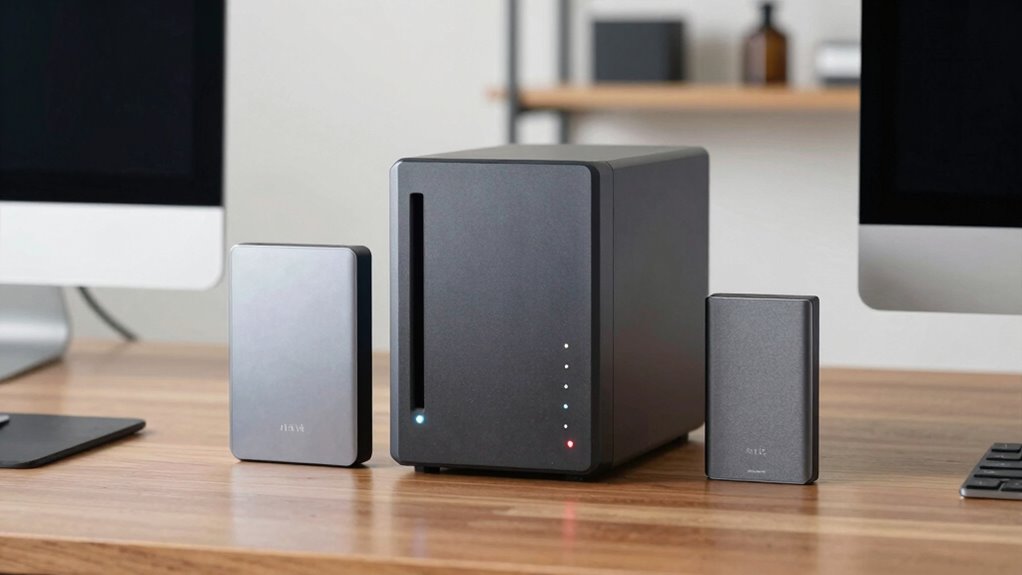
Selecting the right backup devices is crucial to guaranteeing your data stays protected and easily accessible. Consider cloud storage options for off-site backups that you can access from anywhere and easily scale up as needed. Cloud services often offer automated backups, making setup simple. External drives are ideal for local backups; they’re portable, cost-effective, and provide fast data transfer. When choosing between them, think about your storage needs, budget, and how quickly you need to restore files. Combining cloud storage and external drives aligns with the 3-2-1 rule, giving you both online access and physical copies. Ensure your devices are reliable, compatible with your system, and have sufficient capacity to meet your current and future backup requirements. Additionally, understanding the best woods for farmhouse tables can help if you’re considering physical storage options or creating a rustic storage solution. To optimize your backup system, it’s also helpful to understand the role of battery inverter generators in providing reliable backup power during outages, especially for critical electrical equipment or in remote locations. Incorporating redundant storage solutions can further enhance your data security and minimize the risk of data loss, particularly when considering whole-home water systems and their various backup options for continuous operation.
Step-by-Step: Setting Up Your 3-2-1 Backup System

Setting up your 3-2-1 backup system guarantees your data remains protected across multiple locations and device types. To begin, choose a reliable cloud storage provider that offers strong encryption methods to keep your files secure. Next, get an external drive for local backups, ensuring you store copies on different devices. Use these tips to set up your system:
- Store one backup in the cloud, using encryption methods for added security
- Keep a second copy on an external drive, disconnected when not in use
- Regularly update your backups to include new files
- Test your backups periodically to confirm data integrity
- Use strong passwords and encryption for all backup devices
- Incorporate redundant storage to enhance data resilience and recovery options. Also, consider utilizing automated backup tools to ensure consistent and timely backups without manual intervention. Incorporating off-site storage further secures your data against local disasters. Additionally, selecting backup solutions with built-in security features can provide an extra layer of protection for your critical data. To further improve your backup reliability, it’s important to choose solutions that are Vetted for security and performance.
Common Backup Mistakes You Should Avoid
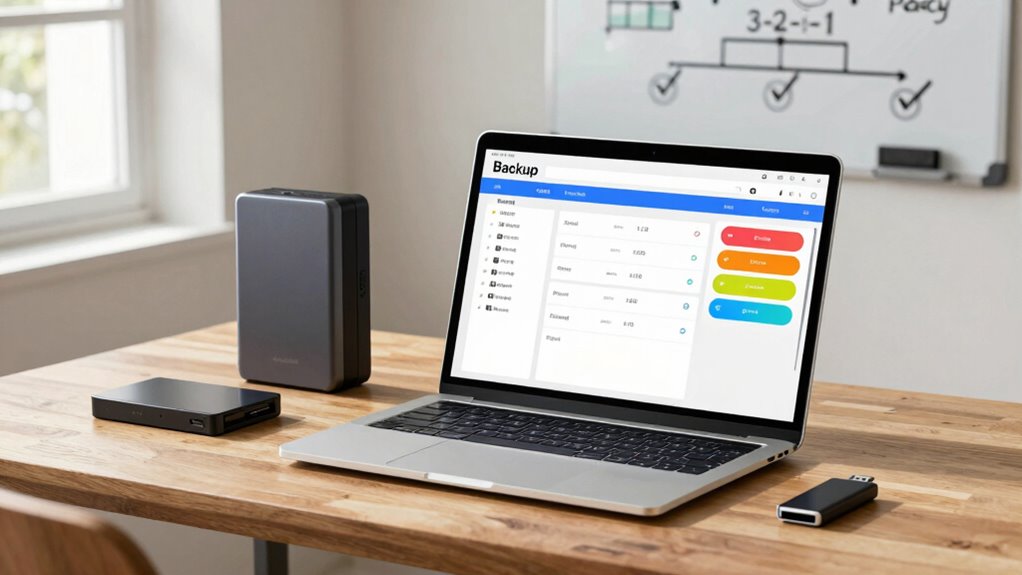
Even with a solid backup plan in place, it’s easy to make mistakes that compromise your data security. One common error is neglecting to use proper encryption techniques, leaving your backups vulnerable to theft or unauthorized access. Relying solely on cloud storage without encrypting sensitive files exposes them to potential breaches. Another mistake is assuming the cloud provider’s security is enough; you should implement additional encryption for added protection. Failing to verify backups or test restore processes regularly can also lead to surprises when you need data most. Avoid complacency by ensuring your backups are encrypted correctly and stored securely, whether on local drives or in the cloud. Vetting your backup procedures and ensuring the security measures are up to date helps prevent costly data loss due to overlooked vulnerabilities or misconfigured backup procedures. Staying vigilant and understanding encryption techniques is crucial to prevent costly data loss due to overlooked vulnerabilities or misconfigured backup procedures. Additionally, regularly updating security protocols can help address emerging threats and reinforce your backup security.
Developing a comprehensive understanding of backup encryption techniques ensures that sensitive data remains protected even if backups are compromised.
How to Keep Your Backup System Healthy and Up to Date

To keep your backup system healthy, you need to regularly check that backups are complete and working properly. Make sure your backup software stays up to date to protect against new threats and vulnerabilities. Don’t forget to test restore processes often to confirm you can recover data quickly when needed. Additionally, monitoring your website performance can help identify issues early that might affect backup integrity. Implementing requirements traceability practices can also ensure backup procedures align with compliance standards and organizational policies. Incorporating security scanning into your backup process helps detect potential vulnerabilities before they can be exploited. Being aware of early warning signs for data loss or corruption can further enhance your backup reliability. Incorporating a growth mindset approach can help your team adapt to evolving backup challenges and foster continuous improvement.
Regular Backup Checks
How often do you review your backup system to confirm it’s functioning properly? Regular checks ensure your backups remain reliable and secure. Start by verifying cloud synchronization, making sure files are syncing correctly across devices. Confirm that encryption protocols are intact to protect sensitive data from unauthorized access. Test restore procedures periodically to ensure data can be recovered swiftly. Keep an eye out for corrupted files or incomplete backups that could jeopardize your data integrity. Finally, document your checks to track issues and improvements. Regular backup checks help catch problems early, saving you time and stress later. Stay proactive, and your backup system will stay healthy, current, and ready when you need it most.
Update Backup Software
Keeping your backup system reliable means more than just checking it regularly; it also requires keeping the software up to date. Software updates often include important security patches, bug fixes, and new features that enhance backup automation. Staying current ensures your system can handle the latest threats and integrates smoothly with cloud synchronization services, making backups seamless and secure. Outdated software can cause vulnerabilities or compatibility issues, risking data loss. Regularly check for updates and enable automatic updates whenever possible. This way, your backup system stays resilient and efficient without extra effort. By maintaining current backup software, you ensure your backups remain reliable, protected, and ready to restore when needed.
Test Restore Processes
Regularly testing your restore process is crucial to guarantee your backups work when you need them most. This ensures your cloud storage backups remain reliable and your encryption techniques haven’t compromised data accessibility. To keep your system healthy, consider these steps:
- Schedule frequent restore tests to catch issues early
- Verify backups in different storage locations
- Use encryption techniques that allow seamless decryption during restores
- Test restoring files from both local and cloud storage
- Document and review the process for continuous improvements
How to Recover Your Data Quickly When Disaster Strikes

When disaster strikes, quick data recovery becomes critical to minimize downtime and prevent significant losses. To guarantee rapid recovery, have a clear disaster recovery plan that prioritizes data integrity. Regularly test your backup systems so you can confidently restore data when needed. Keep your recovery procedures documented and accessible. Use reliable backup tools that support instant restoration. Here’s a quick reference for essential recovery steps:
| Step | Description |
|---|---|
| Identify affected data | Determine the scope of loss |
| Verify backup integrity | Confirm backup files are intact |
| Initiate restoration | Start with critical data |
| Validate data integrity | Ensure restored data is accurate |
| Document recovery process | Record lessons learned |
Effective planning and swift action are your best defenses against data loss during disasters.
Frequently Asked Questions
Can the 3-2-1 Backup Strategy Be Automated?
Yes, the 3-2-1 backup strategy can be automated. Automation potential is high, allowing you to switch from manual to automated backups easily. You can set up scripts or backup software to handle routine tasks, ensuring backups are consistent and timely. This reduces human error and frees you from manual intervention, making your data protection more reliable and efficient.
What Are the Best Cloud Options for Off-Site Backups?
Did you know 94% of enterprises experience data loss? For off-site backups, consider cloud options like AWS, Azure, or Google Cloud—they’re reliable for disaster recovery. These providers offer data encryption, ensuring your data stays secure. Cloud backups are scalable and accessible, giving you peace of mind. Choosing the right provider helps safeguard your data, making recovery swift and straightforward when disaster strikes.
How Often Should I Test My Backup Restore Process?
You should test your backup restore process at least quarterly to guarantee reliability. Regular restore verification helps catch issues before a real disaster strikes. Match your backup frequency to how often your data changes—if you update daily, test restoring weekly or bi-weekly. This way, you stay confident in your backups’ integrity, minimizing downtime and data loss during emergencies. Consistent testing keeps your backup strategy solid and dependable.
Is the 3-2-1 Rule Suitable for Small Businesses?
A stitch in time saves nine, and the 3-2-1 rule suits small businesses well. It guarantees data redundancy by keeping three copies, with two on-site and one off-site, often via cloud storage. This approach protects against hardware failure, theft, or disasters. You’ll find it flexible and cost-effective, giving you peace of mind knowing your critical data is safe and easily recoverable, no matter what happens.
What Security Measures Protect Backups From Cyberattacks?
You should implement strong security measures like encryption protocols to protect your backups from cyberattacks. Always use access controls to restrict who can view or modify your backup data, preventing unauthorized access. Regularly update your security software and monitor for suspicious activity. Combining encryption with strict access controls guarantees your backups stay safe, even if your primary system gets compromised. These steps help safeguard your critical data effectively.
Conclusion
By following the 3-2-1 backup rule, you’re building a safety net that catches you when disaster strikes. Keep your backups fresh and your system healthy, so they’re ready when you need them most. Think of it as planting seeds—you want to be prepared before the storm hits. Stay vigilant, avoid common pitfalls, and your data will stay secure, no matter what life throws your way.