
TL;DR
Get ready for Prime Big Deal Days — try Prime free
Exclusive member deals on October 6–7, plus fast free delivery. Cancel anytime.
Start your free trialAs an affiliate, we earn on qualifying purchases.
A new rain-themed game, ‘Dive or Die: Children of Rain,’ has been released, attracting attention from young gamers. Its unique mechanics and engaging design are confirmed, but its long-term impact remains to be seen.
‘Dive or Die: Children of Rain’ has been officially released, offering a rain-themed challenge game that is rapidly gaining popularity among young gamers aged 8 to 14. The game’s developers confirm its launch and initial positive reception, highlighting its innovative gameplay mechanics and engaging design.
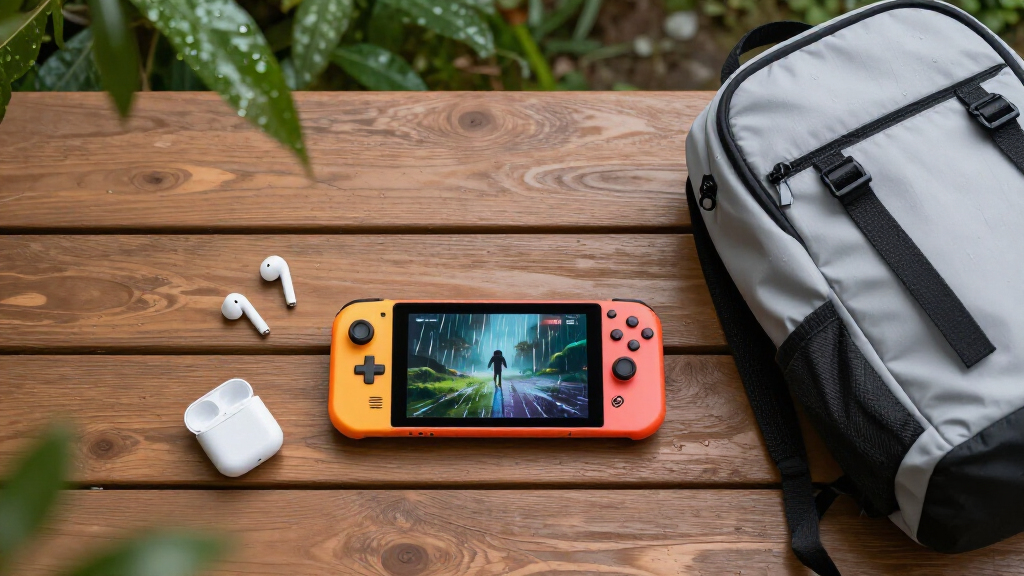
The game, developed by an independent studio, features players navigating through various rain-filled environments, overcoming obstacles like flooding, slippery surfaces, and rainstorms. According to the developers, the game aims to combine fun with problem-solving skills, encouraging children to think strategically about weather-related challenges.
Initial reviews from players and gaming communities indicate high engagement levels, with many praising its vivid graphics and interactive elements. The game is available on multiple platforms, including mobile devices and PCs, making it accessible to a broad audience.
While the game’s popularity is confirmed, it is still early to determine its long-term influence on young gamers or its potential educational benefits, as assessments are ongoing.
Youth gaming field report
Can You Conquer the Rain?
“Dive or Die: Children of Rain” sends young players through floods, slippery terrain and rainstorms—turning a weather-themed challenge into a vivid exercise in timing, navigation and problem-solving.
01 / Inside the game
A world built from bad weather
The independent title’s central idea is simple: make rain an active obstacle. Players must read changing conditions, choose routes and respond to hazards rather than treating weather as background scenery.
Navigate rising water
Flooded spaces reshape safe paths and push players to reassess movement before committing to a route.
Master slippery ground
Reduced grip turns timing and control into part of the puzzle, rewarding careful rather than impulsive play.
React under pressure
Rainstorms add urgency and visual drama while asking players to adapt to rapidly changing conditions.
02 / Play loop
From forecast to finish line
The game’s potential comes from the connection between observation and action: notice the conditions, anticipate the danger, then test a response.
Read the rain
Observe intensity, terrain and visible hazards.
Choose a route
Compare safer paths with faster alternatives.
Meet the hazard
Cross floods, slick surfaces and storm zones.
Adapt the plan
Learn from setbacks and adjust the strategy.
Conquer the level
Turn environmental clues into progress.
03 / Reality check
What we know—and what we don’t
Strong early attention is not the same as proven long-term value. The responsible reading separates reported features from outcomes that still require assessment.
| Claim | Current signal | Status | What comes next |
|---|---|---|---|
| Officially released | Reported launch in late March 2024 | ✓ Confirmed | Track availability and updates |
| Designed for ages 8–14 | Age-appropriate weather challenges | ✓ Confirmed | Parents should review younger players’ needs |
| Available on mobile and PC | iOS, Android and computer access reported | ✓ Confirmed | Check device-specific store listings |
| Builds problem-solving | Mechanics encourage strategic choices | ~ Plausible | Formal learning assessment |
| Improves weather-safety knowledge | Hazard simulations may support discussion | ~ Unverified | Long-term studies and educator feedback |
| Has proven lasting influence | Too early to determine | ✗ Not established | Monitor habits, retention and broader adoption |
Entertainment can open a conversation
- Weather hazards become tangible choices rather than abstract concepts.
- Parents can connect gameplay moments to real-world rain and flood safety.
- The title reflects wider interest in environmentally conscious storytelling.
The next evidence will matter more
- Researchers and educators plan to monitor reception and educational impact.
- Future updates may respond to player feedback and add new challenges.
- School or program adoption would depend on promising assessment results.
04 / Voices + answers
The promise behind the storm
Developers and observers see potential in playful weather education, but the strongest claims remain framed as possibilities—not settled outcomes.
“The game introduces children to weather challenges in a fun, interactive way, which could foster both entertainment and learning.”
Anonymous researcher
“Our goal was to create an engaging experience that also subtly teaches kids about weather phenomena and safety.”
The game’s developer
Is it suitable for every child?
It is designed for ages 8–14. Parental guidance is recommended for younger players and for checking individual comfort with storm imagery.
Age targetedWhere can it be played?
The supplied report lists iOS, Android and PC, giving the game broad potential access across common household devices.
Multi-platformDoes it have educational features?
Weather-focused problem-solving may support learning, but the game is primarily entertainment and formal educational assessments are ongoing.
Under reviewAre updates expected?
Developers have indicated that feedback may shape future challenges and additional educational content.
PossibleCould it teach weather safety?
Possibly. Simulated hazards can prompt useful safety discussions, but there is not yet formal evidence that playing alone improves children’s real-world understanding.
Not yet provenKeep exploring young gamers’ worlds
Guides listed in the supplied report
Why ‘Dive or Die’ Matters for Young Gamers
The game’s rapid rise highlights a trend toward weather-themed challenges in youth gaming, which could influence future game development targeted at children. Its success may also reflect a growing interest in games that combine entertainment with environmental awareness, potentially impacting how weather and climate topics are integrated into digital play.
For parents and educators, the game presents both an engaging experience and an opportunity to discuss weather phenomena and safety in a playful context. However, the long-term educational value and possible effects on gaming habits are still under evaluation.
As an affiliate, we earn on qualifying purchases.
Background on Rain-Themed Gaming Trends
Rain and weather-related challenges have appeared in video games for decades, but recent years have seen a surge in games specifically designed to simulate weather phenomena for educational and entertainment purposes. ‘Dive or Die: Children of Rain’ is part of this trend, focusing on engaging children with interactive, rain-based obstacles.
The game’s release follows a broader movement toward environmentally conscious gaming, with developers aiming to raise awareness about climate issues through interactive storytelling and gameplay. Its development was announced earlier this year, and it has since garnered attention from gaming communities and parents alike.
“‘The game introduces children to weather challenges in a fun, interactive way, which could foster both entertainment and learning.'”
— an anonymous researcher
Unverified Long-Term Impact and Educational Benefits
It is still unclear whether the game will have lasting effects on children’s understanding of weather or influence their gaming habits over time. Long-term studies and user feedback are pending, and the game’s educational value remains to be formally assessed.
Upcoming Assessments and Broader Adoption
Researchers and educators plan to monitor the game’s reception and educational impact over the coming months. Developers may release updates or new content based on feedback, and broader adoption in schools or educational programs could follow if initial results are promising.
Key Questions
Is ‘Dive or Die: Children of Rain’ suitable for all children?
The game is designed for children aged 8 to 14, with age-appropriate content focused on rain and weather challenges. Parental guidance is recommended for younger players.
What platforms is the game available on?
The game can be played on mobile devices (iOS and Android) and PCs, making it accessible to most young gamers.
Does the game have educational features?
While primarily designed as entertainment, the game incorporates weather-related problem-solving that could have educational benefits, though formal assessments are ongoing.
Are there plans for updates or new content?
Developers have indicated they may release updates based on user feedback, potentially expanding the game’s challenges and educational content.
Could the game influence children’s understanding of weather safety?
It is possible, as the game simulates weather hazards that can teach children about safety measures, but this has not yet been formally evaluated.
Source: rss
Fall Picks
fall essentials
As an affiliate, we earn on qualifying purchases.