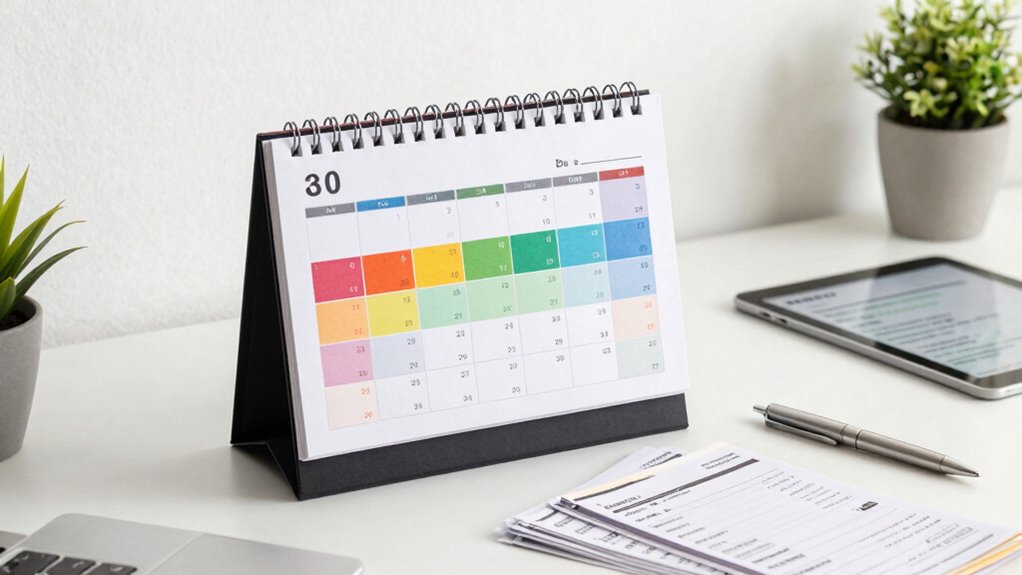

To build a bills calendar that prevents late fees, gather all your billing statements and note their due dates accurately in a centralized system, like a digital calendar or spreadsheet, for easy visualization. Set reminders or alerts days or weeks before each due date using banking apps or automation tools. Review and update your schedule regularly, keep your bills organized in a secure space, and establish a routine for checking the calendar. Keep going to discover more tips to stay on top of your payments.

Get the latest gadgets delivered free — and shop member deals
- Fast, free delivery on millions of items
- Access to Prime Big Deal Days deals on October 6–7
- Prime Video, Amazon Music and more included
Key Takeaways
- Collect all billing due dates and organize them on a centralized digital or physical calendar for easy reference.
- Set advance payment reminders or alerts days or weeks before each due date to avoid last-minute rushes.
- Review and update your bills calendar regularly to account for changes in billing cycles or due dates.
- Establish a consistent routine for reviewing bills weekly or on a specific day to ensure timely payments.
- Keep all billing documents in a secure, organized space to easily verify amounts and due dates when needed.
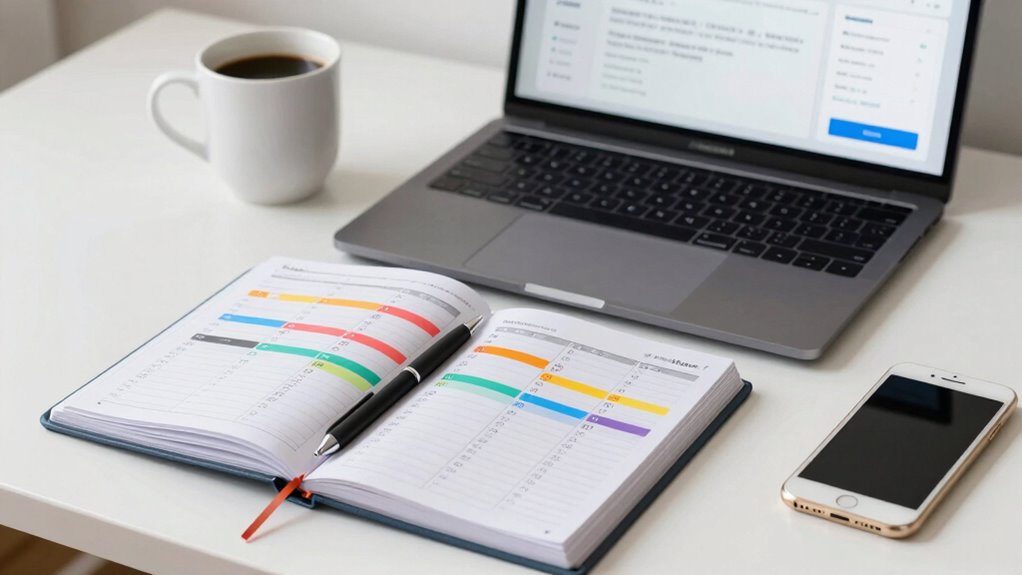
Staying on top of your bills can feel overwhelming, but creating a bills calendar simplifies the process and helps you avoid late fees. When you have a clear schedule, you know exactly when each payment is due, reducing the risk of forgetting or missing deadlines. To get started, gather all your billing statements and note their due dates. Once you have this information, you can organize it into a centralized calendar—whether it’s a physical planner, spreadsheet, or digital app. The goal is to have a visual overview so nothing slips through the cracks.
Using payment reminders is a vital part of building an effective bills calendar. Many digital tools allow you to set reminders days or even weeks before a payment is due. These reminders serve as prompts, giving you enough time to prepare and guarantee funds are available. Automatic alerts take this a step further by notifying you instantly when a bill is due or if there’s a delay in processing. These alerts help you stay proactive rather than reactive, preventing late payments from piling up. By leveraging these notifications, you’re less likely to overlook a bill, especially with the busy schedules most people have. Incorporating digital tools and apps can streamline this process further and enhance your organization. Establishing a reliable system for tracking your bills can improve your financial discipline and reduce stress.
Consistency is essential, so set a routine that works with your lifestyle. For example, you might review your bills every Sunday, update your calendar, and verify that all payments are scheduled. If you prefer a digital approach, sync your bills calendar with your phone or computer, enabling you to receive alerts wherever you are. Many banking or bill-pay apps offer built-in reminder features, making it easy to automate this process. If you opt for a paper calendar, write down each due date clearly and mark the day a reminder should go off, perhaps a few days beforehand. Establishing a reliable system for tracking your bills can improve your financial discipline and reduce stress. Setting up a security-conscious approach to your financial management can also help protect your sensitive information and prevent potential fraud.
It’s also helpful to establish a dedicated space or system for your bills and reminders. Keep your bills and related documents organized in one spot, so you can quickly access information if needed. Regularly reviewing your bills calendar ensures it stays current, especially if your billing dates change or you receive new bills. Staying disciplined with this habit minimizes late fees and keeps your finances in check. Additionally, understanding your billing cycle can help you anticipate upcoming payments and plan accordingly.
Ultimately, the key to building an effective bills calendar is consistency and automation. Payment reminders and automatic alerts work together to keep you informed and prepared. When these tools are in place, you create a safety net that catches missed payments before they become costly. With a well-organized calendar, managing your bills becomes less stressful, giving you peace of mind and better control over your financial life.
As an affiliate, we earn on qualifying purchases.
Frequently Asked Questions
What Are the Best Apps for Managing a Bills Calendar?
You should try apps like Mint, YNAB, or Prism, which excel at budget tracking and due date reminders. These apps help you stay organized by automatically syncing your bills, setting due date alerts, and providing clear overviews of your finances. With these tools, you can easily avoid late fees, keep your budget on track, and guarantee all payments are made on time, reducing financial stress and improving your money management.
How Can I Automate Bill Payments Effectively?
You can automate bill payments like a financial superhero by setting up automatic alerts and payment reminders. Link your bank account or payment apps to schedule recurring payments, so you never miss a due date again—saving you from late fees and stress. Enable notifications for upcoming bills, and watch your finances stay perfectly on track without lifting a finger. It’s the easiest way to stay ahead of your bills effortlessly!
What Should I Do if I Miss a Bill Deadline?
If you miss a bill deadline, act quickly to avoid late fee avoidance. Contact your bill provider to explain the situation and see if they’ll waive the fee. Use bill reminder strategies like setting alerts or automating payments to prevent future issues. Review your bills regularly and keep a calendar handy. Staying proactive helps you stay on top of deadlines and avoid late fees altogether.
How Often Should I Review and Update My Bills Calendar?
Think of your bills calendar as a garden needing regular tending. You should review and update it at least once a month to guarantee payment reminders are accurate and your budget tracking stays on course. For example, after a big purchase or income change, updating your calendar prevents surprises. Regular check-ins help you catch upcoming bills early, making late fees a thing of the past.
Can a Bills Calendar Help Improve My Credit Score?
Yes, a bills calendar can improve your credit score by helping you maintain a positive payment history, which is essential for credit reporting. When you use it to track due dates, you’re less likely to miss payments, preventing late marks on your credit report. Consistently paying bills on time boosts your credit score over time, showing lenders you’re responsible and reliable with credit management.
Conclusion
By creating a bills calendar, you’re setting yourself up for success and avoiding those pesky late fees. Keep track of due dates, set reminders, and stay organized—think of it as your financial safety net. Remember, a stitch in time saves nine, so don’t let bills pile up and catch you off guard. Stay proactive, and you’ll keep your finances running smoothly without breaking a sweat.
Fall Picks
fall essentials
As an affiliate, we earn on qualifying purchases.