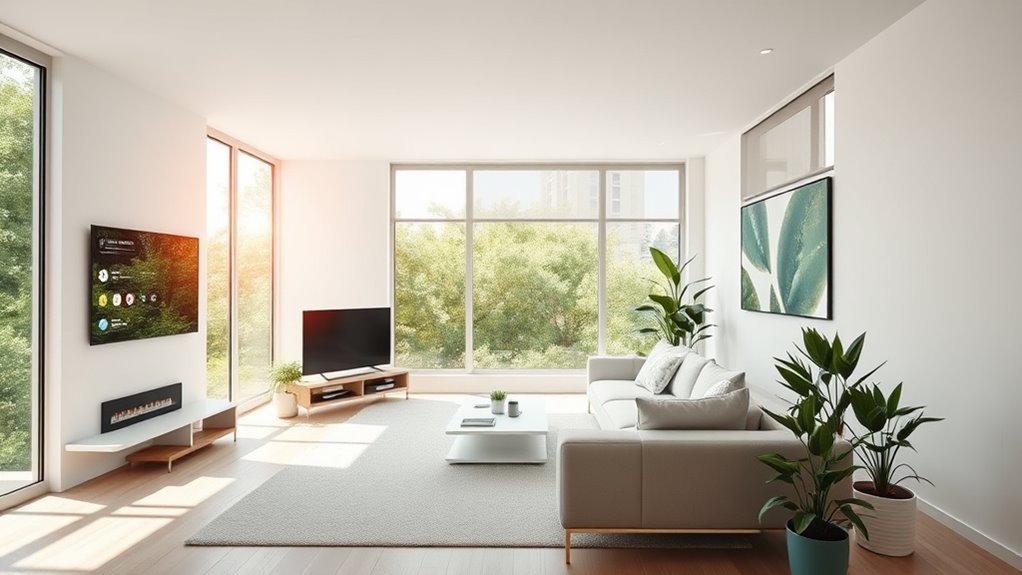

Smart homes help you live sustainably by using energy-efficient appliances, renewable energy like solar power, and automation to cut waste. You can set schedules, monitor usage, and turn off devices automatically to save energy. Connecting to community energy networks and feeding excess power back into the grid also reduces your carbon footprint. By choosing smart living, you’ll discover simple ways to make a big environmental impact—exploring further reveals even more eco-friendly options for your home.
Key Takeaways
- Smart appliances optimize energy use through adaptive operation, reducing waste and lowering utility bills.
- Integrating renewable energy sources like solar panels enhances sustainability and decreases reliance on fossil fuels.
- Automated scheduling and real-time data help households minimize energy consumption and improve efficiency.
- Community grid integration allows households to share excess renewable energy, promoting broader sustainability.
- Smart home systems enable better resource management, supporting environmentally friendly and resilient living environments.

Smart homes are transforming the way we live by making daily routines more efficient and eco-friendly. When you step into a smart home, you immediately notice how seamlessly technology blends with everyday life to reduce your environmental impact. One of the key ways this happens is through energy-efficient appliances. These devices, from smart thermostats to advanced washing machines, adapt to your usage patterns to minimize energy consumption without sacrificing performance. Instead of running appliances at full capacity all the time, they optimize their operations, saving you money on energy bills while reducing your carbon footprint. By integrating such appliances, you take a tangible step toward sustainability, ensuring your household uses resources more wisely.
Smart appliances optimize energy use, saving money and reducing your home’s carbon footprint.
But it doesn’t stop there. Your smart home can also incorporate renewable energy integration, which is a game-changer for sustainable living. With solar panels or small wind turbines connected to your system, you can generate clean energy directly at your residence. Smart energy management systems monitor your consumption and production in real time, allowing you to maximize the use of renewable sources. For example, your system might prioritize running high-energy appliances when solar energy production peaks, reducing dependence on fossil fuels and grid power. This integration not only lowers your reliance on non-renewable resources but also encourages a more resilient and self-sufficient household.
You’re empowered to set schedules and automate energy use, which means you can reduce waste without thinking twice. When you’re away or asleep, your smart home can automatically adjust settings, turn off unused appliances, or switch to energy-efficient modes, all based on your preferences. This level of control ensures that no energy is wasted, and your home operates at ideal efficiency around the clock. Plus, access to real-time data helps you understand your consumption patterns, giving you the insight needed to make even smarter choices about energy use. Additionally, incorporating energy-efficient appliances that utilize analgesic properties can contribute to reducing overall energy consumption by minimizing the need for energy-intensive pain relief methods.
Smart homes also foster a sense of community responsibility by connecting you to broader renewable energy networks. Some systems enable your excess solar power to feed back into the grid, earning you credits or reducing overall demand on fossil-fuel plants. This interconnected approach helps build a more sustainable energy future, one home at a time. Ultimately, by choosing energy-efficient appliances and embracing renewable energy integration, you’re not only making your life more convenient but also contributing greatly to a healthier planet. Your smart home becomes a powerful tool for sustainable living, making it easier and more rewarding to live in harmony with the environment.
smart energy-efficient thermostats
As an affiliate, we earn on qualifying purchases.
As an affiliate, we earn on qualifying purchases.
Frequently Asked Questions
How Can Smart Homes Reduce Overall Energy Costs Long-Term?
Smart homes reduce your overall energy costs long-term by optimizing energy consumption through automated systems. You can set your HVAC, lighting, and appliances to run only when needed, minimizing waste. These intelligent adjustments lead to significant cost savings over time. Additionally, smart devices provide real-time monitoring, helping you identify energy-hungry appliances and further cut down expenses, making your home more efficient and affordable in the long run.
Are Smart Home Devices Environmentally Friendly to Manufacture and Dispose Of?
You might be surprised to learn that smart home devices can have a significant manufacturing impact, with some components requiring rare minerals. While they help save energy, disposal challenges arise as many contain non-biodegradable parts and hazardous materials. This raises environmental concerns, but manufacturers are working on eco-friendly materials and recycling programs. Still, you should consider the full lifecycle to understand how environmentally friendly these devices truly are.
What Privacy Concerns Exist With Interconnected Smart Home Systems?
You should be aware that interconnected smart home systems raise privacy concerns like data breaches and surveillance. Hackers could access your personal information if security isn’t tight, putting your privacy at risk. Additionally, the devices might collect and share your data with third parties without your permission. To protect yourself, regularly update your software, use strong passwords, and be cautious about what information you allow your devices to access.
How Accessible Are Smart Home Technologies for People With Disabilities?
You might think smart home technologies are only for tech-savvy users, but they’re increasingly accessible for people with disabilities. Assistive devices and accessibility features like voice control, automatic door openers, and customizable interfaces make daily life easier. While some systems still need better universal design, many companies are prioritizing inclusivity, making smart homes more welcoming and functional for everyone. Your needs can often be met with tailored, user-friendly solutions.
Can Smart Homes Adapt to Changing Sustainability Standards Over Time?
Yes, smart homes can adapt to changing sustainability standards through adaptive standards and future proofing. You can update software, integrate new devices, and modify energy management systems to meet evolving regulations. This flexibility guarantees your home remains environmentally friendly and compliant over time. By choosing smart solutions with open platforms and regular updates, you actively future-proof your home, making it easier to stay aligned with sustainability goals as standards evolve.

ECO-WORTHY 10KW Output 9.36KWH Off Grid Solar System Complete Kit for Home:12pcs 195W Solar Panels(2340W)+10KW 120V/240V Inverter (UL 1741)+ 2pcs 48V 100AH Lithium Batteries(UL 1973&UL 9540A)
[Ideally Output of 9.36KWH] The power of 9.36KWh per day under 4 hours full sunshine by the 2340W…
As an affiliate, we earn on qualifying purchases.
As an affiliate, we earn on qualifying purchases.
Conclusion
By embracing smart homes, you can substantially reduce your energy consumption and lower your carbon footprint. Did you know that smart appliances can cut household energy use by up to 30%? As you adopt these technologies, you’re not only making your life more convenient but also contributing to a more sustainable future. So, take the step today—your smart home can help create a greener, more efficient world for tomorrow.
automated energy management system
As an affiliate, we earn on qualifying purchases.
As an affiliate, we earn on qualifying purchases.
smart appliances for energy saving
As an affiliate, we earn on qualifying purchases.
As an affiliate, we earn on qualifying purchases.