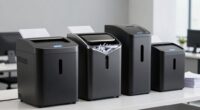
The Waterdrop G3P600 is my best overall pick for an under-sink reverse osmosis water filter system, balancing tankless design with a useful 600 GPD capacity. For a traditional setup, the APEC ROES-50 offers a familiar five-stage format, while the Waterdrop G3P800 is a higher-capacity option for households that want faster production. The main tradeoffs are tank versus tankless storage, flow capacity, filter upkeep, and whether added alkaline or UV stages match your needs. Read on for a side-by-side breakdown of all 13 systems and guidance on choosing the right configuration.

Get the latest gadgets delivered free with Prime
- Fast, free delivery on millions of items
- Prime Video, Amazon Music and more included
- Member-only deals all year
Complete the kit



Key Takeaways
Tankless capacity separates the Waterdrop options: the G3P600 and G2P600 offer 600 GPD, while the G3P800 and GLACIER FRESH model are rated at 800 GPD; choose capacity based on household demand and available cabinet space.
Traditional tank systems remain relevant: the APEC ROES-50, VIVA21, and iSpring RCC7 models suit buyers who prefer a conventional multi-stage setup and can accommodate a storage tank.
Alkaline stages are a preference feature, not a substitute for fit: several iSpring and Waterdrop models add remineralization, but buyers should still check replacement filters, installation needs, and the system’s stated capabilities.
The lineup’s variety is its main decision challenge: similar names across Waterdrop and iSpring conceal differences in capacity, stages, and added features, so compare exact model numbers before purchasing.
There is no one-size-fits-all winner: a compact tankless system favors cabinet space and flow, while a tank-based model may suit buyers prioritizing a conventional layout over under-sink clearance.
| VIVA21 5-Stage Under-Sink Reverse Osmosis Water Filter System |  | Best for Certified Traditional Setup | Filtration stages: 5 | Certifications: NSF/ANSI 58 and NSF/ANSI/CAN 372 | Purification method: Activated carbon and reverse osmosis | VIEW ON AMAZON | See Our Full Breakdown |
| GLACIER FRESH GFU03 Electric-Free Reverse Osmosis Water Filter 800 GPD |  | Best High-Output Electric-Free Tankless Pick | Filtration stages: 5 | Flow rate: 0.6 gpm (up to 800 GPD) | Pure-to-waste ratio: 3:1 | VIEW ON AMAZON | See Our Full Breakdown |
| Waterdrop WD-T4-A Alkaline pH+ Tankless Reverse Osmosis Water Filter System |  | Best for Alkaline Water and Filter Alerts | Filtration stages: 10 | Capacity: 450 gallons per day | Pure-to-drain ratio: 2:1 | VIEW ON AMAZON | See Our Full Breakdown |
| Waterdrop T3-T Remineralization Reverse Osmosis System, 220 GPD |  | Best Compact Electric-Free Remineralization System | Flow rate: 220 GPD | Filtration stages: 7 | Pure-to-drain ratio: 2:1 | VIEW ON AMAZON | See Our Full Breakdown |
| APEC Water ROES-50 5-Stage Under-Sink Reverse Osmosis System, 50 GPD |  | Best DIY-Friendly Tank System | Filtration stages: 5 | Purification methods: Activated carbon and reverse osmosis | Maximum capacity: 50 gallons per day | VIEW ON AMAZON | See Our Full Breakdown |
| iSpring RCC7-BN 5-Stage Under-Sink Reverse Osmosis Water Filtration System |  | Best for Power-Free Operation | Filtration stages: 5 | Certification: NSF/ANSI 58 | Maximum contaminant reduction: Up to 99% | VIEW ON AMAZON | See Our Full Breakdown |
| iSpring RCC7AK-BLK 6-Stage Alkaline Reverse Osmosis Water Filtration System |  | Best for Mineralized Water in a Traditional Setup | Filtration stages: 6 | Certification: NSF/ANSI 58 | Contaminant reduction: Up to 99% of over 1,000 contaminants | VIEW ON AMAZON | See Our Full Breakdown |
| Waterdrop G3P800 Tankless Reverse Osmosis Water Filter System, 800 GPD |  | Best for High Daily Output | Filtration: 10-stage reverse osmosis | Capacity: 800 gallons per day | Pure-to-drain ratio: 3:1 | VIEW ON AMAZON | See Our Full Breakdown |
| Waterdrop G3P600 Tankless Reverse Osmosis Water Filter System |  | Best for TDS and Filter-Life Monitoring | Filtration stages: 8 | Certifications: NSF/ANSI 42, 58, and 372; FCC | Capacity: 600 gallons per day | VIEW ON AMAZON | See Our Full Breakdown |
| Waterdrop G5P500A Reverse Osmosis System, 8-Stage RO Filtration, Alkaline |  | Best Compact Alkaline Tankless Pick | Filtration stages: 8 | RO membrane pore size: 0.0001 µm | Capacity: 500 gallons per day | VIEW ON AMAZON | See Our Full Breakdown |
| iSpring RCC7AK-UV 7-Stage Under-Sink Reverse Osmosis Water Filter System with Alkaline and LED UV Filtration |  | Best for Added UV Treatment | Filtration stages: 7 | Purification methods: Reverse osmosis, alkaline, activated carbon, carbon block, ultraviolet | RO membrane capacity: 75 gallons per day | VIEW ON AMAZON | See Our Full Breakdown |
| iSpring RCC7AK-BN 6-Stage Alkaline Reverse Osmosis Water Filtration System |  | Best for Straightforward Alkaline RO | Filtration stages: 6 | Daily production capacity: 75 gallons | Purification methods: Reverse osmosis, alkaline, activated carbon, carbon block | VIEW ON AMAZON | See Our Full Breakdown |
| Waterdrop G2P600 7-Stage Tankless Under-Sink Reverse Osmosis Water Filtration System, 600 GPD |  | Best High-Capacity Tankless Pick | Filtration: 7-stage reverse osmosis | Daily capacity: 600 gallons | Pure-to-drain ratio: 2:1 | VIEW ON AMAZON | See Our Full Breakdown |
| water filter under sink reverse osmosis system | Dimensions | Filtration stages | Capacity |
|---|---|---|---|
| VIVA21 5-Stage Under-Sink Reve | 19 x 18 x 16 in | 5 | 50 gallons |
| GLACIER FRESH GFU03 Electric-F | 13.58 x 8.27 x 16.54 in | 5 | — |
| Waterdrop WD-T4-A Alkaline pH+ | 16.54 x 6.22 x 17.95 in | 10 | 450 gallons per day |
| Waterdrop T3-T Remineralizatio | 12.6 x 6.1 x 14.7 in | 7 | — |
| APEC Water ROES-50 5-Stage Und | 15.5 x 5.25 x 17 in | 5 | — |
| iSpring RCC7-BN 5-Stage Under- | 23.62 × 15.75 × 11.81 in | 5 | 75 gallons |
| iSpring RCC7AK-BLK 6-Stage Alk | 15.5 × 16 × 18 in | 6 | 75 gallons |
| Waterdrop G3P800 Tankless Reve | 18.12 × 5.67 × 17.72 in | — | 800 gallons per day |
| Waterdrop G3P600 Tankless Reve | — | 8 | 600 gallons per day |
| Waterdrop G5P500A Reverse Osmo | 16.69 × 5.69 × 13.9 in | 8 | 500 gallons per day |
| iSpring RCC7AK-UV 7-Stage Unde | 15 × 8 × 18 in | 7 | — |
| iSpring RCC7AK-BN 6-Stage Alka | 15.5 × 16 × 18 in | 6 | — |
| Waterdrop G2P600 7-Stage Tankl | 17.3 × 5.9 × 14 in | — | — |
More Details on Our Top Picks
VIVA21 5-Stage Under-Sink Reverse Osmosis Water Filter System
The VIVA21 is a strong fit for buyers who want a tank-based, five-stage RO system with stated NSF/ANSI 58 and NSF/ANSI/CAN 372 certifications. Its included faucet, tank, installation kit, tubing, and leak detector make it a more complete starting package than the APEC Water ROES-50, whose listed included components do not specify a leak detector. Automatic shutoff adds another layer of protection against ongoing water flow if a leak is detected. The tradeoff is its 19 x 18 x 16-inch footprint: unlike the tankless GLACIER FRESH GFU03, it needs room for a storage tank beneath the sink. Its 50-gallon capacity and annual filter cycle also suit moderate household demand better than buyers seeking high daily output or less frequent maintenance.
Pros:- Lists NSF/ANSI 58 and NSF/ANSI/CAN 372 certifications.
- Includes a faucet, storage tank, tubing, and installation kit.
- Leak detector and automatic shutoff are included.
- Lifetime limited parts support is listed alongside the one-year limited warranty.
Cons:- The 19 x 18 x 16-inch system and tank require substantial cabinet space.
- The stated 50-gallon capacity is modest beside high-output tankless systems.
- Filter life is listed as 12 months, so periodic replacement is part of ownership.
Best for: Households wanting a certified, tank-based RO kit with a faucet, storage tank, leak detector, and automatic shutoff included.
Not ideal for: Buyers with crowded under-sink cabinets or high daily water demand, since it needs tank space and is rated for 50 gallons of capacity.
- Filtration stages:5
- Certifications:NSF/ANSI 58 and NSF/ANSI/CAN 372
- Purification method:Activated carbon and reverse osmosis
- Maximum supported TDS:1000 ppm
- Capacity:50 gallons
- Dimensions:19 x 18 x 16 in
- Filter life cycle:12 months
- Warranty:1-year limited warranty; lifetime limited parts support
Our verdict“Choose the VIVA21 if you want a certified, tank-based kit with leak detection included and have room for its storage tank.”
GLACIER FRESH GFU03 Electric-Free Reverse Osmosis Water Filter 800 GPD
For buyers prioritizing speed without a powered system, the GLACIER FRESH GFU03 combines a tankless design, up to 800 GPD, and no electric drive. Its stated 0.6 gpm flow rate and 3:1 pure-to-waste ratio make it a more output-focused choice than the 220 GPD Waterdrop T3-T, while the compact body avoids the storage tank required by the VIVA21. The supplied information also highlights a 0.0001 µm membrane and reduction of contaminants including PFAS, lead, and fluoride. Its main constraint is the water supply: operation calls for roughly 40–100 PSI, so low-pressure plumbing may limit performance. Installation also requires drilling a ½–1-inch faucet hole, which can rule it out for renters or anyone unwilling to alter a countertop.
Pros:- Tankless design saves cabinet space compared with the tank-based VIVA21 and APEC ROES-50.
- Rated for up to 800 gallons per day with a listed 0.6 gpm flow rate.
- Runs without an electric drive.
- Lists a 3:1 pure-to-waste water ratio.
Cons:- Requires a ½–1-inch hole for faucet installation.
- Needs approximately 40–100 PSI inlet pressure to operate within its stated range.
- The supplied product data does not list a certification.
Best for: Households that want high daily RO output in a tankless, non-electric unit and have water pressure around 40–100 PSI.
Not ideal for: Renters avoiding countertop drilling or homes with inlet pressure below the listed operating range.
- Filtration stages:5
- Flow rate:0.6 gpm (up to 800 GPD)
- Pure-to-waste ratio:3:1
- Operating pressure:0.25–0.7 MPa (approximately 40–100 PSI)
- Dimensions:13.58 x 8.27 x 16.54 in
- Power:No electric drive
- Installation type:Under sink, tankless
- Membrane:0.0001 µm
Our verdict“Pick the GFU03 for high output and a compact, electric-free setup if your plumbing pressure and countertop allow its installation.”
Waterdrop WD-T4-A Alkaline pH+ Tankless Reverse Osmosis Water Filter System
The WD-T4-A stands apart from the simpler five-stage VIVA21 and APEC ROES-50 by offering standard RO water and alkaline mineral-enhanced water from a tankless, 10-stage system. Its 450 GPD capacity is a substantial step up from those traditional 50-gallon-per-day models, while the 2:1 pure-to-drain ratio gives buyers a clearly stated water-use figure. Filter-life lights and buzzer alerts are useful for households that want a prompt when different cartridges need attention. There are tradeoffs: the system requires an electrical connection, and installing its faucet means drilling the countertop. Its stated NSF/ANSI 372 certification concerns lead content in materials, so it should not be read as a broad certification of contaminant-reduction performance.
Pros:- Offers standard purified water and alkaline mineral-enhanced water.
- Tankless design avoids the cabinet space needed by the VIVA21 and APEC ROES-50 tanks.
- Rated for 450 gallons per day with a 2:1 pure-to-drain ratio.
- Filter-life indicator lights and buzzer alerts help track cartridge changes.
Cons:- Requires an electrical connection.
- Faucet installation requires countertop drilling.
- NSF/ANSI 372 is the listed certification and does not by itself establish RO contaminant-reduction performance.
Best for: Households wanting both RO-purified and alkaline mineral-enhanced water, with filter-life alerts and no storage tank.
Not ideal for: Renters or buyers without an under-sink power connection who want to avoid electrical work or countertop drilling.
- Filtration stages:10
- Capacity:450 gallons per day
- Pure-to-drain ratio:2:1
- Certification:NSF/ANSI 372
- Dimensions:16.54 x 6.22 x 17.95 in
- Power:Electrical connection required
- Filter life:CF: 6 months; RO membrane: 24 months; CB: 12 months; alkaline mineralizer: 12 months
- Included components:T4-A RO system with 3 pre-installed filters, faucet, and user manual
Our verdict“Choose the WD-T4-A if alkaline water and filter alerts matter more to you than an electric-free, no-drill installation.”
Waterdrop T3-T Remineralization Reverse Osmosis System, 220 GPD
The T3-T is the compact alternative for buyers who want remineralized RO water without an electrical connection. Its 12.6 x 6.1 x 14.7-inch tankless body is notably smaller than the Waterdrop WD-T4-A, which also provides alkaline mineral-enhanced water but needs power. Seven filtration stages, a 2:1 pure-to-drain ratio, and stated NSF/ANSI 58 and NSF/ANSI 372 certifications give the T3-T a different balance from the high-output GLACIER FRESH GFU03: it trades that model’s 800 GPD rating for mineralization and a smaller listed footprint. The 220 GPD capacity may be ample for everyday household drinking and cooking, but it is not the strongest fit for unusually heavy demand. Countertop drilling and its stated 43.5–87 PSI operating range remain installation constraints.
Pros:- Tankless, compact dimensions reduce cabinet demands compared with tank-based systems.
- Remineralization adds minerals back to treated water.
- Operates without a power connection, unlike the Waterdrop WD-T4-A.
- Lists NSF/ANSI 58 and NSF/ANSI 372 certifications.
Cons:- Rated at 220 GPD, below the 450 GPD WD-T4-A and 800 GPD GLACIER FRESH GFU03.
- Faucet installation requires countertop drilling.
- Requires operating pressure of 43.5–87 PSI.
Best for: Space-conscious households seeking remineralized RO water without a power connection, with water pressure within the listed range.
Not ideal for: Large households prioritizing maximum output or buyers who cannot drill a countertop or meet the stated water-pressure range.
- Flow rate:220 GPD
- Filtration stages:7
- Pure-to-drain ratio:2:1
- Dimensions:12.6 x 6.1 x 14.7 in
- Certifications:NSF/ANSI 58 and NSF/ANSI 372
- Power:No power needed
- Operating pressure:43.5–87 PSI
- Filter life:CF: 6 months; CBM: 12 months; TRO: 24 months
Our verdict“Choose the T3-T for a small, electric-free remineralizing system if 220 GPD meets your household’s needs.”
APEC Water ROES-50 5-Stage Under-Sink Reverse Osmosis System, 50 GPD
The APEC ROES-50 suits buyers who prefer a conventional tank-based RO layout and want installation details aimed at DIY setup. Its quick-connect fittings and color-coded tubing can make line routing easier to follow than a kit without those stated aids. Like the VIVA21, it uses five filtration stages and a storage tank, but its listed maximum supported TDS is 2000 ppm compared with the VIVA21’s 1000 ppm. That figure describes stated feed-water support, not a guarantee of identical output quality. At 50 GPD, it falls well short of tankless options such as the GLACIER FRESH GFU03, which is designed for much higher output and saves tank space. The ROES-50 also needs cabinet room, and filter replacement is recurring maintenance; the supplied data gives both a six-month cycle and a broader 6–24-month replacement recommendation.
Pros:- Quick-connect fittings and color-coded tubing support a more guided DIY installation.
- Five-stage filtration combines activated carbon and reverse osmosis.
- Maximum supported water TDS is listed at 2000 ppm.
- Includes a filter set and water tank.
Cons:- The 50 GPD rating is far below the tankless GLACIER FRESH GFU03’s stated capacity.
- A storage tank takes up under-sink space.
- Filter replacement is recurring, with the supplied data listing a six-month cycle and a 6–24-month recommendation.
Best for: DIY-minded households seeking a traditional five-stage RO system with a storage tank, color-coded tubing, and quick-connect fittings.
Not ideal for: Buyers short on cabinet space or needing high daily output, since this tank-based model is rated at 50 GPD.
- Filtration stages:5
- Purification methods:Activated carbon and reverse osmosis
- Maximum capacity:50 gallons per day
- Maximum supported water TDS:2000 ppm
- Dimensions:15.5 x 5.25 x 17 in
- Operating pressure:40–85 PSI
- Operating temperature:40–100 °F
- Installation type:Under sink
Our verdict“Pick the ROES-50 if you want a conventional tank system with DIY-friendly tubing and fittings and do not need tankless output.”
iSpring RCC7-BN 5-Stage Under-Sink Reverse Osmosis Water Filtration System
The iSpring RCC7-BN is the straightforward pick for buyers who want certified reverse osmosis without adding an electrical connection beneath the sink. Its NSF/ANSI 58 certification and five-stage treatment make it a more conventional setup than the tankless, powered Waterdrop G3P600, while the included brushed-nickel faucet gives it a coordinated finish. The listed reduction claim covers a broad range of contaminants, and the system handles up to 75 gallons of daily capacity.
The tradeoff is its more involved under-sink footprint: at 23.62 × 15.75 × 11.81 inches, it needs cabinet room for its housings and associated parts, unlike the slimmer tankless Waterdrop models. It also requires installation, and the one-year warranty depends on registration. Choose it for power-free operation and a familiar RO layout, not for a space-saving tankless design.
Pros:- NSF/ANSI 58 certified
- Operates without a power source
- Includes a brushed-nickel faucet and food-grade tubing
- Listed to reduce up to 99% of more than 1,000 contaminants
Cons:- Requires under-sink installation and space for its housings
- Warranty requires product registration
- Less compact than the tankless Waterdrop G3P600
Best for: Households seeking NSF/ANSI 58-certified reverse osmosis who have cabinet space and prefer a system that needs no electrical outlet.
Not ideal for: Renters or owners of crowded sink cabinets who want an easy, compact tankless installation or cannot add a dedicated faucet.
- Filtration stages:5
- Certification:NSF/ANSI 58
- Maximum contaminant reduction:Up to 99%
- RO membrane filtration:Down to 0.0001 microns
- Capacity:75 gallons
- Power:No power source required
- Dimensions:23.62 × 15.75 × 11.81 in
- Faucet finish:Brushed nickel
- Warranty:1-year manufacturer warranty upon registration
Our verdict“Pick the iSpring RCC7-BN if you want a certified, power-free RO system and have room for a conventional under-sink setup.”
iSpring RCC7AK-BLK 6-Stage Alkaline Reverse Osmosis Water Filtration System
The iSpring RCC7AK-BLK adds a useful distinction to the conventional RO format: a sixth remineralization stage intended to improve taste and alkalinity after filtration. That makes it a better fit than the five-stage iSpring RCC7-BN for buyers who prefer mineralized water, while keeping the under-sink, NSF/ANSI 58-certified approach. Its black faucet and quick-fit connectors also provide a different look and connection style from the RCC7-BN’s brushed-nickel hardware.
This is not the compact alternative to the tankless Waterdrop G5P500A: the iSpring needs adequate cabinet space and does not list a daily production figure in the supplied specifications. The transparent first-stage housing can make that stage easier to inspect, but the system still calls for under-sink installation. Choose it for remineralization and a traditional RO configuration rather than maximum production or a powered, space-conscious design.
Pros:- Six-stage filtration includes remineralization for taste and alkalinity
- NSF/ANSI 58 certified
- Includes a black faucet and quick-fit connectors
- Transparent first-stage housing makes that filter visible
Cons:- Requires enough under-sink cabinet space
- Supplied specifications do not state a daily production capacity
- Warranty is limited to one year
Best for: Buyers who want NSF/ANSI 58-certified RO with a remineralization stage and prefer a traditional under-sink system with a black faucet.
Not ideal for: Households prioritizing a small cabinet footprint or a clearly stated high daily output; consider a tankless option such as the Waterdrop G5P500A instead.
- Filtration stages:6
- Certification:NSF/ANSI 58
- Contaminant reduction:Up to 99% of over 1,000 contaminants
- RO membrane filtration:0.0001 microns
- Capacity:75 gallons
- Installation:Under sink
- Dimensions:15.5 × 16 × 18 in
- Included component:Extra filter
- Warranty:1-year limited manufacturer warranty
Our verdict“Choose the RCC7AK-BLK if mineralized water and a traditional certified RO setup matter more than a compact tankless footprint.”
Waterdrop G3P800 Tankless Reverse Osmosis Water Filter System, 800 GPD
Among these five systems, the Waterdrop G3P800 has the highest stated output: 800 gallons per day. That capacity makes it the natural choice for busy households that want fast access to filtered water without a storage tank taking up cabinet space. Its 10-stage filtration and certifications across NSF/ANSI 42, 53, 58, and 372 also give it a broader listed certification set than the G3P600, while the smart faucet shows TDS readings at a glance.
The G3P800 does ask more of the installation than the power-free iSpring RCC7-BN: it needs a corded electrical connection and drilling for two holes. Its 3:1 pure-to-drain ratio is less water-efficient than the 2:1 ratios listed for the G3P600 and G5P500A. I’d favor it when capacity leads the decision, but not when minimizing water waste or avoiding electrical work is the priority.
Pros:- Highest listed capacity in this group at 800 gallons per day
- Tankless design saves space beneath the sink
- Smart faucet displays TDS readings
- Listed certifications include NSF/ANSI 42, 53, 58, and 372
Cons:- Requires a corded electrical connection
- Installation requires drilling two holes
- 3:1 pure-to-drain ratio uses more drain water than the 2:1 Waterdrop G3P600 and G5P500A
Best for: Large or busy households that want high stated daily RO output, a tankless cabinet layout, and faucet-based TDS readings.
Not ideal for: Buyers without an under-sink electrical outlet, those avoiding countertop drilling, or households prioritizing a lower pure-to-drain ratio.
- Filtration:10-stage reverse osmosis
- Capacity:800 gallons per day
- Pure-to-drain ratio:3:1
- Certifications:NSF/ANSI 42, 53, 58, and 372
- Faucet:Smart faucet with LED TDS display
- Maximum supported TDS:500 ppm
- Power:Corded electric
- Dimensions:18.12 × 5.67 × 17.72 in
Our verdict“Choose the G3P800 when maximum stated daily output and tankless convenience outweigh electrical and installation requirements.”
Waterdrop G3P600 Tankless Reverse Osmosis Water Filter System
The Waterdrop G3P600 is a strong middle ground for buyers who want a tankless system with useful feedback at the tap, but do not need the G3P800’s higher stated capacity. Its smart faucet reports water quality and filter life, helping owners see both a reading and a maintenance cue without opening the cabinet. The 600-gallon-per-day capacity is still substantial, and its 2:1 pure-to-drain ratio is more water-efficient than the G3P800’s 3:1 ratio.
Compared with the alkaline Waterdrop G5P500A, the G3P600 puts its emphasis on monitoring rather than remineralization. It also requires electricity and has a listed operating pressure of 87 psi, so buyers should check their setup against that requirement. The tankless dimensions save cabinet space, but the unit is not a no-installation option; choose it for status information and output, not for power-free simplicity.
Pros:- Smart faucet displays water quality and filter life
- 600 gallons per day of stated capacity
- 2:1 pure-to-drain ratio
- Tankless design saves under-sink space
Cons:- Requires a corded electrical connection
- Listed operating pressure is 87 psi
- Does not list alkaline remineralization like the Waterdrop G5P500A
Best for: Households that want a tankless RO system with faucet-based water-quality and filter-life information, plus a 2:1 pure-to-drain ratio.
Not ideal for: Buyers who lack under-sink electricity, want remineralization, or cannot accommodate the listed operating pressure requirement.
- Filtration stages:8
- Certifications:NSF/ANSI 42, 58, and 372; FCC
- Capacity:600 gallons per day
- Pure-to-drain ratio:2:1
- Flow rate:0.42 gpm
- Maximum supported TDS:1500 ppm
- Operating pressure:87 psi
- Filter life:24 months
Our verdict“Pick the G3P600 if you value faucet-based filter and water-quality monitoring more than remineralization or power-free operation.”
Waterdrop G5P500A Reverse Osmosis System, 8-Stage RO Filtration, Alkaline
The Waterdrop G5P500A combines a compact tankless layout with alkaline mineralization, making it a good match for buyers who want remineralized water without a conventional RO cabinet setup. Its 500-gallon-per-day capacity is below the G3P600’s 600 and the G3P800’s 800, but the system adds calcium, magnesium, sodium, and potassium and lists a 2:1 pure-to-drain ratio. That ratio matches the G3P600 and improves on the G3P800’s listed 3:1 figure.
The compact 16.69 × 5.69 × 13.9-inch system can free cabinet room compared with a traditional unit such as the iSpring RCC7-BN. It still needs power, and faucet installation requires countertop drilling; the supplied guidance also flags pressure setup as a possible reason to use a professional installer. Choose it for compact mineralization and measured output, not maximum capacity or a drill-free installation.
Pros:- Compact tankless design
- Alkaline stage adds calcium, magnesium, sodium, and potassium
- 2:1 pure-to-drain ratio
- Listed maximum flow rate is 1.31 L/min
Cons:- 500 gallons per day is less than the Waterdrop G3P600 and G3P800 capacities
- Requires a corded electrical connection
- Faucet installation requires drilling, and pressure setup may call for professional help
Best for: Space-conscious households that want tankless RO, added minerals, and a 2:1 pure-to-drain ratio at a stated capacity suited to everyday use.
Not ideal for: Large households seeking the highest production capacity, or buyers who cannot provide electrical power and drill a faucet hole.
- Filtration stages:8
- RO membrane pore size:0.0001 µm
- Capacity:500 gallons per day
- Pure-to-drain ratio:2:1
- Maximum flow rate:1.31 L/min
- Supported maximum TDS:500 ppm
- Certification:NSF/ANSI 58 and 372
- Dimensions:16.69 × 5.69 × 13.9 in
- Power:Corded electric
Our verdict“Choose the G5P500A if you want compact tankless RO with mineralization and do not need the higher output of the G3P600 or G3P800.”
iSpring RCC7AK-UV 7-Stage Under-Sink Reverse Osmosis Water Filter System with Alkaline and LED UV Filtration
I’d choose the RCC7AK-UV when reverse osmosis alone doesn’t cover the treatment features I want: its seven stages add both alkaline remineralization and LED UV treatment after the core RO and carbon filtration. The UV stage is the main distinction from the iSpring RCC7AK-BN, which has alkaline filtration but no UV stage; that extra treatment also means this model needs an electrical connection. Its 75-GPD membrane and 3.2-gallon tank suit regular household use, while the top-mounted faucet fastener is intended to make installation easier. I also value the clear first-stage housing for checking visible buildup. The tradeoffs are the system’s under-sink footprint, a possible need for a booster pump below 45 psi, and briefly warm water from the UV stage.
Pros:- Combines reverse osmosis, carbon filtration, alkaline remineralization, and LED UV treatment
- 75-gallon-per-day membrane capacity with a 3.2-gallon storage tank
- Top-mounted faucet fastener is designed to simplify faucet installation
- Clear first-stage housing makes visible sediment buildup easier to monitor
Cons:- UV treatment requires an electrical connection
- Manufacturer recommends a booster-pump model when feed pressure is below 45 psi
- Water may be warm for the first few seconds after passing through the UV stage
Best for: Households that want an under-sink RO system with both alkaline remineralization and UV treatment, and have an outlet and adequate water pressure nearby
Not ideal for: Buyers seeking a simpler, electricity-free system or homes with water pressure below 45 psi that do not want to add a booster pump
- Filtration stages:7
- Purification methods:Reverse osmosis, alkaline, activated carbon, carbon block, ultraviolet
- RO membrane capacity:75 gallons per day
- Tank capacity:3.2 gallons
- Feed water pressure:40–95 psi
- UV stage:11 W; stated to kill 99% of viruses and bacteria
- Certifications:NSF/ANSI 58 and 372
- Dimensions:15 × 8 × 18 in
Our verdict“Choose the RCC7AK-UV if you want alkaline remineralization plus UV treatment and can accommodate its power and pressure requirements.”
iSpring RCC7AK-BN 6-Stage Alkaline Reverse Osmosis Water Filtration System
For buyers who want alkaline remineralization without a UV stage, I’d favor the RCC7AK-BN over the more elaborate RCC7AK-UV. Its six-stage design combines RO with carbon filtration and a mineral stage, while the included brushed nickel faucet gives the installation a coordinated finish. Like the UV model, it has a stated 75-gallon daily capacity and a clear first-stage housing, but it avoids adding UV equipment and its electrical requirement. That simpler treatment setup may suit a kitchen where remineralization is the priority rather than an additional disinfection stage. It still calls for under-sink space and periodic filter changes, and the supplied operating-pressure figure is 70 psi, so I’d check household water conditions before choosing it. The Waterdrop G2P600, by contrast, is tankless and built around much higher stated daily output.
Pros:- Six-stage filtration includes alkaline remineralization
- NSF/ANSI 58 certification for the system
- Includes a brushed nickel faucet, storage tank, and installation tools
- Transparent first-stage housing helps monitor visible filter buildup
Cons:- Requires under-sink installation and space for the storage tank
- Does not include the UV treatment found in the iSpring RCC7AK-UV
- Replacement filters are needed periodically
Best for: Households seeking a conventional tank-based RO system with alkaline remineralization and a brushed nickel faucet
Not ideal for: Buyers who specifically want UV treatment, a tankless layout, or a system with less frequent filter maintenance
- Filtration stages:6
- Daily production capacity:75 gallons
- Purification methods:Reverse osmosis, alkaline, activated carbon, carbon block
- Certification:NSF/ANSI 58
- Maximum supported water TDS:750 ppm
- Operating pressure:70 psi
- Included components:RO system, brushed nickel faucet, storage tank, extra tool set
- Dimensions:15.5 × 16 × 18 in
Our verdict“Pick the RCC7AK-BN for tank-based RO with alkaline remineralization and a brushed nickel faucet, but skip it if UV or tankless operation is a priority.”
Waterdrop G2P600 7-Stage Tankless Under-Sink Reverse Osmosis Water Filtration System, 600 GPD
The G2P600 is the clear choice here for buyers who want to avoid a storage tank and prioritize high stated output. Its 600-GPD rating is far above the 75-GPD iSpring RCC7AK-UV and RCC7AK-BN figures, while the 2:1 pure-to-drain ratio is designed to use less water per amount of filtered water produced than less efficient RO systems. Tankless construction can free up cabinet space, and twist-and-pull filters are intended to make replacements less involved. That convenience comes with a different set of compromises: the unit needs a corded power source, its maximum supported TDS is 500 ppm, and NSF/ANSI 372 certification covers lead-free materials rather than offering the same certification stated for the iSpring systems. I’d choose it for capacity and a compact footprint, not for a remineralization stage or power-free operation.
Pros:- Tankless design avoids a separate storage tank in the cabinet
- Stated capacity of up to 600 gallons per day
- 2:1 pure-to-drain ratio is designed to reduce wastewater
- Twist-and-pull filter design supports tool-free replacement, and replacement filters are included
Cons:- Requires a corded electrical connection
- Maximum supported TDS is 500 ppm, lower than the listed 750 ppm for both iSpring systems
- NSF/ANSI 372 certification is for lead-free materials, not the NSF/ANSI 58 certification listed for the iSpring models
Best for: Households that want a tankless RO system with high stated daily capacity, a reduced-drain design, and tool-free filter changes
Not ideal for: Buyers who need a storage tank, alkaline remineralization, operation without electricity, or support for feed water above 500 ppm TDS
- Filtration:7-stage reverse osmosis
- Daily capacity:600 gallons
- Pure-to-drain ratio:2:1
- Maximum flow rate:25 milliliters per second
- Maximum supported TDS:500 ppm
- Maximum temperature:87 °F
- Power source:Corded electric
- Certification:NSF/ANSI 372
- Dimensions:17.3 × 5.9 × 14 in
Our verdict“Choose the G2P600 if tankless cabinet savings and high stated output matter more than remineralization, a storage tank, or electricity-free operation.”

How We Picked
I compared the 13 systems on factors that shape day-to-day use: system format, stated production capacity, filtration-stage configuration, added features, installation demands, and filter maintenance. I treated tankless and tank-based models as different solutions rather than assuming one design suits every kitchen. Models with alkaline or UV stages were judged by how clearly those extras serve a buyer need, not by stage count alone.
The ranking favors useful balance and clear differentiation. The Waterdrop G3P600 leads for its combination of tankless design and substantial stated output; the G3P800 stands out for buyers seeking more capacity, while the APEC ROES-50 represents a straightforward tank-based alternative. Other picks earn their place for specific priorities, such as electric-free operation, remineralization, or UV treatment. I also account for tradeoffs: greater capacity or more stages can bring different space, installation, and replacement-filter considerations, and model specifications should be checked against current manufacturer documentation before purchase.
Factors to Consider When Choosing Water Filter Under Sink Reverse Osmosis System
Use this guide to narrow the field by kitchen layout, household demand, and the water concerns you want to address. A system’s headline capacity or stage count does not tell the whole story; compatibility, upkeep, and the role of each added stage matter just as much.
Tank or Tankless: Start With Cabinet Space
Measure the usable cabinet area around the drain, disposal, plumbing, and stored items before choosing a format. A tank-based system needs room for its storage vessel, while a tankless model typically trades that vessel for a more integrated unit and its own installation requirements. Buyers often measure only the filter housing and overlook space for shutoff valves, tubing bends, and future cartridge changes. Check the installation manual for dimensions and clearance, not only the product listing image. If cabinet space is tight, tankless models such as the Waterdrop G3 series may be a better starting point; if your cabinet can accommodate a tank, conventional systems remain viable. Do not assume either format will fit without checking your sink and plumbing layout.
Match Rated Capacity to Real Household Use
Gallons-per-day figures help compare stated production capacity, but they are not a direct promise of how quickly water will flow from the faucet in every home. Household demand depends on drinking, cooking, appliance use, and how many people draw water at similar times. Water pressure, temperature, and installation conditions can affect actual output, so read the manufacturer’s conditions behind its rating. A larger capacity may be helpful for busy households, but it can be unnecessary if use is modest. Avoid paying attention to capacity alone while overlooking storage design, faucet delivery, and the system’s water-production ratio. For close comparisons, review the full technical sheet and consider your peak-use patterns rather than choosing the largest number by default.
Choose Stages for a Reason, Not for the Count
Stage counts can include different jobs, such as sediment and carbon filtration, the reverse osmosis membrane, remineralization, or UV treatment. More stages do not automatically mean a better match for your water or kitchen. Look for documentation that names each filter’s function and the contaminants the complete system is certified or rated to reduce. If taste is your main concern, an alkaline or remineralizing stage may appeal, but it does not replace checking the system’s performance claims. UV is a separate treatment feature and may add electrical or maintenance needs. Select features around your water report and priorities, not a higher stage number on the box.
Check Water Quality Claims and Certifications
Start with a municipal water quality report or an appropriate test for a private well, then compare the results with the system’s published reduction claims. Product descriptions can use broad terms such as “purification,” but the details matter: confirm the named contaminant, test standard, and whether the complete system or a component was evaluated. Look for certification from a recognized independent organization where applicable, and verify the exact model number because similar model names can have different configurations. A reverse osmosis system may not address every water issue, and some concerns call for a different treatment approach. If your source is a private well or has unusual chemistry, consult a qualified water professional before relying on a standard under-sink unit.
Calculate Filter Upkeep Before You Buy
Replacement cartridges are part of the system’s ongoing workload, so find the exact compatible filter set and recommended service interval before choosing a model. A system with more stages may involve more individual cartridges, while a compact design may use proprietary replacement parts. Compare the replacement schedule and availability rather than assuming that all filters last equally long. Also check whether service requires tools, shutting off the feed, or clearing space under the sink. Delayed replacement can affect performance, so choose a maintenance plan you can realistically follow. Keep the manual and record installation dates to make future changes easier.
Treat Installation and Wastewater as Part of the Decision
Under-sink reverse osmosis systems typically connect to a cold-water supply, a drain, and a dedicated faucet, so check whether your sink has an available faucet hole or needs modification. Tankless models may need electrical power for their functions, whereas electric-free designs can suit kitchens where an outlet is unavailable; verify each model’s installation requirements. If you rent, have limited plumbing access, or are not comfortable drilling or making connections, ask an installer about the work before ordering. Reverse osmosis systems also send some water to the drain, and the amount varies by design and operating conditions. Review the manufacturer’s stated drain-water information and think about local water-use priorities. Installation cost, outlet access, and drain routing can change which model is the practical choice.
Frequently Asked Questions
Should I choose a tankless system or a traditional tank system?
Choose based on cabinet layout and how you draw water, not on format alone. Tankless systems can free space otherwise used by a storage tank, but they still need room for the unit, plumbing connections, and filter service; some also require power. A tank-based system uses more cabinet volume but may fit buyers who prefer a conventional stored-water arrangement. Check the installation dimensions and faucet setup for the exact model before deciding. The Waterdrop G3 and G2 models represent the tankless side of this roundup, while the APEC ROES-50 and several iSpring systems offer traditional configurations.
Is a higher GPD rating worth choosing for a household?
A higher stated GPD rating can be useful when several people rely on filtered water or when demand is frequent, but it does not by itself guarantee a faster faucet flow in your home. Actual performance can vary with water pressure, temperature, and installation conditions. Compare the manufacturer’s rating notes and consider your daily and peak use before selecting a model. The lineup includes 600 GPD options such as the Waterdrop G3P600 and G2P600, as well as 800 GPD models. If your household’s use is modest, space, maintenance, and fit may matter more than the highest capacity figure.
Do I need an alkaline or remineralization stage?
That depends on your taste preferences and what you want from the filtered water. Alkaline or remineralization stages add a step after reverse osmosis, but they are not a reason to skip checking the system’s documented contaminant-reduction performance. This roundup includes options such as the Waterdrop WD-T4-A, Waterdrop T3-T, Waterdrop G5P500A, and several iSpring RCC7AK models. Compare the added stage’s stated function, its replacement schedule, and any changes to maintenance before choosing. If you do not want that feature, a simpler configuration may be a better fit.
How can I tell whether a system will reduce the contaminants in my water?
Start by identifying what is in your water: use a local utility report for municipal supply or arrange suitable testing for a private well. Then check the exact system’s published performance data for each contaminant you care about, including any applicable independent certification. Do not rely on broad phrases such as “removes impurities” without model-specific evidence. Similar product names can refer to different configurations, so match the documentation to the exact model number. If testing reveals a concern outside the system’s claims, ask a water-treatment professional about an appropriate solution.
What should I check before installing an under-sink RO system?
Measure the cabinet and account for the disposal, plumbing, stored items, filter-change access, and any tank. Confirm you have a usable cold-water connection, a drain connection, and a faucet opening or permission to create one. Check whether the chosen model needs an electrical outlet, since that can rule out some tankless or UV-equipped systems in certain kitchens. Read the installation manual before purchase and decide whether the work is suitable for your skills or needs a plumber. Also review the replacement-filter schedule and drain-water requirements so the system remains practical after installation.
Conclusion
For most buyers seeking a balance of tankless design and stated capacity, I recommend the Waterdrop G3P600 as the best overall pick. The APEC ROES-50 is my best value-style choice for shoppers who prefer a straightforward, conventional five-stage setup, while the Waterdrop G3P800 is the best premium fit for buyers prioritizing higher stated output in a tankless design. Beginners who want a familiar format should start with the APEC or a standard iSpring RCC7 system, then confirm installation and filter requirements. For specific needs, consider the GLACIER FRESH model if electric-free operation is a priority, an alkaline model if remineralization suits your taste, or the iSpring RCC7AK-UV if UV treatment aligns with your documented water concerns. Before ordering, check the exact model’s dimensions, performance documentation, power needs, and replacement filters against your kitchen and water supply.