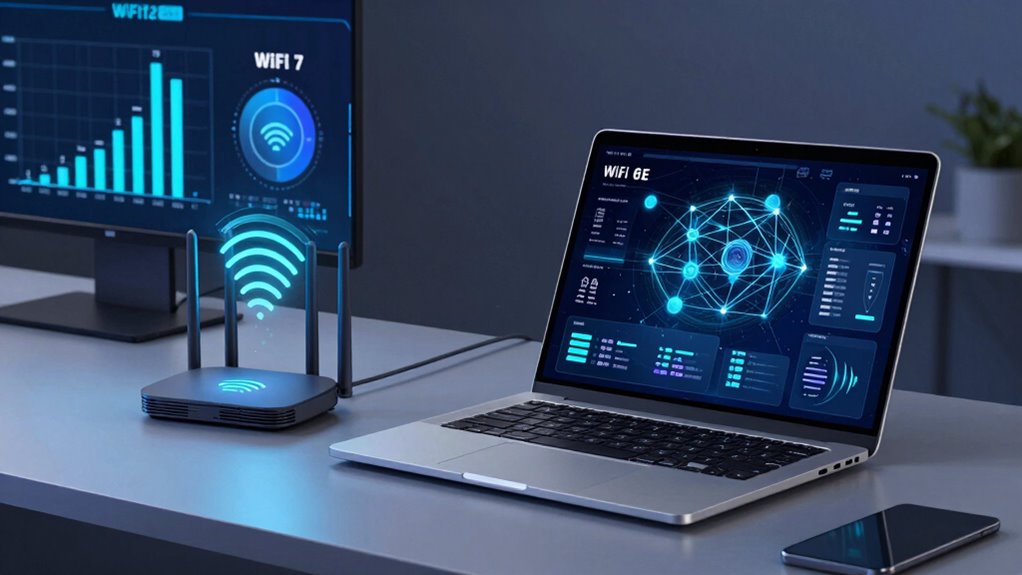

Wi‑Fi 6E offers faster speeds, less interference, and better performance in crowded spaces thanks to its expanded 6 GHz spectrum, making your daily connections more reliable. Wi‑Fi 7 takes it even further with smarter spectrum management, higher speeds, and lower latency, supporting more devices seamlessly. While Wi‑Fi 6E is already making a difference, Wi‑Fi 7 promises bigger improvements as more compatible devices become common. Explore how these upgrades can impact your internet experience.

Get the latest gadgets delivered free — and shop member deals
- Fast, free delivery on millions of items
- Access to Prime Big Deal Days deals on October 6–7
- Prime Video, Amazon Music and more included
Key Takeaways
- Wi‑Fi 6E offers improved performance in crowded areas by expanding spectrum into the 6 GHz band, reducing interference.
- Wi‑Fi 7 will deliver faster speeds and lower latency, enhancing real-time activities like gaming and streaming.
- Device compatibility is crucial; Wi‑Fi 6E benefits depend on supporting hardware, while Wi‑Fi 7 requires new routers and gadgets.
- Both standards improve load management, but Wi‑Fi 7 introduces smarter spectrum management for even smoother user experiences.
- Transition to Wi‑Fi 7 will be gradual, with future device adoption enabling more significant real-world performance benefits.
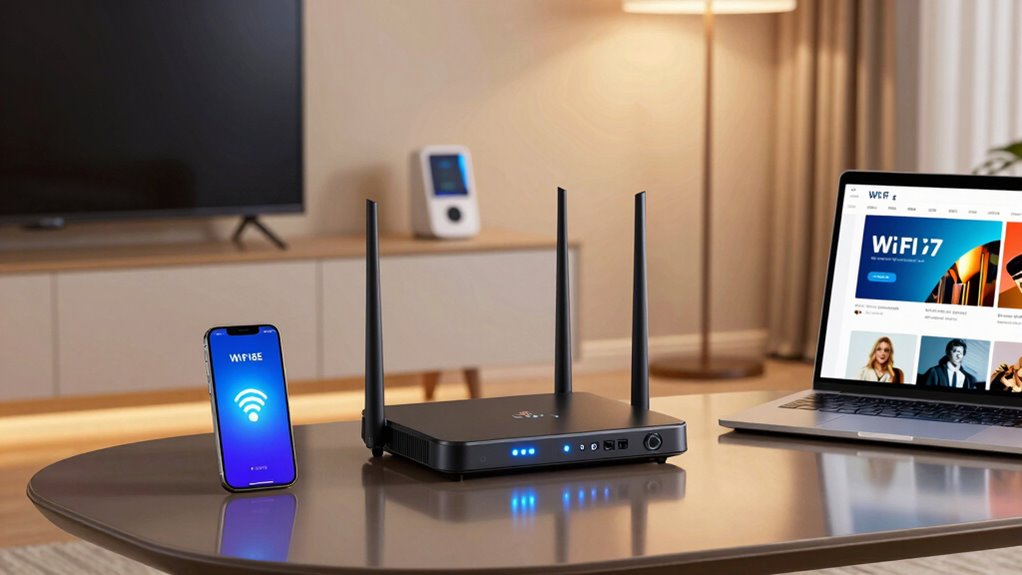
As Wi-Fi technology continues to evolve, understanding the differences between Wi‑Fi 6E and Wi‑Fi 7 becomes essential for optimizing your network. These advancements aim to address common issues like network congestion and improve device compatibility, but they do so in different ways. With Wi‑Fi 6E, you’re getting the benefits of expanded spectrum, primarily in the 6 GHz band, which helps reduce interference and congestion on your network. This means your devices can communicate more efficiently, especially in crowded environments like apartment complexes or offices. However, the impact of Wi‑Fi 6E on device compatibility is somewhat limited. Not all existing devices support the 6 GHz band yet, so you’ll need newer hardware to fully leverage these improvements. If you’re upgrading your network, check whether your devices are compatible with Wi‑Fi 6E to avoid bottlenecks. Additionally, the spectrum expansion in Wi‑Fi 6E significantly enhances network performance in dense environments. As the device ecosystem continues to grow, more gadgets will become compatible with these new standards, making the transition smoother over time.
Wi‑Fi 7 promises to take these improvements even further. It introduces faster speeds, lower latency, and smarter spectrum management. This means your network can handle more devices simultaneously without experiencing the usual slowdown caused by network congestion. Whether you’re gaming, streaming, or working remotely, Wi‑Fi 7 aims to provide a smoother experience. But the real change in daily life depends heavily on device compatibility. As with Wi‑Fi 6E, not all current devices will support Wi‑Fi 7 immediately. You’ll need new routers and compatible gadgets to enjoy its full benefits. The transition might be gradual, but the promise is a future where your network can support a growing number of devices without sacrificing performance.
In real life, these updates mean less frustration during busy times. Say you have multiple smart home gadgets, laptops, tablets, and smartphones all connected simultaneously. Wi‑Wi 6E can help manage that load better than previous standards, but Wi‑Fi 7 will take it even further by intelligently allocating bandwidth and reducing interference. You’ll notice fewer dropouts and buffering, especially in high-demand situations. However, to truly experience these improvements, your devices need to support the latest standards. If you stick with older gadgets, you might not see the full benefits of Wi‑Fi 7 until they become more widespread.
As an affiliate, we earn on qualifying purchases.
Frequently Asked Questions
Will Wi-Fi 7 Be Backward Compatible With Older Devices?
Yes, Wi-Fi 7 will be backward compatible with older devices. You’ll find device compatibility is maintained through firmware updates, allowing your existing devices to connect seamlessly with the new network. This means you don’t have to replace all your gadgets immediately. As Wi-Fi 7 rolls out, manufacturers will likely release updates to guarantee older devices work smoothly, providing you with a smoother shift and continued reliable connectivity.
How Does Wi-Fi 7 Impact Battery Life of Connected Devices?
Wi-Fi 7 can boost your device’s battery life by up to 20%, thanks to advanced battery optimization features. It reduces power consumption during idle periods and streamlines data transfer, making your connected devices more efficient. With smarter power management, you’ll notice longer usage times, especially on smartphones and laptops. This advancement helps keep your devices running smoothly without draining their batteries quickly, enhancing your overall connectivity experience.
Are There Any Security Differences Between Wi-Fi 6E and Wi-Fi 7?
You’ll notice that Wi-Fi 7 introduces enhanced security features compared to Wi-Fi 6E. It supports stronger encryption protocols, making your data more secure against threats. Additionally, Wi-Fi 7 emphasizes improved network segmentation, which helps isolate devices and limit potential attack surfaces. These updates offer better protection for your connected devices, giving you peace of mind while browsing or transmitting sensitive information over your Wi-Fi network.
What Are the Cost Differences Between Upgrading to Wi-Fi 6E and Wi-Fi 7?
Think of upgrading your Wi-Fi like planting a new garden—costs can grow quickly. Upgrading to Wi-Fi 6E usually costs less, with lower upgrade expenses for routers and compatible devices. Moving to Wi-Fi 7, however, involves a higher cost comparison, as you’ll need newer, more advanced equipment. If you’re budget-conscious, Wi-Fi 6E offers a smoother progression, while Wi-Fi 7 promises future-proofing but at a steeper price.
When Will Wi-Fi 7 Become Widely Available to Consumers?
Wi-Fi 7 is expected to become widely available to consumers around 2024 or 2025, as future adoption depends on technological advancements and industry readiness. You’ll likely see devices and routers supporting Wi-Fi 7 entering the market then, offering faster speeds and better performance. Keep an eye on tech announcements, because early adoption may start sooner for high-end users enthusiastic to benefit from the latest wireless innovations.
Conclusion
As you step into the future of wireless connectivity, Wi-Fi 6E offers a broader, less congested spectrum, easing your daily online activities. But with Wi-Fi 7 on the horizon, you’re looking at even faster speeds and lower latency, transforming how you stream, game, and work. It’s like upgrading from a smooth highway to an ultra-fast express lane—both improve your journey, but Wi-Fi 7 promises a leap into a new world of seamless, real-time connectivity.
Fall Picks
fall essentials
As an affiliate, we earn on qualifying purchases.