To fix Wi-Fi dead zones quickly, start by placing your main router in a central, open spot away from thick walls and interference sources. Position mesh satellites halfway between the router and weak coverage areas, elevating them on shelves for better reach. Use signal strength apps to find the best spots, and adjust placement based on coverage feedback. For more tips on optimizing your mesh network, continue exploring effective placement strategies.
Key Takeaways
- Position the main router centrally in an open, elevated spot away from obstacles for better initial coverage.
- Place mesh satellites midway between the router and dead zones, avoiding thick walls and metal objects.
- Reposition nodes based on signal feedback, moving closer together or to more open areas to eliminate coverage gaps.
- Keep devices away from interference sources like electronics and thick walls to maintain strong, stable signals.
- Use signal strength apps to quickly identify weak spots and adjust placement within five minutes for optimal coverage.
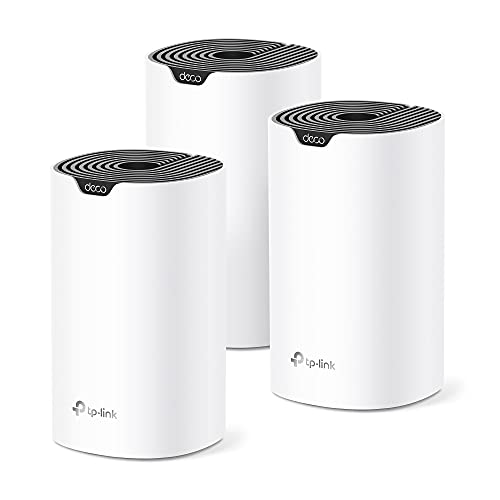
TP-Link Deco S4 Mesh AC1900 WiFi System – Up to 5,500 Sq.ft. Coverage, Replaces WiFi Router and Extender, Gigabit Ports, Works with Alexa, Deco S4(3-Pack)
A New Way to WiFi: Deco Mesh technology gives you a better WiFi experience in all directions with…
As an affiliate, we earn on qualifying purchases.
As an affiliate, we earn on qualifying purchases.
How to Identify Dead Zones in Your Home Quickly

Identifying dead zones in your home is essential for guaranteeing a strong, reliable Wi-Fi signal throughout. To do this quickly, start by walking around your space with a Wi-Fi analyzer app or a signal strength meter. Note areas where the connection drops or weakens markedly. Check your router firmware to guarantee it’s up to date, as updates can improve signal performance. Signal boosters can help eliminate dead zones, but first, you need to pinpoint their locations. Use your device’s Wi-Fi settings to test different rooms and identify spots with poor coverage. Once you find these dead zones, you can plan for ideal placement of your mesh Wi-Fi nodes or consider adding signal boosters to strengthen weak signals. This process makes your network more reliable and efficient. Understanding signal propagation can help you better interpret the results from your testing.

Wi-Fi Analyzer
Generates a snapshot view of nearby Wi-Fi signals
As an affiliate, we earn on qualifying purchases.
As an affiliate, we earn on qualifying purchases.
Why Proper Mesh Wi-Fi Placement Is Key for Full Coverage

Proper mesh Wi-Fi placement is vital for ensuring full coverage in your home. You need to position your routers for peak signal strength and avoid areas with interference. Doing so helps eliminate dead zones and keeps your connection fast and reliable. Additionally, understanding the importance of work-life harmony can help you manage your digital environment more effectively. Optimizing your router placement ensures optimal signal distribution across your space, preventing weak spots. Incorporating herbal wellness practices into your routine can promote relaxation and reduce digital stress, creating a healthier overall environment. Being aware of potential interference sources can further enhance your network performance and stability. Recognizing wireless signal interference sources like appliances or thick walls can guide better placement decisions.
Optimal Router Placement
To guarantee your mesh Wi-Fi system delivers reliable coverage throughout your home, placing your routers strategically is essential. Start by finding central locations in your home, avoiding walls and obstructions that can weaken signals. Proper router calibration ensures each device communicates effectively, so position units where they can ideally connect without interference. Elevate routers slightly off the floor, such as on shelves or countertops, to boost signal strength and coverage. Keep routers away from electronics that cause interference, and ensure they’re not tucked into cabinets or tight spaces. Signal boosting can be achieved by adjusting the placement to maximize coverage and minimize dead zones. Additionally, understanding how whole-home water systems impact overall home efficiency can help you create a safer and more comfortable environment. Proper placement can also help prevent signal degradation, ensuring consistent internet speeds across your space. Using performance cookies to analyze your network’s performance can inform better placement decisions. Remember, the right placement directly impacts your network’s performance, making your mesh Wi-Fi system more reliable and efficient. Home safety considerations also play a role in choosing optimal locations, ensuring that the placement does not interfere with other daily activities or safety features.
Avoid Signal Interference
Placing your mesh Wi-Fi routers thoughtfully helps prevent signal interference that can weaken your network. Signal overlap from multiple routers or interference sources like cordless phones, microwaves, and Bluetooth devices can cause disruptions. To minimize this, keep routers away from these interference sources. Also, avoid placing routers too close together, which can increase signal overlap and worsen interference. Here are some tips:
- Position routers away from thick walls or metal objects.
- Keep them at least a few feet apart to reduce signal overlap.
- Avoid placing routers near electronics that emit electromagnetic interference.
- Place routers in elevated, open locations for better coverage.
- Being mindful of signal interference sources can significantly improve your Wi-Fi performance. Additionally, understanding how electromagnetic interference impacts wireless signals can help you choose optimal locations for your devices and prevent issues caused by body jewelry materials that may emit or be affected by electromagnetic fields.

NETGEAR Orbi Whole Home Tri-Band Mesh Add-on Satellite (RBS750) – Works with Your Orbi WiFi 6 System| Adds up to 2,500 sq. ft. Coverage | AX4200 (Up to 4.2Gbps)
Compatible with RBK752 Orbi WiFi 6 System.
As an affiliate, we earn on qualifying purchases.
As an affiliate, we earn on qualifying purchases.
Best Practices for Placing Your Main Router and Mesh Satellites

To get the best coverage, you need to place your main router in a central, open spot away from obstacles. Position your mesh satellites at strategic points to maximize signal reach without creating dead zones. Proper placement of both guarantees a strong, seamless Wi-Fi experience throughout your home. Additionally, understanding Free Floating can help you plan your home setup around your travel schedule to ensure reliable internet wherever you go.
Ideal Router Placement
Achieving ideal Wi-Fi coverage hinges on strategically positioning your main router and mesh satellites. Proper placement ensures strong signals and enhances router security by reducing exposure to potential threats. Keep these tips in mind:
- Place your router centrally in your home to maximize coverage.
- Elevate the router off the floor, avoiding obstructions like furniture or thick walls.
- Keep the main router away from electronics that cause interference, such as microwaves.
- Make certain your Wi-Fi encryption settings are enabled and secure to protect your network.
- Be mindful of microplastics in dust, which can settle on your devices and potentially impact their performance and longevity.
Optimal Satellite Positioning
Since the main router sets the foundation for your mesh network, positioning your satellites thoughtfully is essential for seamless coverage. Proper satellite alignment ensures each satellite communicates efficiently with the main router and other nodes, minimizing dead zones. Aim to place satellites halfway between your router and the coverage gaps, avoiding obstructions like thick walls or metal objects. Once positioned, perform signal calibration to maximize performance; this adjusts for interference and ensures strong connections. Keep satellites at an ideal height—about waist to chest level—to improve signal strength. Regularly check the mesh network’s connection quality, and reposition satellites if you notice weak spots. Understanding signal propagation can help you optimize placement further for better coverage, ensuring your entire space remains connected and free of dead zones. Additionally, considering interference sources such as microwaves or neighboring networks can help you refine your placement for optimal results. Thoughtful satellite placement, combined with proper signal calibration, creates a robust mesh network that eliminates dead zones. Being aware of environmental factors can further enhance your mesh Wi‑Fi’s reliability and coverage.

2026 WiFi Extender Signal Booster – 2.4GHz 300Mbps WiFi Booster for Home, Covers Up to 9999 Sq. Ft, Easy Setup, Ethernet Port & Access Point, Stable Internet Performance with 60+ Devices
STABLE & FAST 300Mbps WiFi EXTENDER: Advanced central processing unit and powerful new-generation chips,High-speed up to 300Mbps in…
As an affiliate, we earn on qualifying purchases.
As an affiliate, we earn on qualifying purchases.
Easy Tips to Optimize Mesh Node Placement in Minutes

Optimizing your mesh Wi-Fi node placement doesn’t have to be complicated or time-consuming. Start by updating your router firmware to ensure your network runs smoothly. Next, consider your mesh network topology; place nodes where signals can hop efficiently without overload. Here are some easy tips:
- Position nodes at the center of your home, avoiding walls and large furniture.
- Keep nodes elevated—on shelves or high furniture—for better coverage.
- Avoid placing nodes near appliances or metal objects that can interfere with signals.
- Test different spots quickly, adjusting until you find a strong, consistent connection.
- Use mesh Wi-Fi systems designed for seamless coverage, making placement adjustments more effective.
- Incorporate urban greening principles by choosing locations that minimize interference from nearby reflective surfaces or dense structures, enhancing signal quality.
- Remember that coaching and mentoring can be useful for troubleshooting and optimizing your network setup, especially when facing persistent dead zones. Additionally, understanding network topology helps in designing an efficient and resilient coverage plan.
How to Use Signal Strength Tools to Find the Best Spot

Using signal strength tools makes it easier to find the best spot for your mesh nodes. These tools help you visualize Wi-Fi signal strength across your home, showing where your Wi-Fi antennas are most effective. By testing different locations, you can identify spots with strong signals that maximize coverage. Signal boosters or apps can display real-time data, helping you pinpoint dead zones or weak areas. When testing, look for areas where the signal is strongest and most stable. Avoid placing nodes near metal objects or thick walls that can interfere with signal strength. Using these tools guarantees your mesh nodes are placed ideally, providing reliable coverage and eliminating dead zones efficiently. This approach saves time and guarantees better Wi-Fi performance throughout your home.
Common Placement Mistakes That Hurt Your Wi-Fi Performance
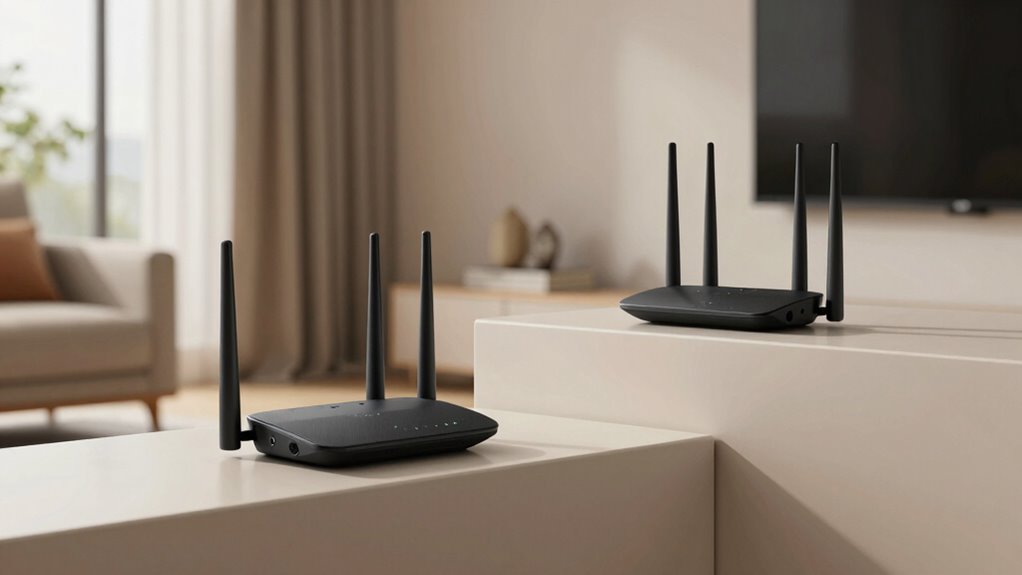
One common mistake is placing your mesh nodes near obstacles like thick walls or appliances, which can block signals. Ignoring central locations can cause uneven coverage and dead zones in your home. Additionally, overlooking signal overlap may lead to interference and slower speeds, hurting your overall Wi-Fi performance.
Placing Near Obstacles
Placing your mesh Wi-Fi router near obstacles can considerably reduce its signal strength and coverage. Obstacle placement and furniture interference block or weaken signals, creating dead zones. To avoid this, keep your router free from nearby objects.
Here are common mistakes to watch out for:
- Storing the router behind thick furniture or inside cabinets.
- Placing it near metal objects, like filing cabinets or mirrors.
- Positioning it close to appliances that emit interference, like microwaves.
- Setting it on the floor instead of higher, open surfaces.
Ignoring Central Locations
To make certain your Wi-Fi signal covers your entire home effectively, it’s essential to choose a central location for your router. Avoid placing it near walls, corners, or far from your main living areas. A central location ensures even coverage and reduces dead zones. Keep the router at a good height—ideally on a shelf or high furniture—since higher placement improves signal distribution. Ignoring this simple rule leads to weak signals and inconsistent performance. Use the table below to visualize central placement ideas:
| Location Type | Ideal Height | Placement Tips |
|---|---|---|
| Living Room | Eye-level or higher | Away from thick walls |
| Hallways | Elevated surface | Keep clear of obstructions |
| Central Room | Shelves or high furniture | Maximize coverage |
| Near Windows | Top shelf | Avoid direct sunlight |
| Open Space | Elevated spot | Minimize interference |
Overlooking Signal Overlap
Failing to account for signal overlap can considerably weaken your Wi-Fi performance. When your mesh nodes are too close, their signals overlap, leading to channel interference that slows down your network. To avoid this, consider these common mistakes:
- Placing nodes right next to each other, increasing signal overlap.
- Using the same Wi-Fi channel for multiple nodes, causing channel interference.
- Not checking signal strength, which can lead to overlapping coverage zones.
- Ignoring how walls or furniture can amplify signal overlap issues.
Apps and Tools to Test and Improve Your Mesh Wi-Fi Coverage

Testing and optimizing your mesh Wi-Fi coverage is easier with the right apps and tools. These tools help you identify dead zones, signal strength issues, and interference sources, making sure your smart home devices stay connected reliably. For example, Wi-Fi analyzer apps like NetSpot or Ekahau let you visualize coverage and pinpoint weak spots. Many of these tools also include features to assess network security, helping you spot vulnerabilities that could compromise your network. By regularly testing your coverage, you can make informed decisions about placement and configuration. Using these apps ensures your mesh system provides seamless connectivity, enhances your smart home experience, and keeps your network secure. Staying proactive with testing tools simplifies maintaining the best Wi-Fi coverage and security.
How to Reposition Mesh Units for Better Coverage

Repositioning your mesh units can substantially improve Wi-Fi coverage, especially when you notice dead zones or weak signals in certain areas. To optimize placement, consider these tips:
Rearranging your mesh units can boost Wi-Fi coverage and reduce dead zones effectively.
- Avoid placing units near thick walls or large metal objects that cause interference.
- Elevate units on shelves or mounts to reduce obstructions.
- Keep units within a reasonable distance to prevent network congestion, but avoid placing them too close, which can cause signal overlap.
- Check for firmware updates, as manufacturers often release improvements that enhance coverage and stability.
Should You Adjust Placement for Different Home Layouts?
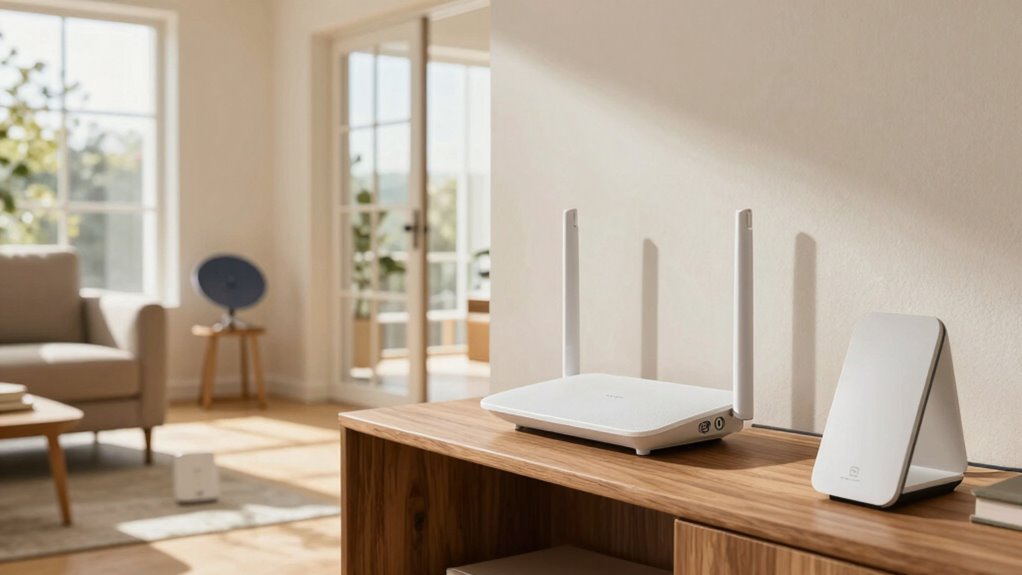
Your home’s layout plays a crucial role in how effectively your mesh Wi-Fi system provides coverage. Open floor plans and minimal walls allow signals to travel easily, so placement adjustments may be less necessary. However, if your home has thick walls, multiple levels, or unusual room configurations, you’ll need to adapt your setup. Consider how your home decor influences placement—large furniture or decorative elements can obstruct signals. Additionally, security considerations matter; avoid placing mesh units in accessible or unsecured areas to prevent tampering. Tailoring your placement to your specific home layout ensures consistent coverage and excellent performance. By understanding your home’s structure and design, you can make smarter decisions that improve Wi-Fi reliability without compromising aesthetics or safety.
Troubleshooting Persistent Dead Zones: What to Do Next

Persistent dead zones can be frustrating, but understanding the next steps is key to resolving them. First, consider adding a signal booster to strengthen weak signals in stubborn areas. Second, optimize your network segmentation by creating dedicated channels or SSIDs for different devices, reducing congestion. Third, move your mesh nodes closer together or reposition them to improve coverage. Fourth, check for interference from appliances or thick walls, and adjust accordingly. If dead zones persist, replacing or adding a range extender or a dedicated access point may be necessary. These steps help identify whether the issue is a weak signal or network congestion, guiding you toward a more reliable Wi-Fi setup. Taking action ensures smoother connectivity and fewer dead zones.
Frequently Asked Questions
How Often Should I Reposition My Mesh Nodes for Optimal Coverage?
You should reposition your mesh nodes whenever you notice dead zones or slow Wi-Fi speeds. Typically, doing this every few months helps maintain signal enhancement, especially as your home layout or furniture changes. Repositioning nodes regularly ensures they stay in ideal spots, preventing interference and maximizing coverage. Keep an eye on your Wi-Fi performance, and adjust node placement as needed to keep your network fast and reliable.
Can Furniture or Appliances Affect My Mesh Wi-Fi Placement Choices?
Imagine your Wi-Fi signals as gentle waves flowing through your home. Furniture placement and appliance interference can block or weaken these waves, creating dead zones. Large metal appliances or thick walls absorb signals, while cluttered furniture can cause interference by scattering the signal. To keep your mesh Wi-Fi strong, place nodes away from bulky furniture and appliances, ensuring clear paths for the signals to reach every corner of your home.
What Are the Signs Indicating a Mesh Node Is Poorly Positioned?
You’ll notice signal degradation or frequent device disconnections when a mesh node is poorly positioned. If your Wi-Fi slows down in certain areas or devices keep disconnecting, it’s a sign that the node isn’t ideally placed. Move it closer to your main router or higher up, avoiding obstructions like thick walls or furniture. Proper placement ensures a strong, seamless connection across your home.
How Does Home Construction Material Influence Wi-Fi Placement Strategies?
Think of your home as a fortress where building materials are like walls that block or absorb signals. Concrete, brick, and metal cause Wi-Fi interference, making it harder for signals to travel. To optimize your mesh network, place nodes where signals can bounce or pass through less dense materials, like drywall. Adjust your placement based on these materials, ensuring strong coverage without interference, much like guiding light through clear windows.
Are There Specific Placement Tips for Multi-Story Homes?
For multi-story homes, place your mesh nodes on different floors, avoiding stairs connectivity issues and wall interference. Position the main router near the center of your home, preferably on the bottom floor, and place additional nodes midway up stairs or on upper levels. Keep them elevated and free from thick walls or metal objects. This setup guarantees better coverage and minimizes dead zones across all levels.
Conclusion
So, next time you find yourself frustrated with dead zones, remember that a quick repositioning might just be the coincidence you need. With the right tools and a little trial, full coverage is within your reach—no tech expert required. Sometimes, a simple move can turn your Wi-Fi from frustrating to flawless. Keep experimenting, and you’ll uncover that perfect spot where your connection finally feels seamless—just like it was meant to be.