
To build a weekly planning system that sticks, choose a specific time each week to review and keep your process simple with tools like digital calendars or notebooks. Make planning a regular part of your routine, pairing it with habits like your morning coffee. Stay flexible and adapt your system as priorities change. Celebrate small wins to stay motivated. Keep following these tips, and you’ll discover how sustainable and effective your planning can become.
Key Takeaways
- Establish a consistent weekly time to review and plan, turning it into a habitual routine.
- Keep your planning process simple with digital tools or notebooks, avoiding complex systems.
- Use reminders or cues to reinforce regular planning and integrate it into existing daily habits.
- Regularly review and adapt your system to stay relevant and maintain flexibility.
- Celebrate small wins and progress to boost motivation and reinforce the habit of planning.
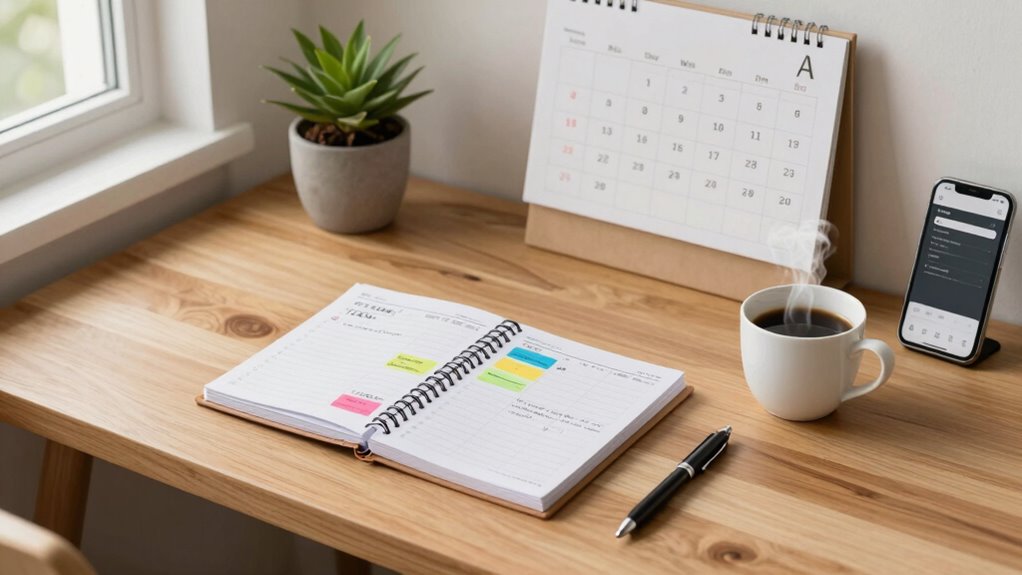
Creating a weekly planning system that actually sticks can feel overwhelming, especially with busy schedules and endless to-do lists. The key is to focus on habit formation and effective time management. When you develop a consistent routine around planning, it becomes second nature rather than a chore. Start by choosing a specific time each week—perhaps Sunday evening or Monday morning—to review your upcoming commitments. This regularity helps turn planning into a habit, so it becomes part of your routine rather than an afterthought. Consistency is essential; the more you do it at the same time, the more automatic it becomes.
Establish a weekly routine to review commitments, making planning a natural and automatic part of your week.
Next, keep your planning process simple. Overloading yourself with intricate systems or elaborate templates can make it seem intimidating. Instead, use a straightforward method, like a digital calendar or a dedicated notebook. The goal is to create a system that’s easy to maintain. When you keep things manageable, you’re more likely to stick with it long-term. Incorporate your planning into your daily routines—set reminders, allocate specific blocks of time, or pair planning with another habit, like having your morning coffee. These small cues reinforce the habit and make your weekly planning feel less like an extra task and more like a natural part of your week. Recognizing the importance of habit formation can significantly improve your likelihood of success.
Developing a consistent routine around planning creates a positive feedback loop that makes it easier to maintain over time. Recognizing the value of repetition can also help solidify your new habits and ensure they become ingrained in your lifestyle. Additionally, understanding how time management influences your productivity can help you allocate your efforts more effectively. It’s also helpful to periodically review and adjust your system to stay aligned with your evolving priorities, which reinforces the importance of adaptability in maintaining a sustainable routine.
Finally, celebrate your consistency. Recognize your efforts and improvements, no matter how small. Building a system that sticks takes time, but with steady habit formation and good time management, it becomes easier with each week. Over time, your weekly planning will become a natural part of your routine, helping you stay organized, reduce stress, and make steady progress toward your goals.

Rocketbook Reusable Smart Everyday Planner, Executive 6×8.8, Black
- Reusable Planner with Multiple Templates: Includes Daily, Weekly, Monthly, and Annual pages
- Undated and Flexible Layouts: Easily update plans and notes, no date restrictions
- Pen and Paper Feel: Smooth writing with patented paper technology
As an affiliate, we earn on qualifying purchases.
As an affiliate, we earn on qualifying purchases.
Frequently Asked Questions
How Do I Stay Motivated to Stick With My Weekly Plan?
To stay motivated, focus on habit formation by making your weekly plan a daily routine. Break tasks into smaller steps and celebrate small wins to keep momentum. Use accountability strategies like sharing goals with a friend or tracking progress visually, which boosts commitment. Remind yourself of your purpose regularly, and adjust your plan as needed to stay engaged. Consistency and accountability are key to maintaining motivation long-term.
What Tools Are Best for Digital Weekly Planning?
Imagine you’re in the days of typewriters, but today, digital calendars and planning apps make scheduling effortless. The best tools for digital weekly planning include Google Calendar for seamless sync across devices, Todoist for task management, and Notion for customizable planning. These apps help you stay organized, set reminders, and adapt plans on the fly. Choose what fits your style, and you’ll find it easier to stick with your weekly goals.
How Can I Adjust My Plan for Unexpected Changes?
When unexpected changes occur, you can adjust your plan by implementing contingency planning and flexibility strategies. Review your priorities and identify tasks that can be postponed or delegated. Update your schedule accordingly, allowing buffer time for surprises. Embrace adaptability, and stay open to modifying your plan as needed. Regularly reassessing your priorities helps you stay on track, even when circumstances shift unexpectedly.
What Should I Do if I Miss a Week’s Planning?
Missing a week’s planning is like losing your compass, but you can recalibrate. First, review missed deadlines and adjust your schedule accordingly. Reach out to accountability partners for support and guidance. Then, carve out time to catch up on pending tasks. Remember, consistency is key, so don’t beat yourself up—just realign your focus, learn from the slip, and get back on track with renewed clarity and purpose.
How to Balance Work, Personal, and Leisure in Planning?
To balance work, personal, and leisure in your planning, prioritize effective time management and clear goal setting. Allocate specific blocks for work tasks, personal activities, and relaxation, ensuring each gets attention. Use your goals to guide daily priorities, preventing overcommitment. Regularly review and adjust your plan to stay aligned with your objectives. This approach helps you maintain a healthy balance and keeps your weekly planning practical and sustainable.
Conclusion
By creating a weekly planning system that fits your life and sticking to it, you’ll boost your productivity and reduce stress. Remember, nearly 60% of people find that consistent planning improves their overall time management. So, start small, stay flexible, and make planning a habit. When you do, you’ll find yourself more organized, focused, and ready to tackle your week with confidence. Consistency is key—your future self will thank you for it.