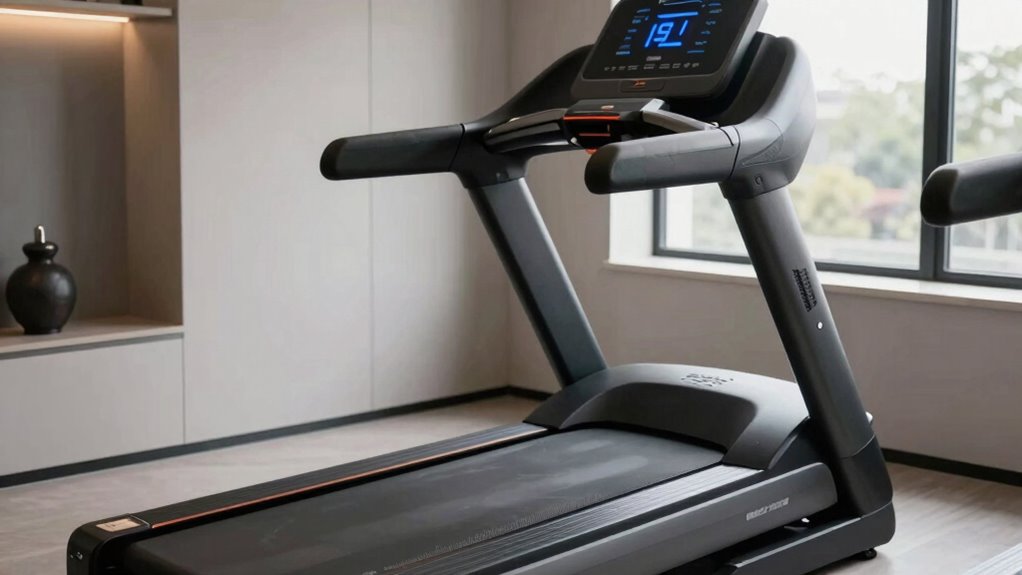
To predict your home treadmill’s durability, focus on the motor’s continuous duty rating, which shows how well it handles sustained use. Look for a motor with at least 2.5 HP for reliability, and prioritize build quality and efficient design, as these reduce heat and wear over time. A quieter, well-cooled motor signals better engineering and longer lifespan. If you want to understand more about motor specs that keep your treadmill running smoothly, keep exploring further.
Key Takeaways
- Prioritize motors with a continuous duty rating for consistent, long-term performance.
- Look for motors with 2.5 HP or higher for better durability and power.
- Choose well-designed motors with advanced cooling systems to prevent overheating.
- Opt for quieter motors indicating higher build quality and reliable operation.
- Assess overall build quality, including sturdy frames and quality components, to ensure longevity.
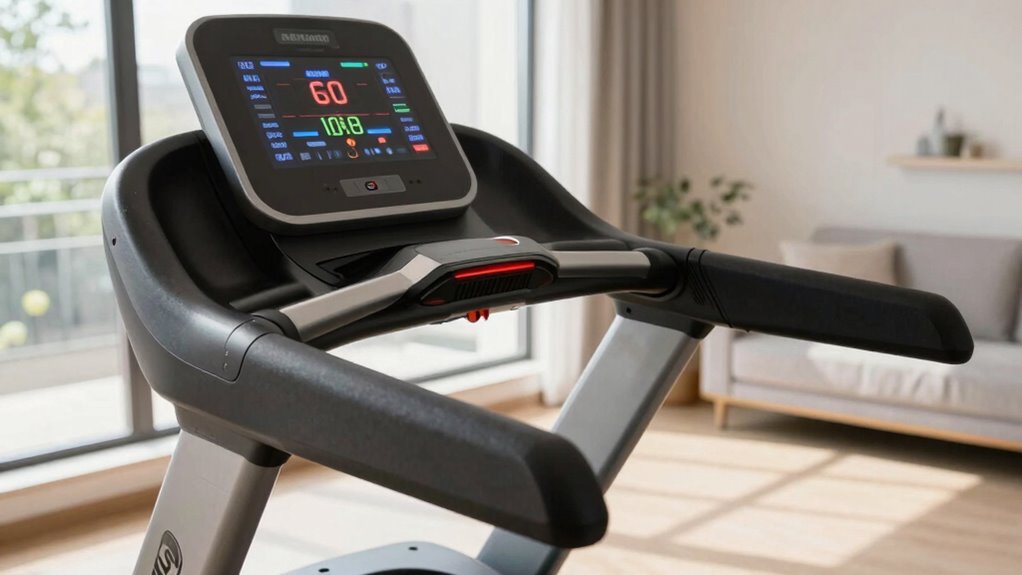
Are you considering adding a home treadmill to your fitness routine? If so, understanding the motor specifications that predict durability can save you money and frustration down the line. When evaluating different models, pay close attention to the running surface and motor noise, as these factors directly impact the treadmill’s longevity and your workout experience. A larger, well-cushioned running surface not only makes your workouts more comfortable but also reduces strain on the motor, helping it last longer. If the surface is too narrow or uneven, the motor works harder to maintain speed and stability, increasing wear and tear over time. Ideally, look for a treadmill with a running surface that provides ample space—at least 20 inches wide and 55 inches long for running, or slightly smaller if you’re walking. A good surface width ensures your gait remains natural, preventing unnecessary stress on the motor and frame. Additionally, considering the motor specs such as continuous duty rating and build quality can give you a clearer picture of the treadmill’s expected lifespan. Moreover, motor efficiency can significantly impact overall durability, as more efficient motors tend to produce less heat and operate more reliably over time.
Furthermore, examining motor design and engineering can reveal insights into how well the motor will perform over extended periods. A well-designed motor often incorporates better cooling mechanisms, which enhance durability and extend its operational life. Equally important is the motor noise, which can give you clues about the treadmill’s durability. A quieter motor generally indicates better construction and quality components. When testing models, listen for any grinding or rattling sounds during operation; loud or irregular noises might suggest inferior parts or poor assembly, which could lead to breakdowns sooner. Conversely, a smooth, consistent hum indicates a well-built motor designed for prolonged use. Manufacturers often specify motor horsepower (HP), with 2.5 HP or higher suitable for most home users. But horsepower alone isn’t enough—consider the motor’s continuous duty rating, which reflects how well it can handle extended workouts without overheating or failing. Look for models with motors rated for continuous operation, as they tend to be more durable.
It’s also worth noting that the overall design and build quality influence motor longevity. A sturdy frame and quality components reduce vibrations and mechanical stress, safeguarding the motor over time. When shopping, read reviews about long-term performance, paying attention to users who mention motor reliability. Remember, a treadmill with a powerful, quiet motor and a generous running surface is more likely to withstand frequent use and last for years. By focusing on these motor specs—particularly the running surface and noise level—you can choose a home treadmill that offers consistent performance and durability, making your investment worthwhile.
home treadmill with 2.5 HP motor
As an affiliate, we earn on qualifying purchases.
As an affiliate, we earn on qualifying purchases.
Frequently Asked Questions
How Often Should I Service My Treadmill for Optimal Durability?
You should service your treadmill every 3 to 6 months for maximum durability. Regularly check and adjust belt alignment to prevent uneven wear, and guarantee proper lubrication frequency—typically every 150 miles or so—to keep the belt running smoothly. Keep an eye on the motor and deck, and clean the surfaces regularly. Consistent maintenance helps extend your treadmill’s lifespan and keeps it running quietly and efficiently.
Are Higher Horsepower Motors Quieter During Operation?
Higher horsepower motors often operate more quietly during use because they typically run at lower RPMs for the same workload, reducing motor noise. Additionally, these motors tend to be more power-efficient, translating to smoother, quieter operation overall. So, if you want a treadmill with less noise and better power efficiency, opting for a higher horsepower motor can make a noticeable difference in your workout experience.
Do Treadmill Motor Specs Affect Energy Consumption?
Imagine your treadmill as a steady, reliable engine working tirelessly. The motor specs directly influence its energy efficiency and power consumption—higher-quality motors typically use power more wisely, reducing energy waste. When you choose a treadmill with efficient motor specs, you’ll notice lower power consumption, saving you money and energy. So, yes, motor specs do affect energy efficiency, helping you work out longer without stressing your utility bill.
Can Motor Size Indicate Overall Treadmill Build Quality?
Yes, motor size can indicate overall build quality, but it’s not the only factor to take into account. A larger motor often suggests better motor longevity and durability, reflecting solid build quality indicators. However, other components like the frame, cushioning, and electronics also matter. When choosing a treadmill, look for a robust motor combined with quality construction to guarantee long-lasting performance and a reliable workout experience.
What Maintenance Issues Are Most Common With High-Powered Motors?
You might face serious issues with high-powered motors, feeling like you’re battling a relentless beast. Common maintenance concerns include increased wear and tear, which can shorten motor lifespan. Over time, you’ll notice overheating, belt misalignments, or strange noises as signs of strain. Regular lubrication, cleaning vents, and checking connections help, but neglecting these can turn your treadmill into a costly paperweight. Stay proactive to keep that powerful motor running smoothly for years.
Conclusion
Just like the steady pulse of a hero’s journey, your choice in treadmill motor specs can predict how long your own adventure lasts. By understanding the importance of horsepower and build quality, you equip yourself for a durable, reliable workout partner. Don’t settle for fleeting features—think of your treadmill as a steadfast companion like the legendary explorers, enduring through the ages. Choose wisely, and your fitness story will be one of perseverance and triumph.