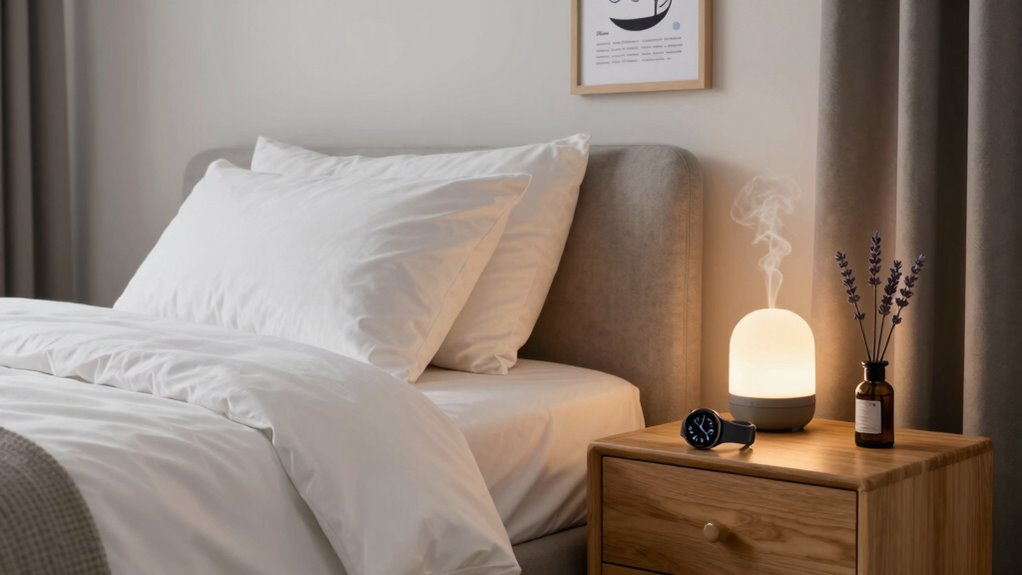

To improve your sleep, focus on creating a sleep-friendly environment by keeping your room cool, dark, and quiet. Establish a calming pre-bed routine, avoid screens an hour before sleep, and stick to consistent bedtime and wake-up times. Limit caffeine and heavy meals late in the day, incorporate daily exercise, and guarantee good air quality. Small changes in these areas can make a big difference—continue exploring to discover how these levers can transform your rest.
Listen free for 30 days with Audible
Thousands of audiobooks and originals — cancel anytime.
As an affiliate, we earn on qualifying purchases.
Key Takeaways
- Maintain a consistent sleep schedule, going to bed and waking up at the same times every day.
- Create a sleep-friendly environment by controlling light, noise, and temperature for optimal rest.
- Establish a relaxing pre-sleep routine, avoiding screens and stimulating activities before bed.
- Limit caffeine, alcohol, and heavy meals close to bedtime to improve sleep quality.
- Incorporate daily physical activity and ensure proper air circulation to enhance overall sleep hygiene.

Getting enough quality sleep is essential for your overall health and well-being, and establishing good sleep habits can make a big difference. One imperative aspect of this is creating a sleep environment that promotes rest. Your sleep environment should be cool, dark, and quiet. Invest in blackout curtains or a sleep mask to block out light, as darkness helps signal your body that it’s time to wind down. Keep your room at a comfortable temperature, around 60-67°F (15-19°C), to prevent overheating or feeling too cold, both of which can disrupt sleep. Minimize noise using earplugs or white noise machines, so external sounds don’t disturb your rest. Your bed should be comfortable, with a supportive mattress and pillows that suit your preferred sleeping position.
Create a restful sleep space with a cool, dark, quiet room and a comfortable bed to improve sleep quality.
Dream analysis can also offer insights into your sleep quality and emotional health. If you wake up feeling tired or anxious, keeping a dream journal might help you understand recurring themes or fears that influence your sleep. Pay attention to your dreams and how they make you feel; this awareness can help you identify stressors or unresolved issues that affect your sleep hygiene. Sometimes, dreams reflect your subconscious worries or unresolved conflicts, and addressing these can improve your overall sleep quality. Engaging in relaxing pre-sleep routines, like reading or taking a warm bath, can also promote a peaceful mind conducive to restful sleep. Avoid screens at least an hour before bed, as the blue light emitted by phones and computers suppresses melatonin production, making it harder to fall asleep.
Your sleep schedule plays a crucial role in maintaining good sleep hygiene. Going to bed and waking up at consistent times helps regulate your internal clock, making it easier to fall asleep and wake up refreshed. Even on weekends, try to stick to your regular sleep routine. Also, be mindful of what you consume before bed. Caffeine, alcohol, and heavy meals can interfere with your ability to fall asleep or cause fragmented sleep. Limit caffeine intake after mid-afternoon and avoid large meals close to bedtime. Additionally, air quality within your sleep space can influence sleep quality and overall health. Ensuring proper air circulation can help reduce allergens and pollutants that may disturb sleep or impact respiratory health. Improving air quality might also involve using air purifiers, which can create a cleaner environment for better rest. Furthermore, maintaining good ventilation can help prevent the buildup of indoor pollutants, supporting overall sleep health.
Finally, incorporate physical activity into your daily routine, but avoid vigorous exercise close to bedtime, as it can increase alertness. By paying close attention to your sleep environment, understanding your dreams, and maintaining consistent habits, you set the stage for high-quality sleep. Small adjustments in these areas can lead to significant improvements in how you feel each day. Remember, good sleep hygiene isn’t just about quantity but about creating conditions that make restful, restorative sleep possible.
As an affiliate, we earn on qualifying purchases.
Frequently Asked Questions
How Long Should I Follow a Sleep Hygiene Routine Before Seeing Results?
You should follow your sleep hygiene routine consistently for at least two to three weeks before noticing noticeable improvements. Your sleep pattern needs time to stabilize, and routine consistency is key. Stick with your habits daily, including regular bedtimes and limiting screen time before sleep. If you stay committed, you’ll likely see better sleep quality and overall restfulness within this timeframe. Patience and consistency are essential for long-term results.
Can Sleep Hygiene Improve Sleep for Shift Workers?
Did you know that over 20% of the workforce are shift workers, often facing circadian disruption? Sleep hygiene can considerably improve your sleep despite shift work challenges. By maintaining consistent sleep routines, controlling light exposure, and avoiding stimulants before bed, you can help realign your internal clock. While it may not eliminate all issues, good sleep hygiene offers a practical way to boost sleep quality during irregular schedules.
Are There Any Risks Associated With Strict Sleep Hygiene Practices?
Strict sleep hygiene practices can carry risks, like the risk of over restriction, which might lead you to become obsessive or anxious about your sleep routine. This can negatively impact your mental health, causing stress or frustration if your sleep doesn’t improve as expected. It’s important to find a balanced approach, maintaining good habits without overdoing it, to avoid these potential risks and support overall well-being.
How Do I Handle Sleep Disruptions Caused by Anxiety?
When anxiety crashes your bedtime party, don’t panic—embrace relaxation techniques like deep breathing or progressive muscle relaxation. It’s like telling your brain, “Hey, chill out, we’re not solving world peace tonight.” Prioritize anxiety management strategies, such as mindfulness or journaling, to break the cycle. Remember, a calm mind equals better sleep. So, relax, breathe, and let those worries drift away—your pillow’s waiting.
Is Sleep Hygiene Effective for Treating Chronic Insomnia?
Yes, sleep hygiene can be effective for treating chronic insomnia. By improving sleep quality and maintaining sleep consistency, you help your body establish a healthier sleep pattern. Simple habits like sticking to a regular bedtime, avoiding screens before sleep, and creating a calming environment support better rest. While it might not resolve all cases alone, consistent sleep hygiene practices markedly enhance your chances of overcoming chronic insomnia.
Conclusion
By following these eight key levers, you can transform your sleep routine into a well-oiled machine, much like a car running smoothly on a clear road. Prioritize consistency, create a calming environment, and avoid disruptions—these small changes make a big difference. Think of sleep hygiene as tending a garden; with regular care, your restful nights will flourish, leaving you refreshed and ready to face each day with energy and clarity.
Flea & tick season Picks
flea and tick prevention
As an affiliate, we earn on qualifying purchases.