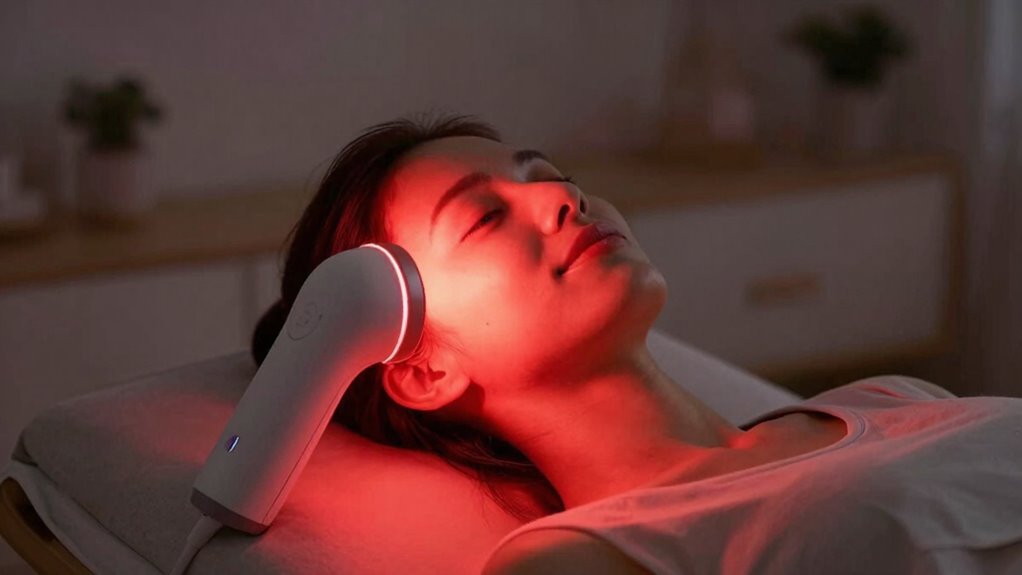

To use red light therapy safely, follow the device’s recommended exposure times and keep it at the proper distance to avoid overheating or skin irritation. Always wear protective goggles to shield your eyes and avoid applying on broken or irritated skin. Choose a device with safety features like timers and follow the manufacturer’s instructions. Consulting a healthcare professional beforehand can help you get the best results and stay safe. Keep exploring to learn more about optimizing your use.

Get the latest gadgets delivered free — and shop member deals
- Fast, free delivery on millions of items
- Access to Prime Big Deal Days deals on October 6–7
- Prime Video, Amazon Music and more included
Key Takeaways
- Follow manufacturer instructions for proper exposure times, distances, and safety precautions.
- Use protective goggles to shield your eyes during treatment sessions.
- Choose devices with safety features like automatic shutoff and ensure they meet safety standards.
- Consult healthcare professionals before starting therapy, especially if you have skin issues or health conditions.
- Monitor your skin’s response, and adjust session duration or frequency if irritation or redness occurs.
Red light therapy is a popular treatment that uses specific wavelengths of red and near-infrared light to promote healing and improve skin health. As you explore this therapy, you’ll notice that many turn to LED devices for convenient, at-home use. These devices harness the power of photobiomodulation, a process where light stimulates cellular activity, resulting in various benefits like reduced inflammation, enhanced tissue repair, and improved skin tone. Understanding how to use red light therapy safely guarantees you get the maximum benefits without risking harm.
One key aspect of safe red light therapy is recognizing the photobiomodulation benefits. When you expose your skin to the correct wavelengths, your cells absorb the light energy, which boosts mitochondrial function and promotes healing. This process can help with skin rejuvenation, pain relief, and muscle recovery. However, for these benefits to be fully realized, it’s essential to follow recommended exposure times and distance guidelines. Overexposure doesn’t necessarily mean better results and might cause discomfort or skin irritation.
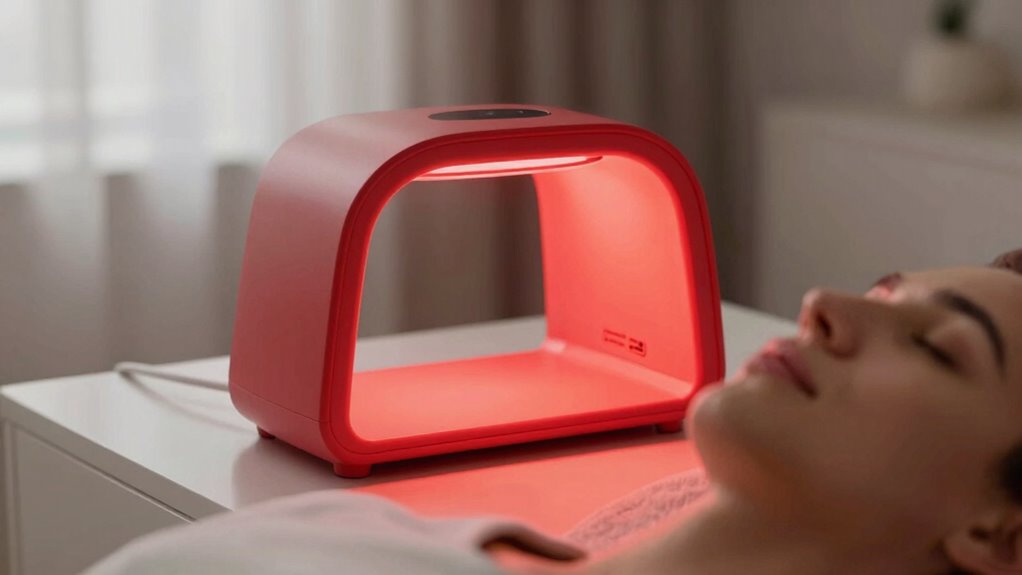
LED device safety is another essential consideration. Many devices on the market are designed with safety features, such as automatic shutoff timers and protective goggles. Make sure to choose a reputable product that complies with safety standards. Always read the manufacturer’s instructions carefully. Wearing protective goggles is necessary to shield your eyes from intense light, especially if you’re using high-powered devices. Keep the device at the proper distance from your skin to avoid overheating or burns and avoid using it on broken or irritated skin. Additionally, understanding the safety standards for LED devices helps ensure you select products that are both effective and safe to use. Being aware of photobiomodulation and its effects can help you better understand how light influences cellular function and healing processes.
Incorporating knowledge about LED technology can also help you choose the most suitable device for your needs, ensuring optimal safety and effectiveness. Moreover, understanding the correct wavelength is crucial for targeting specific health concerns and maximizing therapeutic outcomes. It’s also helpful to be aware of light intensity levels, as they directly impact the safety and efficacy of your treatments. Additionally, consult with a healthcare professional before starting red light therapy, especially if you have underlying health conditions or are pregnant. While LED devices are generally safe for most people, individual responses can vary. Keep an eye on how your skin reacts during and after sessions. If you notice excessive redness, irritation, or discomfort, reduce the session time or frequency.
Consistency is key with red light therapy. You’ll likely see the best results with regular, controlled sessions over several weeks. Remember, this isn’t a quick fix but a gradual process that can greatly benefit your skin and overall well-being when used responsibly. By understanding the photobiomodulation benefits and prioritizing LED device safety, you can confidently incorporate red light therapy into your routine, knowing you’re taking the right precautions to enjoy its healing potential safely.
red light therapy device with safety features
As an affiliate, we earn on qualifying purchases.
As an affiliate, we earn on qualifying purchases.
Frequently Asked Questions
Can Red Light Therapy Be Used on Pets?
Yes, you can use red light therapy on pets, but it’s essential to prioritize pet safety. Always consult your veterinarian before starting treatment, as veterinary applications vary depending on your pet’s health condition. Use pet-specific devices designed for their size and fur, and follow the manufacturer’s instructions carefully. Never aim the light directly into their eyes, and monitor your pet for any adverse reactions during and after therapy sessions.
Is Red Light Therapy Effective for Hair Growth?
Yes, red light therapy can be effective for hair growth. You can promote hair regeneration and scalp stimulation by using it regularly. The therapy boosts blood circulation to the hair follicles, encouraging new growth and strengthening existing hair. To get the best results, follow recommended treatment times and maintain consistent sessions. Remember, individual responses vary, so patience and proper use are key to seeing improvements in hair density.
Are There Any Age Restrictions for Use?
There are some age restrictions and safety considerations you should keep in mind when using red light therapy. Generally, it’s safe for adults, but children and teenagers should consult a healthcare professional before starting treatment. Safety considerations include avoiding direct eye exposure and following recommended session durations. If you’re pregnant or have skin conditions, check with your doctor first. Always follow device instructions and consult a healthcare provider if unsure.
Can It Replace Traditional Medical Treatments?
Red light therapy shouldn’t substitute traditional medical treatments because it’s considered an alternative treatment, not a primary cure. While generally safe when used properly, safety concerns remain, especially if you have underlying health issues or are pregnant. Always consult your healthcare provider before using red light therapy as a substitute for conventional treatments. It’s best to see it as a complementary approach rather than a replacement to ensure your safety and health.
How Long Should Each Session Last?
Your session duration should be carefully tailored to maximize benefits without risking harm—think of it as a delicate dance. Typically, a red light therapy session lasts between 10 to 20 minutes, depending on your device’s power and your skin’s sensitivity. Always follow safety guidelines, such as maintaining proper distance from the device and avoiding overexposure, to guarantee safe, effective results. Consulting a professional can also help determine the ideal session length for you.
Conclusion
Think of red light therapy as a gentle sunrise, awakening your body’s natural healing powers. When used safely, it’s like tending a delicate garden—nurturing growth while respecting its boundaries. Remember, patience and proper guidance are your sun and soil, ensuring you bloom without harm. Embrace this light as a symbol of renewal, but always honor its power. With mindful use, you’ll find your wellness blossoming, radiant and resilient like a well-tended garden at dawn.
Fall Picks
fall essentials
As an affiliate, we earn on qualifying purchases.