
Vintage and secondhand fashion are making a big comeback as more people seek sustainable and unique styles that stand out from fast fashion. By choosing secondhand, you extend clothing lifespans and support a circular economy, reducing environmental harm. This trend encourages responsible consumption and influences brands to adopt eco-friendly practices. If you want to discover how this movement is shaping the industry and transforming wardrobes, there’s more to explore below.
Key Takeaways
- Vintage and secondhand fashion are experiencing increased popularity due to their unique styles and storytelling appeal.
- The movement promotes sustainable practices by extending garment life and reducing environmental impact.
- Consumers are favoring responsible shopping, supporting a circular economy through thrift stores and online marketplaces.
- Fashion brands are adopting eco-friendly sourcing and recycling initiatives in response to consumer demand.
- The resurgence encourages mindful purchasing, emphasizing quality, longevity, and a shift away from fast fashion waste.

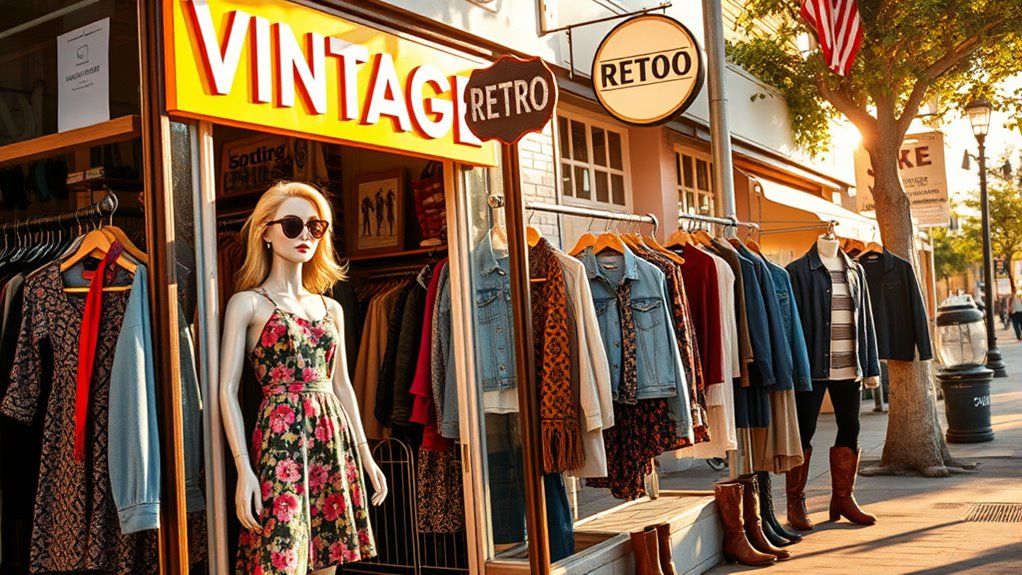
Have you noticed how vintage and secondhand fashion are making a big comeback? It’s everywhere now — from trendy boutiques to your favorite online shops. This shift isn’t just about style; it’s also about making more conscious choices. As more people seek unique pieces that tell a story, they’re turning to vintage and secondhand options to stand out. But beyond the aesthetic appeal, this movement is rooted in sustainability. You’re probably familiar with the concept of sustainable sourcing — choosing clothing made in ways that minimize environmental harm. Buying secondhand is a prime example, as it extends the life of garments and reduces demand for new production. When you opt for vintage or secondhand, you’re participating in fashion recycling, which keeps clothing out of landfills and lessens the need for resource-intensive manufacturing.
Vintage and secondhand fashion promote sustainability by extending garment life and reducing new production demand.
This practice supports a circular economy within fashion, where garments are reused, repaired, and repurposed rather than discarded. It’s a way to cut down on waste and lessen the industry’s environmental footprint. You might wonder if vintage shopping is just about finding rare pieces, but it’s also about embracing a more responsible approach. When you buy from thrift stores, consignment shops, or online marketplaces, you help close the loop on clothing waste. Every piece you select has already been through a lifecycle, and by giving it a new home, you’re actively reducing the demand for new clothing that often involves water-intensive, polluting processes. Additionally, choosing vintage and secondhand fashion can inspire a shift towards sustainable sourcing and more eco-conscious production methods within the industry.
Moreover, this shift toward vintage and secondhand fashion encourages brands to rethink their sourcing strategies. As consumers prioritize sustainable sourcing, brands are increasingly incorporating recycled materials or promoting fashion recycling initiatives. You’ll see more labels emphasizing transparency and eco-friendly practices, knowing that shoppers value their commitment to reducing environmental impact. This movement also empowers you to make more mindful choices. When you hunt for vintage finds, you’re less likely to support fast fashion’s quick turnover and wastefulness. Instead, you’re investing in quality, timeless pieces that can be worn for years, which is a true act of sustainable fashion.
In the end, the resurgence of vintage and secondhand fashion isn’t just a trend; it’s a conscious response to the environmental challenges facing the industry. You are part of this change, influencing the market with your preference for clothes that are stylish, unique, and eco-friendly. By supporting fashion recycling and sustainable sourcing, you help foster a more responsible, circular fashion economy — one where style and sustainability go hand in hand.

Sampeel Leather Jacket Women Cute Motorcycle Biker Leather Coats Vintage 2025 Fall Fashion Outfits Winter Clothes Black S
- Material Composition: Polyurethane, Polyester, Rayon blend
- Fabric Quality: Ultra-soft, dense, durable PU leather
- Design Style: Oversized, long sleeves, retro zipper
As an affiliate, we earn on qualifying purchases.
As an affiliate, we earn on qualifying purchases.
Frequently Asked Questions
How Do I Authenticate Vintage Clothing?
To authenticate vintage clothing, start by examining labeling techniques; authentic pieces often have specific stitching, fonts, and placement. Check the fabric composition—older garments typically use natural fibers like cotton, wool, or silk, and the feel can indicate age. Research brand markings and compare them to known authentic labels. Trust your instincts and look for signs of wear or unique details that confirm the item’s vintage origin.
What Are the Best Ways to Find Rare Secondhand Pieces?
Finding rare secondhand pieces is like hunting for hidden treasure—you’ve got to be persistent! Start by exploring thrift store treasures in your area and visiting online vintage marketplaces. Keep an eye out for limited editions or unique items, and don’t hesitate to ask shop owners about hidden gems. Regularly browsing these sources boosts your chances of snagging those one-of-a-kind vintage finds that make your wardrobe stand out.
How Can I Date Vintage Garments Accurately?
To date vintage garments accurately, start with fabric identification; different periods favored specific materials like rayon or acetate. Study the style evolution to recognize design elements unique to certain eras, such as shoulder pads in the 1980s or flapper details from the 1920s. Check for labels or tags, but remember they can be replaced. Combining these clues helps you pinpoint the garment’s age more confidently.
What Are Eco-Friendly Tips for Buying Vintage Fashion?
Imagine your wardrobe as a garden—you want it to grow sustainably. When buying vintage fashion, focus on sustainable shopping by choosing pieces from ethical sourcing sources. Always research sellers’ practices, look for eco-friendly labels, and prioritize items made with natural or recycled materials. By doing so, you reduce waste, support fair labor, and keep fashion eco-conscious—turning your vintage finds into a beautiful, responsible statement.
How Do I Care for Delicate Vintage Fabrics?
To care for delicate vintage fabrics, you should prioritize fabric preservation by handling them gently and avoiding harsh chemicals. When stains appear, use gentle stain removal techniques like blotting with cold water or a mild detergent, rather than scrubbing. Always test any cleaning method on a small, hidden area first. Store your vintage pieces properly in breathable containers, and avoid direct sunlight to maintain their beauty and longevity.
Conclusion
Think of fashion like a timeless garden, where old blooms are carefully revived, their colors and scents still vibrant. As you embrace vintage and secondhand pieces, you’re tending this garden, nurturing stories and styles from the past. Each piece you wear is a seed planted in the present, blossoming into a unique expression of who you are. By choosing retro, you’re helping a beautiful cycle continue, keeping the garden alive and thriving for generations to come.